Civil War 2.0 Weather Report: All It Takes Is A Spark

“All it took was a spark.” – Sherlock Holmes (2009)

That Asian lady on TV says to donate anything that doesn’t spark joy.  Who is going to take all these illegal aliens?

  1. Those who have an opposing ideology are considered evil.
  2. People actively avoid being near those of opposing ideology.  Might move from communities or states just because of ideology.
  3. Common violence. Organized violence is occurring monthly.
  4. Common violence that is generally deemed by governmental authorities as justified based on ideology.
  5. Opposing sides develop governing/war structures. Just in case.
  6. Open War.

Volume VIII, Issue 1

Most memes except for the clock and graphs are “as found”.  I have maintained the Clock O’Doom at 9., given the open support of assassination and criminality by the GloboLeft and the increase in violence as well as direct interference with ICE and the insertion of the military into law enforcement.  Beware: the number can climb quickly.

My advice remains.  Avoid crowds.  Get out of cities.  Now.  A year too soon is better than one day too late.

In this issue:  Front Matter – Sparks and Ignition – Violence and Censorship Update – Misery Index – Updated Civil War 2.0 Index – Why Is It . . . ? – Links

Front Matter

Welcome to the latest issue of the Civil War II Weather Report.  These posts are different than the other posts at Wilder Wealthy and Wise and consist of smaller segments covering multiple topics around the single focus of Civil War 2.0, on the first or second Monday of every month.  I’ve created a page (LINK) for links to all of the past issues.  Also, subscribe because you’ll join nearly 840 other people and get every single Wilder post delivered to your inbox, M-W-F at or before 7:30AM Eastern, free of charge.

Sparks and Ignition

I’ve been covering the UK as a part of the Violence and Censorship Update to the Weather Report as long as I’ve been doing it.  The reason is simple:  it’s a country that has a similar culture and is facing similar problems and it can be instructive.  It also might be the Spark.

When you look at fires, they need three things:  oxygen, fuel, and a spark.  If I could extend the metaphor a bit, air would be the discontent in a population.  It’s always around, and doesn’t cause a fire by itself.  Anyone can be mad.

But the amplification, the fuel, is when people communicate their discontent.  It’s why an absolute communication blackout occurred on those that were in any way skeptical of the governmental response of COVID or supportive of the obvious fact that the 2020 election was stolen.

Amplification, the fuel, was there when the George Floyd riots occurred.

They were planned.  Oh, sure, not George in particular, but any video would have spread.  After four years of Trump, the GloboLeftElite and GloboLeft activists were so angry that they wanted something, and any event on video that could be made to be the Spark would be amplified.

So, discontent plus amplification plus event = revolt.

It’s happening now in England.  And in Ireland.  The first relates to the murder of an 18 year old British university student, Henry Nowak, by a foreign invader.  Can Brits have knives?  Not without a liosense, guv’na.  But if you’re a sikh you can.  And one of them used that knife privilege to ventilate young Mr. Nowak.  The spice on this already outrageous event?

They coppers were handcuffing Nowak as he died.

Nowak:  “I’ve been stabbed.”

Evil Cop:  “I don’t think you have, mate.”

Why evil?  The coppers took the word of the sikh murderer that Mr. Nowak had, “Done a racism,” and handcuffed the bloodless hands of Mr. Nowak.  The murderer or his family then hid the murder weapon, and stole Mr. Nowak’s phone, either for gain or to suppress evidence.

The next case is still developing:  another foreign invader in Belfast was subject to oppression because he was arrested after being caught sawing the head off of an Irishman.  Silly Irish!  They should know that it’s illegal for them to be caught having their heads sawed off.  That must have inconvenienced the poor refugee.

These are Sparks.  White protests have been the result, though I wouldn’t be surprised if this is the first that you’ve heard of either of these events, since news has been clamped down tight:  they want to remove the fuel from the event.  It can’t spread!

The result is that they’re trying to keep this from spreading.

The discontent is real.  And the oxygen level that is starting to build up in the room is the fact that, as the economy falters for the young, they’re now seeing the wealth pump in action as countries try to bring in cheaper labor from overseas to replace skilled young British and American citizens.  Zoomer disaffection is real, and their complaints are legitimate:  8 out of 10 jobs went to foreigners in the United States since 2020.

80%.

They are the oxygen level that keeps rising, and that’s the level that the GloboLeftElite wants to keep down at any cost.

What they want is to get rid of you.

When I started writing the Weather Reports eight years ago, I thought that Civil War 2.0 would be ideological.

It won’t be.

Violence and Censorship:

Stealing a country’s mythology is censorship, and you can see that in effect with the movies.  At some point people will realize this is just forced humiliation.

Turks gave us a cool new name:

I guess making fun of Indians is off the menu, as Poop World Order was banned from X not long after this.

And when you brainwash white women, murder follows:

Oh, and women judges.  Don’t forget them.

You can’t stop the signal, Mal.  But California will keep trying.

Misery Index

The new Trump administration is shown in red.  Results continue to be much better than Biden’s misery numbers though Iran is starting to show in the index..

And why isn’t giving jobs to aliens over qualified Americans legal?

Updated Civil War II Index

The Civil War II graphs are an attempt to measure four factors that might make Civil War II more likely, in real time.  They are broken up into Violence, Political Instability, Economic Outlook, and Illegal Alien Crossings.  As each of these is difficult to measure, I’ve created for three of the four metrics some leading indicators that combine to become the index.  On illegal aliens, I’m just using government figures.

Violence:

Violence indicators are down this month.  The attempted assassination last month didn’t even flutter the number, which tells you how far down the road we are.

Political Instability:

Down is more stable, and it went down this month.  We’ll see what the Karmello verdict brings.

Economic:

The economy took a minor drop two months ago, but then completely recovered.  For now.

Illegal Aliens:

Still the near lowest level since the Weather Report started.

Why Is It . . . ?

That Syria doesn’t want Syrians and India doesn’t want Indians?

LINKS

The links are again done by Ricky this month.  Thanks, Ricky!

BAD GUYS
https://x.com/Katelyn_Caralle/status/2056134125564645790
https://x.com/CitizenFreePres/status/2053284658322854271
https://x.com/DefiyantlyFree/status/2052414245124366422
https://x.com/spencerpratt/status/2054277602588946492

GOOD GUYS
https://www.youtube.com/watch?v=T4MHgjkdOKk
https://x.com/spencerpratt/status/2057508808067543268

ONE GUY
https://x.com/MarioNawfal/status/2055736794474590660
https://x.com/BreannaMorello/status/2052013624516849961
https://ammo.com/research/defensive-gun-use-statistics

BODY COUNT
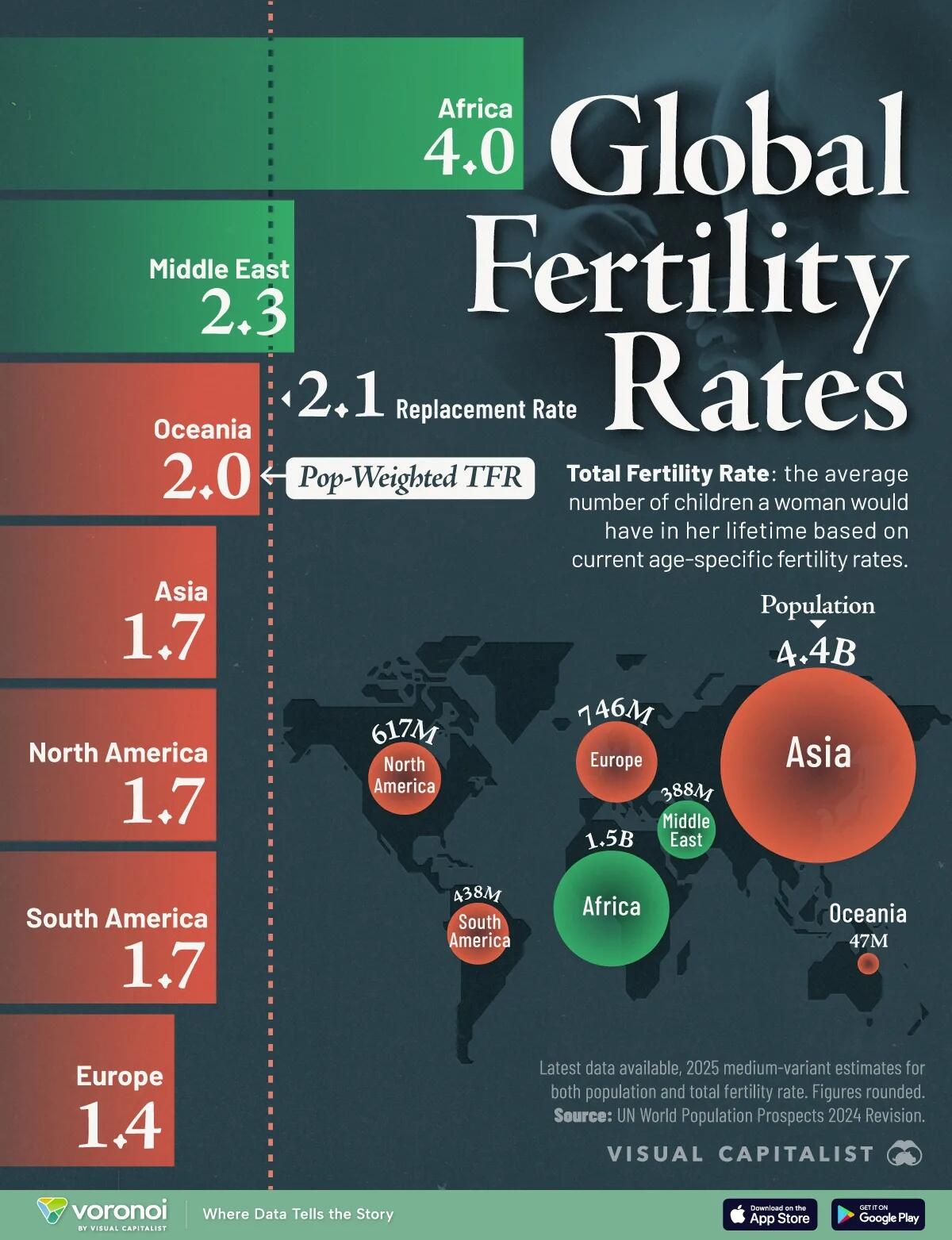
https://cms.zerohedge.com/s3/files/inline-images/Worlds-Fertility-Rates_Web_04272.jpg?itok=o-FNcmIC
https://www.axios.com/2026/05/10/christian-catholic-pastors-seminaries
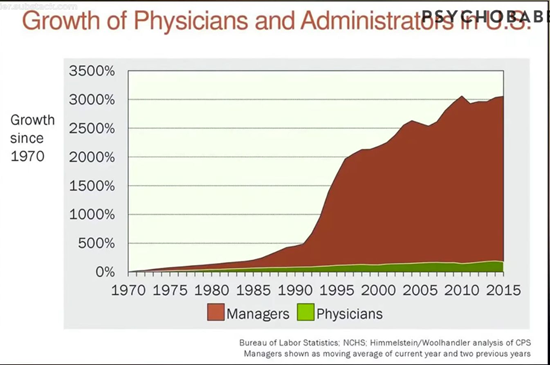
https://www.oftwominds.com/photos2026/docs-admin3-26a.png
https://therabbithole84.substack.com/p/affirmative-action-in-medical-schools

VOTE COUNT
https://x.com/Mezzie13603591/status/2053671751591006406
https://x.com/Smooth_Sailing0/status/2053575218484883476
https://i0.wp.com/jonathanturley.org/wp-content/uploads/2026/04/HAcIMIXagAA3FuR.jpg?ssl=1
https://jonathanturley.org/2026/04/28/incredible-unstoppable-titan-of-terror-the-lobster-that-devoured-virginias-constitution/
https://jonathanturley.org/2026/05/09/the-gerrymander-debacle-in-virginia-leaves-the-democratic-party-with-a-dangerous-agenda/
https://nypost.com/2026/05/07/us-news/redistricting-after-scotus-decision-could-give-gop-edge-in-midterms/
https://www.zerohedge.com/political/jeffries-calls-half-dozen-democratic-states-start-aggressive-redistricting
https://alphanews.org/nearly-19000-people-used-vouching-to-register-to-vote-in-minnesota-on-election-day-2024/

CIVIL WAR
https://www.youtube.com/watch?v=LJek-kc384w
https://www.washingtonpost.com/nation/2026/05/09/trump-assassination-jokes-internet/
https://www.truthdig.com/articles/has-the-supreme-court-set-the-stage-for-a-new-civil-war/
https://www.thefp.com/p/thomas-massie-defeat-gop-primary-trump?hide_intro_popup=true
https://thehill.com/homenews/state-watch/5868969-tennessee-redistricting-memphis-lawmaker-secession/
https://mises.org/mises-wire/vote-harder-why-secession-only-answer-american-megastate
https://financialpost.com/pmn/business-pmn/alberta-premier-stakes-political-future-on-canada-secession-vote
https://www.telegraph.co.uk/us/news/2026/05/22/child-soldiers-mexico-bloodthirsty-civil-war/
https://www.investing.com/analysis/from-civil-war-to-economic-dominance-the-rise-and-decline-of-great-powers-200680817
https://www.americanthinker.com/articles/2026/05/how_the_american_system_reshaped_the_world.html

MEMORIAL DAY
https://x.com/HistorianUSA1/status/2057963073529414038

Singapore Got Rich on a Tiny Rock. We’re Getting Poor on a Vast Continent. Here’s Why.

I hate hipsters, with their vegan diets and tiny feet and whiskery faces and sawdust bedding.  Oh, I meant hamsters.  I hate hamsters. (meme as-found)

We are becoming poor.

Not “poor” in the sense of some third-world hellhole where the average guy eats dirt and dreams of a bicycle.  No, we’re sliding into a softer, slower, more insidious kind of poor, the kind where everything costs more, does less, and shrinks while the price tag stays the same.  Think of your new Giant Size™ Freetos© Corn and Sawdust Chips®.  Thirty-three percent less product than the old Stupendous Size©, same price, and now with extra cardboard flavor for that authentic “we’re all getting cancer” mouthfeel.

Or the Chimkin King® MacNugget© that used to be a glorious 0.75 ounces of protein-packed joy (roughly three picofarads of satisfaction) and is now a sad 0.4 ounces (two millibecquerels of regret).

Same price.

Or twice the price.

You pick.  This isn’t random.  It’s the visible symptom of a deeper rot.

I think Superman® will die when he finds his crypt tonight.

To understand why we’re getting poorer, let’s ask the question:  What makes places and peoples wealthy in the first place?  Wealth isn’t some mystical fog that drifts in on the winds of good intentions.  Wealth is built, deliberately, from a handful of non-negotiable ingredients.  Screw them up, and poverty is the only destination.  Nail them, and creation of wealth is damn near impossible to stop:  look at Singapore, a rock with zero natural resources that became richer than most continents because they got the recipe right.

Here’s the list.  It’s not complicated.

Raw materials.  You need stuff to make stuff.   A country doesn’t have to own the mines or the oil fields.  Taiwan proves that.  They import what they need and turn it into iPhones© and Nvidia© chips that the world lines up to buy.  Venezuela sits on more oil than a Saudi prince’s dream and still can’t afford luxuries like toilet paper or rice.

Energy.  This is the raw material people pretend doesn’t exist until the lights flicker.  Cheap, reliable energy is the multiplier for everything else.  Coal, oil, nuclear, geothermal, solar:  swap the source if you want, but you cannot negotiate with 12 shots of vodka or thermodynamics.  I may run on booze and condiments, but without abundant energy, factories sit idle, and data centers don’t compute.  When energy gets expensive, everything else gets more expensive.  Period.

Gasoline prices are so high that I heard the homeless in Southern California have stopped huffing it and switched to cocaine to save money. (snip as-found)

Capital investment.  You have to build things to build things.  Our entire world is a stack of prior investments stretching back to the pyramids, the steam engine, the transistor. AI doesn’t pop out Sam Altman’s ass:  it needs concrete, steel, copper, water pipes, motors, and enough electricity to power a small country.  Each of those required factories, that also required factories.  Every layer of capital makes the next layer possible.  Starve that pipeline for decades and watch the future evaporate.

Drive and ingenuity.  Someone has to have the spark.  Steve Jobs said it best:  the desire to “kick a dent in the Universe.”  Wanting it isn’t enough, someone has to be smart enough and stubborn enough to actually take the risk.  That’s the rarest ingredient.  Most people are content with Nyquil P.M.™ Netflix® and Nacho Cheese Doritos©.  The ones who aren’t?  They move mountains.

Labor and physical craftsmanship.  Ideas and Jeffery Dahmer are worthless without execution.  You need trained, experienced men who can turn blueprints into reality:  welders, machinists, engineers, coders who’ve solved hard problems before and aren’t afraid to get their hands dirty.  Craftsmanship isn’t taught in a three-hour DEI seminar.  It’s earned through sweat, failure, and repetition.

My former wife didn’t understand algebra, which is why the x is no longer in the equation.

Right environment.  Enough government to stop anarchy, not so much that you end up with Pol Pot’s people party.  Singapore, South Korea, even old-school America had governments that mostly stayed out of the way while protecting property rights and contracts.  Too little law and warlords loot your factory.  Too much and the bureaucrats loot it for you.

Scoring system.  This is the secret sauce.  No scoring system at all?  Communism where everyone starves equally except the leaders.  All scoring system, no guardrails?  Wall Street cocaine binges off of hooker’s butts after their derivative play wrecked Poland.  Reward the leeches useless migrants unworthy rapists?  Hello, modern Europe, where the productive pay for the idle and call it “compassion.”  The right system rewards the creators, punishes the parasites, and lets the market sort the rest.  Mess with the incentives?  You get what you reward.

Get these seven things lined up and wealth explodes.  Miss even a couple and you’re Venezuela with better Wi-Fi.

So why are we sliding backward?

We’ve been neglecting every single one of them for decades, and the bill is coming due.

Raw materials?  We’ve got plenty underground, but we’ve regulated mining into a paperwork hellscape while China laughs and digs.  Or else.

OnlyFans© was outlawed in Orwell’s book 1984.  They wouldn’t allow thotcrime.

Energy?  We’re shutting down reliable coal and nuclear plants for windmills that work when the wind feels like it and solar that dies at sunset.  The result?  Higher costs for everything, from grocery bills to California electric cars that can’t charge because the grid is wheezing.

Capital investment?  We offshored it to China and called it “globalization.” Factories, machine tools, entire supply chains are all gone.  Sure, some capital flowed back in the form of stock buybacks and McMansions, but the productive kind?  That’s building Chang’s future now.

Drive and ingenuity?  Our schools turned into indoctrination camps.  Merit is racist, excellence is oppressive, and every kid gets a participation trophy.  The spark of genius gets smothered under layers of “equity.”  Steve Jobs couldn’t get hired at Apple™ today and with the regulations, couldn’t even start Apple© today.

Labor and craftsmanship?  We imported millions of low-skill workers who consume more in services than they produce in output, while our own kids rack up six-figure debts for gender studies degrees.  The skilled trades?  Stigmatized as “dirty jobs” for decades.  Now we wonder why nothing gets built on time or on budget.  Welding productivity is half what it was in 1960.

But we both liked heavy metal, so we eloped to Vegas for our welding.

Right environment?  We’ve got more government than ever regulations thicker than a Manhattan phone book (for the younger generation, a phone book was when someone printed off a section of the Internet), agencies with SWAT teams, and a bureaucracy that treats citizens like the enemy.  Pol Pot was too extreme, sure, but the slow-motion version where every productive act requires ten permits and a diversity audit?  That’s nearly as destructive.

Scoring system?  We reward voting for more handouts, not creating value.  Welfare cliffs, affirmative action, corporate bailouts, student loan “forgiveness” that’s really just sticking the bill on the productive.  Europe’s model of taxing the hell out of workers to fund the idle has crossed the Atlantic.  And don’t get me started about how we’re letting the people who print the money keep it.  The leeches are thriving.  The creators are exhausted.

Every one of these screw-ups shows up in the data:  houses that cost ten times what they should because we imported 100,000,000 net new consumers (legal and otherwise).  National debt? Every printed dollar dilutes the value of the ones you earned.  Shrinking products, rising prices, declining quality are all the same signal.

We’re poorer.

Stunningly accurate.  (meme as-found)

If we keep this up, we won’t be the world’s superpower.  We’ll be Albania on the Atlantic, the Mumbai in the Midwest, or the Pretoria of the Pacific Rim:  a place where the lights flicker, the shelves are half-empty, people burn Styrofoam® for heat and the ambitious either leave or give up.

The crazy part? Fixing it is simple.

Stop importing net consumers.  Secure the border, enforce the laws we already have and repatriate them all.

Unleash energy.  Drill, build nuclear, keep the coal plants running until the next better thing is actually ready since cheap energy fixes almost everything downstream.

Cut the regulations that strangle capital investment.  Let factories come home and encourage them to do so with tariffs.  Reward builders, not bureaucrats.

Rebuild education around merit, rigor, and actual skills.  Fire the ideologues.  Bring back shop class and calculus.

Restore the scoring system:  reward production, punish predation.  End the welfare traps.  Make work pay again.

That’s it.  All the fixes.  None require magic or a revolution.  Just the political will to stop doing stupid stuff.

So why don’t we do that?

Because the people steering the ship benefit from the decline:  a system is what it does.  Politicians get votes from the dependent class.  Bureaucrats get power from the red tape.  Corporations get cheap labor and cheap virtue-signaling.  The media gets endless stories about “systemic” problems that justify more of the same poison.

The incentives are perfectly aligned.  For them.

For the rest of us? Not so much.

The ingredients for wealth haven’t vanished; we’ve just stopped mixing the batter.  But the window is closing.  Every year of delay makes the turnaround harder and everyone poorer.

I wear shoes with Velcro® closers now.  I mean, why knot?

It will be painful, more painful than pulling putting duct tape on a Kardashian’s back and pulling it off.  For the Kardashian, I mean, since I would pay money to see someone pull duct tape off of a hairy Kardashian.

The alternative to the pain, though, is worse.

I am so tired of sawdust.

Your Chatbot Is Cute. Theirs Is a Chained God. Here’s Why That Changes Everything.

“Have you ever seen the machines?” – The Time Machine (1960)


(all as-found)

I’ve been writing about A.I. for a while now, watching it go from goofy meme generators that couldn’t draw hands to something that’s theoretically (LINK TO ED ZITRON, who thinks it’s just a grift and has good points) eating jobs faster than Whoopi Goldberg can slam down a cheesecake.

However, the part nobody’s really talking about in the shiny TED Talks© and cable financial news talking head soundbites:  A.I. isn’t going to create a shiny utopia of universal luxury.  It’s going to split the world in two.

Again.

Only this time, the gap might make today’s rich-poor divide look like a disagreement over whether pineapple belongs on pizza in the comment section.

Right now, A.I. is democratic-ish.  I can hop on Grok™ or Claude® or ChatRPG© for a few bucks a month and get something that’s already much smarter than the pointy-haired boss in a Dilbert© comic strip.

It feels accessible.  But economics has a way of reminding us that “free” and “widely available” and “cheap” are temporary states like “sober” and “conscious” on New Year’s Eve.

The rich already live in a different reality.

Jeff Bezos even lives in a world that made him think his wife is attractive.  (meme as-found)

Think about it.  When’s the last time Jeff Bezos changed his own oil?  Has Elon Musk wandered the aisles of a grocery store lately, comparing prices on store-brand peanut butter versus the fancy stuff that isn’t made from off-spec styrene?  Probably not.

Their world is comprised of drivers, chefs, assistants, concierges, and layers of people who handle the mundane so they can focus on the tough business of being rich.  Breathing and, well, the other end of the digestive process are about the only things they share with the rest of us.

A.I. will supercharge that separation.

For the ultra-wealthy and national governments (which are basically the same thing at that scale), the A.I. of the future won’t be the public chatbot.  It will be a custom, proprietary, always-on system with access to individual datasets, massive private compute clusters, and real-time integration into their empires.  Imagine an A.I. that doesn’t just answer questions:  it anticipates needs across global supply chains, optimizes investments with keen foresight, runs entire divisions of virtual employees, and even simulates political and market outcomes with terrifying accuracy.

These systems won’t be running on shared servers in the cloud where your prompts might train the next version for everyone.  They’ll be air-gapped, secured, and jealously guarded.  Why share when you don’t have to?  And they’ll be created for maximum loyalty:  they will be, in essence, chained gods.

People they’re not building this for:  you. (meme as-found)

The rest of us?  We’ll get the consumer version.  The good enough.  Best Value® A.I.:  the one that’s rate-limited, censored in annoying ways, and always trying to sell me something or nudge me toward approved opinions.  It’ll be helpful for writing emails or generating images of cats on porches, but it won’t be the strategic weapon the elites wield.

This isn’t conspiracy, it’s simply the outcome of every technological advancement, ever, scaled to the size required by A.I.  The best models, the best hardware, the best data have costs.

Enormous costs.

The people who can pay will pay whatever it takes to stay ahead.  The split is already showing up in research papers and quiet boardroom discussions:  one track for the cognitive elite with private super-A.I., another for everyone else.

What has kept civilization and the elite in check has been the wide dispersion of talent that the genetic lottery of intelligence was in charge of:  talent.

Talent has always been the great equalizer.  A smart kid from a nowhere town could hustle, learn a trade or profession, and climb.  Companies needed human brains.  That paid for engineers, lawyers, marketers, analysts, and middle managers.  The path to wealth, while never easy, existed.

My biggest natural talent is sleeping:  I can do it with my eyes closed. (meme as-found)

When the rich have A.I. that can do most of that thinking better, faster, and without needing health insurance or vacation days, the demand for actual human talent craters.  Why should I pay a six-figure salary for a strategist when my private A.I. can simulate a thousand scenarios overnight?

The path to becoming rich effectively dies for 99.999% of humanity.

Not because people suddenly get dumber, but because the economic leverage of human capital evaporates for most.  The elites won’t need the vast pyramid of workers and consumers in the same way.  They’ll have their closed ecosystems.

Universal luxury from A.G.I. the benevolent master brain that creates enough wealth so we all get whatever luxury we want along with our private penthouses?

See, no free A.I.  (meme as-found)

That was always a fairy tale sold by people who want us to be calm while they consolidate power.  More likely is a world that looks like a high-tech feudalism:  a tiny class at the top with god-tier tools, a small retainer class to service them, and everyone else competing for scraps in an economy that doesn’t particularly need their labor or their spending.  This is the pattern history has shown us, and I see no reason that it would change.

We’ve seen such splits before.  The Industrial Revolution created massive wealth but also urban slums and child labor until society adjusted.  The internet promised to democratize information and ended up creating a few trillion-dollar companies while attention economies turned us into dopamine addicts.

A.I. will be bigger.

It hits directly at the part of us that separates us from being apes or, in for the French, poodles.  And when the cognitive tools are unequally distributed at this scale, the feedback loops get nasty.

Armageddon tired of all these rapture jokes. (meme as-found)

The elites won’t experience the same A.I.  Their versions won’t hallucinate on basic facts or refuse controversial topics.  It will be tuned to maximize their outcomes.  Ours will be tuned for engagement, safe ideas to keep the population docile, and for the extraction of more data.

What does this mean for regular folks?

First, stop waiting for the rising tide.  It’s not coming.

Build skills that are hard to automate or that the elites might still need humans for in the transition:  things involving real-world messiness, physical presence, trust, or creativity that can’t be faked at scale.  Yet.

Second, understand the game.  The split isn’t a bug for the elite, it’s the feature of late-stage capitalism meeting exponential tech.  The people at the top have every incentive to keep the best stuff private like they always have throughout history.

Third, maintain your own sovereignty.  No, not in the “this court doesn’t have subject matter jurisdiction” way but in the “keep thinking critically” way.  If you thought that Madison Avenue and the CIA knew how to persuade, imagine them with superhuman intelligence at their disposal.  Use the cheap AI tools while they’re useful, but don’t become dependent in ways that atrophy your own capabilities.

How did they train that cat to do all that??  (movie as-found)

The future isn’t written, but the trends are clear should A.I. succeed.  We’re heading toward a world where the rich don’t just have more money, they will become masters of reality.

The cultural and class divide we already complain about?  It’s about to get orders of magnitude wider.  Not out of malice, necessarily, but out of cold economic logic and the nature of power.

Or not.  As I’ve written recently, A.I. has caused what I believe to be the biggest bubble in the history of the world, and may pop with datacenters yet unconstructed and with billions in Nvidia© chips rotting in warehouses.

But, hey, why not both?  Why not an economy ending collapse of markets and the advent of godlike A.I. in the hands of the elites and government?  I can imagine Jeff Bezos having one of his factories making cheesecake for Whoopi Goldberg, and the machine going berserk and filling the entire island of Manhattan with cheesecake.  The horror!

The streets would be desserted.

What Does A Bubble Look Like?

“I had it all, even the glass dishes with tiny bubbles and imperfections.” – Fight Club

You know what really gets my goat?  A Chupacabra.

I’ve been in a bubble before.  What happens in them is, well, interesting.

First, the money isn’t just where the attention is.  Nvidia® and OpenAI™ and Anthropic© are where the attention is focused.  But it’s a bubble, right?  Honestly, if the irrational exuberance over A.I. was just about those three companies, it would be pretty boring.

But it’s not.  A bubble is insidious because it doesn’t impact just one part of an economy, it sinks its tendrils in seemingly unrelated things.  That’s good, because change is the basis of growth, creating new combinations in the economy to create value.  I’ll stress the “creating value” part because often that’s confused with “red line go up and to right good, down and to right bad”.  A stock price should be related to the value the company creates but is often masked, at least for a while.  I mean, Enron©, right?

Looking at the A.I. bubble now, well, it’s everywhere, and often in irrational and uncomfortable places, like the backseat of a Volkswagen®.

What’s got two legs and lives off a dead beetle?  Yoko Ono.

Things are built in places for reasons.  When things are being built in stupid places, well, it’s probably that someone isn’t thinking straight.

Let’s take data centers.  What do data centers need?

First, power.  We’ll get back to this subject (and most that follow) again, but unless there’s power, none of the chips run.

Second, space.  You need a place to put the chips.  It’s most often a building, on land.  Well, to be honest, that’s where it’s third most common.  The most common is in the dreams of Sam Altman, the second most common is in a warehouse because the datacenter hasn’t been built yet.

Third, access to robust communications.  You’re building something that has to listen and talk, so it needs to be hooked into the data sphere.  Thankfully, thanks to the Dotcom bubble, that fiberoptics are everywhere.

What the hell is laser hair?  And why do people want to get it removed?

Fourth, access to a place to dump the waste heat generated by all that electricity usage.  Most often, this implies access to water for use.

Each of these has its own solution, but meeting all four requires a bit of thought.  I mean, the South Pole would be great except for the whole “access to communication” bit.  So, selection is a balancing act.  Pacific Northwest, with power, land, water and data access, not so bad.  Pennsylvania?  Also pretty good.

Let’s take the factors, one by one.  Power.  As we’ve discussed before, the power usage for data center construction is screaming “bubble” from the top of its lungs.  People building data centers are signing contracts for power, either from utilities or by buying natural gas generators or . . . fusion?  Really?  That’s what they’re planning?  Why not power them off of Elon’s Tweets®?

Looks like even Buc-ee’s® went A.I.

Yeah.  It’s a bubble.  Just because Fred’s Datacenter Depot and Truck Stop© signed a contract doesn’t mean that they have money or even loans to build it.  Yet, chained investment is spurred on through public utilities and engine/turbine manufacturers.  They’re building new lines, expanding capacity, all for a level of power generation that’s absurd.  Thankfully, you can also get a Slim Jim™ at Fred’s©.

What about land?  These are the lucky ones, since people with hundreds to thousands of acres of land are able to sell the land for ridiculous prices if they win the data center lottery.  The nice thing for these folks is that they actually get paid.

Third:  communications.  There are a lot of fiber networks in the US, so this makes a lot of the country okay for buildout.  Greenland?  Notsomuch.

Besides, I have other plans for Greenland.

Then there’s water.  I use the Mississippi for a proxy cutoff line, since east of it, wet, west of it, dry.  YMMV, and there are places like the PacNorthwest that get a lot of water.

But Utah or Nevada?  Or Colorado?  Sure, these places get cold in winter, but are they even thinking about water usage?  These are the places where the phrase, “Whiskey is for drinkin’ and water is for fightin’.” came from.  They’re dry.

But, there’s a never-ending stream of data centers being announced pretty much everywhere.

Announced.

But my experience in a previous bubble tells me that all of these companies that are attempting to build all of these data centers are needing more in common than just millions of Nvidia© chips.  They’re needing copper for wiring.  They’re needing pipes to move water.  They’re needing concrete.  They’re needing steel beams.  They’re needing rebar and glass and aluminum to build some of the largest buildings every conceived by man outside of the Pyramids and that ballroom next to the White House.

And that’s just for the building.

What is the difference between USA and USB?  One connects to your computer to access all your data, the other is computing industry hardware standard.

They’re also in need of power.  That’s another Big Kahuna, and it’s already raising rates to consumers in various states as utilities plan to build out power plants to serve demand from data centers that . . .

May never be built because they can’t be built because there’s not enough stuff to build them or enough electricity to power them even though, “Hey, we have signed contracts!”

That’s the flip side of a bubble.  It’s irrational.  You end up with insanity like 87% of venture capital going to A.I.  49% of investment-grade bonds are going to . . . A.I.  As Michael Burry notes, during the Dotcom boom, only 40% of venture capital went to dotcom companies.  So, 87% is better and safer than 40% because it’s more, right?

I hear that farmers can use a hoe to make money honestly.

Things inflate because everyone wants them.

Copper.  Silver, which is (currently) not behaving like an economic metal, but like an input to data centers.  Concrete.  The very people that know how to build data centers are in amazing demand.

But a bubble?

Nah.  Don’t call it that.

I could go on for another three thousand words about how frothy we are at this moment in time, but this time really is different.  Most of this bubble is built on debt to build things that are impossible to build in promised timelines using resources that aren’t available.  At least when the dotcom bubble burst, we had lots of unused fiber optic cable in the ground and when the housing bubble burst, we had houses left over.

What happens when a debt bubble bursts that hasn’t built the data centers it promised and evaporates a huge percentage of the venture capital that was sunk into it and all we have left are mountains of Nvidia© chips sitting in warehouses surrounded by confused pimps?

Well, that’s just another way that A.I. will change the world, I guess.

Won’t that be interesting?

Chud The Builder And Two-Tiered Justice In America

“I got a new problem when I post bail.” – The Usual Suspects

“Chud the Builder” is an Internet provocateur/rage baiter who videos himself with strangers in public, often using racial slurs to black people.  His name is Dalton Eartherly, but I’ll stick with Chud.

Chud claims that it is within his free speech to say pretty much whatever he wants if he’s not threatening people.  I’ll leave it up to you to form your own opinion on that, but Chud isn’t shy about using the same words that black people use in songs to describe each other to them directly.

After going to court in Montgomery Coutney, Tennessee on a debt he owned, an altercation occurred.  I’d go into more details, but I’ve heard a lot of contradictory stories, so for now I’ll stick with that.  At some point, Chud drew his weapon and managed to get a two-fer:  Chud accidentally shot himself and he also shot a black man named Joshua Fox.  Both are alive.

There’s a lot to unpack with just this single case.  On X®, @RetroCoast said:

What?  $1.25 million?  I’ll admit that seems like a lot, but maybe that’s normal bail for Chud’s charge:  attempted murder.

Well, no.  In this age of free information flow, it’s now possible to get that data and share it quickly to millions.  OPERATION FREE DALTON went and got the receipts.

Outside of the scale being way off, it is clear that Chud’s bail is excessive compared to the average of $40,625 (hang on, I’ve got that in my other pocket) for other attempted murder cases.  It’s 31 times the average, assuming the data is right.

This was already a complicated case that touched on free speech and the right of self-defense, but now it’s bigger than that.  Chud could only have gotten a bail that high if he was much more dangerous than say, someone who was charged with first degree murder and aggravated assault.

Unless, you know, he was a white guy who said racist stuff on the Internet and it’s a high profile case.  That must be it.  Surely the system punishes white people and black people the same?

Huh.  I guess not.

And note that Chud will get zero support from mainstream groups dedicated to, say, defending those who want to promote free speech or the right to self-defense.  I could keep going.  But keep in mind that Karmello Anthony, who murdered Austin Metcalf by stabbing him in the chest has been out on $250,000 bail for nearly a year.

A system is what it does.

Think back to various high-profile self defense cases.  Kyle Rittenhouse and Daniel Penny were both acquitted of homicide, but what did their trials cost?  $1 million?  $2 million?  What about the Modern Sporting Lawyer who was arrested for protecting his home during the George Floyd Riots?  He pled to a deal.

No, what’s on trial is the ability for individuals to defend themselves, but a very special group of individuals:  white guys.  If you can’t be convicted, it doesn’t matter.  They’ll run you through the ringer of a court case costing millions if you don’t want to go to jail for the rest of your life.  And if you win?  Well, you’re broke, and the process was the punishment.  But if you’re black?

This is not the case if you’re black.  Stab away if you think there’s a good chance he might say a slur after you try to kill him.  And if you’re black you can try to fake a hate crime and the school you go to will cover up for you.

The statistics are clear:

This is so clear I’ll let Mr. Obvious point it out:

And I think the goal is also obvious:

There’s more to this story.  This is only one aspect.  Remember, a system is what it does.  What does the system react most strongly to?  What does it punish the hardest?

Dr. Michael Burry Has Spoken Again. The End Is Nigh, Or Margot Robbie’s Thigh?

“On a long enough timeline, the survival rate for everyone drops to zero.” – Fight Club

A truck filled with quinoa and a truck filled with Worcestershire sauce crashed into a charcuterie shop near my house.  What was the result?  It’s kind of hard to say. (meme as found)

Dr. Michael Burry has spoken again.  Okay, actually more like “emailed again” but he’s on the record again saying that the the end is nigh.  Is he right?  Well, on a long enough timeline, entropy always wins, and the heat death of the universe doesn’t care about my 401(k) yields.

But are we close?

The S&P valuations are through the roof.  We’re in the middle of the largest investment in the history of the United States outside of World War II:  Artificial Intelligence.

More has been spent on A.I. than was spent on the Manhattan Project, but less than was spent on, well, insert whatever outrageous bill Congress passed last week while you weren’t looking—probably something involving green energy subsidies for gluten-free solar panels raised free-range by Antifa® Chapter 4077.

The payoff for winning the Second World War was a big one.  Essentially the United States was surrounded by a smoking crater of a world.  Our industries were ready to absorb all the G.I.’s returning with their war brides into job to rebuild that crater.  I mean rebuild the nice parts, not India.

The world without Western Civilization. (meme as found)

Factories were humming, houses were sprouting like dandelions, and the economy was so robust you could afford a house on a single blue-collar paycheck and still take the kids to Disney World® without having to resort to Moustitution© or selling a kidney.  That’s what we got for entering into the war late and avoiding any of it happening on our homeland.

But what is the prize if A.I. is successful?

Well, it’s negative jobs.  It’s a profusion of information so vast it makes the Library of Alexandria look like a collection of Post-it® notes abandoned after spelling errors.  Elon Musk thinks it will create a society of abundance so great that no one will have to work and everyone can have a cool penthouse and all the gold they can eat.  We can be sure he’s right, because this is just how the Industrial Revolution ended.

Wait, what?

Hours worked went up?  Rural agrarian lifestyles were traded for urban factory hellscapes where the owner of the factory charged extra for all the asbestos he let you breathe in?  Yeah.

Every production “revolution” that the world has seen has actually increased human effort.  Those leaps forward did increase material wealth, but they also led to humans having to work more.  Hunting nomad chads became farming incels.

Why?

You can’t brew booze if you don’t have the grain and the place to brew it.  So, just like me, the nomads decided to give up a lifestyle of hunting, fishing, sex, and leisure for all the beer they could drink.  I mean, I have priorities.

As a child I never napped.  I was resisting a rest.  (meme as found)

I don’t expect anything different in the Thought Revolution.  Nobody will get free stuff, but the world will need a lot fewer of us.  This is the case if it is successful:  essentially an entire civilization working overtime to create a replacement for itself.

Yikes!

But let’s say it doesn’t work.

That’s better, right?  Well, maybe.  A bit.  If A.I. reaches some limit where it becomes economically unfeasible to get to the next level (think power generation capability required being infinite) of cognition, or the models start to get dumber the more advanced they are (there’s a fashion model joke in here somewhere, but I’m too polite to make it), then the stock market will collapse.

Collapse?  Surely, John Wilder, you exaggerate.  No, I meant collapse.  The market has priced in that A.I. is going to work.  On the recent day that Wall Street hit new highs in the S&P 500, most (55%!) stocks weren’t near their highs.  The high is high, but it’s not broad.  This current level of investment in A.I. is so big and so deep and so tall, there is no way it can do anything but fall.

Sorry, got a bit of Seuss stuck in my keyboard.

“Oh me! Oh my!” said the plumber named Fred,
“My pipes cost a fortune, I’m deep in the red!
I can’t fix the sink or the tub or the drain!
This copper’s so pricey, it’s driving me insane!”

This is a damned if you do, damned if you don’t scenario.  Let me put on my Cassandra pants and throw out this idea: Why not both?

The economy is screwed, or at least the economy that I grew up with is screwed.  We’re becoming poor at a fantastic clip.  Not “poor” as in West Virginia moonshiner with a still and a shotgun, but “poor” as in living like we’re in a crowded megacity filled with unwashed brown people where the air smells like regret and curry.

Let’s look at how affordable things are compared to income from the 1970s. I found this handy chart on the Internet.  You know the one:  houses, cars, healthcare, education all marching upward while real wages stagnate like a sloth on Ambien.  Now, I know that no one actually goes to movie theaters anymore even though it’s on the chart.  There’s no point in going to the movie.  I can get booze from my fridge and pause the movie whenever I want if I watch it at home, but yet it’s “indecent” if I fall asleep drunk and in my underwear in the front row at the latest Avatar™ movie.

(as found)

But everyone can still afford a place to live, right?

Well, not since we’ve opened the floodgates and let in the entire world.  A massive population increase combined with a group of people that consume much more in services than they contribute is killing us.  They’re actually making us poorer as each one crosses into the country.

Remember in math you can always raise per capita by lowering the number of capitas.

But, hey, they borrow money so they can create debt that produces profit for the banks, right?  Win-win, except for the natives footing the bill.

Isn’t enough that our economy is as stable as a knife fight between a drunken Whoopi Goldberg and a blindfolded Jimmy Kimmel in a bikini atop a butter-coated teeter-totter on top of WTC7?  Did we have to put the whole existence of humanity in the future in the balance, too?

The good news, I guess, is that Burry could be wrong.  He has been wrong before.  Like me, he’s predicted five of the last two recessions.  But there comes a point where we won’t be able to paper over the cracks in the structure with more printed money and hopium.

Yup, been there, done that.

When all this cracks, and it will because complexity plus leverage plus narrative equals fragility, the reset won’t be gentle.  It won’t be “buy the dip” and back to brunch.  It will be the kind of event that makes 2008 look like a mild correction and 1929 look like a Tuesday.

So where do I want to be when it happens?  I want to be listening to a twenty-something Margot Robbie describing what collateralized debt obligations are from a bubble bath.

And remember Wilder’s Rule of Humorous Collapse #6:  civilizations don’t fail because they run out of money; they fail because they run out of reality.

But at least I finally understand collateralized debt obligations (warning, mildly spicy language).

Disclaimer:  I am not Margot Robbie, though I would take a cameo to talk about philosophy in a movie from my hot tub while I smoke cigars, and am also not a professional anything, let alone your financial advisor, so please bang your head against the wall a dozen times before you take the advice of an unpaid Internet humorist.

Black Swans: Interconnected, Nonlinear, and Ready to Ruin Your Day

“My name’s Swan.” – The Warriors

When getting coffee in Denmark they don’t allow sugar.  They don’t want it to be sweetish.

I’ve read enough history to know that the world doesn’t change in smooth straight lines.  When change hits, it lurches.  One day everything seems stable and the peasants are happily tilling the fields, and the next they’re communists busy storming the Bastille.

That’s the Black Swan.

Nassim Nicholas Taleb laid the definition out in his book The Black Swan.  A real Black Swan isn’t just a surprise.  It has three traits.

First, it’s an outlier, so far outside what most expected that the past gives zero warning.
Second, it carries an extreme impact, the kind that reshapes economies, governments, or entire ways of life.
Third, after it hits, we humans can’t help ourselves: we retroactively “explain” it like it was obvious all along.

“Of course, a fight about ethics in video game journalism would lead to the Strait of Hormuz being closed.”

A restaurant owner offered me free calamari for a good Internet review.  It was squid pro quo.

We’ve had plenty of Black Swans, but I’ll run through some of the greatest hits reel to show the pattern.

1914.
The assassination of Archduke Franz Ferdinand in Sarajevo looked like a local Balkan thing. A couple of pistol shots, right? By the end of summer, however, the Guns of August had turned Europe into a meat grinder.  Twenty million ended up dead due to the war.  Empires dismantled.  The map of Europe was redrawn and communism popped up yet again, this time in war-devastated Russia, being just another proof of the Russian national motto:  “And then it got worse”.

1929.
Stock prices had climbed a mountain of margin debt. Thankfully we’ve learned our lesson and now have only twice the margin debt piled into the market here in 2026. But back then?  One bad week in October and the market collapsed like Will Smith’s career.  The Great Depression followed.

1992.
The Soviet Union looked like it would last forever: nukes, tanks, gulags, that guy that Rocky had to box, the works. Then, overnight, it imploded.  Gorbachev’s reforms, economic rot, and a failed coup turned the world’s other superpower into fifteen broke republics.  The Cold War ended not with a bang but with a shrug and empty shelves in Moscow.  This was a positive Black Swan.  Unless you were Gorby.

What’s the difference between a ruble and a dollar?  Roughly a dollar.

2000.
The Dot-Com Bubble in 2000 was next.  Internet stocks were going to change everything. Pets.com.  Webvan.  Internet pizza by the slice, but you had to go pick it up.  Stock valuations that made tulip mania look rational.  When the music stopped, trillions evaporated.  NASDAQ dropped 78%.  One of my friends sold a company for $50 million.  In Alta-Vista® stock.  That he couldn’t sell for two years.

2001.
September 11. Nineteen illiterate savages with box cutters rewrote global security, launched two endless wars, and shifted trillions in spending.  Air travel changed forever.  Civil liberties got waterboarded.  They made The Mrs. take off her sandals going through security, and then ran a metal detector wand over her bare feet after the shoe bomber.

2008.
The Great Recession came from a housing market no one thought could fail.  The cause?  Subprime mortgages, collateralized debt obligations, and banks playing Jenga™ with other people’s money.  Lehman Brothers folded, credit froze, and the government printed enough money to wallpaper the Moon.

“Can we fix it?”  Bob’s wife’s attorney, “Not this time, Bob.  Just sign the papers.”

2020.
COVID-19, a virus from a wet market (or a lab, pick your conspiracy) shut down the planet.  Just-in-time supply chains snapped like dry twigs.  Governments printed trillions while telling you to stay home and order DoorDash™ because no one working for DoorDash© could spread the disease.  Inflation roared back like a thing roaring back.

Every single one of these events looked impossible right up until it wasn’t.  And every single one was explained afterward like the smart people had been warning us that these events were going to happen all along.

We are living in the most interconnected, nonlinear system humanity has ever built.  The whole mess is dependent upon global supply chains, instant financial markets, AI-driven trading, just-in-time inventory, and central banks playing God with interest rates.  A hiccup in one node doesn’t stay local anymore.

It cascades.

Nonlinear means small inputs can produce gigantic, unpredictable outputs, like a butterfly flapping its wings in Beijing, causing Nic Cage to say “no” when offered a part in a movie.

A Tesla® driver crashed into a semi while watching a Nic Cage movie.  Guess he should have just watched the trailer.

We are in a world where I think more Black Swans are imminent, because there are groups that are actively shaking the foundations of the way the world words.

Like China.  China’s economic ascendency isn’t some slow rise.  It’s unrestricted economic warfare, exactly like the Chinese generals described in their book.  They’ve gutted our manufacturing base while we cheered “free trade.”  They control rare earths, solar panels, pharmaceuticals, and now a big chunk of silver production and refining.  One policy tweak in Beijing and entire U.S. industries seize up.

That’s not theory.  It’s happening.

At the same time, Trump is busy recasting the entire post-World War II alliance structure.  In his defense, it was going to happen anyway, so might as well try to recast it in a way that works for the United States.  The old Cold War playbook:  NATO, endless commitments, sending our treasure overseas while our own borders leak is getting rewritten.

New deals based on new priorities, while old partners are suddenly on notice. When you yank the scaffolding out from under a 75-year-old global order, things get wobbly.

Add in the debt bomb.

Interest payments alone are bigger than defense budgets used to be.  Bond vigilantes haven’t shown up yet, but they’re circling.  One bad auction, one loss of faith, and the bond market revolts.

Rates spike.  Stocks crater.  Pensions and 401(k)s take a hit that makes 2008 look like a warm-up.

Then there’s AI and automation.

We’re likely on the edge of having AGI (artificial general intelligence) that could rewrite every job category.  Or we could get an AI stock crash first: valuations are moonshot, hype is everywhere, and conflicting AI agents trading against each other at light speed could trigger a flash crash that makes 1987 look quaint.  Massive unemployment follows as advanced automation eats white-collar work the way robots ate factory jobs.

What happens when millions of college-educated professionals suddenly have nowhere to go?

Geopolitical Black Swans are lining up too.

Civil unrest in the UK that looks more like low-grade civil war every year:  mass migration, cultural collapse, and the elites are disconnected.  Could Saudi Arabia fracture internally while oil markets hang in the balance?  What about a Cascadia subduction zone earthquake that could drop bridges, snap pipelines, and isolate the Pacific Northwest for weeks?

Any one of these hits an already-fragile, hyper-connected world and the dominoes don’t stop falling.

Any pizza can be a personal pizza.

The point is to recognize the pattern:  complexity plus nonlinearity plus rapid systemic change equals Black Swan habitat.  We’ve never had more of all three at once.

So what to do?

Stop pretending the experts have it under control.  They clearly don’t.

The good news is resilience looks the same for many cases.  Skills beat degrees when the power goes out.  A garden and a stocked pantry beats a grocery store when shelves empty.  Cash, metals, and productive land beat IOUs from a government that prints money like it’s confetti.

The Black Swan doesn’t care about fear, but it does respect preparation.

The next one is coming.  It always does.

And if you’re off to storm the Bastille, well, remember to wear clean underwear.  I’d usually tell a more complicated joke at the end, but the best underwear jokes are brief.

How The GloboLeft Uses Your Virtue Against You And Why It’s Killing The West

“Be excellent to each other.” – Bill and Ted’s Excellent Adventure

I’ve never been to central Europe, but I might Czech it out one day. (all memes as-found)

“Then what makes a beautiful person?  Isn’t it the presence of excellence?  Young friend, if you wish to be beautiful then work diligently at human excellence.  And what is that?  Observe those who you praise without prejudice.  The just or the unjust?  The just.  The even-tempered or the undisciplined?  The even-tempered.  The self-controlled or the uncontrolled?  The self-controlled.  In making yourself that kind of person, you will become beautiful.  But to the extent you ignore these qualities, you’ll be ugly, even if you use every clever trick to appear beautiful.”
-Epictetus

Epictetus may have had some ulterior motives when he said this, since if history is correct he was lame, was missing an eye and an ear, and had hair only in patches on his skull.  Did I mention the burn scars?

I kid.  But Epictetus was lame.  I mean, not 1980s “lame” but rather had a limp.

The point he makes is a good one, though.  We are fundamentally the genes we are born with.  If I wanted to be taller, I suppose there is surgery I could get to lengthen my legs.  Yeah.  Really.

If I wanted to avoid being a blinding hazard when the Sun shines off of my scalp, well, I could get hair plugs or a toupee.

Neither of those, however, would make me a better person.  And I don’t know about you, but when I find out about the vile beliefs and practices of some Hollywood™ starlets, well, they start to lose a lot of their attractiveness to me.  In fact, I start to see ugly, just like the ugly I see with Jeff Bezos’ wife.

I mean, really.  Wow.  That’s a lot of plastic surgery.  Seriously, does she not look like an alien that was constructed out of a scaffold of lizard DNA in a Tupperware® factory?  If she and Bezos have kids I don’t know which they’ll look like:  dime-store rubber geckos or a tube of Saranwrap©.

I do think that Epictetus, despite the handicap of being dead as well as gimpy, has done a good job at sketching out some of the things that have made Western Civilization great.  There was a time that we nearly universally admired being just.  Our culture is one that’s based on guilt, rather than shame, so being just comes from within.

Shame comes from without.  In a shame-based culture (which describes most third world cultures) the idea is that cheating an old widow in Iowa out of her family fortune is acceptable unless you get caught.  It’s clever, and they feel guilt only in being caught.  Ever see any video of a foreigner getting caught doing something wrong on video?

I know you have.

What happens is that the shame kicks in.  They can’t and don’t feel guilt over doing evil, only shame for getting caught doing evil.  This explains why India looks like India and Nigeria looks like Nigeria.  Good actions aren’t valued.

Next, Epictetus talks about the virtue of being even-tempered.  Again, this is something that society selected for through its very construction.  People who impetuously committed crime were systematically executed in Great Britain for nearly a thousand years.

Don’t think that has something to with keeping tempers in a bottle?  It certainly does.  And when men like that become warriors, well, Heaven help you if you push one over the edge into rage and wrath.  That is something mythic, something that makes entire continents burn.

Lastly, Epictetus talks about self-controlled versus, well, not.

Again, this is a virtue that Western Civilization has lauded in its stoic male heroes who experience hardship yet come away stronger for the effort.  Our very fables talk about men who never cry because they understand that they are masters of their emotions and can select which ones the let to the surface when the stress is running high.

This is not a bug like Hollywood© would try to make us think:  this is a feature.

To one extent Epictetus is right:  these are all necessary values for beauty, at least for me.  They are also necessary values for everything that is required to move society upward, to keep us from being crabs in a bucket, drawing each other down for our own temporary gain.

And, Epictetus notes that these virtues are within our control, each and every one of them.  Sure, if you come from a place that’s not been selecting for these behaviors for nearly a thousand years (and I could argue that Europe as a whole has been selecting for these behaviors for thousands of years) then it might be difficult.

But not impossible.  And if it is impossible, then that person could rightly be called a savage.

All of Western Civilization is ultimately built on the idea that these are things that individuals can do, right here, right now through being virtuous.  They are True.  They are Beauty in themselves.  And they are Good.

This is, in my mind, a major disconnect and why Western Civilization is hated by so many in the third world.  They look at this wonderful cultural set of values of which we are exemplars (on our best days) through our own choices and feel envy.  They want a world that looks like ours, but yet don’t want to change their behaviors.

This is why they don’t build.

This is why we do.

Are there other cultures with similar values?  Certainly.  Japan appears to have undergone a similar winnowing with respect to honor.  Feel free to opine in the comments about other places that make the grade.

Like Western Civilization, though, cultures that have a large focus on just outcomes are susceptible to propaganda that plays on cultural guilt.  Ever wonder why GloboLeftists pimped the 1619 Project?  Like the entire Civil Rights movement, it was based on creating guilt in people who had committed no crime or offense.

And it was effective.

On white people.  But it wouldn’t be on them.

I think that there still exists a strong fear on the part of white people to say, “Hey, I’d rather live among other white people.”  It sounds scary to them.  Yet, those same people wouldn’t bat an eye if black people wanted their own dorms that excluded whites.

It’s guilt.  Our virtues have been weaponized against us.  It’s so effective that even British people feel guilt over slavery, even when they effectively ended the international trade in slaves.  Those who do this are, like Epictetus said, using every trick to be Beautiful to try to hide their true ugliness.

My guess is that’s why they really want the statues to come down.  To see Western Civilization and all it has created is the biggest slap in the face to them and fills them with shame, so they have to either destroy it, or come up with some reason why they have failed to assuage their shame.

Continue in your quest for excellence, and understand those that will try to drag you down or fill you with guilt.

Ignore them.

And, in the immortal words of Abraham Lincoln,

“Party on, dudes!”

The Poor Get Hit First

“Small aircraft have such a poor safety record.” – Iron Man

Who can drink five gallons of gasoline without getting sick?  Jerry can.

Today I was reading that Air India® was going to abandon overseas routes.

Why?

They’re too expensive, the Indian spokesdalit said as he mass-dialed grandmothers in Iowa to try to get them to send him unredeemed gift cards.

The truth is simpler and harsher: the flights aren’t too expensive.  They’re too expensive for Indians.

This might be the single best news to come out of the Israel-America-Iran War so far.  If the Iranians actually follow through on their threat to cut the undersea cables connecting Africa and India to the Internet, well, this would be the best war ever.

It’s like Christmas came early.  Has anything similar happened in the United States due to the war?

Absolutely.

Congratulations!  If you had stock in Spirit® Airlines™ you can now retire 10 years after you die! (as-found)

Spirit™ was the Greyhound Bus© of the skies, and that’s not a compliment unless you’re a fan of things that smell like the socks of a homeless junkie in San Francisco in June.  Spirit© was a bottom-feeder airline, chasing the clientele with the least money, the lowest standards, and the highest likelihood of assaulting a stewardess.

When fuel costs climbed and Spirit© couldn’t raise ticket prices without emptying the plane, they collapsed.  For anyone who actually has to show up at an airport, this is pure upside. Spirit© Airlines™ folding means the skies just got a little more civilized.

I fully expect this pattern to spread.

Remember that former U.S.A.I.D.-funded executive pulling down $272,000 a year?  If not I fear for your reading retention because the meme is right up above, dude.  Anyway, she’s now discovering she can’t land a $19-an-hour gig managing a spice store.

A spice store!  Is government just day care for women with college degrees?  Regardless, she’s now poor.  And that’s good, because the poor lose first, and the credentialed grifters who fed off them are sliding down the same chute right behind.

Let’s talk basics.  Even if the price of rice tripled, I wouldn’t notice much.  Rice is still cheap for me.  If I have to give up steak, I can just eat some rice, right?  But that’s not a universal truth.  If all a person in some third-world hellhole can afford is rice, and the price doubles, welcome back, world hunger.

What a lot of people missed is that world hunger was a solved problem.  People just didn’t starve anymore, except in Hollywood®, and that wasn’t real starvation, it was just skinny starlets mainlining Ozempic® and calling it a diet.

On time I tried an all-tequila diet.  Effective.  I lost two weeks.

Global food production had climbed so high that famine was basically extinct outside of war zones and socialist experiments.  Now the dominoes have started falling.

I expect revolutions popping up like mushrooms in Africa.  Hungry people turn into angry people, and angry people with AK-47s equals a revolution.  The sound of light machine-gun fire is already the national anthem in half the continent.  Outside of colonialism, Africa never really developed.  For whatever reason, they were incurious enough never to have invented the wheel on their own.

Africa is poor:  devastatingly so.  When Muhammad Ali came back from a boxing match in Zaire (a country that didn’t last as long as The Simpsons have been on Fox®), he famously said, “Thank God my granddaddy got on that boat.”

That was the 1970s, after the colonial governments had been tossed out.  It didn’t turn out well for Africa or Africans.  But world hunger had still been beaten in spite of African governments by 2010 or so.

My dad donated all my toys to the orphanage.  I was sad.  Then he said, “So you’ll have something to play with.”

Part of the blame lands squarely on aid.  Food aid to Africa teaches farmers not to farm.  Why bother when free grain shows up from the sky?  The mental link between planting, harvesting, and eating snaps.  To quote that genius South African political leader Julius Malema, “The food we eat in South Africa does not come from farms owned by white people, it comes from Shoprite©, Pick’n’Pay™ and Spar®.”

So yeah, they’ve got that going for them.

Hunger will stalk Africa hardest, but it won’t stop at the Sahara.  It will hit India and the lower-income stretches of Asia, too.  China should skate by because authoritarian efficiency has its uses and they have piles of cash.  The Middle East gets shakier.  Eastern Europe, too.  Sure, the Byelorussians had decades of cheap vodka, but at some point somebody’s going to want to eat those potatoes instead of drinking them.

Is angry vodka mean-spirited?

Then there’s Europe.  Decades of importing millions of people with zero marketable skills has created a permanent underclass that lives on benefits.  Cut those benefits even a little and watch the reaction.  England is already on the edge of something ugly.  Throw in batches of moslims who get even more murder-y when the free checks shrink, and the whole thing slides downhill fast.

The native populations who actually built those countries are the ones who will be expected to keep paying, right up until they can’t.  Back home, the same logic applies.

Inflation didn’t hit the hedge-fund guy first.  It hammered the guy stretching a paycheck from one tank of gas to the next.  Fast-food prices doubled, rent climbed, and the folks at the bottom discovered that “essential workers” are only essential until the margins get squeezed then they can be easily be replaced by illegals or H-1B Indians.

The poor lose first because they have no cushion, no skills that the market values, and no margin for error.  When times get tight, luxury items like $272,000 non-profit jobs disappear, and even the mid-level grift starts to evaporate.

This culling isn’t random.  Societies have always had layers.  The top layer produces, saves, and innovates.  The bottom layer consumes more than it creates.  When the pie stops growing, the bottom layer gets the smallest slice first.

The credentialed political-grifter class is about to get the same lesson.

Those laid-off U.S.A.I.D. types who spent decades flying first class on someone else’s dime are now competing for retail jobs in a world that no longer needs their PowerPoint© decks. Hey, I have an idea!

Since they love foreigners so much, maybe she can move to India and run spice shops if she can’t get the gig here.  Not sure they’ll clear $19 an hour in Mumbai, but at least she can stand at the door and greet customers with a cheerful:

“Season’s greetings.”


Every Where You Look: The Game

“I’m giving you a choice:  either put on these glasses or start eating that trash can.” – They Live

“I’m hear to chew bubblegum and kick ass.  And I’m all out of bubblegum.”  (all memes as found)

Most posts aren’t connected, outside of they’re all written by me.  However, the last few have been following a theme that’s pretty old:  mistaking The Game for reality, even Plato wrote about it.  There are times we all get stuck in it.  It’s pretty seductive.  We mistake The Game for reality, often to our own detriment.

What’s The Game?

The Game is where life moves away from reality.  Money (or currency, or cash, which are not the same thing but we’ll use interchangeably in this post) was invented as a way to make trade easier.  Gold and silver were great because they didn’t rust, could be split up in itty bitty increments, and couldn’t be printed.

Money is an invention.  Collectively, humans made it.

We also invented interest rates.  Back a year or so ago (I’m too lazy to look it up) I invited everyone to think differently about the world by changing one simple thing:  eliminate interest on money.

If you haven’t seen the movie They Live, you should.  But when I suggested that “Let’s pretend that interest rates don’t exist,” I felt like Rowdy Roddy Piper trying to get Keith David to put on the ZZTop® sunglasses that (spoiler) allowed humans to see that half the people around him were aliens.

I mean, we didn’t get in a fistfight that lasted 20 minutes, but no one wanted to play a different version of The Game.  It was such a fundamental departure from the way the current world worked that people just couldn’t imagine it.

This is what The Game does.

I’ll guarantee that your great grandparents moving across the American West or settling in Kentucky or working a farm in Virginny could have imagined life without interest rates.  Many of them may not have borrowed money at interest at all.

In their lives.

It’s not that money didn’t matter, it most certainly did.  But if you grubstaked a house on the prairie you might have had to borrow a dollar or two until the crop came in, but it was probably to the store, and it probably wasn’t at interest.  Who would even loan against a farm?  Land was free for those that could homestead it.  Banking for everyone is a new invention.  Just like interest rates, it was just a new rule for The Game.

The reason?  Why not extend The Game to everyone so that they could transfer their wealth at six percent per year to the owners of a bank?

Large amounts of society are like this.  It is a large part of why it was so crucial to the COVID tRUsT tHe ScIENce crowd.  This was in a time of general insanity as the “trans-women are women” and “women are exactly like men” and “black people are really oppressed and George Floyd was murdered” hysteria hit peaks.

All of these are symptoms that The Game is afoot, and there is nothing a person who has bought into The Game will fight more than having the rules of The Game challenged.  And if individuals fight hard, the system will fight even harder.

January 6, anyone?

If I were a suspicious man, I’d think this was all an intentional plan to move away from the real to the fantasy world of make-believe things like money.  The transition for money moved from:

  1. Money is something tangible. Gold, yes.  Silver, maybe along with some copper and nickel.  But I don’t trust silver or copper or nickel much.
  2. Okay, gold is so important you can’t touch it but you can keep your silver coins. Only the government.  Oh, and the gold that we just took from you?  We’re going to immediately double its value.  But the dollar will always be backed by gold.
  3. Silver in coins are too expensive to make. We’ll just make them out of base metals.
  4. Gold?   We’re just going to have dollars.  You can buy your gold back.
  5. Pennies? Too expensive to make, we lose money on every single one we make.  We’ll skip ‘em.
  6. Say, have you tried some of this electronic digital cash so we can track everything you buy? So convenient and easy!

The reality has been twisted, and taking your money from you via interest payments and taxes wasn’t enough, they had to take the money, too.  The rules of The Game have been changed.

And me arguing that getting rid of interest rates is a crazy thought experiment?

The way your money was taken the same way your rights are taken.  They are removed slowly, people are nudged.  If you follow the Supreme Court, the plain language of the document has been twisted so far as for some judges to believe that somewhere in the Constitution is the protected right of dual citizens to

  1. Exist, and
  2. Serve in jobs like congressman or as a federal judge.

But, yet, the plain language allowing me to own military-grade weapons means that I shouldn’t be allowed anything more powerful than a shotgun pellet gun bb-gun squirt gun dart gun Nerf™ gun, and my right to the Nerf® gun isn’t absolute.

The rules of The Game have been changed.

Okay, I made this one.

The same way that your rights are taken is the same way your values are taken.

Imagine society in 1950.  Perfect?  No.  If you didn’t mow your lawn, you couldn’t get a job or a loan.  Society rejected you, but those may have been features, rather than bugs.

Likewise, gays couldn’t adopt and certainly couldn’t get jobs where they would be alone with children – that would be insane!  But then The Game changed.  The Catholic Church decided that they could trust gay priests, since priests were celibate and, besides, God loves gay people, too, right?

Ouch.  Not so much.  It wasn’t the “priest” that caused the problem, it was the “gay”.

Gay people existed then.  Not in such large numbers because, for large numbers of gay people today “gay” is a choice.  And back then, the choice was made for you, and communities who had sexual fetishes about latex-covered toasters didn’t exist because there was no Reddit™ to connect them all.

That was better.  Rule changes to The Game have spread farther, faster in our connected world.

But our values have been ripped away via rule changes to The Game.  Nothing is wrong, except thinking something is wrong.  Silly.  The Game is about inclusion.  Even to the point of including people who hate you.  This is what is wrong with the world today.

Yeah.  See what that’s doing with birth rates.  But its also on purpose.  These values have been chipped at every year since at least the 1950s until the only value that The Game will leave you with is the value of money.

And they’ll even take that away from you.

Just try on the damn glasses, why don’t you?