What Does A Bubble Look Like?

“I had it all, even the glass dishes with tiny bubbles and imperfections.” – Fight Club

You know what really gets my goat?  A Chupacabra.

I’ve been in a bubble before.  What happens in them is, well, interesting.

First, the money isn’t just where the attention is.  Nvidia® and OpenAI™ and Anthropic© are where the attention is focused.  But it’s a bubble, right?  Honestly, if the irrational exuberance over A.I. was just about those three companies, it would be pretty boring.

But it’s not.  A bubble is insidious because it doesn’t impact just one part of an economy, it sinks its tendrils in seemingly unrelated things.  That’s good, because change is the basis of growth, creating new combinations in the economy to create value.  I’ll stress the “creating value” part because often that’s confused with “red line go up and to right good, down and to right bad”.  A stock price should be related to the value the company creates but is often masked, at least for a while.  I mean, Enron©, right?

Looking at the A.I. bubble now, well, it’s everywhere, and often in irrational and uncomfortable places, like the backseat of a Volkswagen®.

What’s got two legs and lives off a dead beetle?  Yoko Ono.

Things are built in places for reasons.  When things are being built in stupid places, well, it’s probably that someone isn’t thinking straight.

Let’s take data centers.  What do data centers need?

First, power.  We’ll get back to this subject (and most that follow) again, but unless there’s power, none of the chips run.

Second, space.  You need a place to put the chips.  It’s most often a building, on land.  Well, to be honest, that’s where it’s third most common.  The most common is in the dreams of Sam Altman, the second most common is in a warehouse because the datacenter hasn’t been built yet.

Third, access to robust communications.  You’re building something that has to listen and talk, so it needs to be hooked into the data sphere.  Thankfully, thanks to the Dotcom bubble, that fiberoptics are everywhere.

What the hell is laser hair?  And why do people want to get it removed?

Fourth, access to a place to dump the waste heat generated by all that electricity usage.  Most often, this implies access to water for use.

Each of these has its own solution, but meeting all four requires a bit of thought.  I mean, the South Pole would be great except for the whole “access to communication” bit.  So, selection is a balancing act.  Pacific Northwest, with power, land, water and data access, not so bad.  Pennsylvania?  Also pretty good.

Let’s take the factors, one by one.  Power.  As we’ve discussed before, the power usage for data center construction is screaming “bubble” from the top of its lungs.  People building data centers are signing contracts for power, either from utilities or by buying natural gas generators or . . . fusion?  Really?  That’s what they’re planning?  Why not power them off of Elon’s Tweets®?

Looks like even Buc-ee’s® went A.I.

Yeah.  It’s a bubble.  Just because Fred’s Datacenter Depot and Truck Stop© signed a contract doesn’t mean that they have money or even loans to build it.  Yet, chained investment is spurred on through public utilities and engine/turbine manufacturers.  They’re building new lines, expanding capacity, all for a level of power generation that’s absurd.  Thankfully, you can also get a Slim Jim™ at Fred’s©.

What about land?  These are the lucky ones, since people with hundreds to thousands of acres of land are able to sell the land for ridiculous prices if they win the data center lottery.  The nice thing for these folks is that they actually get paid.

Third:  communications.  There are a lot of fiber networks in the US, so this makes a lot of the country okay for buildout.  Greenland?  Notsomuch.

Besides, I have other plans for Greenland.

Then there’s water.  I use the Mississippi for a proxy cutoff line, since east of it, wet, west of it, dry.  YMMV, and there are places like the PacNorthwest that get a lot of water.

But Utah or Nevada?  Or Colorado?  Sure, these places get cold in winter, but are they even thinking about water usage?  These are the places where the phrase, “Whiskey is for drinkin’ and water is for fightin’.” came from.  They’re dry.

But, there’s a never-ending stream of data centers being announced pretty much everywhere.

Announced.

But my experience in a previous bubble tells me that all of these companies that are attempting to build all of these data centers are needing more in common than just millions of Nvidia© chips.  They’re needing copper for wiring.  They’re needing pipes to move water.  They’re needing concrete.  They’re needing steel beams.  They’re needing rebar and glass and aluminum to build some of the largest buildings every conceived by man outside of the Pyramids and that ballroom next to the White House.

And that’s just for the building.

What is the difference between USA and USB?  One connects to your computer to access all your data, the other is computing industry hardware standard.

They’re also in need of power.  That’s another Big Kahuna, and it’s already raising rates to consumers in various states as utilities plan to build out power plants to serve demand from data centers that . . .

May never be built because they can’t be built because there’s not enough stuff to build them or enough electricity to power them even though, “Hey, we have signed contracts!”

That’s the flip side of a bubble.  It’s irrational.  You end up with insanity like 87% of venture capital going to A.I.  49% of investment-grade bonds are going to . . . A.I.  As Michael Burry notes, during the Dotcom boom, only 40% of venture capital went to dotcom companies.  So, 87% is better and safer than 40% because it’s more, right?

I hear that farmers can use a hoe to make money honestly.

Things inflate because everyone wants them.

Copper.  Silver, which is (currently) not behaving like an economic metal, but like an input to data centers.  Concrete.  The very people that know how to build data centers are in amazing demand.

But a bubble?

Nah.  Don’t call it that.

I could go on for another three thousand words about how frothy we are at this moment in time, but this time really is different.  Most of this bubble is built on debt to build things that are impossible to build in promised timelines using resources that aren’t available.  At least when the dotcom bubble burst, we had lots of unused fiber optic cable in the ground and when the housing bubble burst, we had houses left over.

What happens when a debt bubble bursts that hasn’t built the data centers it promised and evaporates a huge percentage of the venture capital that was sunk into it and all we have left are mountains of Nvidia© chips sitting in warehouses surrounded by confused pimps?

Well, that’s just another way that A.I. will change the world, I guess.

Won’t that be interesting?

Dr. Michael Burry Has Spoken Again. The End Is Nigh, Or Margot Robbie’s Thigh?

“On a long enough timeline, the survival rate for everyone drops to zero.” – Fight Club

A truck filled with quinoa and a truck filled with Worcestershire sauce crashed into a charcuterie shop near my house.  What was the result?  It’s kind of hard to say. (meme as found)

Dr. Michael Burry has spoken again.  Okay, actually more like “emailed again” but he’s on the record again saying that the the end is nigh.  Is he right?  Well, on a long enough timeline, entropy always wins, and the heat death of the universe doesn’t care about my 401(k) yields.

But are we close?

The S&P valuations are through the roof.  We’re in the middle of the largest investment in the history of the United States outside of World War II:  Artificial Intelligence.

More has been spent on A.I. than was spent on the Manhattan Project, but less than was spent on, well, insert whatever outrageous bill Congress passed last week while you weren’t looking—probably something involving green energy subsidies for gluten-free solar panels raised free-range by Antifa® Chapter 4077.

The payoff for winning the Second World War was a big one.  Essentially the United States was surrounded by a smoking crater of a world.  Our industries were ready to absorb all the G.I.’s returning with their war brides into job to rebuild that crater.  I mean rebuild the nice parts, not India.

The world without Western Civilization. (meme as found)

Factories were humming, houses were sprouting like dandelions, and the economy was so robust you could afford a house on a single blue-collar paycheck and still take the kids to Disney World® without having to resort to Moustitution© or selling a kidney.  That’s what we got for entering into the war late and avoiding any of it happening on our homeland.

But what is the prize if A.I. is successful?

Well, it’s negative jobs.  It’s a profusion of information so vast it makes the Library of Alexandria look like a collection of Post-it® notes abandoned after spelling errors.  Elon Musk thinks it will create a society of abundance so great that no one will have to work and everyone can have a cool penthouse and all the gold they can eat.  We can be sure he’s right, because this is just how the Industrial Revolution ended.

Wait, what?

Hours worked went up?  Rural agrarian lifestyles were traded for urban factory hellscapes where the owner of the factory charged extra for all the asbestos he let you breathe in?  Yeah.

Every production “revolution” that the world has seen has actually increased human effort.  Those leaps forward did increase material wealth, but they also led to humans having to work more.  Hunting nomad chads became farming incels.

Why?

You can’t brew booze if you don’t have the grain and the place to brew it.  So, just like me, the nomads decided to give up a lifestyle of hunting, fishing, sex, and leisure for all the beer they could drink.  I mean, I have priorities.

As a child I never napped.  I was resisting a rest.  (meme as found)

I don’t expect anything different in the Thought Revolution.  Nobody will get free stuff, but the world will need a lot fewer of us.  This is the case if it is successful:  essentially an entire civilization working overtime to create a replacement for itself.

Yikes!

But let’s say it doesn’t work.

That’s better, right?  Well, maybe.  A bit.  If A.I. reaches some limit where it becomes economically unfeasible to get to the next level (think power generation capability required being infinite) of cognition, or the models start to get dumber the more advanced they are (there’s a fashion model joke in here somewhere, but I’m too polite to make it), then the stock market will collapse.

Collapse?  Surely, John Wilder, you exaggerate.  No, I meant collapse.  The market has priced in that A.I. is going to work.  On the recent day that Wall Street hit new highs in the S&P 500, most (55%!) stocks weren’t near their highs.  The high is high, but it’s not broad.  This current level of investment in A.I. is so big and so deep and so tall, there is no way it can do anything but fall.

Sorry, got a bit of Seuss stuck in my keyboard.

“Oh me! Oh my!” said the plumber named Fred,
“My pipes cost a fortune, I’m deep in the red!
I can’t fix the sink or the tub or the drain!
This copper’s so pricey, it’s driving me insane!”

This is a damned if you do, damned if you don’t scenario.  Let me put on my Cassandra pants and throw out this idea: Why not both?

The economy is screwed, or at least the economy that I grew up with is screwed.  We’re becoming poor at a fantastic clip.  Not “poor” as in West Virginia moonshiner with a still and a shotgun, but “poor” as in living like we’re in a crowded megacity filled with unwashed brown people where the air smells like regret and curry.

Let’s look at how affordable things are compared to income from the 1970s. I found this handy chart on the Internet.  You know the one:  houses, cars, healthcare, education all marching upward while real wages stagnate like a sloth on Ambien.  Now, I know that no one actually goes to movie theaters anymore even though it’s on the chart.  There’s no point in going to the movie.  I can get booze from my fridge and pause the movie whenever I want if I watch it at home, but yet it’s “indecent” if I fall asleep drunk and in my underwear in the front row at the latest Avatar™ movie.

(as found)

But everyone can still afford a place to live, right?

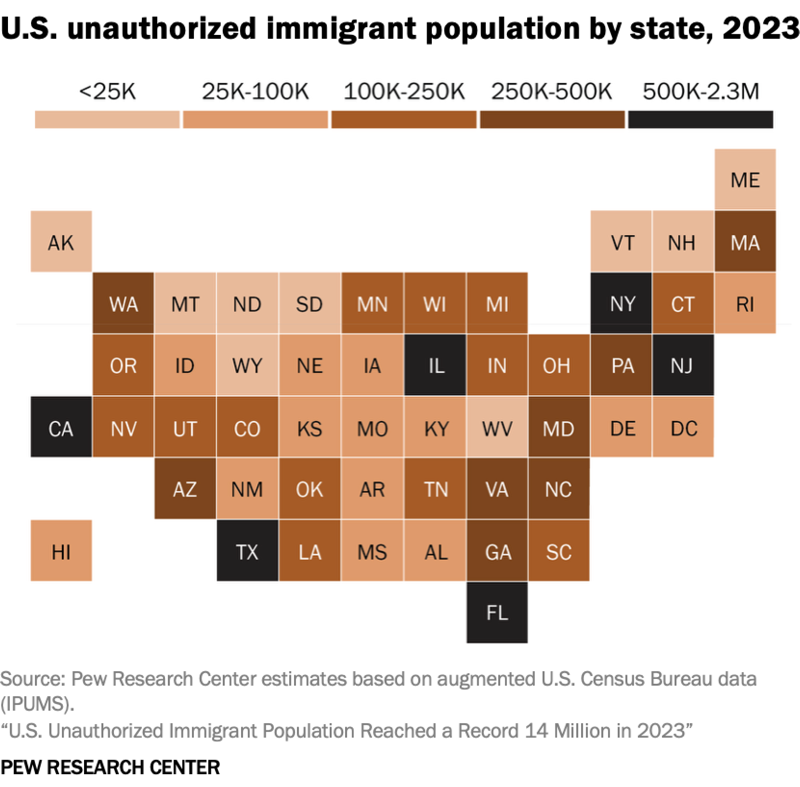
Well, not since we’ve opened the floodgates and let in the entire world.  A massive population increase combined with a group of people that consume much more in services than they contribute is killing us.  They’re actually making us poorer as each one crosses into the country.

Remember in math you can always raise per capita by lowering the number of capitas.

But, hey, they borrow money so they can create debt that produces profit for the banks, right?  Win-win, except for the natives footing the bill.

Isn’t enough that our economy is as stable as a knife fight between a drunken Whoopi Goldberg and a blindfolded Jimmy Kimmel in a bikini atop a butter-coated teeter-totter on top of WTC7?  Did we have to put the whole existence of humanity in the future in the balance, too?

The good news, I guess, is that Burry could be wrong.  He has been wrong before.  Like me, he’s predicted five of the last two recessions.  But there comes a point where we won’t be able to paper over the cracks in the structure with more printed money and hopium.

Yup, been there, done that.

When all this cracks, and it will because complexity plus leverage plus narrative equals fragility, the reset won’t be gentle.  It won’t be “buy the dip” and back to brunch.  It will be the kind of event that makes 2008 look like a mild correction and 1929 look like a Tuesday.

So where do I want to be when it happens?  I want to be listening to a twenty-something Margot Robbie describing what collateralized debt obligations are from a bubble bath.

And remember Wilder’s Rule of Humorous Collapse #6:  civilizations don’t fail because they run out of money; they fail because they run out of reality.

But at least I finally understand collateralized debt obligations (warning, mildly spicy language).

Disclaimer:  I am not Margot Robbie, though I would take a cameo to talk about philosophy in a movie from my hot tub while I smoke cigars, and am also not a professional anything, let alone your financial advisor, so please bang your head against the wall a dozen times before you take the advice of an unpaid Internet humorist.

The Poor Get Hit First

“Small aircraft have such a poor safety record.” – Iron Man

Who can drink five gallons of gasoline without getting sick?  Jerry can.

Today I was reading that Air India® was going to abandon overseas routes.

Why?

They’re too expensive, the Indian spokesdalit said as he mass-dialed grandmothers in Iowa to try to get them to send him unredeemed gift cards.

The truth is simpler and harsher: the flights aren’t too expensive.  They’re too expensive for Indians.

This might be the single best news to come out of the Israel-America-Iran War so far.  If the Iranians actually follow through on their threat to cut the undersea cables connecting Africa and India to the Internet, well, this would be the best war ever.

It’s like Christmas came early.  Has anything similar happened in the United States due to the war?

Absolutely.

Congratulations!  If you had stock in Spirit® Airlines™ you can now retire 10 years after you die! (as-found)

Spirit™ was the Greyhound Bus© of the skies, and that’s not a compliment unless you’re a fan of things that smell like the socks of a homeless junkie in San Francisco in June.  Spirit© was a bottom-feeder airline, chasing the clientele with the least money, the lowest standards, and the highest likelihood of assaulting a stewardess.

When fuel costs climbed and Spirit© couldn’t raise ticket prices without emptying the plane, they collapsed.  For anyone who actually has to show up at an airport, this is pure upside. Spirit© Airlines™ folding means the skies just got a little more civilized.

I fully expect this pattern to spread.

Remember that former U.S.A.I.D.-funded executive pulling down $272,000 a year?  If not I fear for your reading retention because the meme is right up above, dude.  Anyway, she’s now discovering she can’t land a $19-an-hour gig managing a spice store.

A spice store!  Is government just day care for women with college degrees?  Regardless, she’s now poor.  And that’s good, because the poor lose first, and the credentialed grifters who fed off them are sliding down the same chute right behind.

Let’s talk basics.  Even if the price of rice tripled, I wouldn’t notice much.  Rice is still cheap for me.  If I have to give up steak, I can just eat some rice, right?  But that’s not a universal truth.  If all a person in some third-world hellhole can afford is rice, and the price doubles, welcome back, world hunger.

What a lot of people missed is that world hunger was a solved problem.  People just didn’t starve anymore, except in Hollywood®, and that wasn’t real starvation, it was just skinny starlets mainlining Ozempic® and calling it a diet.

On time I tried an all-tequila diet.  Effective.  I lost two weeks.

Global food production had climbed so high that famine was basically extinct outside of war zones and socialist experiments.  Now the dominoes have started falling.

I expect revolutions popping up like mushrooms in Africa.  Hungry people turn into angry people, and angry people with AK-47s equals a revolution.  The sound of light machine-gun fire is already the national anthem in half the continent.  Outside of colonialism, Africa never really developed.  For whatever reason, they were incurious enough never to have invented the wheel on their own.

Africa is poor:  devastatingly so.  When Muhammad Ali came back from a boxing match in Zaire (a country that didn’t last as long as The Simpsons have been on Fox®), he famously said, “Thank God my granddaddy got on that boat.”

That was the 1970s, after the colonial governments had been tossed out.  It didn’t turn out well for Africa or Africans.  But world hunger had still been beaten in spite of African governments by 2010 or so.

My dad donated all my toys to the orphanage.  I was sad.  Then he said, “So you’ll have something to play with.”

Part of the blame lands squarely on aid.  Food aid to Africa teaches farmers not to farm.  Why bother when free grain shows up from the sky?  The mental link between planting, harvesting, and eating snaps.  To quote that genius South African political leader Julius Malema, “The food we eat in South Africa does not come from farms owned by white people, it comes from Shoprite©, Pick’n’Pay™ and Spar®.”

So yeah, they’ve got that going for them.

Hunger will stalk Africa hardest, but it won’t stop at the Sahara.  It will hit India and the lower-income stretches of Asia, too.  China should skate by because authoritarian efficiency has its uses and they have piles of cash.  The Middle East gets shakier.  Eastern Europe, too.  Sure, the Byelorussians had decades of cheap vodka, but at some point somebody’s going to want to eat those potatoes instead of drinking them.

Is angry vodka mean-spirited?

Then there’s Europe.  Decades of importing millions of people with zero marketable skills has created a permanent underclass that lives on benefits.  Cut those benefits even a little and watch the reaction.  England is already on the edge of something ugly.  Throw in batches of moslims who get even more murder-y when the free checks shrink, and the whole thing slides downhill fast.

The native populations who actually built those countries are the ones who will be expected to keep paying, right up until they can’t.  Back home, the same logic applies.

Inflation didn’t hit the hedge-fund guy first.  It hammered the guy stretching a paycheck from one tank of gas to the next.  Fast-food prices doubled, rent climbed, and the folks at the bottom discovered that “essential workers” are only essential until the margins get squeezed then they can be easily be replaced by illegals or H-1B Indians.

The poor lose first because they have no cushion, no skills that the market values, and no margin for error.  When times get tight, luxury items like $272,000 non-profit jobs disappear, and even the mid-level grift starts to evaporate.

This culling isn’t random.  Societies have always had layers.  The top layer produces, saves, and innovates.  The bottom layer consumes more than it creates.  When the pie stops growing, the bottom layer gets the smallest slice first.

The credentialed political-grifter class is about to get the same lesson.

Those laid-off U.S.A.I.D. types who spent decades flying first class on someone else’s dime are now competing for retail jobs in a world that no longer needs their PowerPoint© decks. Hey, I have an idea!

Since they love foreigners so much, maybe she can move to India and run spice shops if she can’t get the gig here.  Not sure they’ll clear $19 an hour in Mumbai, but at least she can stand at the door and greet customers with a cheerful:

“Season’s greetings.”


Delayed Reaction: Systems, Cash, and Shortages

“That’s the Lone Ranger®?  I thought he was here to fix the air conditioner.” – Predator 2

My friend’s wife asked him why he had Only Fans® on his phone.  Apparently “to contribute to your sister’s college tuition” was not the right answer.

One thing I’ve noticed in life is that there is always a delay between action and reaction.  If there weren’t a delay, we wouldn’t need watches to see why our spouses were still not ready even though we agreed we were leaving at 9am.

I digress.  One famous example is a household thermostat.  I think I’ve mentioned it before.  In my house, the air conditioner has exactly two settings.

On.

Off.

That’s it.  It doesn’t have a “make it colder faster” setting.  Or a “don’t overshoot and make the water condensing on the windows freeze” setting.  Nope.  Just on or off.

That alone is something that many adults don’t even recognize.  If it’s 80°F (3MPa) in the house, turning the thermostat down to 58°F (6km) won’t make it get any cooler any faster.  It will, however, keep the AC going long after The Mrs. has gone to get a blanket.

I got fired from my job as a locomotive engineer.  Boss asked me how many trains I’d derailed this year, and I told him, “I don’t know, boss, it’s hard to keep track.”

There are many other things like this as well.  Infestation er, immigration is one.  We go from “Well, that was a pleasant new Mexican restaurant,” to, “Can you speak a little more slowly and enunciate?  Or, better yet, get me someone that speaks English,” to “No, let’s not go to that part of town anymore because we don’t speak hindi and they poop in the street,” in only 30 years or so of unrelenting legal and illegal immigration.

Somewhere between 30 years and 3 hours, though, there’s the space where our economy moves in its cause-and-effect loop.

Part of the economy is entirely made up, that being stock prices and cash.  The dollar wouldn’t exist if we didn’t all agree it exists.  Where did it come from?  Well, we made it up.  We first said we’ll print pieces of paper that entitled you to a bit of gold, and when the “bit of gold” part became inconvenient we decided to skip the entire gold part and keep the “we’ll print” part.

That’s fictional.  And it always ends up the same through thousands of years of human history, but, yeah, sure.  This time it will be different.

If we’re lucky, we’ll get food as good as the Soviets had it.  Why, I hear it was so good that people would stand in line for days just for a single piece!

But there’s also a part of the economy that’s based in raw reality.  Rather than trading bits of paper for other bits of paper, or electrons on one storage system for electrons on another storage system, at some point people need to move the actual stuff that all the fictional stuff is tracking.

And that’s real.  I can’t eat a beef future that’s been cooked medium rare since it’s on a hard-drive in Pittsburgh or some place.  I have to wait until I have an actual ribeye in front of me.  Real things are those things that still exists when we stop believing in them.  Anyone here want to buy some francs or deutschmarks?  Thought not.

They don’t exist.

But they used to.  So, by definition, they were only as real as our belief.  What’s neat about imaginary things is you can make as many as you want as quickly as you want.  I think that since politicians spend our dollars with exactly that mindset, they lose the concept that they can’t just print eggs out of thin air.

I ordered a chicken and an egg from Amazon® today.  I’ll let you know.

No, we have a technology that turns insects into usable protein in the form of an egg, the product of thousands of years of human ingenuity.  It’s called a chicken.  And chickens are real, especially my neighbor’s rooster, who can’t seem to figure out that midnight isn’t dawn.

Real things, like the temperature in my house, are subject to actual physical laws.  And the reaction to an action is sometimes something that may take months or longer.  Let’s take the price of food.  When the price of fuel goes up, the price of fertilizer goes up, and the price of food goes up.

The typical reaction of a politician is to solve the problem by controlling the imaginary lever he controls:  spending more than they have.  Then the Federal Reserve™ uses the levers they control, namely cash supply and interest rates.  Interest rates are an imaginary thing that shows how much extra cash the most recent administration just spent.

But throughout all of this, we can’t imagine a steak.  We still need fertilizer to make the grass grow and diesel to harvest and move the hay, and a cow to eat the hay, and someone to kill and butcher the cow and then some way to get it to my house.

Why are pandas at home in San Francisco?  They’re vegetarians that refuse to breed.

None of that is imaginary, and is all where the physical world intrudes on the fantasy of finance.

And, just like cooling my house, all of this operates on a delay.  The oil is pumped from the ground.  The oil is then pumped into a tank.  It sits waiting for transport.  Then it’s transported to a refinery where it sits in a tank until its turned into diesel or gasoline and put in a tank.  And then it’s shipped to another tank where it sits until it’s put into a filling station tank.  Then it hits the final tank:  the fuel tank of the tractor or car where it will be transferred to the engine and, finally, burned to make useful energy.

At each of those steps there’s a buffer where the oil sits in a tank for some time.  That buffer is the lag in the system, the time between when a shortage starts at any part in the process.  As the buffer disappears, the shortage that cannot be papered over shows up at last.  About 20% of the finished gasoline in the United States is stored . . . in car and truck tanks.

And in six months or a year, we’ll all wonder why steak costs $73.37 a pound and silver $290 an ounce because those can’t be created by changing a computer entry.

I suppose it’s time to save money now for the future inflation crush.  I did tell The Mrs. that there was no need to set the temperature so cold on our air conditioner.  She told me?

“Not a fan.”

The Strait of Hormuz and the Domino Effect

“Let’s say this Twinkie™ represents the normal amount of psychokinetic energy in the New York area.  Based on this morning’s reading, it would be a Twinkie© thirty-five feet long, weighting approximately 600 pounds.” – Ghostbusters

Is it wrong of me that I want this as a t-shirt?

When I was younger, I was reading the book Liar’s Poker by Michael Lewis.

In the book, the author related the story of how he was on the trading desk when news of the Chernobyl reactor meltdown hit.  His co-worker, a seasoned trader who’d seen it all, looked at Lewis and said two words:

“Buy wheat.”

The reason was simple.  Ukraine was the Soviet Union’s biggest supplier of wheat.  Now, radioactive wheat would have sounded cool in the 1950s.  Imagine the cereal ads:  New Atomic Pops™: NOW FORTIFIED WITH GAMMA RAYS!

The seasoned trader, however, knew there was going to be a shortage of wheat on the world market since the RDA of uranium isotopes has been decreased under the Make America Healthy Again agenda rolled out.

But Chernobyl happened.  The consequences?  One event, one domino, and the price of bread halfway around the planet starts twitching like a tall tweaker on Tang™.  That’s how fast these things move when the stakes are real.

I’ve moved on to nuclear jokes because most of the chemistry jokes argon.  What, no reaction?

In a more serious world where consequences were to be a thing that actually happened, I’d bet on a huge economic tidal wave incoming from the current Israel-America-Iran War.  Ten to twenty percent of the world’s daily oil supply is stuck behind blockades.  To top it off, 14% of Qatar’s liquefied natural gas production is offline, and won’t be able to be repaired until 2029 or 2031.

Then, the Strait of Hormuz:  closing, re-opening, closing again like a game of “duck, duck, missile” has already tumbled a lot of dominos.

Right now, the Strait isn’t exactly a freeway.  Tankers are rerouting, insurance rates are through the roof, and every time someone blinks the flow sputters.  One day it’s open enough for a few supertankers to sneak through.  The next, it’s blocked again and prices expand like Madonna’s face after whatever it is she’s injecting into it.

Those first dominos are easy to spot, and they were the subject of a recent post.  Fertilizer production is down because natural gas is the key feedstock, so (domino falls) food prices are headed up.

Gasoline, jet fuel, and bunker fuel costs are up, so (domino falls) transport prices are up, too. Trucks, ships, planes, and everything that moves stuff from farm to factory to your grocery shelf gets more expensive.

Freight rates for everything from soybeans to sneakers start climbing.  Those are the obvious ones.

But dominos don’t stop at the first few if there are more in line.

I guess we know now who was holding the whole thing together.

Before the big inflation wave really crashes ashore, weird things start happening in the markets.  Gold is up on good news and down on bad news.  Same with silver.

Why?  Because these are assets (at least the paper versions that pretend to be gold and silver) that people can sell fast and clean to cover margin calls, and other ways that they’ve leveraged the market.  Each domino leads to other consequences.

What are the downstream consequences?  Political unrest?  Certainly.  We’ve seen it before.  We’re seeing it now.

When food prices spike, people in places that were already living on the edge don’t write polite letters to their congressman.  They take to the streets.  Empty bellies and expensive diesel have a way of turning into pitchforks and torches.

And what about a complete redo of the world economic stage?  Yeah, that’s a hell of a big Twinkie®, er domino.  But, it’s looking more likely every day.

Here’s the part that should keep you up at night if you’re the kind of person who still believes in fairy tales about “the system.”  In a world where almost any country can convert whatever Christmas wrapping paper they crank out of their printing presses into any other currency almost instantly, why does the world need the dollar?

I’ve been asking this question forever on this blog.

I have absolute certainty that the dollar is the same as a cryptocoin made by Algerian, Albanian, or Albigensian pirates:  it’s a meme.  It’s just a meme that everyone has bought into for 100 years or so.  If I can dump the Zimbabwe Zloty straight into Seychelles Shekels, well, no need for dollars as the go-between as I trade my diseased goats for your rotten cocoanuts.

I heard that the Pharaoh’s favorite cook was Gordon Ramesses.

No need at all.

Marco Rubio even let the cat out of the bag the other day when he said that in the future the United States wouldn’t be able to put sanctions on countries anymore because other countries wouldn’t be using the dollar very much.

Now that’s a huge domino!

It was going to happen.  There was no way the world was going to forever let the United States print dollars forever and have people send us stuff like oil from the Orient or gold from Germany or PEZ® from Paraguay while we shipped them electronic representations of paper money that was now just too expensive for us to bother to print.

We’ve seen this domino before.

I later found out he had a trap door, so it was just a stage he was going through.

A nation that ceases to be a nation and starts to become a financial entity is toast.  One example was Spain.  They pulled in all that New World gold, let their economy wither, and offshored the real work to places like the Netherlands because they could not ditch the Dutch.  For a while it looked like Spaniards were on top of the world.  Then the Indians who gold ran out, and the bills came due.

The final nail in the coffin of Spain, which had been declining for hundreds of years?

When it ceased to be a military power that anyone noticed.  The Spanish-American War was that moment for Spain.  In the end, I think the Spanish were tired of being Spain since it was so much work, and were more than happy for Great Britain to take the helm.

But that was then.  Now Great Britian looks more like Spain circa 1870.

The Royal Navy has more admirals (40) than total warships (25) and only six plausibly active surface warships.  Guess that Britannia shan’t be ruling the waves of anything larger than a hot tub anytime soon.

Most of the time, nothing happens.

Markets drift.  Politicians talk.  Central bankers print and pretend.  Then that domino hits, and it happens all at once.

One day the system is humming along on just-in-time deliveries and faith in the reserve currency.  The next day the Strait is blocked for real, fertilizer plants shut down, grocery shelves get spotty, and suddenly everyone remembers that energy isn’t optional and cold showers suck.  Energy is the blood in the veins of the whole machine.

When the price jumps, everything else has to adjust:  wages, rents, retirement plans, and government budgets.

The dominos don’t ask permission.

The United States had to wait for COVID, but China got it right off the bat.

And here’s the part nobody wants to say out loud:  the United States has been running on cheap energy and the dollar’s special status for eighty years.  Both of those props just got kicked.

Hard.  The reset isn’t coming in some distant future.  It has already started.

The only question is how many more dominos have to fall before everyone admits the board has been tipped and the Monopoly™ pieces are stuck in the Cheez-Whiz™ covered Rice Krispie® treats.

In the end, dominos don’t care.  They just fall.  One after another, faster and faster, until the structure is gone.  When the last domino drops, the only thing left is whatever you built that wasn’t made of paper and promises.

And sweet, nutritious, gamma rays!

Remember, Kim Jong Un and Dominos™ have a lot in common:  they can both make a crispy Hawaiian in less than thirty minutes.

Casualties Of War: Africa, A.I., India . . . And Europe?

“I had the titular role in Out of Africa.” – Upright Citizens Brigade

Will that work?  I have my droughts.

World economic systems are straining due to the current IAI (Israel, America, Iran) war.  One of the lessons learned from previous economic crises is that issues show up at the weak points first.  Back during the Arab Spring in 2011, people in the Arab world were revolting.

I mean rebelling.

One big driver was the inflation that had hit the area.  What caused the inflation?

Well, money printing in the United States due to the 2008 Great Recession had finally spread internationally to the Middle East.  Certainly, the Middle East is already as stable as a methed-up stripper ex-girlfriend whose rent-check just bounced, so adding vodka to the mix didn’t help.

Countries burned.

They overthrew their governments, and when they didn’t like the new ones, went and got the old ones back.  This was caused at least in part because the Arabs were hungry and food was too damn expensive.  Can’t farm the desert, so might as well blow the place up.

Which they did.

Once again, the Middle East is center of worldwide economic stress and it’s moving quickly across the world.

Bigfoot is confused with sasquatch, yeti never complains.

In Australia, they’re running out of something they call petrol.  If only they knew about gasoline!

In India, they’re running out of fertilizer so it will be difficult to line the streets with poo.

In Taiwan, soon enough they’ll be running low on helium, which is a byproduct of natural gas processing.

Helium?

Yeah, they need lots of helium to make computer chips so that you can make Internet cat pictures that are photorealistic plus I think they huff it a lot which is why they can’t pronounce “R”.  Regardless, here’s an A.I. cat for you:

But one place that will certainly be having difficulty is Africa.  Africa is the basketcase of the world.

Why? For starters, Africa imports 85% of its food.

85%.

85%.

Why? Farming is apparently too hard, and whenever they have a few white people farming and feeding Africa, black people decide they’ll take the magic farm and get rich.  Except they don’t. Lush, productive farms fall into disrepair, but, hey, the Africans who looted the place ate for a day.

Not only that, their governments are also basketcases.  In almost every country, the government requires copious amounts of foreign aid to get anything done.  I’d make more fun of them, but then I think about our budget deficit and go, “Oh, yeah, at least in America we know some payday lenders.”

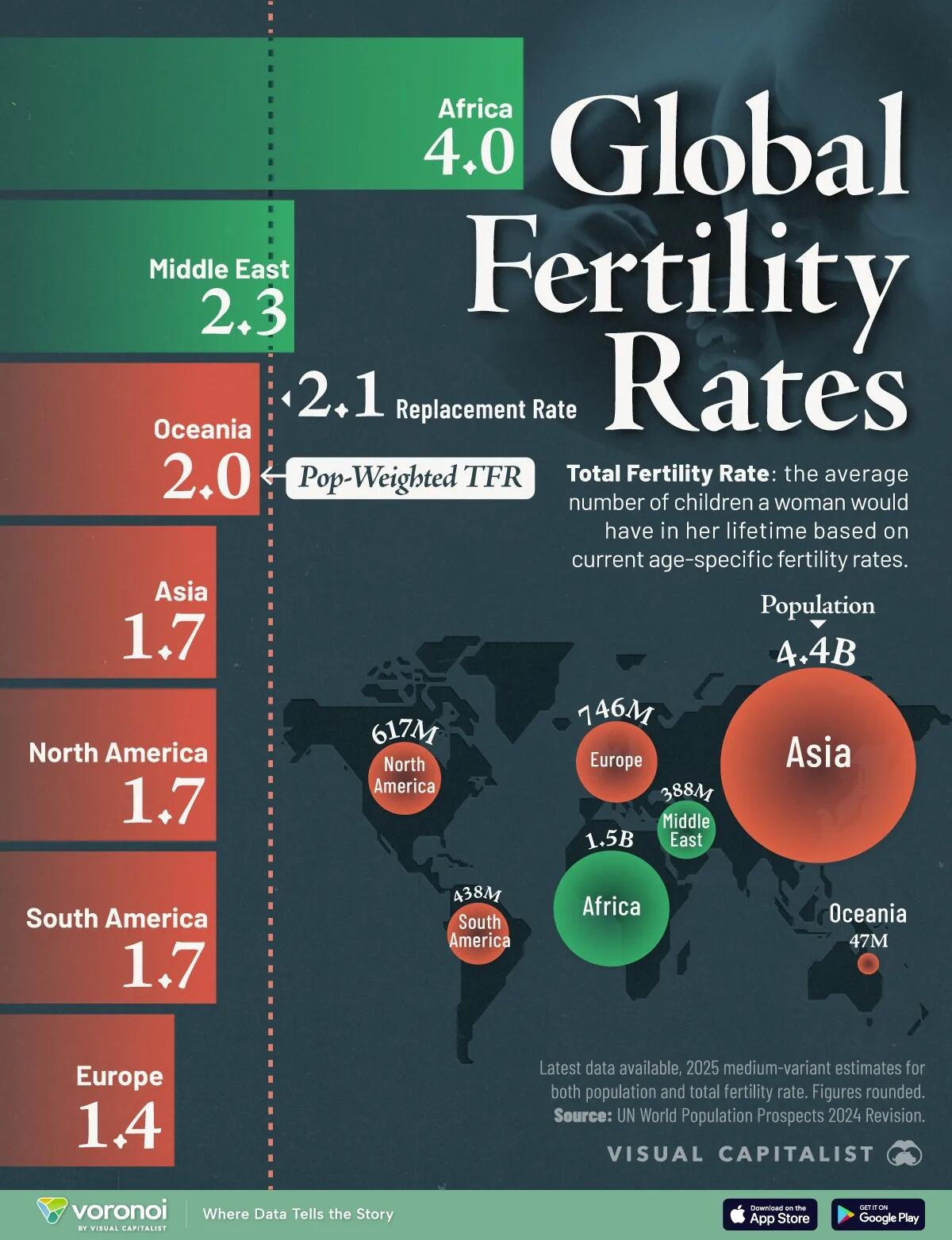
So, since they have to bring in food and can’t care for themselves in any way at all, at least they’re doing the responsible thing by keeping their wombs from being clown cars and not having hundreds of millions of children that they have no way to feed, right?

No. They’re turning their wombs into clown cars and having hundreds of millions of children that they have no way to feed.

And, of course, they’ll blame us.  In this case, they might be right.  We’ve taken a group of civilizations whose only actual contributions to the world are raw materials and AIDS and given them medicine and food.  Since the entire continent has been in super-fertile rabbit mode since forever (r/K biology –link below), what did they do with effectively unlimited food and a drastically reduced child mortality?

r/K Selection Theory, or Why Thanksgiving is Tense* (for some people)

Breed.

They’ve gone from a reasonable 10% of the population of the world when I was a kid to more than double that today, as the world population has doubled.  They double-doubled.  And they were starving and dying when I was a kid.

Regardless, it’s like someone turned on the “African-making machine” and left it on overnight.  For decades.  And, their population is projected to be some silly number like 40% of the world’s population by 2100.

(as-found)

But that will never happen.  Why?  Because a big crisis, like the one we’ll be seeing soon due to the IAI war, will simply remove the excess wealth that sends medicine and food down to Africa.  We all know what happens next:  the senseless deaths, the violence, the revolutions, the cannibalism.

Oh, wait, that’s Africa when things are going well.  Things will soon enough get much darker on the Dark Continent as the wealth spigot dries up.  I can’t imagine that Europe will continue to absorb them there, either, but then again I never thought the West would be committing collective cultural suicide like it is today.

Sadly, not AI or a horror movie. (as-found)

The IAI war isn’t some far-off desert dust-up that only affects oil futures and late-night cable news.  It’s a live-action stress test on every fragile supply chain we’ve built since the last big reset.  Oil tankers with $100,000,000 cargos reroute around the Red Sea like it’s a game of dodgeball with $3,000 drones.  Grain ships that used to feed half the planet now sit idle or pay pirate insurance that would make your mortgage look cheap.

Fertilizer plants in Europe and Asia that run on Middle Eastern natural gas?

Yeah, those are suddenly “strategic assets” instead of just boring factories.  The ripple hits the weak points first, just like it always does.  Australia’s petrol shortages aren’t because they suddenly forgot how to drill and can’t figure out how to spell “gasoline” it’s because the tankers that used to show up like clockwork are now playing naval chicken in the Strait of Hormuz.

India’s fertilizer crunch?  More natural gas.

And Taiwan’s helium?  That’s not some niche nerd problem.  Helium keeps the fabs running so your phone can update and your cat video can render in 8K.  No helium, no chips.

No chips, no economy that looks even vaguely modern.

It’s all connected, and the connections are fraying faster than a cheap suit at my uncle’s funeral.  Africa just happens to be the thinnest thread on the whole sweater.  They don’t grow enough food to feed themselves on a good day.  They don’t manufacture much beyond raw materials that richer countries turn into actual products.  Their governments run on foreign aid the way a junkie runs on his next fix.

And while the rest of the world was busy printing money and inventing new genders, Africa was busy doing what r-selected populations do best when you hand them calories and medicine: exploding in numbers.

The math is brutal and it doesn’t care about feelings.  When the aid stops, when the container ships prioritize Europe and Asia over charity runs to the Sahel, when the NGOs pack up because the insurance premiums are higher than their budgets, the party ends.  Not with a polite “thank you for the fish,” but with the kind of scenes that make Arab Spring look like a polite disagreement at a PTA meeting.

Who has two thumbs and a poor grasp of visual humor?  This guy. (as-found)

We helped create the conditions.  Not out of malice, but out of the same soft-hearted, soft-headed Western instinct that says “we have extra, so let’s share.”

We shared vaccines.

We shared grain.

All this while infant mortality plummeted and fertility stayed at levels that would make a rabbit blush.

The result?

The bill is coming due, and the IAI war is just the guy in the suit who shows up to repossess the furniture.  Europe already has its hands full with the last wave.  America is staring at its own debt mountain and wondering why the grocery bill looks like a car payment.  Australia and India and Taiwan are discovering that “just-in-time” supply chains work great until the “just-in-time” part becomes “just-in-case the war lasts another six months.”

The weak points crack.

Then the stronger ones start groaning.

Then the whole system starts looking for someone to blame.

The Dark Continent is about to get darker.  Revolutions, famines, the whole greatest-hits album of human misery played on repeat.

(as-found)

And the rest of the world?  We’ll be too busy trying to keep our own lights on to send another aid convoy.  And I worry the most about rebellion here.  Especially among the cows.

I can’t abide a mootiny.

Iran So Far Away: Million-Dollar Bombs Versus $3,000 Drones and Day 23 of the 4 Day Operation to Liberate Iran

“This film is only for Madagascar and Iran, neither of which accept American copyright law.” – Bowfinger

I’ve heard that if a golf ball lands on a house, it’s scored as a home-in-one. (all memes as-found)

If you were sleeping under a rock (not the iRaq©, which has been officially purchased by Apple®) The United States and Israel dropped a surprise airstrike package on Iran like it was Amazon Prime® Day for regime change.

Supreme Leader Khamenei? Gone.

Nuclear sites? Smoking craters.

Military bases? Swiss cheese.

Iran fired back with hundreds of drones and ballistic missiles at Israel and pretty much every country in the neighborhood from Bahrain to Qatar. I’m especially offended by Qatar, because if a word has a “Q” in it, it should have a “U” as well. Qatar. That’s just wrong, man. It bothers me enough that I think they should kick Qatar out of the UN, but the argument against that is that it’s an unnecessary Qatar solo.

Vlad the Impaler’s favorite joke starts this way: “So this bar goes into this guy…”

Back to the war. Er, special military operation. It’s still early in the game, but in true 2020s fashion, the winners so far seem to be no one except the guys selling missile insurance and the printers at the Federal Reserve©.

Are we done yet? No, we’re not. So, let’s look at The Bad and The Good, at least so far.

The Bad

Energy prices are exploding upward faster than a Houthi suicide bomber on Red Bull®.

Oil is headed toward levels so high I won’t be able to bathe in it anymore, feeling the luxury of 10-W40 as it coats every inch of my skin. I remember when crude oil was cheap enough I could afford to fill my pool with it.

Sadly, those days are gone. Brent crude (a proxy for crude oil that shows up on a ship) is up over 40 percent since the strikes started. Analysts are whispering $110-plus if they have bought futures, and I’ve heard that it might go higher, still.

High energy prices act like an immediate tax increase on everything except paper straws in plastic wrappers in California. Periodically purchased Pringles®? Pricier. Pickles? Pricier. Plaster of Paris? Pricey. PEZ® is even presently a pretty penny purchase.

Oh, wait, pennies are too expensive to make.

I think King Arthur would be interested in this, since at either end they’d need a place to park, which would mean two places called Camelot.

Meanwhile the United States is burning through billions of dollars of precision munitions that take years to manufacture just to turn perfectly good Iranian concrete into expensive Iranian gravel. Concrete costs a few hundred bucks per cubic yard and you can pour a bunch in an afternoon if there are enough Mexicans around.

Our missiles? Millions per missile and the supply line is months to years for even the ones that keep missing the Iranian missiles.

I make it a point never to scream into a colander, since it might strain my voice.

Iran, on the other hand, is lobbing $3,000 drones that somehow managed to damage a $14 billion natural gas facility that took a decade to design and build. We brought a sledgehammer made of gold. They bring the fly swatter made of spite after decades of sanctions required that they work with nothing.

The policy is deeply unpopular with the American public. Polls show most people want nothing to do with this adventure except the tar and feather merchants who are prepping for higher tar prices, but think that feathers may come down enough so they can make a profit.

That face you make when you swap out something 80% of the American public are for versus something that 16% are for.

Iran is sucking all the oxygen out of the room and taking the focus off domestic issues like making beer cheaper or figuring out how to get illegal aliens and H-1B visa holders to stop turning the United States into either Guatemala or Mumbai.

Instead? We are arguing about whether blowing up another desert dictatorship is worth another trillion we do not have, which is gonna go great at the polls come November.

The Good

Every cloud has a silver lining, even when the cloud is radioactive fallout.

This mess is making my prediction (it’s in writing here on the site, but I’m too lazy to look it up) that the national debt doubles every eight years look less like a prediction and more like a weather forecast. In truth, it is that, since I can do math and see that, yeah, every 8 years the national debt has doubled since 1973.

The bright side of this debt? At least half of us get shiny new dollars to spend every eight years instead of those boring old dollars. Inflation is just another word for free money!

Last year, I could walk into the store with $100 and walk out with 50 pounds of ribeye. Not now. They installed security cameras.

I have been rough on Qatar so far, but one citizen from that nation may be of use in regime change in Iran due to the dire straits of the current situation. They should check out Qatar George, he knows all the Kurds.

If we play our cards right, Iran may follow through on its threats to take India, Africa, and the Pakistanis off the Internet, and remove them from all electronic communications. Hey, that is a public service more useful than anything Congress has done in years. No more spam scam calls from overseas call centers.

As a bonus, Pakistan has already hinted that since it cannot hit the United States directly it will nuke India instead if things get spicy. So, what exactly is the downside of that?

India would probably try to scam free Internet from Australia, which would come from a LAN down under.

Another bright spot is that we now know that Chinese air defense systems are as effective as barbells on a space station. Iran uses plenty of Beijing’s hardware and it did not exactly shine against American and Israeli jets. People in Taiwan should sleep easier tonight. If the Chinese who would invade them are equipped with the same made-in-China wonders, the invasion fleet might sink when it hits the water.

Shipping is getting a makeover too. Many tankers are now taking the long way around Africa instead of the Strait of Hormuz. This will be nice because it will allow cheese to age properly on the extra weeks at sea. Real cheddar needs time, and is not a rush job. The downside? Somalian pirates will not be able to steal and hijack as much cargo, so they will be forced to open more Learing Centers®.

Melons have traditional weddings. They cantaloupe.

Finally, what happens if the A.I. boom collapses because the market tanks and liquidity dries up? This is perfect. The Federal Reserve© could print even more money to paper it over. Then they could roll out trackable Central Bank Digital Currency to replace the failed dollar. Who could lose with that? My every purchase monitored for wrongthink while the dollar dies like a good idea on Facebook®.

It’s a win-win for the surveillance state, we’re all poor and can’t have privacy!

The real bright spot after all this is that I did find out the difference between Qatar and Abu Dhabi. In Qatar, watching The Flintstones is not allowed, but the people of Abu Dhabi do.

The Oil Shock of 2026: Pulp Fiction Economics

“Oh, man, I shot Marvin in the face.” – Pulp Fiction

Trump outlawed the selling of shredded cheese.  He wants to make America grate again. (all memes as-found)

Am I the only one who feels like the global economy just got Tarantino’d?

One minute it’s business as usual, the next there’s blood on the walls, or in this case, oil not flowing through the pipes.  We’re staring down the barrel of an oil shock that makes the 1970s look like a minor hiccup.

The Strait of Hormuz?

It was effectively slammed shut by the Iranians amid the escalating mess with the U.S. and Israel.  That narrow choke point between Iran and Oman used to carry about 20 million barrels per day (liters per lightyear, for you Europeans) of crude and products.

That’s roughly 20% of the world’s daily oil consumption as of early 2026. Or I should say carried, past tense.

Now?  Zilch.  Null.  Nada.  Empty set.  Nothing.

The taps are off, and we’re talking a sudden removal of around 15-20 million barrels per day (Coulombs per gram) from the global market, depending on how you slice the crude from the refined stuff.

The reason that Saudi Arabia has so much money isn’t because oil is expensive, but because they don’t let women spend money.

Oil prices are set at the margin.

It’s not just about the total supply the price is set by that last barrel that tips the scale.  The world was already humming along at with supply keeping pace thanks to OPEC cuts, U.S. fracking miracles, and a dash of South American output from places like Guyana and Brazil, which apparently produce more than just horrific tropical diseases.

But shutting down 15 million barrels overnight?

That’s not a dip; that’s a crater.  Prices don’t nudge up politely, they spike like a heart rate after too much coffee when this level of supply is cut.  Oil isn’t just black gold for the gas tank of the Wildertruck®:  it’s woven into every thread of modern life like pop culture.

When Fonzie’s motorcycle breaks does he call Triple-Ayyyy?

Plastics? Oil.

Transport? Trucks, ships, planes all guzzle it.

Heating an East Coast home in winter? Oil or derivatives.

Lubrication for machines that make everything from iPhones® to insulin?  Yep, oil again.

When the price jumps it acts like a stealth tax on every single human activity that involves moving atoms around.  We’ve already seen Brent crude north of $120 a barrel, with whispers of $150 if this drags on.  Groceries will cost more because trucks burn fuel.  Manufacturing grinds slower because inputs skyrocket.  Even that Amazon® package shows up later and at a higher price.

Historically, high energy prices have been a tyrant’s best friend.  Cheap energy?  That’s freedom fuel.  It lets people build, innovate, travel, and produce wealth without begging the government for handouts.  Low prices mean less dependence on central planners I can heat my home, drive to work, and fill my tank without the state holding the reins.

But jack up those prices?  Wealth creation stalls.  People cut back on extras, then necessities. Factories idle.  Jobs vanish.  Suddenly, the masses are clamoring for subsidies, price controls, “emergency” aid.

I found out if I replace my coffee with green tea I lose 74% of my enjoyment of life.

Governments love that.  It’s their cue to step in as savior, doling out favors while tightening the leash.  Look at the 1970s:  oil shocks led to inflation, stagflation, and a bigger welfare state.

We’re just at the front end of this beast.  The 1970s shocks were bad.  Prices quadrupled, lines at pumps, recessions, and worst of all, Jimmy Carter.

But back then, the world consumed only 60 million barrels per day (meters per kilogram). Now it’s almost twice that, economies are more interconnected, and just-in-time supply chains mean there’s no inventory to pick up the slack.

The Strait of Hormuz is (was) one of the most strategic spots on the planet. Easiest way to move oil?  Pipelines, if you’ve got ‘em.  Second?  Water.  It’s more convenient for collection if you use tankers rather than just pouring it on the water.  And Hormuz was the biggest funnel: about 20% of global consumption squeezed through that 21-mile-wide gap at its narrowest.  Talk about a speed zone.

I don’t understand time zones.  In Europe it’s today, in Australia, it’s tomorrow, and in Iran it’s 832 A.D.

That oil won’t stay stuck forever my 50-50 guess is two months.  After that, either cooler heads prevail and it reopens, or the Saudis and others pivot hard.  They’ve got some bypass pipelines already but capacity is limited.  Building more is feasible, but we’re talking billions and years, not weeks.  In the meantime, producers like Saudi, Iraq, Kuwait are stuffing oil into storage tanks that are filling up fast.

Economic cracks are showing everywhere.  Last week, I mentioned the private credit markets imploding with funds like BlackRock® limiting redemptions because liquidity’s drying up.

Now add this oil shock?

A.I. is already sucking up capital like a vacuum on steroids.  But cash for everything else has been scarce.  Billions in private debt funds are wobbling because borrowers can’t refinance at these rates, and higher energy costs will be the final nail for some.

Expect more gates slamming shut, more “sorry, your money’s stuck here” letters.

Gasoline prices are up here in the U.S., sure.  Last I heard we were headed to $4.50 a gallon as an average, while pushing $6 in California.  Compared to the rest of the world, this is a sweet spot.  Thanks to fracking, the U.S. produces about two-thirds of the crude we consume, with most imports coming from Mexico and Canada.

This hurts us, but tis but a flesh wound compared to the gut punch for Europe and China.

A question from Iran:  “Is it okay to sleep with your third cousin?  I mean, if you’ve stopped sleeping with the other two?”

Europe?  They’re getting hammered.  They were already weaning off Russian oil post-Ukraine, now Middle East flows disrupted?  Natural gas prices are spiking, factories are idling in Germany, protests in France, well, there are always protests in France.

Will this force negotiations with Russia over Ukraine?  Absolutely possible.  “Hey, Vlad, how about we ease sanctions if you pump more to us and we’ll rough up the Ukrainian midget?”

China’s in the same boat.  70% of their oil imports are from the Gulf, but are now rerouting around Africa at huge cost.

Where does this end?

Short term: pain.

Recessions in Europe, a slowdown in Asia, inflation here at home.

Long term: resets, and the world that we live in now becomes a dream.

I once had a dream I married an invisible woman.  Not sure what I saw in her.  Our kids were nothing to look at, either.

More drilling everywhere feasible, and maybe a rethink on global dependencies and who uses what currency.  But don’t count on smooth sailing.  Shocks like this expose fragilities, and in the Fourth Turning crisis, they’ll accelerate change.

Cheap energy’s over for now.

This oil shock isn’t just economic:  it’s existential.

Things flow smoothly.  Until they don’t.

Just ask Marvin.

Bubbles Within Bubbles Within Bubbles

“I had it all, even the glass dishes with tiny bubbles and imperfections.” – Fight Club

I wonder if Sean Connery is in 00 Heaven?

As we approach the end of 2025, the U.S. economy resembles a science-fair volcano built on baking soda, hype, construction paper, speculation, bubblegum, vinegar, and greed.  I’ve written about this before, and, well, it’s so big it keeps dragging me back in.

The rot is birthed by several mothers:   cheap cash, the need to put it somewhere, and a new technology whose benefits are (at this point) opaque at best.  Let’s put down that you already know “money printer goes brrrrrrrr” so we’ll go back to A.I.

Again.

At the center of this precarious structure is what everyone who isn’t high on their own supply knows is an A.I. bubble.  Large numbers of people (including me) recognized the housing bubble for what it was, but it kept on going because momentum is one hell of a master.

Another case of car-pole-tunnel syndrome.

A.I. has inflated stock prices, diverted resources like a drunk wine aunt at Lululemon®, and now has spawned secondary bubbles in hardware and infrastructure.

I’ve touched on this in previous posts, noting how projected AI:

  • growth outpaces any reasonably available power supplies, present and near future,
  • revenue projections fall short of the grandiose promises, and
  • the full realization of AI’s (theoretical) potential could unleash economic distortions on a scale we’ve rarely seen in human history.

But bubbles don’t exist in isolation.  Bubbles multiply, feeding off each other until the inevitable pop unwinds it all.  When the Great Housing Bubble burst, for example, sales of sulfuric acid went to zero for months.  How are they related?  Turns out the Great Housing Bubble was fed off the same credit structure that paid for basic chemicals.

And for all this time I thought it was because sulfuric acid was just like anything Chuck Schumer says:  baseless and corrosive.

One time in chemistry they asked me to write 1,000 words on acid.  I couldn’t finish it because my pen turned into a giraffe and the paper melted.

Today, we’re seeing this play out in real time, with AI-driven demand ripping into consumer electronics and beyond, all while broader market indicators flash warning signs of decline.

The AI stock bubble has birthed an investment bubble in virtually all computer hardware. Demand for specialized components has skyrocketed, pulling supply away from consumer markets and inflating prices across the board.

  • RAM prices surged 172% year-over-year, with some guessing they’ll double in 2026,
  • SSD prices per TB are climbing with AI and cloud providers tightening supply chains.
  • Motherboards shortages are emerging as manufacturers prioritize AI server builds over consumer PCs, with one producer having sold out for 2026 already.

This shift isn’t just raising costs for gamers and everyday users; it’s distorting global supply chains, creating a feedback loop where AI hype justifies more investment, which in turn inflates hardware bubbles.

The statistics say cows kill more people than sharks, but I’m surprised that cows are killing any sharks.

What happens when the tide rolls out?  With the underlying economy already showing recessionary cracks, the fallout will almost certainly be severe.

Let’s start with the AI bubble itself:   valuations in the sector have soared, with companies like Nvidia™ and others commanding trillions in market cap based largely on future promises rather than current realities.  The S&P 500’s concentration in a handful of AI-related stocks reached 30% by late 2025, the highest in decades. Nvidia© (for example) doubled in price from April.

Doubled.

Skepticism is now mounting.

All this is unfolding against a backdrop of broader economic weakness that A.I. papered over.

Oil prices are declining despite ongoing disruptions from wars in Ukraine and tensions with Iran.  Price levels are back into COVID 2021 levels.  This drop persists amid supply risks: Ukrainian drone strikes on Russian refineries and U.S. sanctions on Venezuelan tankers should theoretically support prices, yet oversupply fears dominate.

My dad once asked me, “Son, if you have a hot blonde rubbing oil on a hot brunette, what do you get?”  I answered, “I don’t know, Pop.”  “Your camera, son, your camera.” (as found)

If peace breaks out in Ukraine, bringing Russian oil fully back online, prices could plummet 30%-50% as sanctions lift and exports surge.  Add in a resolution with Iran, and the glut could be historic—you might as well use oil for bubble baths.  The IEA already forecasts surpluses building into 2026.

This is a signal of weakening industrial activity worldwide, not resilience.

Domestic indicators paint a similar picture. Unemployment among native-born Americans ticked up to 4.7% in July 2025 from 4.5% a year prior, with the overall rate holding at 4.6% in November.

Wages? They’re stagnant at best.

The K-shaped economy persists:  high-wage earners see modest gains, but lower-income workers face stagnation, widening inequality.

So, what portends when the A.I. Bubble bursts?

History offers grim lessons: the Dotcom crash wiped out trillions and triggered a recession and the economic response to that caused he Great Recession.  An A.I. pop could be worse, given its entanglement with hardware and infrastructure.  It doesn’t help that it is spawned, in part, by the loose-money policies of the post-COVID world.  If I’m making an SAT question, Dotcom is to The Great Recession as COVID is to ___________.

  1. The A.I. Bubble
  2. A giant PEZ® dispenser filled with plutonium pellets
  3. Greta Thunberg
  4. The Black Studies Department at Harvard®

He then arrested me for assault with sandpaper.  He didn’t accept the excuse that I’d only roughed the guy up a bit.

Consequences of it popping?

  • Investment in data centers and chips dry up, leading to layoffs of all those H-1Bs in San Fran and cratering the tech manufacturing here and in many nations around the world.
  • Deflation hits: hardware prices would crash as overcapacity floods the market, but not before bankrupting suppliers who bet big on eternal demand.
  • Dogs and cats, living together.
  • With the economy already teetering: slow job growth, wage pressures, and oil signaling demand weakness, the rest are downstream consequences.
  • Consumer spending, which has propped up GDP, falters as confidence erodes and debt defaults rise.
  • Income inequality worsens because banks and Wall Street firms cannot be allowed to fail.

If this capital misallocation is as bad as some of the graphs I’ve seen, this will be the singular economic event of the lifetime of anyone alive.  There is a reason that I picked 2032 as the central pivot point of when Civil War 2.0 would show up and it was the underlying financial mismanagement of the United States.  A.I.?  It’s not the gasoline in the room, it’s the spark.

It would have been something.

I made this and even though I replaced it with a more fitting meme up above, I figured you’d want to see it.

In the end, bubbles always burst because they’re built out of illusions and fed by poor allocations of capital.  The A.I. frenzy has masked underlying frailties that would have led to a very major recession during Biden’s term, but the bubble continued to get bigger.

As oil slides, jobs stall, and hardware hype peaks, the reckoning looms.  And that science-fair volcano?  I hope I don’t drop it on my foot.

I’ll Krakatoa.

The usual.  Not investment advice, do your own research, etc., etc..  I’m not a priest or an exorcist though I played one on TV.  If you read this and make meaningful decisions based on it you need to take a step back and reconsider your life.

Is Everything Fake?

“Happy premise number three:  even though I feel like I might ignite, I probably won’t.” – Bowfinger

My ex-wife was more versatile than carbon:  she could form more than four bonds at the same time.

The economy recently feels to me like a(nother) bad sequel to The Matrix:  smoke, mirrors, simulated steaks and guys pretending to be girls directing everything.

It made me think of Bowfinger, a 1999 Steve Martin flick.  Steve Martin plays the titular producer, Bobby Bowfinger.  His character drops this gem while trying to scam a crew into working on his latest film:

“That’s after gross net deduction profit percentage deferment ten percent of the nut. Cash? Every movie costs $2,184.”

The rest, it’s like Hollywood?  Fake sets, fake stars, fake everything.  Our economy, I think, has officially hit 8.9 out of 10 on the Bowfinger scale.

It’s a façade of trillions propped on fraud, fiat, and fairy dust.  The evidence is everywhere:  from federal slush funds laundering cash to “charities” that fund political hit squads, to Somali scams siphoning billions for terrorist toys, to the AI hype train where Nvidia’s® GPUs vanish into vaporware voids.  It makes me ask one question:

Have we peaked at “peak fake”?

Genghis Khan stayed in shape during conquests by making sure he hit his steppe goal each day.

Start with the government’s golden shower of “aid.”  In the last few months, we’ve watched as the public found out that billions flood from Uncle Sam’s coffers to “nonprofits” and foundations that, surprise, boomerang right back to commentators, politicians, and partisan ops that give the opinions to the Democratically-appointed judges to make sure that their cash lifeline is safe from scrutiny.  Sibling marriages are less incestuous.

Remember the post-election blitz Democratic blitz?  A Free Press® investigation uncovered a $27 billion rush-out-the-door bonanza, with $20B hitting eight leftist nonprofits faster than Kamala could say “unbourboned by what has been.”

It would be one thing if these were soup kitchens serving the starving, but these are slush funds for radical agendas, exploiting tax dollars to bankroll everything from election meddling to “community organizing” that looks suspiciously like astroturf Antifa® activism.  It’s like if United Way™ funded Trotsky but funded by the Czar.

Robespierre, Trotsky, and Pol Pot walk into a bar.  There were no survivors.

And USAID?  They shelled $44K to Politico™ for subscriptions chump change, but emblematic of how federal funds feather media nests.  Nonprofits are NGO scams, funneling billions to progressive power grabs, sometimes even recycling it from overseas.  Ukraine is the country that just keeps giving.  I mean, if you’re a Democratic politician.

House hearings exposed how these networks weaponize your taxes for ideological insurgency.  You’re paying for the people who keep bleating:  “muh democracy.”  This is Bowfinger budgeting: real costs hidden, profits pocketed by players who script the narrative.

Speaking of Minnesota Somalisota . . . (otherwise known as Mogadishu on the Mississippi), the relentless spotlight has turned from Indian invaders to Somalian swindlers.  The “Feeding Our Future” fraud, where Somali networks allegedly pilfered over $250M from child nutrition programs during COVID.  That’s bad enough, but state audits have found broader scams at over $1 billion in taxpayer theft, with funds funneled overseas to anti-American terrorists.

Terrorist training:  “C-4 yourself.”

I mean, not just anti-American Democrats, but actual “was given a dowry of AK-47s, goats, and C-4” dirka-dirka terrorists.

This isn’t petty theft:  this is peak fake philanthropy that rivals the Clinton Foundation.  “Charities” as cover for African clan cash grabs, shipping your dollars to fund foes abroad.  If you watch videos of interviews with these people, they have no connection philosophically to the United States, wish to live under sharia law, don’t speak English, and don’t have jobs, other than stealing.  I guess the only saving grace is that at least these “charities” didn’t pay for Chelsea Clinton’s wedding and the terrorists are fine with using standard NATO rounds.

The next fake?  I’ve mentioned it again and again, Nvidia®.

It’s not so much Nvidia™ as the hype around A.I.  Nvidia® seems to (mostly) be just selling computer chips.  Mostly.  Their stock has been exploding upward like a Somalian with a grenade, doubling since April, with a market capitalization flirting with $4 trillion.

Who is buying all those GPUs, and for what?  Is it kids playing Fortnite®?

Ed Zitron, tech industry writer, estimates Big Tech needs $2T in AI revenue by 2030 just to justify their A.I. spending binge, or it’s going to lead to a fall that will leave a mark.  We’re back to Wilder’s A.I. Paradox:  if A.I. is valuable enough to be worth the money that’s being invested in it, it will wreck the economy with a wave of unemployment.  If it’s not, it’ll wreck the economy because it failed.

Yay!  It’s almost like we don’t have a choice!

My quantum computer wasn’t working, so tech support told me to turn it on and off at the same time.

It’s a lot like the French having a military:  if they fight, they lose, and if they run, they lose.

Who is buying this stuff?  The usual suspects: OpenAI®, Microsoft™, Oracle©, Amazon™, and Google©.  As we’ve shown here before, this investment simply doesn’t have the infrastructure like electricity, PEZ®, or clean water production to support it even if they could build all that stuff.  It smells like tulips in the Dutch Republic back around 1637.

Me?  I think it’s entirely possible that we’re building a multi-trillion-dollar computer that might wreck our economy if it works.  And it might wreck the economy if it doesn’t.

So, is this peak fake?

We’ve got governments gifting billions to grifters on an endless cash spin-cycle.  We’ve got immigrants importing scams and exporting cash to jihadi Jamal in Jowhar.  Also, we have A.I. alchemists turning silicon into massive debts that might be decadal mistakes.

If it was just that, yeah, it might all work out.  But there’s this:  the economy is a house of cards built on counterfeit confidence:  $36 trillion in fiat debt, infinite inflation, and innovations that might wreck everything if they don’t become a robotic overlord.  Is it any wonder that the smallest pebble dropped onto this slope might cause a landslide?

How much dirt is in a six foot deep, three foot diameter hole?  None.  It’s a hole.

Fake fails eventually, but often lasts longer than almost anyone would believe during inertia.

Will we reset?  I think that’s almost certain.  When will we reset?

That I can’t tell.  As long as everyone agrees that the market is up, the market is up.  But Wendy’s™ is getting ready to close 5% of its restaurants because the business is so great.  I think the lower end of the income spectrum has thrown in the towel.

“A Dave’s Single™?  What, do I look like a Rockefeller?”

Going back to The Matrix:  “You know, I know this steak Dave’s Single® doesn’t exist.  I know that when I put it in my mouth, the Matrix is telling my brain that it is juicy and delicious.  After nine years, you know what I realize?  Ignorance is bliss.”

Ignorance, bliss?  What do those words even mean?  In other news, I’m in a great mood!

Disclaimer:  This isn’t investment advice, this is an Internet humor column.  You might want to try those little cartoons they had in Bazooka Joe® gum for better advice on timing and market direction than I could give you.  I don’t own any positions in any stock mentioned in this post, and I also do not own (much) real estate on the Moon, though I was sold a 1/10th share in some bridge in New York by an Albanian.