Life Is Hard For A Reason. A Good Reason. Plus Hot Chicks.

“Life’s short and hard like a bodybuilding elf.” – Bloodhound Gang

Regardless, the people at his funeral will be called Paul-bearers.

I bought the book Dune by Frank Herbert when I was a kid.  I still recall buying it as it was on one of the monthly trips we took to the book store when we ventured off of Mount Wilder.  Ma Wilder was horribly indulgent when it came to books or other healthy creative outlets, like model kits.  Books had an unlimited budget around the house, and she never particularly cared which books, as long as I was reading them.  As such, at two or three novels a week from age 10 to 16, I read a lot.

I still do.

Dune was one of those.  I read it before I started driving.  I remember reading it in the time after finishing mowing Grandma Wilder’s lawn and before I was picked on a beautiful summer day decades ago.  One thing that struck me is the description in the book of the planet Salusa Secundus.  As a kid I mentally pronounced it “Salsa” Secundus, and, well, it is a pretty spicy planet.

I was told to bring an extra jar of liquid cheese, in queso-emergency.

In Herbert’s description, Salusa Secundus was a hell world, horrible weather, murderous beasts, extreme temperatures, awful terrain.  It was also the Emperor’s prison where he tossed away the worst criminals of his interstellar empire.  “ . . . the mortality rate among new prisoners is higher than sixty percent.”

Yet, here was where the Emperor got his fanatical and tough warriors, the feared Hardeharhar.  Oops, different book.  I mean the Sardaukar®.

Why there?  Well, if you could survive there, you could survive on any planet that a man could live on.  And if you could make it though the gauntlet of prisoners trying to kill you, congratulations, you survived the initiation process.

The guards at Big Ben in London look tired!  I guess they’re working around the clock.

The idea isn’t a new one.  The Spartans had a similar story, as retold by Plutarch, who, despite his name, was not Mickey Mouse’s™ dog:

Another boy . . . when some of his companions had stolen a young fox and delivered it to him . . . hid it under his gown; and though the angry little beast bit through his side to his very guts, he endured it quietly, that he might not be discovered.  When the searchers were gone . . . [his friends] chid him roundly, saying, ‘It had been better to produce the fox, than thus to conceal him by losing your own life.’  ‘No, no!’ said he, smiling, ‘it is better to die than to be detected in a base attempt at theft.’

Our teacher told us this story when I was in second grade.  Yes.  They told it in a somewhat different variation, but they were telling it to seven-year-olds.  No trigger warning.  No safe space.  Just a story about a kid who was so tough that he’d let a fox eat his intestines rather than show weakness.

I think I have an idea where Herbert took his inspiration for the Hardeharhar from.

But at the Best Buy© in Athens you can get advice from the Greek Squad©.

This is a story that resonates, and the deeper it resonates the truer it is.  We don’t become strong by being bathed in rose water and sleeping on satin sheets and eating our fill of lemon-cream PEZ© every day, and sailors don’t become captains on calm seas.

We don’t become emotionally strong by never facing hardship.

We don’t become physically strong by sitting on a couch.

We don’t live lives of purpose without getting bruised.  Any thing of purpose and worth that one might do will be opposed.  Period.  Either the odds are against it, the gods are against it, or other people are against it.  Sometimes all three.

These are the good fights, if founded in the True, Beautiful and Good.  These are the things that are worth the time and effort and pain.  These are the things that my scar tissue prepared me for.  A life that is based on something that Epictetus said:

Don’t you understand that amounts to saying that I would so prepare myself to endure, and then let anything happen that will happen?

An Epic Cow is really Legend Dairy.

That’s a strong statement.  And in a life filled with challenges, it’s hard to understand sometimes why we faced the challenges we did, why we have the scars and bruises that we do.  I think it’s because if they didn’t break us and they made us better prepared.  Yeah, even Nietzsche was right a time or two, if you include his magnificent mustache.

What then, does this leave us with?

We have today.  We have this moment.  We have the amazing gift that we can do anything we wish to right now.  We can make vows to change the world, we can dedicate (or rededicate) ourselves to fighting for what we know is True, Beautiful, and Good.

And that’s why we’re here.  We’re not here for comfort.  We’re not here for leisure.  We’re not here for quiet.  A quiet universe is a dead universe.  A universe without conflict is a dead universe.  A universe without purpose is a dead universe.

How much mass is in the universe?  All of it.

We do not live in a dead universe.  We’re breathing, fighting, aberrations, statistical flukes and inconvenient, stubborn fools fighting against entropy and common sense.  We see the world and keep going, because, deep down, we have our choices, our reasoned choices that allow us to get up to fight another day.

Or give up.

Me?  I choose to keep going, come what may.

Besides, now I’m hungry and am looking for chips and salsa.

Extra spicy.  I think I’m ready.

Novelty vs. Routine: The One Line Every Man Must Guard Or Watch His Life Slip Away

“I’ve seen things you people wouldn’t believe.  Attack ships on fire off the shoulder of Orion.  I watched C-beams glitter in the dark near the Tannhäuser Gate.  All those moments will be lost in time, like tears in rain. Time to die.” – Bladerunner

And to everyone who said I couldn’t do standup, well, I see you’re not laughing now.

Routine is where life goes to die.

On reflection the other day I was a bit amused to note how much of my life is on autopilot. I have three pairs of pants that are all the same that I wear for work that are identical in cut, color, and comfort, so I never have to stand in front of the closet wondering what matches what.  I have six shirts that rotate on my torso for daily wear, each one as unremarkable as the last.  I get up, generally, within one minute of the same time each day, and the Wildermobile™ hits the pavement within the same thirty seconds each workday.  I have cigars three times a week, on the same days and at the same approximate time, rain or shine, good mood or bad.

Why three times a week?

Well, because insurance says that means I’m a non-smoker.  It’s a loophole I’m happy to exploit, and it keeps the premiums from getting as high as Johnny Depp jumping on Mount Everest.

Now, don’t get me wrong, I set those things up on purpose.  I figure I have only so much energy to make decisions each day, so why not save it up and also pre-make decisions for the time I’m stupidest each day?  For me, that’s in the morning when I get up.  Brush teeth first, pants second, and if I’m lucky they’re on my legs and not as a unique set of chestless arm chaps.  No debate, no drama, just forward motion.

It’s like giving my brain a head start on the real work that comes later.  This makes sense to me. Efficient.  Practical.  The kind of system a man builds when he realizes life is long on demands and short on spare mental horsepower.

But.

I get concerned sometimes that I’ve pre-programmed life a bit too much, and created too much of a routine.  The reason I’m concerned is that all of those minutes faced with nothing novel or consequential happening slip away like the replicant played by Rutger Hauer says in Blade Runner:  “All those moments will be lost in time, like tears in rain.”

And the mostest lostest will be those moments where I was living life on routine, putting one foot in front of the other with hours of my life slipping by on autopilot.  The coffee is hot, the drive is the exact same stretch of highway, the cigar smoke curls up exactly as it did last Tuesday.  Comfortable, yes.

But is comfort the same as living?

Time is really one of the biggest fascinations of my life. Even as a kid, I was obsessed with the idea that something new is only bright and shiny when it’s brand new, and after a certain amount of damage it simply can’t be made to look new again.  It wears.  It gets scratched and dinged, and none of that is, short of melting it down and remaking it new again, reversible.

Time does that to everything, including us.  I can go back to the home I left this morning, but I can’t go back to this morning.  It’s a lost country, a place where I can only go in my memory. Gone.

Irretrievable.

And what if every morning is the same for a thousand days?  Haven’t I just compressed all of my life into one single Groundhog Day, with the only exception that I’m getting older, less shiny and new?  Less naïve?  Less innocent?

The calendar pages flip, but the days bleed together into one long, grey blur.

I wake up, I do the things, I go to bed, and suddenly a decade has vanished while I was busy being responsible.

The flip side of routine is novelty.

I remember the first night I met The Mrs., the way the room felt electric and the conversation refused to end.  I remember my first car.  I remember my first touchdown.  I remember my last day of college.

I remember building the first Pinewood Derby® car with The Boy and the last one with Pugsley. Those moments and milestones that make up the peaks and valleys of life.  Those, certainly, have made my life longer.  Not in years, but in the way that life stretches when something real happens.  I remember those moments intensely.

There’s a fine line, though.

If my life is nothing but novelty, then what chance do I have of creating something useful, of establishing meaning with my life?

There is none.

Chaos is where life goes to lose meaning.  One wild distraction after another, no anchor, no progress, just a pinball existence bouncing from shiny object to shiny object until nothing sticks and nothing matters.

If my life is always routine, I’m pushing every bit of meaning away, becoming a grey man in a gray room on a grey house on a gray hill.  Everything blends.  Nothing stands out.  The days stack up like identical bricks in a wall you can’t see over, and one day I realize the wall is my life and I built it yourself.

I have this thought, mainly because Pugsley is mostly on his own now.  I figure the time when I’ve spent half of the hours I’ll ever spend with him was sometime in 2015 or 2016.  He’s now out in the world.

That realization sneaks up on a father like a quiet thief.  No warning bell when the halfway mark passes.  I just look up one day and notice the house is quieter, the schedule has gaps, and the kid you taught to ride a bike is suddenly navigating highways I’ll never drive.

It forces the question:  so what now?

Again, routine is where life goes to die, and chaos is where life goes to lose its meaning.

Routine is Scylla; Chaos, Charybdis. I love it when I work a semicolon into a sentence!

We paddle between the two monsters, trying not to get devoured by either.  Too much of one and we drown in sameness.  Too much of the other and we drown in noise.

I think we as a culture are caught between these two monsters right now.  We have chaos in the never-ending rise of technological advancement, which at the same time turns faces toward the black mirrors in their hands, where they take the cold comfort of doomscrolling their life away in an endless sea of other people’s outrage and other people’s highlights.  Every notification promises novelty with a new opinion that will surely change everything.

But it doesn’t.

It just scrolls.

The phone lights up, the brain lights up, and another slice of irreplaceable time disappears into the glow.  We’ve engineered a world that offers infinite novelty at the cost of any real depth, and we wonder why so many feel hollow.

Reality, I think, is part of the antidote. Writing is, for me. Sure, I do it on a routine:  same time, same chair, same keyboard, but each post is something different.  Each one starts from a fresh thought, a fresh observation, a fresh wrestle with whatever corner of life is nagging at me that week.

It’s routine that (mostly) invites novelty instead of smothering it.

And getting out and accomplishing something in the physical world is also important, too.  Building something with my hands. Moving my body until it complains and then keeps going anyway.  These things don’t just fill time; they mark it.

They leave evidence that I was here, that I did something that outlasts the doomscroll.

The balance isn’t perfect and it never will be. Some days the routine wins because the world demands it.  Other days novelty crashes in whether I wanted it or not.

The trick, I’m learning, is to guard the line between them like it’s the most important border in your life.  Protect enough routine to keep the engine running and enough novelty to keep the engine pointed somewhere worth going.

Because time doesn’t wait for us to figure it out.  It keeps moving, wearing us down, turning shiny new mornings into well-worn afternoons.

And if I’m going to lose moments like tears in rain, I’d rather a few of them be the kind worth remembering:  sharp, vivid, and undeniably mine, than a thousand identical ones that blur together into nothing at all.

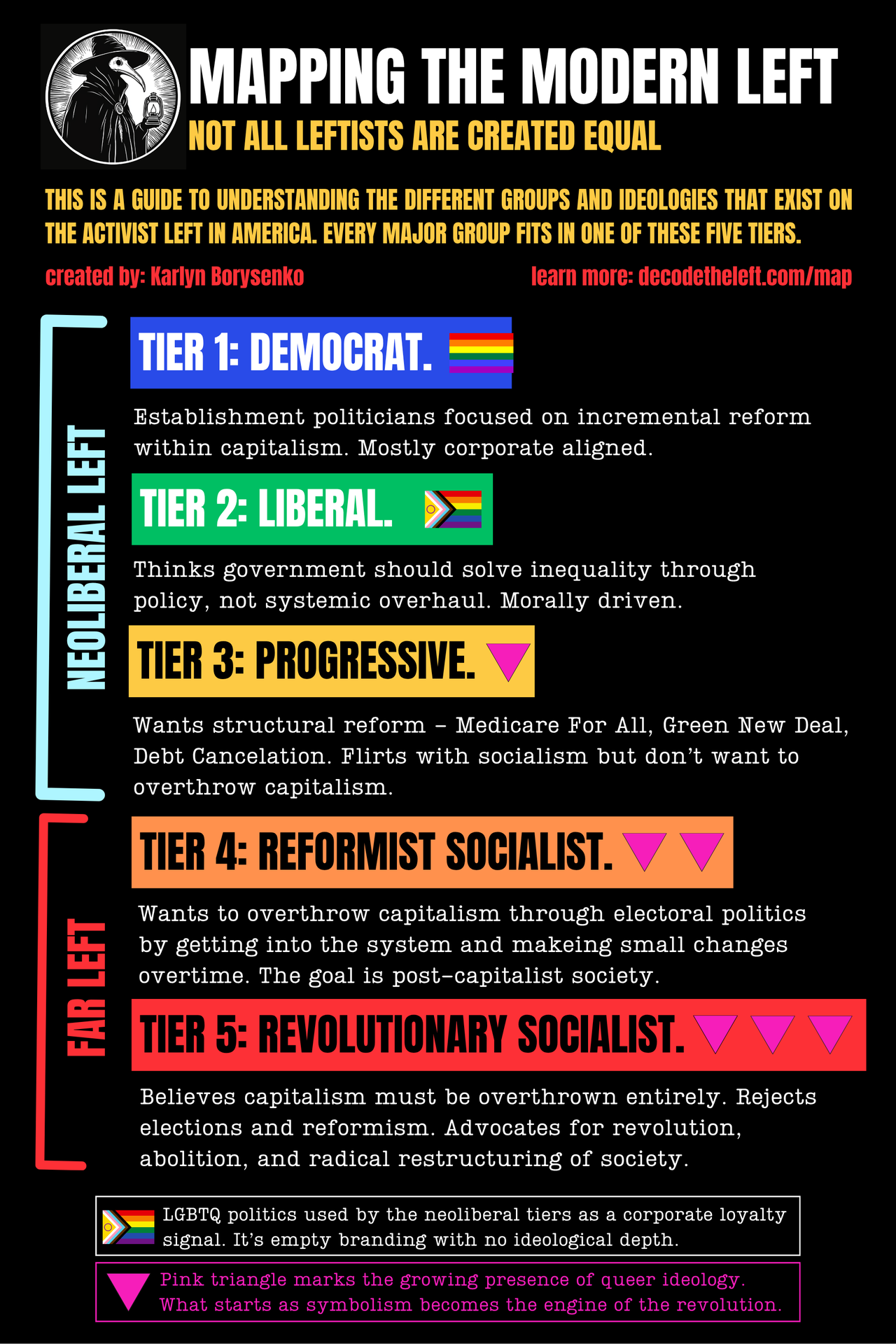
How The GloboLeft Uses Your Virtue Against You And Why It’s Killing The West

“Be excellent to each other.” – Bill and Ted’s Excellent Adventure

I’ve never been to central Europe, but I might Czech it out one day. (all memes as-found)

“Then what makes a beautiful person?  Isn’t it the presence of excellence?  Young friend, if you wish to be beautiful then work diligently at human excellence.  And what is that?  Observe those who you praise without prejudice.  The just or the unjust?  The just.  The even-tempered or the undisciplined?  The even-tempered.  The self-controlled or the uncontrolled?  The self-controlled.  In making yourself that kind of person, you will become beautiful.  But to the extent you ignore these qualities, you’ll be ugly, even if you use every clever trick to appear beautiful.”
-Epictetus

Epictetus may have had some ulterior motives when he said this, since if history is correct he was lame, was missing an eye and an ear, and had hair only in patches on his skull.  Did I mention the burn scars?

I kid.  But Epictetus was lame.  I mean, not 1980s “lame” but rather had a limp.

The point he makes is a good one, though.  We are fundamentally the genes we are born with.  If I wanted to be taller, I suppose there is surgery I could get to lengthen my legs.  Yeah.  Really.

If I wanted to avoid being a blinding hazard when the Sun shines off of my scalp, well, I could get hair plugs or a toupee.

Neither of those, however, would make me a better person.  And I don’t know about you, but when I find out about the vile beliefs and practices of some Hollywood™ starlets, well, they start to lose a lot of their attractiveness to me.  In fact, I start to see ugly, just like the ugly I see with Jeff Bezos’ wife.

I mean, really.  Wow.  That’s a lot of plastic surgery.  Seriously, does she not look like an alien that was constructed out of a scaffold of lizard DNA in a Tupperware® factory?  If she and Bezos have kids I don’t know which they’ll look like:  dime-store rubber geckos or a tube of Saranwrap©.

I do think that Epictetus, despite the handicap of being dead as well as gimpy, has done a good job at sketching out some of the things that have made Western Civilization great.  There was a time that we nearly universally admired being just.  Our culture is one that’s based on guilt, rather than shame, so being just comes from within.

Shame comes from without.  In a shame-based culture (which describes most third world cultures) the idea is that cheating an old widow in Iowa out of her family fortune is acceptable unless you get caught.  It’s clever, and they feel guilt only in being caught.  Ever see any video of a foreigner getting caught doing something wrong on video?

I know you have.

What happens is that the shame kicks in.  They can’t and don’t feel guilt over doing evil, only shame for getting caught doing evil.  This explains why India looks like India and Nigeria looks like Nigeria.  Good actions aren’t valued.

Next, Epictetus talks about the virtue of being even-tempered.  Again, this is something that society selected for through its very construction.  People who impetuously committed crime were systematically executed in Great Britain for nearly a thousand years.

Don’t think that has something to with keeping tempers in a bottle?  It certainly does.  And when men like that become warriors, well, Heaven help you if you push one over the edge into rage and wrath.  That is something mythic, something that makes entire continents burn.

Lastly, Epictetus talks about self-controlled versus, well, not.

Again, this is a virtue that Western Civilization has lauded in its stoic male heroes who experience hardship yet come away stronger for the effort.  Our very fables talk about men who never cry because they understand that they are masters of their emotions and can select which ones the let to the surface when the stress is running high.

This is not a bug like Hollywood© would try to make us think:  this is a feature.

To one extent Epictetus is right:  these are all necessary values for beauty, at least for me.  They are also necessary values for everything that is required to move society upward, to keep us from being crabs in a bucket, drawing each other down for our own temporary gain.

And, Epictetus notes that these virtues are within our control, each and every one of them.  Sure, if you come from a place that’s not been selecting for these behaviors for nearly a thousand years (and I could argue that Europe as a whole has been selecting for these behaviors for thousands of years) then it might be difficult.

But not impossible.  And if it is impossible, then that person could rightly be called a savage.

All of Western Civilization is ultimately built on the idea that these are things that individuals can do, right here, right now through being virtuous.  They are True.  They are Beauty in themselves.  And they are Good.

This is, in my mind, a major disconnect and why Western Civilization is hated by so many in the third world.  They look at this wonderful cultural set of values of which we are exemplars (on our best days) through our own choices and feel envy.  They want a world that looks like ours, but yet don’t want to change their behaviors.

This is why they don’t build.

This is why we do.

Are there other cultures with similar values?  Certainly.  Japan appears to have undergone a similar winnowing with respect to honor.  Feel free to opine in the comments about other places that make the grade.

Like Western Civilization, though, cultures that have a large focus on just outcomes are susceptible to propaganda that plays on cultural guilt.  Ever wonder why GloboLeftists pimped the 1619 Project?  Like the entire Civil Rights movement, it was based on creating guilt in people who had committed no crime or offense.

And it was effective.

On white people.  But it wouldn’t be on them.

I think that there still exists a strong fear on the part of white people to say, “Hey, I’d rather live among other white people.”  It sounds scary to them.  Yet, those same people wouldn’t bat an eye if black people wanted their own dorms that excluded whites.

It’s guilt.  Our virtues have been weaponized against us.  It’s so effective that even British people feel guilt over slavery, even when they effectively ended the international trade in slaves.  Those who do this are, like Epictetus said, using every trick to be Beautiful to try to hide their true ugliness.

My guess is that’s why they really want the statues to come down.  To see Western Civilization and all it has created is the biggest slap in the face to them and fills them with shame, so they have to either destroy it, or come up with some reason why they have failed to assuage their shame.

Continue in your quest for excellence, and understand those that will try to drag you down or fill you with guilt.

Ignore them.

And, in the immortal words of Abraham Lincoln,

“Party on, dudes!”

Falling Down: A Movie You Should Hate, Because It Hates You

“I am not a vigilante. I am just trying to get home to my little girl’s birthday and if everybody’ll stay out of my way, then nobody’ll get hurt.” – Falling Down

I think I’m done with the “It Came From . . . “ series.  Now I’ll probably just spend some time (once a month) looking at propaganda in movies and TV and how it was used to manipulate us.  I’ll miss those because they were fun, but I’ve just nearly run out of good years to review.

For no reason other than I was thinking about it for some reason, I’d like to look back at the movie Falling Down to discuss how, even though it was popular among some people on the TradRight, it wasn’t a love letter:  it was a hate letter.  Back in 1993, the movie Falling Down came out.  I went and saw it that one time in the theater.  I recall being repulsed.

I wasn’t very wise then.  I didn’t and couldn’t exactly put a finger on why I was repulsed other than walking out of a movie with the distinct feeling that I was just in the presence of Evil.  It was a memorable movie, though.  I still remember many of the scenes and the setups and the way those scenes made me feel even though it’s been nearly 33 years since I watched them.

This movie is pure propaganda dressed up as action-adventure.

First, the propaganda is firmly against white people.  There is something very wrong with all of the white people in the movie, and we’ll get into more details on that.  Second, it’s against families as no intact family is shown in a positive light.  Third, it’s utterly against not just white people, but white men in particular.

That’s where our protagonist comes in, with Micheal Douglas playing a white guy.  Michael Douglas plays D-FENS (he has a name, but who cares), a generic replaceable technical guy or manager in the defense industry in Los Angeles.

The main technique used by quite gay and quite leftist director was to put the quite white main character into a sympathetic position so that the audience, mainly white men for “action” movies in 1993, sympathizes with him.

So, it starts in traffic.  Everyone hates traffic.  Everyone has been in traffic.

We see D-FENS stuck in traffic and his air conditioner fails, and he says “screw it, I’m not parking it, I’m abandoning it.”  Every single man I know has fantasized about at abandoning at least one car.

We understand D-FENS.

The fact they choose minor things to make the character relatable is in Wilder’s Rule 7:  The biggest fights are over the smallest things.  This is the trick to make you feel what he feels.  They chose to do that by picking relatable things, and then magnifying the reaction to them to the level of the darkest fantasy that I’ve ever had.

Then, D-FENS is confronted with another minor annoyance, this time a crappy convenience store with an asshole owner/clerk and ludicrous prices.  In this case, it’s a Korean who D-FENS tags as being insufficiently grateful to America.

It’s that pattern again.  But we’ve all been there to the shitty convenience store with outrageous prices offset by surly service.  In this case, though, after being threatened with a baseball bat after asking for the owner/clerk to make change so he could use a pay phone, D-FENS takes the bat from the owner/clerk and smashes the place up.

Again, we’ve all been there.

Except we didn’t smash the place up, though deep down we understand and sympathize with D-FENS.  Heck, to show how morally righteous he is, D-FENS even pays the inflated price for his beverage.

He ends up fighting with some gang members over a pay-phone, beats one with a bat so they try to shoot him.  They crash their car after trying to kill him (convenient, that), and D-FENS takes their convenient bag of weapons.  The GloboLeftist critics HATED this, because the gang members were Hispanic.

“How dare you show anyone but a white, blonde man as a member of a gang.  Or not have one of those multi-racial gangs that only exist in movies?”  This is a second point aimed at the white male audience.  “See, we’re on your side.  Ethnics in gangs with no adherence to Western values are scary.  See, we’re not GloboLeftists if we show we’re race realists.”

As we go through this, we find that D-FENS was laid off from his defense job.

Why as he laid off?

The Soviets no longer existed, so why did we need a defense industry?  It was going to be nothing but peace forever, and in fact the only question was which moslem country was first going to turn into a liberal democracy and make celebrating gay sex a national requirement.

Except . . . well, here are the words of the guy who actually wrote the screenplay:

“To me, even though the movie deals with complicated urban issues, it really is just about one basic thing:  The main character represents the old power structure of the U.S. that has now become archaic, and hopelessly lost.  And that way, I guess you could say D-FENS is like Los Angeles.  For both of them, it’s adjust-or-die time–that’s what the movie is about.”

If you’re a white guy and thought that this movie was about you, from your frustrations with fast food to the epidemic of divorced dads who couldn’t see their kids, notsofastguido.  The author hates you.  The director hates you.

They hate you and want not only to replace you but to eradicate you from memory.  In the end, D-FENS is shot to death in front of his ex-wife and kid.  Erased from history just like he was erased from his job and erased from his family.  His life, his dedication, turns to dust.  Even the lines, “I’m the bad guy?  How’d that happen?  I did everything they told me to,” are meant to demoralize you.

When a bad guy that you’re meant to see yourself in is killed and his legacy is wiped away the intent is clear:  to demoralize you.  You have been symbolically sacrificed by the movie.

They want you to know how they feel:  Nothing you do matters, white guy.  Your life is meaningless.  Worse than meaningless.  We will tear your statues down.  We will erase your genes from history.

Oh, and who kills D-FENS?  Robert Duvall, a retiring cop.  And the precinct he’s retiring from?

Almost all of they younger cops are black or Asian or Hispanic.  Duvall’s character is being replaced, too by a sassy Latina.  But since Duvall is going gracefully, he gets to live.

The lesson that you were meant to take away as a white guy was simple:  you are being replaced.  You will lose.  Resist, and we will erase you.  Retire, and we will give your culture a retirement while you whither and die.

The California the writer and director lived in wasn’t the California they wanted.

Not long after this movie came out, the populace voted to deny welfare benefits to illegals.

“Not constitutional,” said the judge.

Then California voters mandated that nearly all public school instruction be in English.  Student performance increased.  Yet, in 2016, that new California, the California the director and writer of Falling Down wanted, the California without room for people like D-FENS, voted to overturn it.

So, I hate this movie.  And unlike younger me, I now know why.

Because it hated me first.

The Funniest Post You’ll Ever Read About Society, Values, And Waffles

“One time I bit hard into a marble ashtray, thinking it was a savory waffle.” – Anchorman 2

I bought The Mrs. a beautiful diamond ring, but she asked why I didn’t spend that money on a car instead.  Silly wife!  They don’t make fake cars.

I’ve spent hours reviewing why the country I grew up in felt like it ran on autopilot:  lawns were mowed, kids were in school, and front doors were unlocked at night and then turned into . . . this.  The version I see in 2026 feels like it’s held together with duct tape, threats, with little nothing shared.

Friday, I wrote about how real personal change only happens when emotion rewires values from the inside.

I think that same principle scales up to the societal level.

A highly functioning society doesn’t run on rules and cops.  It runs on a shared vision and voluntary self-enforcement:  you don’t have fist fights between naked people in Waffle House® at 3AM where I end up losing a shoe because that’s simply not done.  When that vision fades, you get more rules, more monitors, more guys with badges and attitude.  And the whole thing gets heavier, slower, and meaner.  And less free.

I went to my first Fight Club meeting last night.  I showed up late so I missed the first few rules, but it was awesome!  I love Fight Club!

Let me tell you what doesn’t build a free, cohesive society.

First, someone making people comply.  North Korea proves it works if your goal is terrified people who cry when the Dear Leader walks by and you don’t mind the occasional public execution for wearing the wrong socks.  Compliance by force is easy.  Loyalty?  Not so much. People smile on the outside and cringe on the inside.  That’s not a society.  That’s just a prison with better choreography.

Second, someone with power monitoring me to make me comply.  Remember 2020-2021?  It wasn’t technically illegal to say no to the clotshot, but tell that to the people who lost their jobs, their airline seat, or couldn’t put their kids in school without it.  A whole lot of people who would’ve skipped it folded under the overt pressure of “your papers, please.”  Some complied, without believing.  Big difference between that and the True Believers.

Third, someone moving society to monitor my behavior.  The GloboLeftElite tried to turn the internet into one giant hall monitor.  COVID was the big opportunity.  Disagree on Twitter® about anything, (masks, origins, side effects) and poof, banned.  The goal was simple:  only the approved narrative gets to be broadcast.  The goal was:  brainwash the populace into one artificial shared vision by deleting every other idea.

I was fat but I identified as slim.  I guess that made me trans-slender.

But we didn’t need any of that garbage back when the country actually worked.  Back then we had a shared set of values.  Values kept lawns mowed without code enforcement officers. Values kept people showing up to work, paying their bills, and not stealing the neighbor’s Amazon® packages.  Values were the invisible fence that let a free people stay free.

A huge part of the collapse is the deliberate feminization of society. Women are wonderful creatures.  Their nurturing and care are the reason families exist and babies don’t die in the woods.  But scale that instinct up to the level of national policy and it turns horrifying.

An illiterate military-age man crossing the border illegally triggers the exact same emotional circuit as a crying baby, especially in the spinster wine-aunt who never had kids.  The illegal becomes a surrogate for the kid her barren womb never produced.  Must help.  Must clean it up.  Must give it a chance.

And when it rapes or murders?  Well, punishing it is so mean.  It just needs more care.  That same instinct created the victimhood hierarchy we see everywhere now.  Who’s crying the loudest today?  Which baby gets the most snacks, the most attention, the most special rules?  The entire GloboLeft runs on sorting victims by volume.

I heard that one of Bob Ross’ victims said, “I’m scared” as they walked into the woods.  Bob replied, “You’re scared?  I have to walk out of here all by myself.”

The attempt to replace old values ran for decades through every TV show from M*A*S*H to Maude to Diff’rent Strokes to Golden Girls.  Every single “very special episode” was a Trojan horse.  Archie Bunker® would land a zinger, then spend the last two minutes being proven to be the world’s biggest idiot.

The message was clear:  your grandparents’ values are dumb and mean.  Here, try these shiny new ones instead.

The replacement values, however, weren’t built on what is True, Beautiful, and Good.

They were built on lies.

“There’s only one race, the human race.”
“They’re just like us!”
“This isn’t a nation, it’s a country built only on ideas, not on the posterity of the Founders.”
“Every idea is equally valuable.”
“Love is love.”

The biggest lie of all time?  “I have read and accept the terms and conditions to use this software.”

I could go on.  The lies are finally becoming visible to the general public, the way they always do when reality shows up with receipts.  What’s coming back are the old values, because those are the only ones that actually work at scale.

Getting there won’t be easy.  Societies don’t pivot on a dime.  There will be stunning levels of violence, which is the pain that comes from feminists not understanding that foreigners aren’t the same thing as babies.

The emotional foundation of the country is shift.

I think we will win, because we represent what’s True, Beautiful, and Good, and those that represent that will control the switch on the society that rises from the rubble. If the nation that follows is lucky, they will have the shared values that once made voluntary self-enforcement the norm and not the shattered “all against all” values of an India or a Haiti.

Seriously, is this the world we want?

Rejecting Hollywood’s® propaganda, the GloboLeftist victim Olympics, must be replaced by the old, sturdy values, the ones rooted in family, work, truth, and a common language and culture.  Importing millions who share none of that doesn’t enrich: it dilutes until the shared vision evaporates and only the cops remain.

I’m not naive.  The GloboLeftElite won’t surrender the microphone quietly.  The lies have been lucrative.  But lies always collapse under their own weight.

And that shoe I lost at Waffle House®?  I’ve developed a solution:

IHOP®.

The Double Debt Mountain of 2026

“It’s just a metaphor, dude.” – Guardians of the Galaxy

I had bad credit, so I asked my high school geometry teacher if she’d cosine for me.

The economy looks “fine” on the surface.  Fine, that is, if you believe the headlines.  I sense, though, underneath it’s a double debt mountain that’s getting closer to a landslide every day, and someone is planting bombs along the slope.  Okay, that’s a lot of metaphor.  Let me see if I can pilot this ship home.

Damn.  Another metaphor.

One bomb is the wallets of the kids.

The other bomb is in Washington.

Both are set to blow up the same people:  Millennials and Gen Z, generations already hammered by housing costs, stagnant real wages, hordes of legal and illegal aliens soaking up employment, and women who forgot that the main reason they exist is to make more humans.

Good news?  Yeah, there’s a tiny sliver.  Credit card delinquencies on some non-housing debt leveled out in late 2025 according to the New York Fed®.  But that’s like saying the fire department showed up and has the fire down to burning one house an hour in the neighborhood.  The real picture is as ugly as an Antifa swimsuit pageant.

Yeah, it’s grim.

And all of their older women are coming down with prostate cancer.

Credit cards have become the new paycheck for millions of young Americans, and new companies have shown up to monetize even the smallest debts.  Want to go to Taco Bell™ and pay for that Super Crunchwrap Supreme Bellgrande™ over the next six months?

You can do that.

Total credit card debt hit a record $1.28 trillion in 2025, up $44 billion in just three months.  That’s not a blip:  that’s paying for groceries on credit cards and only paying the minimum monthly payment.  Delinquencies on household debt overall jumped to 4.8 percent, led by the kids.  For people under 39, the transition into serious delinquency on credit cards is nearly double the national average.

Surveys show 56 percent of Gen Z are forced to use cards just to make ends meet because prices keep climbing.  Sixty-six percent of Millennials say they rely on plastic to get through the month.  Thirty-five percent of Millennials are carrying more than $10,000 in card debt.

Credit card debt, the gateway drug of insolvency.  Sure, payday lenders and “buy here, pay here” car places are the crack cocaine and meth of debt, but it all starts somewhere.

Gen Z is running around $3,500 in average balances, while Millennials are pushing $7,000.  They’re not buying yachts or avocado toast, they’re financing groceries, gas, and rent.

It’s Avocado’s number.

Here’s why this mess is worse than it looks:

First, real wages aren’t keeping up, and the system is rigged against the young.  Gen Z and Millennials entered the workforce during the pandemic hangover, got crushed by housing prices we already talked about, and now face interest rates that make every purchase a long-term loan.  The GloboLeftElite told them to “follow your passion” and rack up student debt for useless degrees that qualify them for entry-level retail jobs in malls that don’t exist anymore.

And they listened.

Credit cards fill the gap at 20-25 percent interest.  For those that didn’t choose wisely and avoid jobs taken by Jugdish, life is not luxury.  It’s debt, roommates, and used couches that smell vaguely of fish.  Forever.  One bad month due to a mandatory car repair, unexpected medical bill, or if Egyptians convince them to invest in a pyramid scheme, and they’re in the hole they can’t climb out of.

Chuck Norris had a grizzly bear carpet in his bedroom.  It’s not dead, just scared to move.

Second, banks and card companies love debt.  People don’t get poor because they don’t make enough money, they get poor because they give it away to everyone else:  ask the Amish.

Banks are making fat margins on revolving debt while pretending everything is peachy.  Delinquency rates are rising, but not fast enough for the suits to panic yet.  They know the game:  extend and pretend and as long as we get this quarter’s bonus, it’s all copacetic.  Just like with the housing market in 2008.

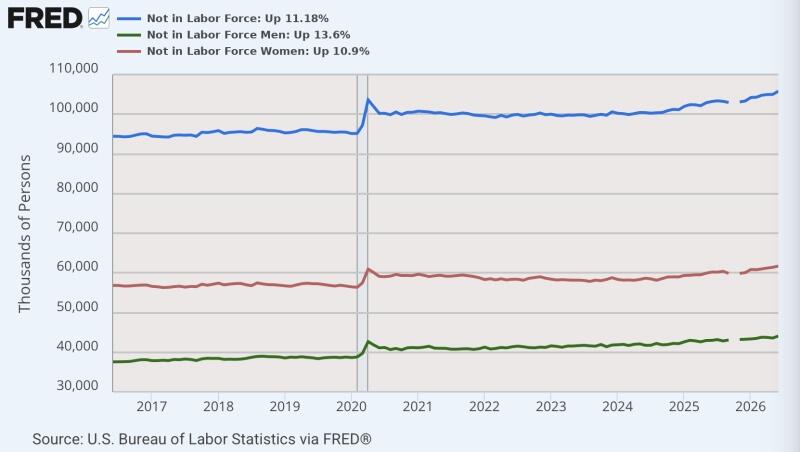
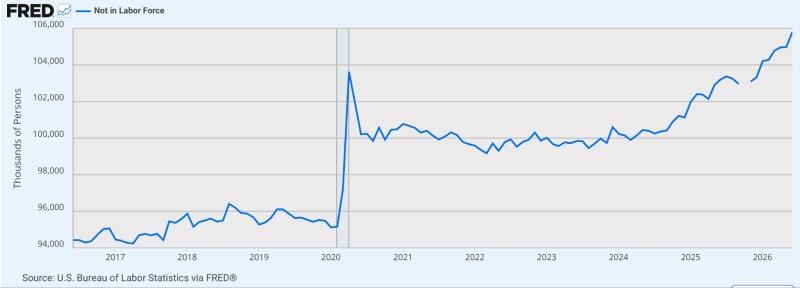
Meanwhile, the official unemployment rate looks fine because more paper-pushers are getting hired in the last growth industry:  government jobs.

The real economy?  Productive private-sector work is stagnant.  Young people are borrowing to eat.

Third, this consumer debt bomb feeds right into the bigger federal debt bomb.  Washington has its own plastic problem, except it’s measured in trillions.  National debt sits north of $38.5 trillion.  Net interest payments are projected to hit $1 trillion in fiscal year 2026 and interest payments are already bigger than defense spending in the first quarter of this year.

Interest already eats 19% of all federal revenue.  By 2036, CBO says it doubles to $2.1 trillion and consumes nearly a quarter of everything the government takes in, but the CBO is always low, because they have to use the assumptions that Congress made up.  Yes.  AOC is responsible for the rules of the game.

But what do we want to spend our money on?

Defense?  Medicare? Infrastructure? Sorry, the interest check has to clear first.

What you get when you cross a human with a moose?  Arrested, apparently.

Fourth, the GloboLeftElite solution is always the same: print more, borrow more, kick the can.  National debt doubles every eight years.  The Fed and Congress act like debt is free because they control the printer and don’t have to worry.  Higher debt, though, means higher interest rates, which means even more debt service, which means . . . you get it.  It’s a doom loop.

Every time they “stimulate” to keep the economy looking good for the next election, they make the next crisis worse.  And who pays?  Not the politicians.  Not the connected class in D.C.

It’s the taxpayers, especially the young ones who haven’t built wealth yet, but yet were forced to watch the abomination that is Scrappy Doo™.

Fifth, the generational theft is obvious.  Boomers got cheap debt, rising home values, and that long summer of the 1980s and 1990s.  Oh, and pensions that actually worked.  Millennials and Gen Z get 24 percent credit card APRs, $1 trillion in federal interest payments crowding out future programs, and a promise that “we’ll import more workers” to fix the birth rate collapse caused by imported workers, interest payments, and . . .

Female empowerment.

Female hypergamy and economic despair already delayed families, and they’ve reached civilization-ending levels with Gen Z and Millennial female solipsism.  Now add maxed-out cards and a government that can’t even pay its own interest without borrowing more.

The kids who should be having kids are busy paying Visa® instead.

Before I was adopted, my selfies were called “family photos”.

The result? Gen Z and Millennials fall even further behind.  They delay marriage, delay kids, delay life.  Birth rates keep dropping.  The GloboLeftElite flips from “stop having babies, save the planet!” to “import babies, we’re not having enough!” in one generation because their policies broke the math.

Young couples look at the spreadsheet listing rent, cards, future taxes for Boomer pensions and federal interest and decide “maybe later.”

Or never.

But me?  Debt mountains?  Debt landslides?  I think I need to stop with my metaphors because they’re making me sneeze.  Metaphors really set off my analogies.

How To Break A Society, Part I

“Half measures are the curse of it.  A rational society would either kill me or put me to some use.” – Red Dragon

The Andrew formerly known as Prince.

Picture this:  I leave my keys in the truck overnight.  Windows down.  Wallet on the dash.  Next morning?  Still there.  Nothing missing, though a cat might have explored an empty burger wrapper.  No viral TikTok™ of some “youth” doing donuts in my F-150®.

Absurd?  No.

And not because Big Brother has cameras up the backside of every squirrel, but because back in the day people just didn’t do that crap.  The neighbors would have known who did it.  Moms would have heard about it at church, and the father of the kid would have heard about it from his boss.

Shame, accountability, and consequences work better than ankle monitors.

That was the power of societal norms.  Invisible fences made of “What will people think?”  And the Founding Fathers knew it.  They told us so.

Benjamin Franklin walked out of the Constitutional Convention and some lady asked what they’d given us. “A republic,” he said, “if you can keep it.” Not “if the government keeps it for you.” Not “if we pass enough laws.” If you can keep it.

John Adams was even blunter in 1798: “Our Constitution was made only for a moral and religious people. It is wholly inadequate to the government of any other.”

They weren’t kidding.

I shocked the postman by opening the door completely nude.  I think what surprised him the most was that I knew where he lives.

Just like the Constitution, the libertarian dream only works when people self-circumscribe their own behavior.  An 85,000-page federal code of regulations telling me not to steal if my conscience (and the fear of my neighbors shunning me like a rabid raccoon with diarrhea at a picnic) already does the job.  The Constitution assumed a pretty genetically homogeneous people who spoke the same language, mostly went to the same church, read the same Bible, and agreed that punching your neighbor over a fence line was a last resort, not the premise of a YouTube™ video.

Some people broke the rules.  Always have, always will no matter the civilization.  But back then the system didn’t turn justice into a CBS® series lasting twenty years.  The mean time from sentence to rope?

Often weeks or a few months, not the decades-long death-row vacation with three hots, cable, and taxpayer-funded lawyers we enjoy today.  Were innocents sometimes executed?

Almost certainly.

But swift, mostly impartial justice beat the hell out of vigilante posses or letting killers out on technicalities to murder yet again.  A society that can’t punish the guilty quickly loses the ability to protect the innocent at all.

I stand behind Alec.  It’s safer than standing in front of him.

Fast-forward to post-World War II America.  Streets were so safe kids rode bikes until the streetlights came on.  Doors stayed unlocked.  Factories hummed, wages rose, and the biggest scandal in most towns was somebody skipping the church potluck.  Prosperity wasn’t just money:  it was a stable and predictable life.

That bored the revolutionaries of the 1960s half to death.

They looked at this overwhelmingly safe, secure, prosperous society made of families in traditional family roles and said, “Nah, too square.”  The GloboLeftist project kicked into high gear with the Great Society.

Lyndon Johnson and his crew didn’t just want to help the poor.  No.  They wanted to remake society.  The guardrails of conformity had to go.  Why?  Because the norms of self-restraint, local reputation, and actual community stood in the way of central control.

Take lending, for example.  Let’s say I wanted a home loan in 1955.  My local banker didn’t just run a credit score, because they didn’t exist.  He would have called my pastor:  “Does Wilder show up on Sundays,?  He does?  Any rumors about his behavior?  PEZ®, eh?  That’s a bit odd.”

Local money stayed local. My mortgage would have literally been made from the savings of the people I saw at the grocery store.  Or, rather that The Mrs. saw at the grocery store, since why would a married man go to the store?

Good families got a break if junior was speeding?  Sure.  Outsiders had to prove themselves?  Absolutely.  But it worked because everyone was playing the same cultural game.

If King Charles was anymore inbred, he’d be a sandwich.

Then came the 1960s and beyond.

Mass migration became deliberate policy.  Civil rights were the noble public excuse, but the real play was splintering the old society so it could be replaced with something more compliant. Free association?

Gone.

You can’t choose who you hire or rent to without risking a lawsuit. Schools?

Prayer out, social engineering in.

Education standards?

Lowered faster than a politician’s principles.

Family?

Oh, boy.

Women used to save themselves for marriage.  Even when I was a kid, that was still the norm in most places and led to more than one frustrating Saturday night.

Body count back in the 1950s?  Usually one, and it came with a ring and a white dress.  Fast-forward one lifetime from the Great Society:  sophomore year of college and some girls are racking up body count numbers higher than a Call of Duty™ leaderboard.

No-fault divorce, welfare that paid better for single moms than married couples, and a nonstop cultural drumbeat that “settling down” was oppression led not to the Great Society but the Great Breakdown.  The nuclear family, once our bedrock, got nuked.  Fatherless homes exploded.  The Great Society didn’t cure poverty:  it subsidized it while making dads optional and government mandatory.

My WIFI router is in the basement.  You could say this post comes from a LAN down under.

Every facet of life got the treatment.

Religion was pushed out of the public square.  “Under God” became hate speech.  Local norms replaced by federal mandates.  You couldn’t even form a private club without worrying about quotas.

The explicit goal?

Fragment the connections that made America 1960 a powerhouse.  Replace them with government strings.  Make people dependent on D.C. instead of their neighbors, their church, or their own character.

And it worked.

One generation. That’s all it took.

We went from “mind your own business but don’t be a jerk” to needing sensitivity training to say “good morning” without committing a microaggression.  We went from “your reputation follows you” to “my truth” where accountability is optional and consequences are for white men.

The absurdity peaks when you realize the same people who tore down the norms now act shocked at the results.

“Why is crime up? Why are families falling apart? Why can’t we have nice things?”

Because they spent 60 years telling people the guardrails were bigotry.  They replaced “don’t do that, people will talk” with “do whatever feels good, you slay, queen.”  They swapped local bankers who knew your grandma for algorithms that approve loans based on your zip code, skin tone, and whether your social media likes the right causes.

A fragmented society built on ephemeral values:  “my feelings, my identity, my government check” cannot magically produce the disciplined, self-restrained people who built the 1960 powerhouse. We can’t have a republic of free men when half the population thinks “freedom” means no consequences and the other half thinks the Constitution constrains the government too much.

The fall wasn’t accidental.

I ate in an all-you-can-eat Italian restaurant buffet.  There were endless pastabilities.

It was engineered during a time of plenty, when people were fat and happy enough to believe the sales pitch.  “Break the old norms, they’re oppressive!” Turns out the oppression was mostly keeping humans from doing what humans do when they’re not in a civilization and are left unchecked.

I don’t think we can keep the republic Franklin talked about from where we are.  Adams knew the reason: paper and ink don’t enforce morality.  People do.

Or they don’t.  And when they don’t, the government is happy to step in with a smile and a 10,000-page regulation.

The norms are gone. The absurdity remains. And the bill?

It’s due, with interest.

Why Henry VIII Would’ve Killed for Your Tuesday

“Dying in our sleep is a luxury that our kind is rarely afforded.  My gift to you.” – Kill Bill:  Volume 1

I guess he had a bad heir day.

Henry VIII could have anyone killed in England killed, whenever.

That’s a historical level of flex, right?

“Off with his/her/their/xir head!” and boom, problem solved.  The only way he could have had a more complete solution is if he had ye olde Hellfyre Missyll that he could have obliterated the parts with.  Hank had more wives than most guys have pairs of underwear, threw parties that made Vegas look like a church potluck, and ate so much roasted swan he probably needed a crane to get out of bed.

Yet the poor bastard was miserable.  Hank’s leg was a festering horror show of oozing sores that never healed. Doctors, if you could call them that, mashed it with hot pokers and prayed to Saints who were clearly not looking out for Henry.

Summers?  Hank oozed sweat in every royal crevice like a Somalian in a daycare because air conditioning hadn’t been invented yet.  Winters?  Drafty castles that made your average Motel 6® feel like the Ritz™.

Fresh vegetables in January?  Forget it, unless you counted the mold on last year’s turnips.  Antibiotics?  Nope.  He died at 55 looking like a bloated, angry grape because a simple infection laughed at him.

Bill Gates claimed that it was hard to give away $100 billion.  Then he discovered divorce.

Meanwhile, the poorest person reading this right now has:

  • Climate-controlled comfort (except when the power goes out and we all act like it’s the apocalypse)
  • Aspirin that kills headaches faster than Henry could yell “treason”
  • Strawberries in February flown in from well, wherever, for $2.99 a pint
  • A phone in their pocket with more computing power than NASA used to put men on the Moon, back when they still did that sort of thing

And we complain the Wi-Fi is slow.

As a society, we’ve lost the plot.  We chase the next luxury like it’s the last helicopter out of Saigon, never noticing we’re already living better than every king who ever lived.

Marie Antoinnette didn’t like the chopper that took her out of France.

That’s where fasting, prayer, and meditation come in.

They don’t add luxury.  And they’re not anti-luxury, either.  Instead, they intensify life real life by pulling away things that dull it.  They rip the blindfold off so you can finally see the ridiculous abundance that’s been hiding in plain sight.

Take camping, which is another life-intensifier.  Or better yet, backpacking, because backpacking is camping for people who like suffering without a car nearby.  You hike ten miles with everything you own on your back.  Hot shower?  Nah.  Cold beer?  Dream on, pal.

Clean socks after three days?  Suddenly they feel like silk sheets at the Four Seasons®.  That lukewarm instant coffee at sunrise after a 14,000-foot summit?  Nectar of the gods.  And that single cigar you packed for the top?

It tastes better than the $80 Cuban some hedge-fund guy is smoking in his climate-controlled man cave.  The Luxury Meter resets.  Hard.  The stuff I took for granted becomes decadent again.

I felt motion sickness on the airplane yesterday.  It didn’t help having all of those people screaming for lifejackets and rafts.

That’s exactly what fasting, prayer, and meditation do as I get older, except I don’t have to carry a 40-pound pack or sleep on rocks.

Let’s start with fasting, because I actually do this every week and some of my happiest days are while I’m doing it.

Yes, I’m the weirdo who smiles while hungry.  Judge away.  After 72 hours without food, that first bite of whatever I eat next hits different.  It’s not “dinner.”  It’s a religious experience.

Last week I broke a fast with a salad of lettuce, and my own dressing (olive oil, balsamic vinegar, and Frank’s Hot Sauce™.

I swear the lettuce tasted like it was grown by angels on Mount Olympus. I actually said “thank you” out loud to vinegar.  The Mrs. asked me, “Are you planning on starting a cult?”

“No, it’s too hard to find enough people who are willing to shave off all the hair on their bodies.  Just no commitment nowadays.”

Fasting reminds me that food isn’t a background app:  it’s a miracle, a gift.  My ancestors fought wolves for scraps, and won.  That’s why I’m here.

Right now I’m so hungry I could eat my watch, but that would be time consuming.

Henry VIII had entire forests of deer murdered for his gouty pleasure and still died angry.  Me? I can open the fridge and there sits last night’s leftover steak and a bag of midget tomatoes.

Fasting turns the volume down on “I want more” and turns it up on “Holy crap, this is amazing,” when one of those ripe tomatoes explodes flavor in my mouth as I bite into it.  Prayer does the same thing, but with gratitude instead of hunger and with fewer seeds.

I’m not talking about the fancy stained-glass, organ-music version.  I’m talking about the five-minute reciting the “Lord’s Prayer” or just sitting there praying “thanks” for all the little miracles in my life, like cigars.  Thanks for the roof that doesn’t leak. Thanks for the truck that started this morning.  Thanks for antibiotics that would’ve saved Henry’s leg and probably at least one of his marriages if the Habsburgs weren’t trying to kill him.  Thanks for the fact that I can complain about gas prices while eating pineapple from Costa Rica on a pizza in February.

I think that if I do this regularly my brain chemistry changes.  I cease envying the guy with the bigger bank account and start noticing that I’ve never missed a meal, except on purpose.

And then there’s meditation, which I used to think was for hippies in hemp pants smoking hemp and praying to a bong with hi-fi playing sitar music in the background.

Turns out it’s just shutting up for five minutes.  Sit.  Breathe.  Notice the thoughts racing around like caffeinated squirrels.

After a few minutes the squirrels calm down.  And suddenly I notice things. The warmth of the coffee mug.  The feeling of my head against the back of my chair that just happens to adjust six ways.  The ridiculous luxury of quiet.

Only self-aware people will understand this joke.  You know who you are.

Henry VIII never had five minutes of peace:  someone was always trying to poison him or marry him or overthrow him or he had another wife to kill.

I can have it peace and quiet whenever I want, and it costs exactly nothing.

When I do all three together it’s like a factory reset on my soul.  The constant “I need more” noise fades.

I’m not saying sell everything and move to a cave and become a monk.  I like my truck, my cigars, and my central heat as much as the next guy.  But I’m not going to let “luxury” make me the modern version of Henry VIII:  rich in stuff, poor in joy, angry at the world because the sores never heal and the wives won’t die.  These things remind me that the real luxury isn’t the next thing, it’s realizing the things I already have would’ve made kings weep with envy.

Though say what you want about Henry, he did have a cure for wives who had headaches.

The Defeat Of The West?

“Victory has defeated you.” – The Dark Knight Rises

I once forgot the rules to chess, but they told me it was okay to check.

I just wrapped up Emmanuel Todd’s latest book, La Défaite de l’Occident (that’s “The Defeat of the West” for those of us that hate the metric system), and it lines up perfectly with what I’ve been posting about for years here.  In fact, this isn’t the first time I’ve written about Dr. Todd, having written about his Family Structure/Geopolitics Theory.

Another Key To Understanding It All: Family Structure

Family Structure, Part II: Orphans Still Not Required

The book isn’t in English yet, but somebody cut and pasted it into Google® to have it translated, and you can find it out there if you look.

In this book, Todd is using the Ukraine mess as a lens to autopsy what he calls the West’s self-inflicted doom.  In Todd’s view, the collective West is collapsing, compared to “stable” powers like Russia and China.  The West’s decline isn’t from bad luck or Russian super-spies, nope.  It comes from the rotting foundations of the West itself.

Why did Princess Diana cross the road?  She wasn’t wearing her seatbelt.

I’ve written extensively about the deindustrialization that’s left the economy hollowed out, so that should be familiar.  Add to that a slide into nihilism stemming from the death of Protestant Christianity in the United States.  Protestants used to stand for something, but the last time I went to a Protestant church it was very much them not wanting to be against anything and the female pastor went on a long “men are bad” speech.

On the other side, Russia, lagging on almost everything by about 50 years, is experiencing a resurgence in families, a religious revival, and an ethnonational cohesion that allowed them to (mostly) take the hit from sanctions and keep going.  The Ukraine war?  It’s the litmus test exposing our bluff:  we’re great at low-intensity or short duration conflicts with things like coups, sanctions, and drone strikes on weaklings (Iran, Venezuela, you name it), but don’t have the industry for real, prolonged industrial slugfests.

One example:  Russia can produce three million rounds of artillery a year, with one recent estimate that they produced seven million rounds last year.  Even at the lower three million number, that is three times the amount that the United States and other NATO countries, combined can produce.  And, yeah, Russia is fighting Ukraine and the United States has lots of amazing tech that nobody but people with top clearance or Chinese spies know about.

That’s why Ukraine keeps facing ammo droughts.  The West’s “superior” economies are finance-bloated illusions where we just keep swapping pictures of silver for electronic dollars that we’re too cheap to bother printing anymore.

I am really good at predicting the scores of the Super Bowls® before they start.  0-0.

US manufacturing jobs?  These dropped from 20 million in 1980 to 13 million today, with 80% of GDP now in services and Wall Street Pokémon® card swapping.

Russia simply isn’t the basketcase the MSM paints.  Yes, their nominal GDP’s around $2T vs. the US’s $27T and EU’s $20T, but in purchasing parity (what their money can really buy them) terms, Russia’s at $6T, edging out Germany as the world’s fourth largest economy.

Why?  The sanctions (starting in 2014) forced them to become independent.  After nearly a decade, when the United States hit them with sanctions after their 2022 invasion of the Ukraine, well, they were ready to survive without trade from the West.  Even though Russia has a much smaller population (roughly half) than the United States, Russia has more engineers aged 20 to 34 than the United States.  Russia has 2 million, the United States around 1.3 million.

Once a European midget asked me to hide him.  I guess I can cache a small Czech.

Contrast that with what Todd calls the West’s “shallow state” since it’s (his view) an oligarchic mess lacking soul or cohesion.  Todd mainly blames this on religious evolution:  Protestantism (Weber’s ethic of work, literacy, discipline) powered the rise of the West, but we’ve hit the stage where the United States is a secular void.  Zombie Protestant churches linger, channeling energy into welfare states.

Now we find that culture in the West is pure nihilism: no morals, just primitive urges for pleasure, cash, and violence.  Todd’s view is that the moral low point where we finally jumped the shark was around 2015.  “Marriage for all” symbolizing the final shredding of Christian norms and rise of GloboLeftism.  In Todd’s words, “If the people and the elite no longer agree to function together, the notion of representative democracy no longer makes sense:  we end up with an elite who no longer wants to represent the people and a people who are no longer represented.”

This certainly defines the state of the West now.  A huge majority of the people want all illegals gone, and some want legals gone, too.  And yet, the illegals are here and we fight to make the line up and to the right in what is now, according to Todd, a “liberal oligarchy”.  That leads to a national weakness.

This weakness is structural and has been building for decades as the United States in particular (and the West in general) worked as fast as it could to de-industrialize.  This offshoring has consequences, and can’t be changed in a heartbeat.  To rebuild, we have to build factories, build supply chains, build up a workforce, and remember how to make stuff.  To explain how difficult this may prove to be, in 2024 China reached 10,000 Terawatt hours of electrical production.  That’s more than the United States, Europe and India combined.

My favorite Asian stereotype is Sony®.

Back to Todd:  “Producing the world’s currency, at minimal or no cost, makes all activities other than monetary creation unprofitable and therefore unattractive.”  Why do we spend so much effort on finance in the United States?  It’s just so profitable and so much easier than making stuff, which requires real effort.

Todd’s conclusion:  Ukraine was a trap for the United States. The United States, flush from the victory over the Soviets was unbound.  It could do whatever it wanted.  The United States expanded its global reach from the early 90s to 2022.  But we ignored Russia’s 2021 ultimatum because we thought sanctions would crush them like they did in 2014.

The opposite happened.  Ukraine remains resilient but allowing 60+ year olds into the army isn’t really a sign that you expect when you’re winning.  I expect the end of Ukraine’s resistance to be amazingly abrupt and to occur sometime in the next year, with August being a midpoint.  Russia will win, and as near as I can see, their economy is stronger and more independent than it was before the start of the war.

I asked Sydney “How do you get into that tight shirt?” and she said, “For starters, you could buy me a drink.”

Now, my two cents:  Todd’s spot-on that West’s weakness is structural, not just spineless leaders.  Pain is coming.  NATO/EU has ceased to be a bloc; it’s a squabbling conglomerate with clashing interests and seems to have lost its will to live.

Todd’s book substantiates the politically incorrect that I’ve been championing forever:  nationalism trumps globalism.  The West is exhausted, defeated not by conquest but by its own nihilism leading to that most Evil philosophy of all:  “Do what thou wilt shall be the whole of the law.”

As for me?  I still refuse to learn to speak or read French.

Happiness, Desire, Whiskey, and Purpose

“Is this making you happy?” – Fight Club

Why are mathematicians always happy?  They know that the root of anything negative is imaginary.

“Happiness is all that it wants, and resembling the well-fed, there shouldn’t be any hunger or thirst.” – Epictetus

Think back to the moment that were really content.  Happy.  Maybe it was after a nice steak.  Maybe it was after a draw on a good cigar.  Maybe it was in on the bench seat of a 1978 GMC® truck on a warm summer night.

Whenever it was, in moments of true contentment, true happiness, you don’t want or need anything.  The moment is complete.  It is as it is.  I feel that way after I write a post I’m especially happy with.  I feel that way most mornings after the first sip of coffee.  In those moments, in those times, I simply don’t need anything more.

W.C. Fields:  “Always carry a whiskey flask in case of a snake bite.  With that in mind, always carry a small snake.”

This is why I say that happiness is the easiest thing for most people, most of the time.  It’s simple.  Stop wanting what you don’t have.

Done.  Easy.  Unless it’s air.  I need that most of the time and get quite cross and panicky when I don’t have it.  And water, yeah, I need that on occasion.  Food?  Not an issue.  Like most people in current-day USA, I could skip a meal or a few dozen meals and still be physically fine.

So, happiness is easy.

My brothers Sin and Cos stayed out in the Sun too long.  They’re now tanned gents.

Why then, are most people unhappy?

They want what they don’t have.  In some cases, they want what they can never have.  Some mid-tier 8 who spends a night banging Brad Pitt now wants a Brad Pitt type guy to love her.  That’s simply not going to happen in this universe because Brad Pitt has all the twenty-year-old 10s he wants to have, and one of them might be a keeper.

So, our mid-tier 8 is unhappy.  If she didn’t think she deserved Brad Pitt, well, she might have a chance to be happy.  But, no, she’s made herself unhappy.  And, she’s made herself unhappy in the stupidest way possible:  she’s pining for something she will never ever be able to have.  In her case, it’s confusing being Mrs. Right Now with being Mrs. Right.

After A.I., how will programmers make money?  Selling their laptops.

This unhappiness didn’t come from outside her:  she made it up.  So, whenever I’m unhappy, it’s typically because of a really simple reason:  reality isn’t conforming itself to the way I want it to be.  You know, the post didn’t say what I wanted to say in the way I wanted to say it.

The post is outside of me.  It’s something I made.  I can choose what I can do with it.  I can abandon it.  I’ve done that about five times, I think.  I can decide, “You know what, good enough.”  I’ve done that a few times.  But most of the time, when I press the button that schedules the post, I’m happy.  Very happy.  I put in the effort on a cause that was worthy of my time.

If I’m unhappy with a post, it’s because I chose to be unhappy about it.  I write because it is something that makes me, on balance, very happy.

If it didn’t, I wouldn’t do it.

The problem, though, is happy people don’t get much done.  That’s why weed and vidya games are bad.  They give bliss without accomplishment.  It’s the easy road to happy.

But that sort of happiness, for me at least, is without meaning because it’s without accomplishment.  I’m unhappy all the time, but I’m unhappy about (mostly) things I choose to be unhappy about.  I rarely choose to be unhappy about things I can’t control.  If I can’t control it, it’s just the way the world is.

When you break up with an A.I., does it experience machine yearning?

But if I’m unhappy, and I think it’s worth the effort, even if it’s big, I’ll choose to be unhappy to try to make it happen.

That’s the definition of purpose.  It might be small, like mowing the lawn.  It might be big, like changing the world.  But I get to choose.  It should fit my talents.  And, as I’ve been prattling on about them, yeah, it should be in service of Truth, Beauty, and Goodness.

It needs to be worth it, and that defines what worth it is.  Well, at least to me.  YMMV.

I think so many people are unhappy because they simply don’t have a purpose, they don’t see a way that they can be of substance, be of consequence in a world where 8 to 10(!) billion people exist.  It’s overwhelming.

It makes one feel small, sometimes.

But me?  I keep pushing.  I’ve even distilled my purpose down to a sentence:  “To make visible that which would otherwise not have been seen.”  So, the writing is kinda core to a purpose like that, unless I want to sit in the backyard yelling at the squirrels on how they’re being inefficient with their nuts.

Do Catholics ever give up cleaning their drier filter for lint?

Purpose, then, is a double-edged sword.  It provokes me to action, and leaves me with a fire inside.  But this is one that I choose to carry.  It’s one that I wish to have.

I control (mostly) my emotions.  Being happy means not wanting.  Except when I choose what I want.  And right now?  I want elimination of Evil, a steak and a cigar.

In that order.  But I’ll work on getting rid of the Evil while I enjoy my steak and cigar.