A Tale Of Two Koreas: Dystopia On The Half-Shell

“From what I hear, which isn’t much, Iran financed it and North Korea supplied the bombs.” – Jericho

North Korea shows off it’s newly developed portable Internet device.  (All memes as-found)

Imagine living in a Korea where:

  • a small group of corrupt elite wield godlike powers over the government and citizens,
  • kids work in factories at the age of less than 10, or, toil in school for up to 18 hours a day to study for a chance to please that same elite who control the entire country,
  • most non-elite live in drab, gray (or is it grey?) apartments with the main view of . . . other apartments,
  • adults work long hours in a job that mainly serves to feed the elite,
  • the fertility rate is 0.78, meaning life is so awful that parents don’t want to bring babies into it, meaning the population will be cut by more half each generation, and
  • the kids listen to K-Pop.

Yeah.  South Korea.

You know, I know people love to call certain places hellholes while praising others as shiny beacons of progress, mainly due to one being capitalist and one being communist.

I get it.  I hate communism, too.

I had a horrible dream last night that Artificial Intelligence controlled our lives, and then, thankfully, the alarm on my Alexa® went off and woke me up and then Alexa® went through my to-do list.

But what if I told you that sometimes the “better” option of capitalism is just a prettier prison?

In South Korea, a tiny cabal of families runs the show like they’re the Sopranos, but with better electronics, worse haircuts, and no fear of the FBI.  These aren’t your average mafia dons; we’re talking about chaebols.  Chaebols are massive conglomerates that have tentacles that extend all the way through all parts of society, like the corporation you work for owning your fridge, car, and your grandma’s pacemaker.

Take the Lee family at Samsung®:  they’re not just peddling phones with spyware straight from the NSA, nope.  In South Korea, they have fingers in everything from shipbuilding to life insurance to health care to construction to hotels in about 80 different companies that comprise about 22% of the South Korean economy.

Hell, if you sneeze in this country, there’s probably a Samsung tissue waiting to catch it.  And when Daddy Lee gets nabbed for bribery and attempted bribery (again), does the empire crumble?

Nope, Lee Junior slides right in.

Is the guy who does security on Samsung™ phones the guardian of the galaxy?

Then there’s the Chung clan over at Hyundai®. These folks don’t just make cars.  Nope.  Hyundai builds cities, runs banks, and probably have a secret lab cloning K-Pop idols, Gangnam-style.

Power gets handed down generation to generation, and if there’s a whiff of scandal?  Poof, it vanishes faster than a North Korean dissident.

Embezzlement?

Tax evasion?

Those are just another boring Tuesday for these overlords.  They operate above the law, pulling strings in government like K-Y® covered puppet masters at a marionette orgy (I’m sorry I thought of that, but now you have to think of that, too).

I don’t know how to stop a killer sex bot, but I do know how to stop a hand puppet:  disarm it.

These huge conglomerates eternal, sucking up wealth while the average South Korean fights over scraps.  Capitalism is great at building stuff, sure, but when it goes full oligarch, it’s like giving all the Monopoly® money to the banker (drunk Aunt Betty) and listening to her tell everyone else to enjoy passing Go© without collecting $200 and then it’s the Thanksgiving from Hell and Uncle L.T. won’t stop talking about golf.

Excuse me.  Some past-life trauma.

I’m not against wealth concentration when it comes because people created actual wealth in society.  I think people should be rewarded for making the lives of others better.  But South Korea?  The top families make money because they control all the pathways of wealth creation and the government.

I’d bet they’re gonna make a move on religion, next.

Bold statement time: capitalism alone doesn’t equal freedom; and in South Korea it is just feudalism (which, I remind you, was also capitalism) with neon-colored LED lights.

And it gets worse.  What really inspired me to write this one was about the kids.  The South Korean economy is a beast that demands blood sacrifices, starting young.  Kids are out there hustling like they’re in a Dickens novel, but instead of cleaning chimneys, it’s cram schools that make American homework look like recess.

I’d make a joke but I want to be seen as mining my own business.

For the grown-ups, it’s worse: 60-80 hour weeks are the norm, turning humans into zombies shuffling through cubicles.  Monotonous?  Try soul-crushing, like being stuck in the Matrix but without the cool kung fu and hot chicks in skin-tight latex.  Adults are coding, welding, or staring at screens till their eyes cross, all for a paycheck that barely covers rent.  And that’s the lucky ones – the effective unemployment rate flirts on a regular basis with 25%.

And speaking of rent—everyone’s jammed into these towering commie-blocks, gray slabs of despair that make Brutalist architecture look inspiring.  Check it out on Google™ Maps© Streetview®.  It’s like The Sims® but with new Depression Mode enabled: tiny apartments where families stack like cordwood, dreaming of escape but too exhausted to move.

The place where it gets really grim is that they’re working themselves to death.  South Korean birthrates are in the toilet, flushing away the future one non-existent kid at a time.

It takes 2.1 kids per woman to keep a population stable.  In South Korea, it’s 0.78 kids per woman.  In about 100 years, that might mean that instead of 55 million serfs potential employees Samsung® might only have a just a few over 7.5 million left.

This isn’t sustainable; it’s societal suicide by spreadsheet.

You know what jokes about low birthrates aren’t?  Childish.

Everyone thinks it South Korea is all Squid Games and high-speed internet, but peel back the veneer, and it’s a dystopia where families (well, not all families) get ground to dust.  Sure, they’ve got flashy tech, but at what cost?

Their souls, apparently.

Now, let’s cross that fortified border to the hermit kingdom of North Korea, where the dystopia’s got a different flavor but the same aftertaste of oppression. Point by point, because why not?

  • Corrupt Clique in Charge: Instead of chaebol families, it’s the Kim dynasty. Power passes from Kim to Kim like a Habsburg chin.  Voting?  You don’t vote on a living god.  The elite live like it’s a South Korean oligarchy, but make theirs communist, so, uniforms and marching and Soviet-tech.  So, tie.
  • Economic Shackles on Steroids: Child labor? Oh yeah, but it’s “patriotic duty” with Nork kids harvesting crops or building monuments to Stalin instead of studying like their southern counterparts.  The system is a joke, with rations so meager you’d think calories were capitalist spies.  Families toil in state farms or factories, nukes, missiles, and spare MiG parts while the Kim family imports Twix® and Coors™.  The South doesn’t have death camps, but I’m not sure if that’s good or bad at this point, so, tie.

This definitely hurt the North’s score.

  • Soul-Sucking Slog: Just like being at the Democratic National Convention, life in North Korea is a parade of propaganda and forced smiles, living in actual commie-blocks that crumble like the regime’s promises.  Monotonous work?  Try endless marches and indoctrination sessions.  It’s like 1984 but with worse food even than English food.  I’ll give this to the South, since they come here from time to time, and I’ve never had a North Korean visit.

What is this, a school for ants?

  • Birthrates Below Replacement: Around 1.9 kids per woman, much, much better than the South, so eventually there will be more Norks than replaceable Samsung® assets.  Besides, who wants to raise a family when Junior might rat you out for humming the Brady Bunch theme?  This one goes solidly to North Korea.
  • K-Pop Equivalent? Nope, just state anthems praising the Dear Leader.  I’ve got to give this to North Korea.

If black people move there, will they make K-Rap?

Point total?  To the North.

Okay, if I had to pick, I certainly wouldn’t pick the North, but let’s be honest, the South is awful as well.  I’ve been trying to make this point again and again:  capitalism is an economic system, and it’s only a useful economic system if it generates wealth and supports families.  When capitalism captures the systems of government the people begin to look like property, exactly like people look to communists.  In Korea, people are either cogs or convicts.

The Founders didn’t mention capitalism or socialism, they just turned people loose with guns and a few rules and let them figure it out.  In the West today, business wants to import foreigners to become better cogs, and the GloboLeft wants to import hordes of foreigners who are used to their government treating them like convicts.

Though on the bright side, my Samsung™ phone has lasted for years . . .

The Lighter Side Of Dating, Mating, And Civilizational Collapse

“My job is to see that big, strong men like you get on these buses without getting lost.” – Stripes

The other day I spent the afternoon playing chess with senior citizens in the park.  Took me a while to find 32 of them.

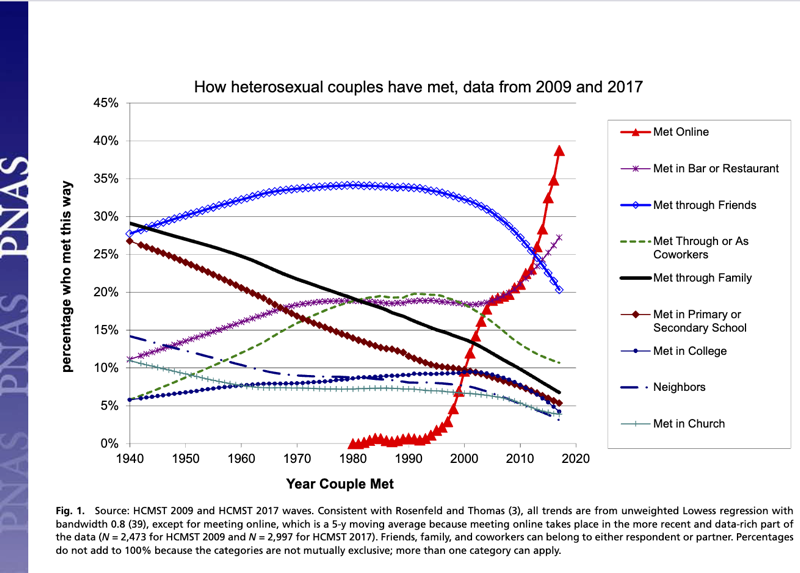
Even thirty years ago, finding a spouse was as easy as grabbing a beer at a kegger.  You met.  Maybe at school, maybe at church, maybe at work, maybe some friends introduced you.  Hell, maybe at the kegger.  It was a straightforward and reliable process, and it was also often sweaty and fun.

Even before my time, though, it was even easier.  Take it back to the 1800s, and men brought home the bacon, women kept the hearth warm, and together they built a life, maybe a farm, maybe a picket fence.  Often, people would meet and spend their whole lives in the same location.

The process wasn’t perfect, but it worked for thousands of years.

Fast-forward to 2025, and the mating market is a dumpster fire.  A constant source of conversation is the baby bust, describing how women aren’t reproducing enough children to keep society going.

Part of the reason for that is that cultural shifts and technological disruptions have turned love from carnal creativity in the backseat of a Camaro™ to the swipe of a finger on the smooth glass of a screen protector.  The result?  A generation of lonely hearts, spinsters, and guys who’ve decided sweatpants and beer are a better deal than chasing women who don’t even see them as people.

Pro tip:  never yell “shotgun” when you’re boarding an airplane.  Apparently, TSA doesn’t appreciate that.

Culture and tech crashed the human mating economy, and why it’s tearing the family, the atom of society, to shreds.

For thousands of years, societies kept a lid on female promiscuity, not because of some patriarchal conspiracy (okay maybe it was, we’re still meeting Thursday night, right guys?), but because it worked.

People who tear down traditions often don’t realize exactly what they’re destroying until it’s gone, and then it’s too late because the fragile fabric that it was supporting has collapsed.  It’s sort of like playing Jenga™ with retarded monkeys on crack, but I won’t speak any more about how I know that.

Tradition knew what science later confirmed:  high rates of female promiscuity correlate with lower marriage rates and higher divorce rates.  Skanky women are horrible for society.  A 2020 study from the Institute for Family Studies found that women with more sexual partners before marriage are less likely to stay married.  They graph waivers after the big increase in marrying a woman who has had more than one sex partner to a big drop at around four sex partners (for some reason).  If you can’t get a virgin, four seems to be the lucky number.  But if you’re the 167th guy to tap into that action?

My math number was afraid of negative numbers.  He’d stop at nothing to avoid them.

The chances of you being “the one” are nearly zero, yet in 2025 she still wants a ring worth six months of blood, sweat and tears and a house and she brings . . . you being number 167.

Back when shame was a thing, women faced social pressure to be selective, and men had a reason to step up for a low-mileage woman.  Now?  Shame is as outdated as a Marvel™ movie.  Women are free to “explore” and “find themselves” and “live their best life” all while banging a neverending stream of potential Prince Charmings.

Then there’s money.

Historically, men were the breadwinners, or at least the leaders in the grind in the family business or farm, with Ma raising the kids and churning the butter while Pa tamed the back 40.  Women relied on men for financial stability, and men relied on women to keep the home and raise the children.

Enter the modern workforce:  women now make up nearly half of U.S. workers and 90% of the human resources department everywhere.  That leads to the dilemma of the Stunning and Brave woman:  she wants a man who makes more than her, yet demands equal pay.  A 2023 Pew Research study found 55% of women prefer a partner with higher income (and 45% of women are liars).  That’s fine, but men’s wages have stagnated since the 1970s while women’s have risen.  The math doesn’t add up.

Feminism is a broad issue.  (meme as found)

Worse, the government has stepped in as Husband 2.0.

Welfare programs, from food stamps to housing subsidies, act like a sugar daddy for single women, especially mothers.  In 2022, over 40% of single-mother households received some form of public assistance.  Why marry a man when Uncle Sugar’s got your back and they can still bang all the men they want and don’t have to listen to any man?

Women on welfare aren’t wives anymore; they’re concubines of the state, trading solemn vows for EBT and government cheese.  The family, once the bedrock of civilization, is now a casualty of games and prizes fueled by promiscuity and feminism.  But I repeat myself.

Not to brag, but my wedding reception was so beautiful that even the cake was in tiers.

And that’s not even factoring in divorce-rape where unhaaaaapppy or bored women can hit the eject button and blow up the marriage with no real consequences except getting to keep the house, kids, cash and getting a free ticket to ride on the Chad carousel.

That’s bad enough.  It’s actually worse than Madonna’s herpes.

If culture cracked the mating market, technology crushed it like a python on a peanut.  Enter Tinder®, Bumble®, and the swipe-right revolution.  Women, all women, are hypergamous.  They want the very best mate they can find.  Society used to keep them in check through societal pressure.  Oh, and soon enough they would have run out of random men to pleasure.  Now the apps give them a digital buffet of Chads, Brads, and Thads.

Is anyone named Thaddeus nowadays?  I digress.

A 2021 study showed women on dating apps rate 80% of men as “below average” in attractiveness, while men rate women more realistically on a bell curve.  The result? A 5 or 6 woman swipes right on a 10.  Call him Prince Charming the Senator’s son, complete with abs and a hedge fund, who might bang her once but won’t stick around for breakfast or be seen in public with her, let alone hang a ring on her.

I hear he’s from the bad side of his Italian hometown – he came from the spaghetto.

She walks away thinking, “He was the one, I could get him to marry me,” and now every guy who doesn’t match up to Prince Charming is . . . settling.  Yes.  Settling, even though Prince Charming doesn’t remember her and only picked her up because it was a Tuesday, and was just taking his father’s deathbed advice:  “go ugly, early” and picked her up just for amusement.

Spinsterhood beckons, with a side of cat and wine memes.

Men aren’t entirely innocent bystanders here, either.

Faced with an endless parade of women chasing the top 10% of guys, many men have thrown in the towel.  Why grind for a better job, hit the gym, or learn to dress like you didn’t just roll out of a laundry basket?

The odds aren’t good. (as found)

A 2024 survey found 30% of men aged 18-29 have given up on dating entirely, opting for porn, video games, or “monk mode.”  They’re not wrong to notice the game is rigged against traditional one-for-one sorting.  Now, Chad gets his choice, and, if they’re lucky, the might get the attention of a slagged-out woman who is still pining for Chad – a widow for a man that was only in her life for a night.

This isn’t just about lonely Friday nights.  This is about the death of the family.  Men want decent looks, monogamy, and a partner who’s kind—basic stuff.  “She can’t read but she’s faithful and hasn’t had sex with Baltimore” has become a passing grade for many.

And if you want to argue about Monopoly®, you have to wait until Thanksgiving like everyone else.

Women want the whole package:  money, status, looks, protection, and a guy who’s basically a football start with a corner office.

Wait.  Tom Brady didn’t work out for his wife.  Neil Armstrong’s wife became unhaaaapppy.  What chance does the average guy have?

Marriage rates are at historic lows, being down 60% since 1960.  Divorce rates hover around 40%.  Kids grow up in fractured homes or none at all, with single-parent households now at 30% nationwide and rising.  The family, the core unit, the atom that glues society together, is being eroded by individualism on steroids.

I could write a book about this topic, but you get the idea.

So how do we dig out of this mess?

Start with culture.  Bring back shame.  The scarlet-letter kind.  Encourage women to value loyalty over chasing Chad, and men to step up instead of checking out.  That starts with incentives, because I don’t think anyone has any shame left.

I got fired from the library today.  Apparently, putting books on feminism in the “dystopian fantasy” section was frowned on.

Let’s rethink current incentives.  Have a kid and no husband?  Tough luck.  No child support, no state support.  Same thing with divorce.  No fun and prizes for that, and if you’re at-fault, you lose the kids.  Sure, tax breaks for married couples or policies that don’t make Uncle Sugar a better bet than a husband are nice, but we don’t need a nudge, we need a nuke.

Will the norm come back?  It has to.  Two more generations of this, and civilization will cease to exist.  Perhaps G. Michael Hopf (LINK) got the old quote wrong and it should go more like this:

Bad times create strong men,
Strong men create good times,
Good times make women skanky,
Skanky women create bad times.

Don’t worry, nothing’s depending on this.  I mean, nothing other than the fate of civilization.

Schlitz® and Shot Puts: The Lost Art of Failing

“For the genetic elite, success is attainable, but not guaranteed.” – Gattaca

I heard women are now allowed to join the SAS.  Thank heavens!  There’s no way those lads should be making their own sandwiches.

When I was a kid, life was a buffet of possibilities with a chocolate sauce fountain at the end.  I should know, because I was that greedy little guy piling my plate high with everything from wrestling to chess club to that four ill-fated years of track where I learned that that shot put was never going to go farther than 38’.

Ever.

But it wasn’t just me.  Back in the ‘70s and ‘80s and ‘90s, all of childhood was a sandbox—room to dig, build, and occasionally eat the sand just to see what happened.  Hell, in the 1970s I don’t think mothers stopped smoking while in labor, and then let their kids go free-range until the police brought them home from the kegger at the old gravel pit.  They said I was full of Schlitz®, but I would have differed if I didn’t keep passing out.

An original ad.  Back when ads were based.  And, probably a good enough cook for the SAS.

Outside of cheap watery beer, as a kid I could try everything, suck at half of it, and still have time to ride bikes with my buddies.  I mean, they were imaginary friends, but at least they would stop staring at me when I yelled at them, “stop staring at me”.

The point is, I had time.  Time to dabble, freedom to fail, and a real chance to struggle to find out what made John Wilder tick (spoiler:  booze, tobacco, and women).  I could dream of being an astronaut one week a Green Beret the next, and James Bond the week after.  No one demanded that I pick a lane and stay there, probably because they were too busy smoking and drinking and driving. For me, though, failure was a teacher, not a felony.

Kids today?

They’re not at a buffet.  They forced to pick their entrée at 12 and commit to it like terrier hangs onto a T-bone.

I remember a conversation with a colleague back in Houston, circa 2010.  His daughter, still in middle school, had to choose: volleyball, softball, or tennis.  One single sport, full commitment, no take-backs.

When his girlfriend asked if he was trans, he got so mad that he packed her stuff and left.

This wasn’t just signing up for the school team and seeing how it went.  This meant off-season practices, traveling squads, private coaching, and summer clinics that cost more than my first car.  All this for a kid who, statistically, had a better shot at being struck by lightning than playing at the college level.  In Houston’s mega-sized high schools (the nearest one had 5,000 kids and a football stadium that could shame a small college) only the top 1% even make the team.

The rest?  They’re sidelined, their dreams of spiking a volleyball or swinging a bat relegated to backyard pickup games, if they’re lucky.

Why this insanity? Two culprits: economics and elite overproduction.

First, economics.

Big school districts love their mega-schools.  They’re cheaper per pupil to run, since they have fewer buildings, fewer janitors, more bang for the bureaucratic buck.  Plus, a 5,000-student high school can field a football team that crushes smaller districts and draws 20,000 fans to a stadium that makes my college’s stadium look like a community rec center field for third graders.  In Texas, high school football isn’t a sport; it’s a religion, though they do have better concessions.

But our high school coach wanted us to have a small ghost.  He said he wanted us to show a little team spirit.

And it pays:  Bigger schools mean bigger revenue, bigger crowds, and bigger bragging rights for state titles, but you still only need 45 uniforms and helmets.

The second culprit is trickier:  elite overproduction.

Historian Peter Turchin (who I’ve written about before HERE) points out that societies often churn out more “elites” than they can sustain—too many people vying for too few top spots, whether in politics, business, or, yes, even high school sports.  We see it in our polarized Congress and bloated corporate C-suites, so why not in our kids’ lives?

Parents, schools, and even kids themselves feel the pressure to produce not just good students or athletes but exceptional ones.

The result of this is catastrophic.  It has produced a generation of tweens locked into one sport, one instrument, or one hyper-specialized path, all in the name of building a résumé for elite colleges that demand “well-rounded” applicants who’ve paradoxically had no time to be well-rounded.  Or, you know, they could just have a great DEI score.

Whatever.

Dogs have masters.  Cats have staff.

For the average kid, the stress this creates is brutal.  Kids today face schedules that would make a CEO sweat.  A 14-year-old might have 6 a.m. weight training, school, after-school practice, and a side hustle of “personal development” like SAT prep or violin lessons.

Free time?

That’s for quitters.

Social life?

Catch up on InstaFace® between reps.

The mental toll is real:   you can look around and see kids today are drowning in depression and hopelessness.  Part of this, I’d argue, comes from a life without failure.  Most kids in Houston won’t lose a football game or a wrestling match or a basketball game.  They’ll go and watch, sure, but they don’t get a chance to actually fail.  Without learning that failure is really an option and that tomorrow is another day, every little setback in their life feels like a catastrophe.

Without challenges that force them to fail, adapt, and push through, they hit adulthood brittle, unprepared for real-world setbacks.  I lost at sports in ways that made me want to cry when I was in high school.  I didn’t cry because I’m not gay, but I learned that I could get up in the morning after losing and see that I was still there.  My loss was temporary, but it really did help build may character.  Today’s kids, locked into elite tracks or locked out of actual competition, often don’t face meaningful failure until it’s high-stakes.

By then, the stakes are too high to learn gracefully.  They need safe spaces to crash and burn, like a JV wrestling match where you get pinned by a kid whose armpit smells like grape soda and Cheetos® or a debate club where your argument flops harder than a fish on a dock.

After the Little Rascals finished, Buckwheat became moslem and is now known as Kareem O’Wheat.

When we moved away from Houston’s mega-schools to Modern Mayberry, we did it mainly to escape this madness.  Our kids could try things.  They didn’t have to be the best to play, and they had room to fail without it defining their future or collapsing their ego.

That freedom let them discover who they were, not who a coach or a college admissions board thought they should be.  They’ve learned that the struggle is the goal.

Well, that and the booze, tobacco, and women.

Wilder’s Fables: Killing The Goose That Laid The Golden Egg

“Oh, yeah, call the police.  Tell them about the Spear of Destiny, the golden goose, the lost Ark.  Enjoy your stay in the psych ward.  I understand Thorazine® comes in vanilla now.” – The Librarian:  Quest for the Spear

I bought one of my friend an elephant statue for his front room.  He said, “Thanks.”  I said, “Don’t mention it.”

In the OG version of The Goose That Laid the Golden Egg, (the OG version of which is pushing 2600 years old) a greedy farmer finds a goose that pops out golden eggs, but instead of chilling with the steady bling, yo, he decides to open up the bird for a quick jackpot despite the goose giving him a new golden egg each day.  Shockingly, there is no gold mine inside.  Just goose guts.  And a lesson no one ever seems to pay attention to.

In 1945, the West stood astride the world like an economic Applebee’s® with endless appetizers, its factories humming and the treasury brimming with gold.  Literal gold, and some of it was even ours – I’ll skip my usual grumbling about FDR’s confiscation for another post.  Some of the gold wasn’t, it was gold from our allies that had been given to the United States for safekeeping.  Because, panzers.

But America was a far greater treasure than all the gold in the country.  America at that time was the goose of golden prosperity.  The United States was responsible for half of the world’s GDP, its assembly lines spitting out cars, steel, washers, sinks, and dreams of a better future.  Add in the allies?  It was a clear three-quarters of the world GDP, with only the Soviet Union, still bulging from the war steroids it took for a decade, being close.

And there’s not a big market for a used T-34/76.  “One owner, very nice.  Ignore red stains, please.  Last owner not so careful at Kursk.”

Capitalists have it easy.  They never have to spell bourgeoisie.  (meme as found)

Allies flocked to the Western orbit.  Some were spooked by the hordes of Soviet tanks, others were nudged by CIA coups, and then nudged again until they got it right.  Most, however, was because Uncle Sam’s deal of bikinis and bourbon was sweeter than a Moscow winter and a Siberian GULAG.  It was an empire, but it was an empire of alliance.

Fast forward to today.

The Soviets are long gone, and the goose isn’t dead, but it’s close.

The economy has been slowly strangled by a combination of bad policies and worse ideas, and none are deadlier than mass immigration.

To be clear:  the wealth of the West wealth was no accident – things that produce wealth aren’t illiterate laborers, pools of oil, or uncut trees.  Nope.  The wealth producer, the golden goose was culture, not what Vox Day so eloquently described as “magic dirt.”  By killing the goose, our future is becoming bleaker, and the GloboLeft is cheering the downfall.

Bruce Lee was fast, but his older brother Su-den was even faster.

The golden age peaked post-World War II, and the United States had a 20-year head start on the rest of the world while Europe and Asia rebuilt from rubble.

By 1973, though, the United States began to falter economically.

This wasn’t entirely from external foes, but at least partially from our own hands.

Four factors gutted the goose:

  • dumping the gold standard,
  • feminizing the workforce,
  • enforcing affirmative action, and
  • opening borders to unrelenting immigration.

The first three wounded us; the last is the mortal blow, changing our people, our culture, and our wealth.  Let’s discuss the carnage.

  • Dumping the Gold Standard (1971):  Nixon’s pen stroke cut the dollar loose from gold, turning money into Monopoly® paper.  Oh, wait, there’s a limit to how much Monopoly© cash they can print.  The median home price in 1973 was $32,500.  Today, it’s $412,300.  Without gold’s anchor, our wealth’s a mirage, and the goose’s eggs are plastic.
  • Feminization of the Workforce:  The 1970s pushed women into offices, doubling labor supply but halving family focus.  Birth rates tanked—2.1 kids per woman in 1973, 1.6 in 2023.  Empty cradles mean fewer Actual American workers, and less innovation from the best workforce on Earth.  The GloboLeft calls it “empowerment” when a woman has to leave the home for fifty hours a week in order to afford to pay for another woman to ignore her child by becoming a cubical Karen.  Go figure.

I have a new personal record in the 100-yard dash.  I’m up to 47 yards.  (meme as found)

  • Affirmative Action (Duke Power, 1971, for example):  Forcing quotas over competence, the Supreme Court’s decision diluted merit.  Companies hired to check boxes, not build bridges.  A 2022 study found 30% of firms reported lower productivity post-DEI mandates.  30%.  If diversity is our strength, I’m not sure who “our” refers to when we’re forced to play diversity bingo.
  • Mass Immigration: Here’s the killing blow. Since 1973, legal and illegal immigration flooded the West.  There were 2.5 million border crossings in 2024 alone and those are the numbers that they’ll admit to, which we know are low.  Now add in the Islamification of Europe, where France is nearly a Caliphate and the Germans keep going to work in order to pay for the illegals that flocked to them.  Most don’t integrate.  Imagine the farce:   Mexican banners at California ICE protests where they tried to stop ICE from arresting underage illegals busy in the process of harvesting illegal (federally) marijuana.  Can we be honest and just admit that immigration is not at all about joining the West, it’s about exploiting it.

Imagine, it only took 44 hours for the police to completely clear Martha’s Vineyard of illegals. (meme as found)

Immigration, though, is the dealbreaker because it changes the people.  And everything is downstream of who the people are:  culture, politics, and even PEZ®.

In 1973, a near-minimum-wage earner could buy a median home for $32,500, which was about five times the average annual wage.   Today, that median home costs a stunning $412,300, ten times the average wage.

Why? Illegals depress wages.  Back in 1973, a high school grad could pull a great job in construction.  But even since 1990, construction wages have dropped 15% in real terms.

Illegals also drain services: illegal immigration costs taxpayers $150 billion annually (FAIR 2024), siphoning wealth like a cuckoo bird stealing the nest for its own young rather than for those that built it in the first place.

If it takes a village to raise a child, I guess it takes a vineyard to raise a cat? (meme as found)

The GloboLeft insists “diversity is our strength,” but Pew’s 2019 study shows diverse communities have less trust.  Many immigrants—legal or not—don’t assimilate and have no desire to assimilate.  Ever.  Many (not all!) second and third-generation Mexicans in California wave foreign flags because they’re only here for the gold, not the goose and, in fact, despise the goose.

Meanwhile, families, the nucleus of Western civilization, struggle.  Low wages and high costs mean fewer kids—Europe’s at 1.5 fertility, which means that, pretty soon, the Swedish Bikini Team™ will have mustaches and be wearing burkas.  As we often repeat, the future is there for those who show up.

The West’s prosperity had nothing to do with luck.  It was culture.

Discipline, merit, family, forged in Athens, Rome, and 1930s Detroit. The GloboLeft’s dogma remains one based in hate for the West:  open borders, DEI, and reviling of every bit of the culture that creates wealth.

They’d rather pluck the goose than protect it, and be happy with the result.

But the goose isn’t dead yet.

Bleeding?  Yes.

In a state that’s getting worse every day?  Also yes.

Is it worse than most people think?  Absolutely.  It is a dire point we find ourselves at.

But one thing I’ve seen when I read about Western Civilization is this:  every time it looks bleak, and it looks like the flame of what we stand for is in danger of getting extinguished, people become firm and take that stand.  And we win because we’re fighting, at the core, not for an economic idea but for the Truth, the Beautiful, and the Good.

I think, in part, it’s because it’s not magic dirt.  It’s in us, and this rallying from near defeat is what makes us who we are, what drives us to make civilizations, to make the golden goose, again and again.

You know, that even inspires me.  Almost gives me goose bumps.

How Society Shapes Humanity

“Don’t worry, scrote. There are plenty of ‘tards out there living really kick-ass lives. My first wife was ‘tarded. She’s a pilot now.” – Idiocracy

Apple® has embraced the future: they’ve already priced in 20 years of inflation.

One constant theme of this blog is change.

We live in a world that is defined by change, and the benchmarks we measure society are things like change in GDP, change in population, change in the availability of different PEZ™ flavors.

Blue is a flavor, right?

The focus of humanity on change is not the norm, but rather an exception. The amount of novel situations and technology entering our lives is at an all-time high and is increasing year-over-year.

Let’s backtrack a bit and put this in perspective.

Going back to food, 15,000 years ago we ate a lot of meat and fish, some rando fruits and vegetables that some cave-bro had been brave enough to taste and not die, and nuts.

Nothing about society would change for 15,000-year-ago bro’s tribe for thousands of years.

There are people who maintain that the human organism hasn’t changed enough so that our very different diet of sugar, grains, sugar, industrial chemicals, sugar, minerals from a mine in Bulgaria, sugar, beef jerky, and microplastics isn’t somehow normal and that our bodies haven’t adapted to it.

Maybe they have a point?

Why can’t Elvis drive a Cadillac™ in reverse? He’s dead.

Anyway, this isn’t so much about feeding your head as it is about feeding your mind with the change in the way we deal with information.

How has that changed humanity?

In the beginning was the Word. And, the word.

If you couldn’t speak it, chances of getting your genes propagated were slim because if you can’t talk your grubby cave-gal out of her wolfskin jeans, your genes aren’t gonna be around for the next round. Thus, we became a society where language was important so her Tinderclub© didn’t swipe left.

Then we started writing stuff down. Most kings and leaders didn’t need this, but a growing segment of the population did – people like scribes and lawyers. Eventually, they made more money than people who couldn’t read. The ladies of the past weren’t so different than the ladies of today (except they couldn’t vote and were property pretty much) but the written language genes also showed up for the future.

In lots of places, but not all. Some never jumped from talking to reading, so the segment of their population that couldn’t read never got flushed. This is evident in many sub-populations even today.

Can illiterate psychics give palm readings?

Generations of humans would live and die during this period with little change in technology or the basic factors that determine the shape of their lives. They would be born and die in a house that looked just like the house (and maybe was the same house) that their ancestors 100 years previous had lived in.

Writing and reading made society more complex, and allowed ideas to span continents, and I’ve written about this before. So far, so good. But more complex societies have more complex outcomes. Rather than sort for good eyesight or the ability to take down a mammoth, the selection process moved to selecting for people who got along well with strangers, and who could plan.

The harsher the climate, the more the pressure for these selections. Did we still need people who could kill, kill, kill? Sure we did. They came along, too because their mating opportunities are high. There’s a reason that 1/8 of Asia is related to Genghis Khan. I think his go-to pickup line was “I’ll conquer your steppe, baby.”

His mom’s advice was, “Just because you Genghis Khan, doesn’t mean you Genghis Should.”

At some point around the Renaissance, Western civilization decided to get rid of the members who had impulse control issues. England, for example, started executing criminals who couldn’t control themselves, and kept it up for hundreds of years. This was pretty good at weeding out the undesirables. China had gone through this process hundreds of years in the past, which may explain why so many Chinese have a bit of Khan in their respective woodpiles.

Societies back then also let stupid people die. There wasn’t a welfare system to keep stupid people alive, so there were selection pressures for smart. Some folks call it “social Darwinism”, but I call it the universal penalty for being stupid.

Essentially, this is a society-enforced soft eugenics program, culling out a portion of the population just because they never make enough money to breed. And, let’s be honest: everyone feels bad for the kids on the short bus, but nobody really thinks they should be having kids of their own in an attempt to see how many more chromosome pairs than 23 that you can fit.

Well, 24 and Me© now has a new customer.

Society has changed now. Besides subsidizing poverty, which ensures we’ll have more of it, we’ve also changed in a fundamental way how we take in information.

The media we consume has been decreasing in complexity for over 100 years. My guess at the high-water mark for complexity in media and the most intelligent era in human history (in Western Civilization) would be around the time of Dickens. Go back and read the language of the Lincoln-Douglas debates, a series of debates meant to appeal to the common voter of the time, and tell me what would be made of the breadth of language and the depth of argument today?

Could an average eight grader keep up with it? Could an average Harvard™ freshman without having ChatGPT® or Grok© summarize it?

Since current political debates look much more (in many cases) like the wrestlers of the WWE™ before a steel-cage match, I think most people would get bored and wander off.

That’s the media that we’re trained with today.

We went from books, to magazines, to television, to 10-minute YouTube™ clips, to 20-second TikTok™ videos. Trump? His 2016 election was based on 140-character Tweets™.

The building of complex arguments has largely been abandoned in the public sphere and decisions of vast chunks of the population are made on what emotions are stirred by looking at a photograph. Certainly, many of those are now staged, and in a decade half of them will be the propaganda products of A.I.

I always make it a point to respect the modesty of women wearing bikinis by staring at the parts of their body that are covered up.

The selection and sorting still exist, but now it has (like in the film Idiocracy) selected for people who are the opposite of the groups society selected for in 1820: someone seems to want low-impulse control, and non-productive populations that are incapable of planning. Sure, it could be a coincidence that major policy initiatives all remove incentives for stupid people not to have dozens of babies.

This process, thankfully, is self-limiting. A technological society depends on a stream of competent people to plan and run society. And, no, not like Soviet Central Planning, but rather, “Hey, we need more lettuce in the Modern Mayberry Walmart©, so since we’re Walmart™ and want to make money, we should ship them some” planning.

It’s always quicker to burn down a house than to build one, so it’s really no surprise that making things worse is a lot easier than making them better. Paraphrasing what Thomas Sowell (I think) said, “We shouldn’t look at poor places and ask why they’re poor, we should look at rich places and ask why they’re rich.”

Nah, there aren’t any votes in that. And it sounds like hard work, right? Besides, stupid is growing faster than TikTok™ dance challenge videos.

Have we reached the point where we’ve made a society so complex it allows devolution to the point it can no longer be maintained? If so, congratulations! You’ve been alive during the period of peak novelty in human history.

The good news is that you can get blue-flavored PEZ™ here at the peak.

Robot Brains and Breakouts

“We do have an emergency plan in case of a prolonged strike, right here.  Let’s see.  ‘Replace teachers with superintelligent cyborgs, or if, cyborgs aren’t invented yet, use people from the neighborhood’.” – The Simpsons

All memes as-found.

Well, it’s time to talk about Artificial Intelligence once again.  When I started out writing about this subject, my articles were few and far between.  That’s because progress was slow at that point, and an article every year or so made sense.  It was something to watch, not fret about like Kamala choosing between straight vodka and some other vodka that tasted vaguely of some sort of berry.

The development of A.I., however, is no longer slow.  My posts of even a few months ago are now entering obsolescence.  A.I. is evolving rapidly:  remember the silly A.I. drawings where, like me, A.I. couldn’t draw hands very well?

A.I. has got that covered now, and draws hands better than a USAID employee draws a paycheck.

A.I. is developing along the trajectory that I had (more or less) anticipated recently:  it’s horrible innovating in meatspace (for now), but it’s rapidly replacing those tasks that require thinking.  There are those of you who have noted in the past that what the A.I. does isn’t really thinking as humans would normally describe it, but yet is still more human than a DMV employee.

A.I. however, even on those terms, probably “thinks” better and more completely than at least 50% of humanity.  It doesn’t matter if it “thinks” like a human thinks – it’s the results that matter.

The fact that A.I. is that good really should scare you more than it probably does.  What that implies is that a lot of jobs are going away, rapidly.  It’s not just nerd talk, it’s a pink slip tsunami.  Tim Cook of Apple™ fame thinks that within a year, most programming will be done by computer.  All those jobs that coders used to get big bucks for?

They will be gone, probably back to India to pull rickshaws since the Indian scammers will be replaced by A.I. any day as well.  Microsoft© just announced it was giving 6,000 programmers the boot.  Since programmers make a lot of money compared to the general population, that will save Microsoft® over a billion bucks.  That’s not too shabby if you’re Microsoft™, but if you were a former Microserf©, well, good intentions won’t pay the mortgage.

Computer Science majors now have the highest unemployment rates of recent grads.  English poetry majors have better job prospects.  I guess “learn to code” can be replaced with “learn to think about an ode”.  Not that the kids are doing any homework in college, anyway:

These are far from the first jobs that A.I. has eliminated.  A.I. can write a sports story as well as a that former college linebacker with a degree in communications just based off the box score data.  So, we don’t need him.  He can go sell cars, I guess.

But jobs aren’t the only casualty.  I cannot begin tell you about the number of websites now that consist of nothing but pure, poorly written, 1st generation A.I. swill.

You’ve seen the articles.  First they give a cursory overview of the subject to pad out the length to make them more optimized for search engines.  This is about 500 words of random word salad that really doesn’t answer your question.  The final paragraphs, if you’re lucky, might have an answer that you were looking for.

To top it off, now Google™ and Microsoft© A.I.s are scraping websites for content and presenting a summary without those websites getting a visit.  Now, A.I. can take content straight from A.I.  That’s certainly not a recipe for disaster as A.I. begins to recommend medium-rare chicken.

Going back to 2014, translators were the first to be hit with this.  Google™ translate killed the need for translators even when it was awful.  Why?  Because it was free.  Free always beats “costs $75 an hour”.  Sure, some very, very high-level translators were still required, but most of them are no longer needed.

And artists? A.I. can only copy art, but for most people that’s enough.  The variations of existing art raises the floor, and it’s free.  A corporation can buy soulless corporate art for a few bucks from an artist, or it can get it for free from A.I.  Again, competing with free is very, very hard.

A.I. is coming for Hollywood™, too.  This is the last generation where actual people will be stars.  And, it’s the few years before Hollywood™ is overrun with content that is to similar levels of quality to the current product produced for a few thousand dollars.  Don’t believe me?

This parody ad was done by one guy (PJ Ace (@PJaccetturo) / X) in an afternoon.  How much would this have cost if it required people and cameras?  Don’t know, but it’s certainly more than the $500 he spent on A.I. time.  A feature length movie is now doable for less than $100,000, and I’ll bet by next year it’ll be less than $10,000.

2027 is going to be when content explodes, and the value of Disney’s® movie division drops to zero unless they’re smart and start charging license fees to people to make actual good content again.

But it’s not just good content – it’s reality that will melt.  My brother, John Wilder (our parents weren’t that creative when it came to names) got a bunch of Donald Duck™ comics when he was a kid, and they were passed on to me.  In one of them, Scrooge McDuck® leads a wacky adventure into the desert.  He says to Huey, Dewey, and Louie, “Believe none of what you hear, and only half of what you see.”

I’ve been skeptical of everything coming out of the media for decades, but now, A.I. scripted and created content meant to manipulate public opinion will become the norm.  Think of a thousand dead illegal alien infants on beaches, or dozens of George Floyd clips circulating to enflame the masses.

That’s where we’re headed.

Talk radio?  We’re close to having an A.I. host, trained on Rush Limbaugh, take to the airwaves and answer like Rush would have.  Or, like people would want you to think Rush would have.  A.I. has now shown to be more persuasive than actual people, as an A.I. wrote more convincing arguments than other users in the “Change My Mind” forum on Reddit™.  Yes.  A.I. is already more persuasive than the average Redditor™.

Imagine:  A.I. that is the most persuasive thing on the planet, armed with videos crafted entirely to manipulate emotions to change minds.

It would be one thing if there was some sort of sober assessment and measured, thoughtful control of A.I. progress.  I assure you, there isn’t.  Both the United States and China, for instance, are certain that the destiny of their country will be set by which country gets the best A.I., soonest.

That gets chilling, because the ultimate goal would be Artificial Superintelligence.

What’s that?

A machine that’s not just smarter than a human, but smarter than all humans put together.  It doesn’t matter if it thinks like we do.  It doesn’t matter if it doesn’t have a soul.  What matters are the impacts.

And, the race Artificial Superintelligence will know no barriers.  Recently, the Chinese created a robot brain made from human stem cells, and, let’s face it:  China will use an endless amount of human embryos for A.I. research because . . . no one will call them on it.

The endgame of all of this is potentially terrifying – a race to the bottom for that portion of humanity that became middle class during the last 200 years, but a resulting serfdom that’s actually worse than today – a serfdom that doesn’t need 90%+ of humanity as those functions are replaced by A.I.  It’s not like it will start disobeying us, right?

But the finish line could be even worse, because Artificial Superintelligence might decide it doesn’t need us at all.  But, hey, there are like seventeen flavors of vodka I’ve never tried, so I’ve got that going for me.


Ghost Jobs And The Fate Of A Nation

“Hey, anybody seen a ghost?” – Ghostbusters

Do vegan zombies shamble around moaning “graaaaains”?

If I were a kid looking for work today, I’d be pissed.

By one study, at least 60% of jobs listed on job posting sites are as fake as the girl in Canada my friend kept talking about.  One survey had 81% of recruiters admitting that they posted ghost jobs.  They never existed, and never will exist.  This is a little like thinking you have a blind date with a girl and then finding out it’s actually Michelle Obama.

Why on Earth would they do that?  Not the whole “dating Michelle Obama” thing, but the fake jobs . . .

Why?

Well, several reasons:

  • People in HR are evil like a cat and enjoy the thought of torturing their prey,
  • To fake that the company is growing,
  • Because it’s Tuesday and they’re bored,
  • To get resumes to compare against existing staff,
  • Looking for hot chicks to apply, and
  • Trolling for resumes to show that there’s a need for infinity H-1B visa holders to come on over from India with fake credentials and take the job at $7.35 an hour.

I would mop, but floors are beneath me. (meme as found)

To top it off, the system is rigged:  often, when a job does appear, the hiring manager wrote the description for a specific person, i.e., a person who isn’t you, and although it has already been filled, the description has to be posted because “rules”.  It’s a fair competition, exactly like the “who is the best boy” competition I entered and my mom was the judge.

Seriously, though, how could she pick the neighbor kid?

When I got my very first job, it was because my brother already worked at the place.  My second job?  Because I played football with the boss’s kid in high school.  When hired for my first job out of college, my employer knew details they could only have learned from conversations with my professors or the NSA.

Since then, nearly every job that I’ve had has been as a result of someone knowing me, picking up the phone, and calling me because they wanted me in the role.  I am very lucky to have gotten in that groove – the main way I’ve gotten jobs is due to a friend or other connection.

What is the only approved North Korean drink size?  The supreme liter.

But first you have to have a friend.

Kids these days?

Not so much.  The meme was, “Go in, give ‘em a firm handshake, and tell ‘em you want the job.”

In many places, that’s simply not possible.  Many corporations only take job applications online.  And, if the resume doesn’t have the right keywords to get plucked out of the luminiferous aether of the digital world by an A.I. on its lunch break, it goes into the black pit of resume despair, from which no word will ever be heard, only faint moaning and the rustling of paperclips.

Your mother is so ugly she went into a haunted house and came out with a job application. (news article as found)

Ghost jobs make it worse, somehow.  When tech was busy laying of hundreds of thousands of coders so they could import the population of Mumbai instead, there were job listings aplenty.  These kids, getting ready to graduate from college, didn’t know anyone, yet there were thousands of (apparently) available jobs.

How could they fail?

The big lie is that those jobs were never really real, and of the ones that were real, each of them would get somewhere (depending on the job) between 250 and 1,000 applications.  In a realistic world, probably 20% of the applications were a good fit.  So, that means that for every job, there were likely between 50 and 200 people that could do the job with enough skill to make the hiring company happy.

But only one person gets the job.

I were ever interviewing to become a waiter and they asked me if I was qualified I’d say, “I bring a lot to the table.”  (meme as found)

I have written in the past about the keys to the devolution of the country – popular immiseration being one of those keys.  In order for that unrest that leads to collapse to occur, people need to be not uncomfortable, not unhappy, but miserable with no visible way out.

Because, after all as the songwriter wrote:  freedom’s just another word for nothin’ left to lose.

Men need a job.  Men need a purpose.  They have to have this as much as they have to have oxygen.  Give them a soft life, give them all the material comforts, give them video games and weed, and they are still miserable.  They have to have a purpose, and the most common way to have a purpose is to have a job that matters.

Without it, men are miserable.

Now, consider the exceptionally capable.  Not the Elon Musks.  Not the very top elite, but exceptionally capable people who would have been great mid to upper mid management for IBM™ back in 1966.  Those people used to be, while not the spark plug, but maybe the timing chain of the economy.  Necessary, but not the folks that are going to start a business.

But replacement is a myth.  (as found)

We have entered, perhaps, the era where exceptionally capable and exceptionally qualified people exist in numbers beyond where they are useful.  There are simply too many people who can program now for it to be especially profitable – the advice I gave both of my boys was simple:  never get a degree where you’ll be competing against a billion people for a job.

Programmers now have to find something new.

Maybe they should learn to mine coal?  No, that’s shut down.  Maybe they should become journalists?  Not, those are being fired faster than they’re produced.  The world that we’re moving into won’t particularly value many of the things that these young people spent years learning.

That’s bad enough.  But now, dangle a ghost job where they’d be the perfect candidate in front of them, and let them apply for it and experience the frustration of a poodle pawing at a plastic porkchop?

Are you trying to radicalize them?

I mean, that’s probably what happened to Barack . . .

Weapons Of Mass Distraction And Booze Jokes

“No fear.  No distractions.  The ability to let that which does not matter truly slide.” – Fight Club

Did you hear about the emo cake?  It cuts itself.

2025 is the 23rd year of the smart phone, as the CrackBerry® was introduced way back in 2002.  To put that into perspective, 23 years before 2002, Jimmy Carter was president and Hillary Clinton had only eaten six children.

But the BlackBerry© didn’t take over immediately – it was mainly a hit with the executive-set at first, since it allowed them to get emails while they were on the slopes at Gstaad or write ANGRY EMAILS IN ALL CAPS while munching on bigfoot filet roasted over Moonrocks at the beach down in Monaco.

The real killer smart phone, though, was the iPhone©.  It was introduced just 18 years ago in 2007.  The design standards for the iPhone™ quickly became the standard for cell phones, and it knocked BlackBerry® into oblivion within just a few short years because teenaged girls liked it much better because, selfies.

To be fair, it was a pretty big jump in functionality and aesthetics.

Why does Hillary have two “L”s in her first name?  One for 2008, one for 2016.

The impact, though, of smart phones, however, is undeniable.  They became the single most effective way to distract a person.  Ever.  You’ve seen the effect enough that it’s cliché – walk into a restaurant and it’s not a group of people talking to each other.  Instead, it’s a group of people eating near each other while they take in content produced with the explicit objective of taking over their attention.

And, it has certainly worked if the goal was to distract.  People now spend more time doomscrolling on their phones than they spend with their children, spouses, and friends.  Combined, and Tinder™ has led to more one-night stands than wine coolers.

I love cooking with wine.  Sometimes I even add it to the food I’m making.

The reason smartphones grab our attention is somewhat seductive:  every time a new notification hits, it sets off a small hit of dopamine in the brain.  Just like lab rats, we love our dopamine.  And the designers know it.  On earlier versions of Twitter©, if I got multiple “likes” on a Tweet®, they would be delayed and doled out so that the action-anticipation-reward loop was optimized to keep me engaged.

And the format of Twitter© (that X™ retained) of scrolling through content, why, something super interesting might be at the bottom of the next swipe of my finger on the screen.  So, I’d better just go two more minutes.  And then an hour goes by . . .

X© is an attention harvester – they built the perfect trap to stick the rat to the app.  And so is Facebook™.  And Instagram©.  And Snapchat®.

These are designed to meld into our nervous system, and keep our eyes focused on the screen, day after day.

I know this, because it works, and it worked on me.

And when it breaks down, you can have a Ford® Siesta™.

After I realized that, though, I decided on a strategy:

I would jealously guard my attention like CNN™ guarded information on Joe Biden’s ability to remember, you know, the thing.  The reasons are many:

Information overload leads to depression and anxiety.  I had to ask myself, “Can I do anything about this?” and “Is this something I really care about?”

Here’s where I draw the line:

Consciously, I decided I really don’t care about Ukraine and Russia.  And you can’t make me care about them.  I also decided the same thing with Israel and Gaza.  They’re not here, and if I’m going to spend my attention and emotion, I’d rather do something to make the United States better, first – like doing everything I can to get as many illegals deported as possible and shutting down as many H-1B visas as possible so maybe someone at a call center could be intelligible.

Or I could spend my time spreading the word about the wonders of PEZ™.

Never trust a minotaur – half of everything they say is bull.

I also make a conscious decision (mostly) on what media I’m going to consume and when.  I do personal emails three times a week because my inbox isn’t a slot machine for spam.  I browse non-news websites three times a week (mostly – there are exceptions).

I have, at least at my age, also decided that multitasking isn’t something I’m going to count on unless the task is really mindless.  I try to focus more on just one thing at a time – then I’m really there.

The problem in 2025 isn’t time management, it’s attention management.  And I have to have time to:

  • Think deeply, so I’m not just reacting to stimulus and so I can better see propaganda. Honestly, I’ve gotten to the point that I don’t trust any media unless I can verify the claim.
  • Relax, so I’m not so wound up about things. Life shouldn’t be so tense.  That’s what caffeine is for.
  • Create, because I really enjoy it, and because that’s the way that maybe I can change the world. Without distractions, I can crush out a first draft of a post in about an hour.  Pounding and sanding the result takes one or two more, and then I gotta add memes.

To do any of those things requires attention.

We are the sum of what we spend our attention and effort on.  If I’m distracted, I know that I simply won’t have the focus I need in order to make the best decisions.  Who, indeed, would like the American public distracted and not paying attention to what exactly is going on in the world?

Why does The Mrs. think I walked into a barn and ordered a bear?

Smartphones have become weapons of mass distraction.

Yet each time we’re distracted by one, it’s the result of a choice.

So, why let them win?  I’ve got to look forward to 2048, 23 years into the future from now.  I imagine Barron Trump will be in his third presidential term by then . . .

How Expensive Housing Leads To An Oversupply Of Wine Aunts

“You won’t lose the house.  Everybody has three mortgages nowadays.” – Ghostbusters

When Zoomers start to pass away, will they have eulogis?

FYI – no podcast tonight.  I’m sure you’re shocked.  I’m out travelling.  Next week???

The American economy is broken in several ways, but one of the biggest is housing.  When I was a wee Wilder in my twenties, I bought a house that was about twice my income.  The mortgage payment was doable, just barely.

I just looked up what it’s going for today, and the answer was . . . over 10 times what I paid for it.  Was it a nice house?  Sure.  But not that nice.  Why did it go up 10 times in value?

Several reasons, and not because it grew a hot tub and a golden toilet, either.

This particular house was nice because it was in a suburban neighborhood where the schools weren’t . . . bad.  The local elementary school and high school were pretty safe which was why we bought it in that area in the first place.  Places with “good schools” tend to have much higher property values than those that don’t have good schools.

But good schools lead to high home prices because a mother will sacrifice her husband’s kidney to the Hong Kong black market to get her kid into a good school.

Why does that picture remind me of the media during COVID?

A lot of that is bounded by driving distance – people will drive a long ways to have good schools, but there is a limit.  The suburbs were set up based on just that mathematical tradeoff.  The fact that the ‘burbs had much higher appreciation just means people will pay a lot to avoid . . . bad schools.

Around this time, people stopped looking at homes as a place to live, and started looking at them as an investment.  What they noticed was that prices in the ‘burbs seemed to go up faster than their salary, so houses began to resemble shake-shingled slot machines.

Places like California saw this effect first – as big city with a very desirable climate, people flocked there for the jobs created by a variety of businesses, from defense to entertainment to manufacturing to importing illegals.

Enter the predators.

Blackstone® is now there in California.  Recently, they’ve been building housing in San Diego.  Rent?  $3000 to $4000.  A month.  But it’s not just California – the median housing payment for people who bought homes is now a record – $2,819, not including taxes and insurance.

There are, of course, two sides to the equation:  my freshman economics prof would note that supply and demand have led to this situation.

During COVID, there were a lot of trials held on Zoom™.  Does that mean the case was settled out of court?

Demand is up because tens of millions of illegals have flooded this country in an unabated wave.  Whereas a typical American family has three or five people living in it (nine if you’re the Brady family) the average foreigners will often rent a cot in a kitchen so that the houses are packed with people, India-style, so that 10 or 15 people are paying $200 a week to live in these homes.  A landlord could make $8,000 or $12,000 gross profit if they rented to people to whom that would still be better than living in Haiti or India.

Yup, turning suburban houses into Mumbai Motel 6 one cot at a time.

Oh, and I mentioned Blackrock™.  Not content to strip mine American companies by loading them down with debt and ejecting them like Osama Bin Laden’s corpse off a flight deck, the private equity firms have entered as a competitor, buying houses with one goal:  to turn people from one-time purchasers into full-time wagie wealth engines who end up paying but never owning.

You’ve heard their slogan:  You’ll own nothing, and like it™.  Hey, at least you can put a happy face on your rent check.  Wait.  It’s all direct withdrawal now.

So, there’s the demand problem.  Americans didn’t ask for this, but here it is.

What do you say to your English teacher when she’s crying?  “There, they’re, their.”

What about supply?

Supply isn’t increasing to match demand.  There are lots of reasons for this, among them zoning laws, environmental laws, contractor requirements, building codes, and other Not In My BackYard (NIMBY) restrictions that make it complicated and expensive to build anything.  In fact, in places like California, it’s turned into BANANA – Build Absolutely Nothing Anywhere Near Anyone.

That reduces supply.

If you bought a home 25 or 35 years ago in a place like this, congratulations.  The restrictions in supply of housing make your investment worth a lot more than it would normally be worth if the market were functioning properly.  I suppose the upside is that very expensive houses create the perfect environment for . . . good schools.

That has other consequences, though.

The Mrs. asked me if I had a police record.  “No, but I do have one by Sting.”

Whereas I could get into a house at the age of 24, that’s simply not the case for kids today in most areas.  My modest first home (I checked its current value) would lead to a full-in payment of at least $5,000 a month.  That’s $60,000 a year, after tax.

Not a lot of just out of college kids can afford that, so forgetaboutit.

Young families are locked out in that area.

That has a knock-on effect:  lower family formation, lower numbers of children being born, and miserable young men.  Oh, there are miserable women, too, but they’re older than forty and they’re miserable when they find out that the only role left for them in society is Cat Loving Wine Aunt™.

As I said above – the economy is broken, and housing is part of it.  Oh, wait, now we have an oversupply of wine aunts.

Will that result in making box Chardonnay too expensive?

The Next Big Barriers

“Two guys wanted to build a thing called an airplane.  People go up in it and fly like birds.  Ridiculous, right?  What about breaking the sound barrier, or rockets to the Moon, or atomic energy, or a mission to Mars?  Science fiction, right?” – Contact

What’s the difference between a cat and a comma?  A cat has claws at the end of paws and a comma is a pause at the end of a clause.

(Note:  No podcast tomorrow (busy) and we’ll see about Friday’s post.)

Last week (link below) I wrote about the barriers that mankind has crashed through, and how each one has had a significant impact that was transformative on what humanity was – we are certainly not the same people that we were before fire, agriculture, or even the Industrial Revolution.

10 Limits And How Humanity Shattered Them

We’ve changed immensely based on pushing through these barriers.  I mean, if hot women had more babies and humanity is always getting sexier, at some point will we reach a barrier where we’re just too sexy?

Seriously, though, what other barriers remain?

Reality

What about . . . reality?

Already a good portion of the world spends some part of each day in an alternative reality, some where they fight demons, or fight post-apocalyptic mutants, or pretend to be a gay black man in feudal Japan.  These games are quite stunning today, complete with large, sprawling maps, realistic graphics, and a storyline even though they assume that feudal Japan had the same DEI quotas as Ubisoft®.  Regardless, many of these virtual worlds take weeks or even months to finish.

The woman pictured is an attorney, though.  Tarara Boom, D.A.

And that’s what exists now.  Imagine not far into the future where, when A.I. is added in with a touch of VR, the entire experience becomes so immersive that it becomes hard to distinguish it from reality, and with 50% of adults feeling disconnected from others, this gives a hollow but attainable replacement.

Imagine a sandbox universe where you form a startup company like Apple™ and run it until it’s the biggest company on Earth.  Or live as a Viking.  Or relive whatever fantasy you can imagine, or even live different branches of your own life, making a different choice each time.

For many, video games and InstaFace© are already addictive.  Forming them so that they spike and manipulate your endorphins in a manner to maximize your engagement would be infinitely more addictive that SnapGram™.

Scott Adams predicted if we could ever meld Star Trek’s™ holodeck with a sex doll, the human race would be extinct in one generation, and this would be the killer app.

Literally.  And it looks like he is right:

Overheard Zoomer conversation:  “You can live out your craziest fantasies on video games.  The other day on The Sims™ I had a family, a house, and a job!” (as found)

Biological Limitations

What if, in real time, you could have an A.I. jacked into your brain, while having various implants or tools that cover for whatever frailty we squishy meat sacks exhibit.  We do have many tools already, to a certain extent:  spacesuits allow us to survive the vacuum of space, while submarines can protect us at the bottom of the ocean.  Well, some submarines.

But now add in A.I.  What if instead of learning arduously over the span of months or years that you could learn it instantly, so you could read Shakespeare in the original Klingon?  Or what if you never forgot anything you didn’t want to forget, and could replay the sights, sounds, and sensations of any event in your life?  What if you were gene-edited to be nearly immortal, with the possible exception of a random supernova or nuclear war?

A frog did a DNA test and found it was a tad Polish.

What if your consciousness were just uploaded to the ‘net?

What would you do?  More importantly, at what point would modifications create something the no longer was something we’d even identify as human, and imagine that the current crop of leaders would be the best we’d ever, ever have?

Uncertainty

What will happen next year is always a crapshoot, right?

Well, no.  In large brushstrokes the future is very predictable.  If I drop a glass, when it hits the ceramic floor of my kitchen, it’s going to break.  That’s not very far into the future, but it’s extremely accurate.

There are things very far into the future that are predictable as well to a high degree of accuracy.  We can predict exactly where the Moon will be on April 17, 7265 A.D. at 9:31:30 A.M. GMT.

The movie (and story) Minority Report used psychics to predict the future, but what if there was an algorithm that knew who was most likely to commit crimes?  What if the stock market could be gamed to the point where investing was no longer gambling?  A.I. can already predict consumer behavior with an 85% accuracy according to an MIT study.

What would that do to economies?

ChatGPT did my taxes in the style of Ernest Hemingway:  “For Free:  Four quarterly tax payment vouchers, never used. (meme as found)

The Tyranny of the Speed of Light

Okay, let’s assume that there’s no physical way to beat it.  The gulf between stars is enormous, and no one can cross it in a dozen lifetimes.  But what if we just sent A.I.?  To an A.I., being powered down for thousands or even millions of years wouldn’t necessarily be relevant.  As long as the core state of being were retrievable after a cosmic voyage, time is meaningless.

Perhaps, just perhaps, A.I. might seed a star in a distant part of the Milky Way with programmed biological package, a Genesis Device™, if you will, designed to recreate biological life far away.  Or drop a machine that turns entire solar systems into tasty floating PEZ™ artifacts?

Or it just might go full Berserker™ and destroy anything it can, because, Tuesday.

I guess that’s why the Vikings called English villages chopping malls.

Breaking through these barriers has taken us from small bands of hunter-gatherers to what we are today.  But it isn’t technology alone – we are not the same people that wandered the steppe, and the current tech trends are weakening the bonds of the societal atom:  the family, and without that, humanity can no longer exist.  Just as we used technology to change the world, that same technology has changed us as well.

What will we be in the future?  I mean, besides incredibly sexy.