Excalibur: The Movie The West Needs Now

“My pride broke it!  My rage broke it!  This excellent knight, who fought with fairness and grace, was meant to win.  I used Excalibur to change that verdict.  I’ve lost, for all time, the ancient sword of my fathers, whose power was meant to unite all men, not to serve the vanity of a single man.  I am . . . nothing.” – Excalibur

I tried to pull the sword from the stone, but I wasn’t Arthurized.

I rewatched Excalibur last weekend for the first time, likely, since Reagan was president and the phrase “press one for English” had yet to be spoken.

It was glorious, and better than I remembered, and that isn’t just the wine talking.  Excalibur came out in 1981, directed by John Boorman, who also brought us the underrated epic of Zardoz.  Any man who can talk Sean Connery into wearing an orange diaper for an entire film and likes guns as much as Boorman is okay.

Excalibur, however, features no orange underwear or guns.  It is, however, one of the most nationalistic, unapologetic, mythic, sword-swinging spectacles ever put on film.

To be clear:  it’s not a history lesson.  It’s a legend.

First things first:  no, the armor isn’t remotely historically accurate.  Plate armor like that didn’t show up until centuries after the real  Arthur would have been stomping around Britain in the 600s or 700s.  The knights look like they stepped out of a 15th-century tournament sponsored by the Stainless Steel Institute® instead of a muddy Dark Ages battlefield.

The wedding party lasted too late into the night for one of Arthur’s Knights.  Poor Sir Cadian.

Boorman knew this.  He didn’t care because Excalibur isn’t trying to be a documentary.  It’s a full-throated retelling of the King Arthur myth, the kind that’s been passed around campfires and tavern tables for more than a thousand years.  When I looked back at the overall King Arthur Literary Universe©, I found that there were endless characters and sub-characters and plots and mutually exclusive elements.

Boorman picked the main plot points of the Arthur myth perfectly.  As a result, the film knows exactly what it is:  a legend soaked in Christianity, fog, blood, magic, virtue, redemption, and destiny.

The critics, when it first came out, whined that the characters weren’t “complex” enough.  Arthur wasn’t nuanced.  Guinevere wasn’t layered and didn’t have a chance to prove herself on the battlefield as a Strong Independent Woman©.  Lancelot wasn’t a tortured anti-hero with a tragic backstory and three therapy sessions.

That’s the damn point.

They’re archetypes.

My favorite dessert at Thanksgiving is made by dividing a pumpkin’s circumference by its diameter:  pumpkin pi.

Arthur is the Once and Future King.  He is pure, flawed, larger than life and his failings are the point of the movie.  Merlin is the scheming wizard who sees the long game.  Morgana is ambition and vengeance and hotness wrapped in snakes, silk, and spite.  The film doesn’t waste time giving everyone a five-minute monologue about their feelings.

It trusts the myth to simply be what it is.

And with the exception of Helen Mirren, all of the rest of the cast in main roles flailed for the rest of their careers as B and C listers.  But in this movie?  Nigel Terry is Arthur.  Nicol Williamson is a Merlin that is so Merlin that I can’t imagine another person being Merlin.  In what probably saved their careers, you’ll spot Liam Neeson, Gabriel Byrne, and Patrick Stewart in roles that are nearly so brief you’ll blink and miss them.

The actors are the roles they were born to play, and the story moves like a river in flood.  That’s why it still works.

Part of the backstory is that Boorman wanted to make a Lord of the Rings movie, but thankfully couldn’t find anyone stupid enough to take the risk on a production far too large for its time.  Instead, he made Excalibur.

I imagine Father’s Day was uncomfortable around the castle.

Excalibur is a nationalist British film, made by a British director, for an audience that still remembered what a legend actually was.  Men were men.  Women were women.

Honor and virtue mattered.  Betrayal hurt.  Sex was raw and consequential, not a punchline or a sermon.  People with good motives weren’t ridiculed.

Boorman put his own flesh and blood into the movie, literally.  Boorman had to direct his own young and incredibly hot daughter in one of the more, shall we say, vigorous scenes in the movie.

Yeah.

Imagine Boorman as a director, talking to his daughter:  “Honey, can you just, you know, a little more passion on take three?  Hip thrusts, dear.”  To top it off, Boorman’s son played the young version of Mordred.  This is the family business, Boorman style.

The man didn’t just make a movie about myth, he co-wrote the screenplay, directed the film, produced the film, and he dragged his own bloodline into the forge.  No wonder the whole movie feels more alive than most things that have been made in the last decade.

That is why Excalibur feels dangerous somehow next to today’s polished, focus-grouped slop.

No one was trying to make Excalibur “relatable for modern audiences.”  No one was worried about alienating the overseas market or triggering the comment section.  No soulless Disney© corporate executive (but I repeat myself at least three times) was trying to make a tentpole for the Arthur Cinematic Universe© and have three more movies so they could triple the profits.

He just told the damn story.

You know I’m right.

The result is a film that looks like it was shot inside a stained-glass window:  every frame drips with atmosphere, every line of dialogue sounds like it was read off of a stone carving.  The classical music fills the spots perfectly.  The (very inaccurate) battles feel like they matter because the people swinging the swords believe in something bigger than themselves.

The movie is earnest.  The actors and writers and crew believe in the story they’re telling.

That’s the contrast that stings in 2026.  We’re drowning in corporate product:  remakes, reboots, and “elevated” retellings that strip out everything that made the originals mythic.

They give us complexity instead of clarity, messaging instead of meaning.

Excalibur reminds me why the old stories endured:  they weren’t about making transgender people or minorities feel seen.  They were about making people feel the weight of destiny, the cost of power, and the pull of something ancient and also something that was True, Beautiful, and Good.

Search for “Amelia Meme UK”.

So, if you haven’t seen it, you might correctly guess I’m a fan.  If you haven’t seen it in a while, give it another shot.  Pour something that Arthur would have quaffed, turn the lights down, put the damn phones up, and let the sword rise from the lake one more time.

In a world that’s forgotten how to tell legends, Excalibur still knows exactly what it is.  And just like King Arthur himself, there will never be another like it.

Let’s hope that Great Britain remembers Arthur’s words from the film:  “Now, once more, I must ride with my knights to defend what was, and the dream of what could be.”

What Does A Bubble Look Like?

“I had it all, even the glass dishes with tiny bubbles and imperfections.” – Fight Club

You know what really gets my goat?  A Chupacabra.

I’ve been in a bubble before.  What happens in them is, well, interesting.

First, the money isn’t just where the attention is.  Nvidia® and OpenAI™ and Anthropic© are where the attention is focused.  But it’s a bubble, right?  Honestly, if the irrational exuberance over A.I. was just about those three companies, it would be pretty boring.

But it’s not.  A bubble is insidious because it doesn’t impact just one part of an economy, it sinks its tendrils in seemingly unrelated things.  That’s good, because change is the basis of growth, creating new combinations in the economy to create value.  I’ll stress the “creating value” part because often that’s confused with “red line go up and to right good, down and to right bad”.  A stock price should be related to the value the company creates but is often masked, at least for a while.  I mean, Enron©, right?

Looking at the A.I. bubble now, well, it’s everywhere, and often in irrational and uncomfortable places, like the backseat of a Volkswagen®.

What’s got two legs and lives off a dead beetle?  Yoko Ono.

Things are built in places for reasons.  When things are being built in stupid places, well, it’s probably that someone isn’t thinking straight.

Let’s take data centers.  What do data centers need?

First, power.  We’ll get back to this subject (and most that follow) again, but unless there’s power, none of the chips run.

Second, space.  You need a place to put the chips.  It’s most often a building, on land.  Well, to be honest, that’s where it’s third most common.  The most common is in the dreams of Sam Altman, the second most common is in a warehouse because the datacenter hasn’t been built yet.

Third, access to robust communications.  You’re building something that has to listen and talk, so it needs to be hooked into the data sphere.  Thankfully, thanks to the Dotcom bubble, that fiberoptics are everywhere.

What the hell is laser hair?  And why do people want to get it removed?

Fourth, access to a place to dump the waste heat generated by all that electricity usage.  Most often, this implies access to water for use.

Each of these has its own solution, but meeting all four requires a bit of thought.  I mean, the South Pole would be great except for the whole “access to communication” bit.  So, selection is a balancing act.  Pacific Northwest, with power, land, water and data access, not so bad.  Pennsylvania?  Also pretty good.

Let’s take the factors, one by one.  Power.  As we’ve discussed before, the power usage for data center construction is screaming “bubble” from the top of its lungs.  People building data centers are signing contracts for power, either from utilities or by buying natural gas generators or . . . fusion?  Really?  That’s what they’re planning?  Why not power them off of Elon’s Tweets®?

Looks like even Buc-ee’s® went A.I.

Yeah.  It’s a bubble.  Just because Fred’s Datacenter Depot and Truck Stop© signed a contract doesn’t mean that they have money or even loans to build it.  Yet, chained investment is spurred on through public utilities and engine/turbine manufacturers.  They’re building new lines, expanding capacity, all for a level of power generation that’s absurd.  Thankfully, you can also get a Slim Jim™ at Fred’s©.

What about land?  These are the lucky ones, since people with hundreds to thousands of acres of land are able to sell the land for ridiculous prices if they win the data center lottery.  The nice thing for these folks is that they actually get paid.

Third:  communications.  There are a lot of fiber networks in the US, so this makes a lot of the country okay for buildout.  Greenland?  Notsomuch.

Besides, I have other plans for Greenland.

Then there’s water.  I use the Mississippi for a proxy cutoff line, since east of it, wet, west of it, dry.  YMMV, and there are places like the PacNorthwest that get a lot of water.

But Utah or Nevada?  Or Colorado?  Sure, these places get cold in winter, but are they even thinking about water usage?  These are the places where the phrase, “Whiskey is for drinkin’ and water is for fightin’.” came from.  They’re dry.

But, there’s a never-ending stream of data centers being announced pretty much everywhere.

Announced.

But my experience in a previous bubble tells me that all of these companies that are attempting to build all of these data centers are needing more in common than just millions of Nvidia© chips.  They’re needing copper for wiring.  They’re needing pipes to move water.  They’re needing concrete.  They’re needing steel beams.  They’re needing rebar and glass and aluminum to build some of the largest buildings every conceived by man outside of the Pyramids and that ballroom next to the White House.

And that’s just for the building.

What is the difference between USA and USB?  One connects to your computer to access all your data, the other is computing industry hardware standard.

They’re also in need of power.  That’s another Big Kahuna, and it’s already raising rates to consumers in various states as utilities plan to build out power plants to serve demand from data centers that . . .

May never be built because they can’t be built because there’s not enough stuff to build them or enough electricity to power them even though, “Hey, we have signed contracts!”

That’s the flip side of a bubble.  It’s irrational.  You end up with insanity like 87% of venture capital going to A.I.  49% of investment-grade bonds are going to . . . A.I.  As Michael Burry notes, during the Dotcom boom, only 40% of venture capital went to dotcom companies.  So, 87% is better and safer than 40% because it’s more, right?

I hear that farmers can use a hoe to make money honestly.

Things inflate because everyone wants them.

Copper.  Silver, which is (currently) not behaving like an economic metal, but like an input to data centers.  Concrete.  The very people that know how to build data centers are in amazing demand.

But a bubble?

Nah.  Don’t call it that.

I could go on for another three thousand words about how frothy we are at this moment in time, but this time really is different.  Most of this bubble is built on debt to build things that are impossible to build in promised timelines using resources that aren’t available.  At least when the dotcom bubble burst, we had lots of unused fiber optic cable in the ground and when the housing bubble burst, we had houses left over.

What happens when a debt bubble bursts that hasn’t built the data centers it promised and evaporates a huge percentage of the venture capital that was sunk into it and all we have left are mountains of Nvidia© chips sitting in warehouses surrounded by confused pimps?

Well, that’s just another way that A.I. will change the world, I guess.

Won’t that be interesting?

Chud The Builder And Two-Tiered Justice In America

“I got a new problem when I post bail.” – The Usual Suspects

“Chud the Builder” is an Internet provocateur/rage baiter who videos himself with strangers in public, often using racial slurs to black people.  His name is Dalton Eartherly, but I’ll stick with Chud.

Chud claims that it is within his free speech to say pretty much whatever he wants if he’s not threatening people.  I’ll leave it up to you to form your own opinion on that, but Chud isn’t shy about using the same words that black people use in songs to describe each other to them directly.

After going to court in Montgomery Coutney, Tennessee on a debt he owned, an altercation occurred.  I’d go into more details, but I’ve heard a lot of contradictory stories, so for now I’ll stick with that.  At some point, Chud drew his weapon and managed to get a two-fer:  Chud accidentally shot himself and he also shot a black man named Joshua Fox.  Both are alive.

There’s a lot to unpack with just this single case.  On X®, @RetroCoast said:

What?  $1.25 million?  I’ll admit that seems like a lot, but maybe that’s normal bail for Chud’s charge:  attempted murder.

Well, no.  In this age of free information flow, it’s now possible to get that data and share it quickly to millions.  OPERATION FREE DALTON went and got the receipts.

Outside of the scale being way off, it is clear that Chud’s bail is excessive compared to the average of $40,625 (hang on, I’ve got that in my other pocket) for other attempted murder cases.  It’s 31 times the average, assuming the data is right.

This was already a complicated case that touched on free speech and the right of self-defense, but now it’s bigger than that.  Chud could only have gotten a bail that high if he was much more dangerous than say, someone who was charged with first degree murder and aggravated assault.

Unless, you know, he was a white guy who said racist stuff on the Internet and it’s a high profile case.  That must be it.  Surely the system punishes white people and black people the same?

Huh.  I guess not.

And note that Chud will get zero support from mainstream groups dedicated to, say, defending those who want to promote free speech or the right to self-defense.  I could keep going.  But keep in mind that Karmello Anthony, who murdered Austin Metcalf by stabbing him in the chest has been out on $250,000 bail for nearly a year.

A system is what it does.

Think back to various high-profile self defense cases.  Kyle Rittenhouse and Daniel Penny were both acquitted of homicide, but what did their trials cost?  $1 million?  $2 million?  What about the Modern Sporting Lawyer who was arrested for protecting his home during the George Floyd Riots?  He pled to a deal.

No, what’s on trial is the ability for individuals to defend themselves, but a very special group of individuals:  white guys.  If you can’t be convicted, it doesn’t matter.  They’ll run you through the ringer of a court case costing millions if you don’t want to go to jail for the rest of your life.  And if you win?  Well, you’re broke, and the process was the punishment.  But if you’re black?

This is not the case if you’re black.  Stab away if you think there’s a good chance he might say a slur after you try to kill him.  And if you’re black you can try to fake a hate crime and the school you go to will cover up for you.

The statistics are clear:

This is so clear I’ll let Mr. Obvious point it out:

And I think the goal is also obvious:

There’s more to this story.  This is only one aspect.  Remember, a system is what it does.  What does the system react most strongly to?  What does it punish the hardest?

Dr. Michael Burry Has Spoken Again. The End Is Nigh, Or Margot Robbie’s Thigh?

“On a long enough timeline, the survival rate for everyone drops to zero.” – Fight Club

A truck filled with quinoa and a truck filled with Worcestershire sauce crashed into a charcuterie shop near my house.  What was the result?  It’s kind of hard to say. (meme as found)

Dr. Michael Burry has spoken again.  Okay, actually more like “emailed again” but he’s on the record again saying that the the end is nigh.  Is he right?  Well, on a long enough timeline, entropy always wins, and the heat death of the universe doesn’t care about my 401(k) yields.

But are we close?

The S&P valuations are through the roof.  We’re in the middle of the largest investment in the history of the United States outside of World War II:  Artificial Intelligence.

More has been spent on A.I. than was spent on the Manhattan Project, but less than was spent on, well, insert whatever outrageous bill Congress passed last week while you weren’t looking—probably something involving green energy subsidies for gluten-free solar panels raised free-range by Antifa® Chapter 4077.

The payoff for winning the Second World War was a big one.  Essentially the United States was surrounded by a smoking crater of a world.  Our industries were ready to absorb all the G.I.’s returning with their war brides into job to rebuild that crater.  I mean rebuild the nice parts, not India.

The world without Western Civilization. (meme as found)

Factories were humming, houses were sprouting like dandelions, and the economy was so robust you could afford a house on a single blue-collar paycheck and still take the kids to Disney World® without having to resort to Moustitution© or selling a kidney.  That’s what we got for entering into the war late and avoiding any of it happening on our homeland.

But what is the prize if A.I. is successful?

Well, it’s negative jobs.  It’s a profusion of information so vast it makes the Library of Alexandria look like a collection of Post-it® notes abandoned after spelling errors.  Elon Musk thinks it will create a society of abundance so great that no one will have to work and everyone can have a cool penthouse and all the gold they can eat.  We can be sure he’s right, because this is just how the Industrial Revolution ended.

Wait, what?

Hours worked went up?  Rural agrarian lifestyles were traded for urban factory hellscapes where the owner of the factory charged extra for all the asbestos he let you breathe in?  Yeah.

Every production “revolution” that the world has seen has actually increased human effort.  Those leaps forward did increase material wealth, but they also led to humans having to work more.  Hunting nomad chads became farming incels.

Why?

You can’t brew booze if you don’t have the grain and the place to brew it.  So, just like me, the nomads decided to give up a lifestyle of hunting, fishing, sex, and leisure for all the beer they could drink.  I mean, I have priorities.

As a child I never napped.  I was resisting a rest.  (meme as found)

I don’t expect anything different in the Thought Revolution.  Nobody will get free stuff, but the world will need a lot fewer of us.  This is the case if it is successful:  essentially an entire civilization working overtime to create a replacement for itself.

Yikes!

But let’s say it doesn’t work.

That’s better, right?  Well, maybe.  A bit.  If A.I. reaches some limit where it becomes economically unfeasible to get to the next level (think power generation capability required being infinite) of cognition, or the models start to get dumber the more advanced they are (there’s a fashion model joke in here somewhere, but I’m too polite to make it), then the stock market will collapse.

Collapse?  Surely, John Wilder, you exaggerate.  No, I meant collapse.  The market has priced in that A.I. is going to work.  On the recent day that Wall Street hit new highs in the S&P 500, most (55%!) stocks weren’t near their highs.  The high is high, but it’s not broad.  This current level of investment in A.I. is so big and so deep and so tall, there is no way it can do anything but fall.

Sorry, got a bit of Seuss stuck in my keyboard.

“Oh me! Oh my!” said the plumber named Fred,
“My pipes cost a fortune, I’m deep in the red!
I can’t fix the sink or the tub or the drain!
This copper’s so pricey, it’s driving me insane!”

This is a damned if you do, damned if you don’t scenario.  Let me put on my Cassandra pants and throw out this idea: Why not both?

The economy is screwed, or at least the economy that I grew up with is screwed.  We’re becoming poor at a fantastic clip.  Not “poor” as in West Virginia moonshiner with a still and a shotgun, but “poor” as in living like we’re in a crowded megacity filled with unwashed brown people where the air smells like regret and curry.

Let’s look at how affordable things are compared to income from the 1970s. I found this handy chart on the Internet.  You know the one:  houses, cars, healthcare, education all marching upward while real wages stagnate like a sloth on Ambien.  Now, I know that no one actually goes to movie theaters anymore even though it’s on the chart.  There’s no point in going to the movie.  I can get booze from my fridge and pause the movie whenever I want if I watch it at home, but yet it’s “indecent” if I fall asleep drunk and in my underwear in the front row at the latest Avatar™ movie.

(as found)

But everyone can still afford a place to live, right?

Well, not since we’ve opened the floodgates and let in the entire world.  A massive population increase combined with a group of people that consume much more in services than they contribute is killing us.  They’re actually making us poorer as each one crosses into the country.

Remember in math you can always raise per capita by lowering the number of capitas.

But, hey, they borrow money so they can create debt that produces profit for the banks, right?  Win-win, except for the natives footing the bill.

Isn’t enough that our economy is as stable as a knife fight between a drunken Whoopi Goldberg and a blindfolded Jimmy Kimmel in a bikini atop a butter-coated teeter-totter on top of WTC7?  Did we have to put the whole existence of humanity in the future in the balance, too?

The good news, I guess, is that Burry could be wrong.  He has been wrong before.  Like me, he’s predicted five of the last two recessions.  But there comes a point where we won’t be able to paper over the cracks in the structure with more printed money and hopium.

Yup, been there, done that.

When all this cracks, and it will because complexity plus leverage plus narrative equals fragility, the reset won’t be gentle.  It won’t be “buy the dip” and back to brunch.  It will be the kind of event that makes 2008 look like a mild correction and 1929 look like a Tuesday.

So where do I want to be when it happens?  I want to be listening to a twenty-something Margot Robbie describing what collateralized debt obligations are from a bubble bath.

And remember Wilder’s Rule of Humorous Collapse #6:  civilizations don’t fail because they run out of money; they fail because they run out of reality.

But at least I finally understand collateralized debt obligations (warning, mildly spicy language).

Disclaimer:  I am not Margot Robbie, though I would take a cameo to talk about philosophy in a movie from my hot tub while I smoke cigars, and am also not a professional anything, let alone your financial advisor, so please bang your head against the wall a dozen times before you take the advice of an unpaid Internet humorist.

How The GloboLeft Uses Your Virtue Against You And Why It’s Killing The West

“Be excellent to each other.” – Bill and Ted’s Excellent Adventure

I’ve never been to central Europe, but I might Czech it out one day. (all memes as-found)

“Then what makes a beautiful person?  Isn’t it the presence of excellence?  Young friend, if you wish to be beautiful then work diligently at human excellence.  And what is that?  Observe those who you praise without prejudice.  The just or the unjust?  The just.  The even-tempered or the undisciplined?  The even-tempered.  The self-controlled or the uncontrolled?  The self-controlled.  In making yourself that kind of person, you will become beautiful.  But to the extent you ignore these qualities, you’ll be ugly, even if you use every clever trick to appear beautiful.”
-Epictetus

Epictetus may have had some ulterior motives when he said this, since if history is correct he was lame, was missing an eye and an ear, and had hair only in patches on his skull.  Did I mention the burn scars?

I kid.  But Epictetus was lame.  I mean, not 1980s “lame” but rather had a limp.

The point he makes is a good one, though.  We are fundamentally the genes we are born with.  If I wanted to be taller, I suppose there is surgery I could get to lengthen my legs.  Yeah.  Really.

If I wanted to avoid being a blinding hazard when the Sun shines off of my scalp, well, I could get hair plugs or a toupee.

Neither of those, however, would make me a better person.  And I don’t know about you, but when I find out about the vile beliefs and practices of some Hollywood™ starlets, well, they start to lose a lot of their attractiveness to me.  In fact, I start to see ugly, just like the ugly I see with Jeff Bezos’ wife.

I mean, really.  Wow.  That’s a lot of plastic surgery.  Seriously, does she not look like an alien that was constructed out of a scaffold of lizard DNA in a Tupperware® factory?  If she and Bezos have kids I don’t know which they’ll look like:  dime-store rubber geckos or a tube of Saranwrap©.

I do think that Epictetus, despite the handicap of being dead as well as gimpy, has done a good job at sketching out some of the things that have made Western Civilization great.  There was a time that we nearly universally admired being just.  Our culture is one that’s based on guilt, rather than shame, so being just comes from within.

Shame comes from without.  In a shame-based culture (which describes most third world cultures) the idea is that cheating an old widow in Iowa out of her family fortune is acceptable unless you get caught.  It’s clever, and they feel guilt only in being caught.  Ever see any video of a foreigner getting caught doing something wrong on video?

I know you have.

What happens is that the shame kicks in.  They can’t and don’t feel guilt over doing evil, only shame for getting caught doing evil.  This explains why India looks like India and Nigeria looks like Nigeria.  Good actions aren’t valued.

Next, Epictetus talks about the virtue of being even-tempered.  Again, this is something that society selected for through its very construction.  People who impetuously committed crime were systematically executed in Great Britain for nearly a thousand years.

Don’t think that has something to with keeping tempers in a bottle?  It certainly does.  And when men like that become warriors, well, Heaven help you if you push one over the edge into rage and wrath.  That is something mythic, something that makes entire continents burn.

Lastly, Epictetus talks about self-controlled versus, well, not.

Again, this is a virtue that Western Civilization has lauded in its stoic male heroes who experience hardship yet come away stronger for the effort.  Our very fables talk about men who never cry because they understand that they are masters of their emotions and can select which ones the let to the surface when the stress is running high.

This is not a bug like Hollywood© would try to make us think:  this is a feature.

To one extent Epictetus is right:  these are all necessary values for beauty, at least for me.  They are also necessary values for everything that is required to move society upward, to keep us from being crabs in a bucket, drawing each other down for our own temporary gain.

And, Epictetus notes that these virtues are within our control, each and every one of them.  Sure, if you come from a place that’s not been selecting for these behaviors for nearly a thousand years (and I could argue that Europe as a whole has been selecting for these behaviors for thousands of years) then it might be difficult.

But not impossible.  And if it is impossible, then that person could rightly be called a savage.

All of Western Civilization is ultimately built on the idea that these are things that individuals can do, right here, right now through being virtuous.  They are True.  They are Beauty in themselves.  And they are Good.

This is, in my mind, a major disconnect and why Western Civilization is hated by so many in the third world.  They look at this wonderful cultural set of values of which we are exemplars (on our best days) through our own choices and feel envy.  They want a world that looks like ours, but yet don’t want to change their behaviors.

This is why they don’t build.

This is why we do.

Are there other cultures with similar values?  Certainly.  Japan appears to have undergone a similar winnowing with respect to honor.  Feel free to opine in the comments about other places that make the grade.

Like Western Civilization, though, cultures that have a large focus on just outcomes are susceptible to propaganda that plays on cultural guilt.  Ever wonder why GloboLeftists pimped the 1619 Project?  Like the entire Civil Rights movement, it was based on creating guilt in people who had committed no crime or offense.

And it was effective.

On white people.  But it wouldn’t be on them.

I think that there still exists a strong fear on the part of white people to say, “Hey, I’d rather live among other white people.”  It sounds scary to them.  Yet, those same people wouldn’t bat an eye if black people wanted their own dorms that excluded whites.

It’s guilt.  Our virtues have been weaponized against us.  It’s so effective that even British people feel guilt over slavery, even when they effectively ended the international trade in slaves.  Those who do this are, like Epictetus said, using every trick to be Beautiful to try to hide their true ugliness.

My guess is that’s why they really want the statues to come down.  To see Western Civilization and all it has created is the biggest slap in the face to them and fills them with shame, so they have to either destroy it, or come up with some reason why they have failed to assuage their shame.

Continue in your quest for excellence, and understand those that will try to drag you down or fill you with guilt.

Ignore them.

And, in the immortal words of Abraham Lincoln,

“Party on, dudes!”

The Double Debt Mountain of 2026

“It’s just a metaphor, dude.” – Guardians of the Galaxy

I had bad credit, so I asked my high school geometry teacher if she’d cosine for me.

The economy looks “fine” on the surface.  Fine, that is, if you believe the headlines.  I sense, though, underneath it’s a double debt mountain that’s getting closer to a landslide every day, and someone is planting bombs along the slope.  Okay, that’s a lot of metaphor.  Let me see if I can pilot this ship home.

Damn.  Another metaphor.

One bomb is the wallets of the kids.

The other bomb is in Washington.

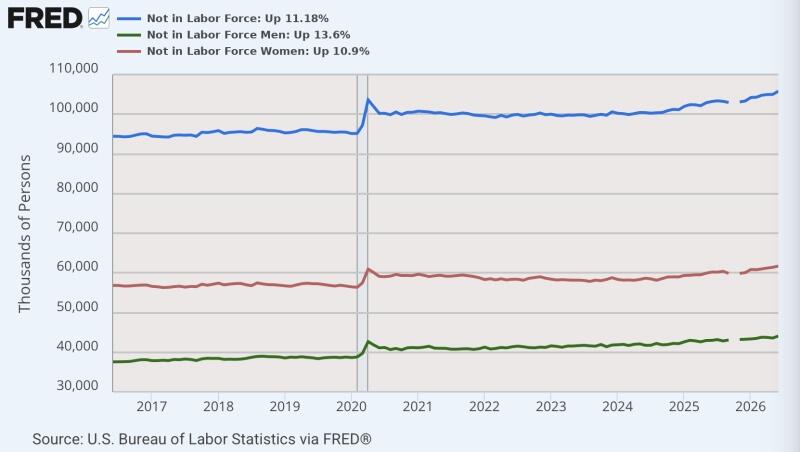
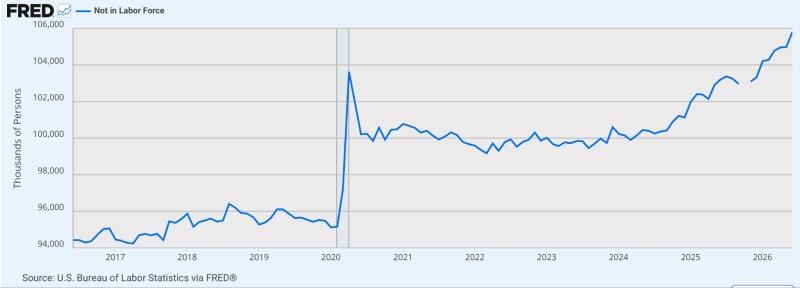
Both are set to blow up the same people:  Millennials and Gen Z, generations already hammered by housing costs, stagnant real wages, hordes of legal and illegal aliens soaking up employment, and women who forgot that the main reason they exist is to make more humans.

Good news?  Yeah, there’s a tiny sliver.  Credit card delinquencies on some non-housing debt leveled out in late 2025 according to the New York Fed®.  But that’s like saying the fire department showed up and has the fire down to burning one house an hour in the neighborhood.  The real picture is as ugly as an Antifa swimsuit pageant.

Yeah, it’s grim.

And all of their older women are coming down with prostate cancer.

Credit cards have become the new paycheck for millions of young Americans, and new companies have shown up to monetize even the smallest debts.  Want to go to Taco Bell™ and pay for that Super Crunchwrap Supreme Bellgrande™ over the next six months?

You can do that.

Total credit card debt hit a record $1.28 trillion in 2025, up $44 billion in just three months.  That’s not a blip:  that’s paying for groceries on credit cards and only paying the minimum monthly payment.  Delinquencies on household debt overall jumped to 4.8 percent, led by the kids.  For people under 39, the transition into serious delinquency on credit cards is nearly double the national average.

Surveys show 56 percent of Gen Z are forced to use cards just to make ends meet because prices keep climbing.  Sixty-six percent of Millennials say they rely on plastic to get through the month.  Thirty-five percent of Millennials are carrying more than $10,000 in card debt.

Credit card debt, the gateway drug of insolvency.  Sure, payday lenders and “buy here, pay here” car places are the crack cocaine and meth of debt, but it all starts somewhere.

Gen Z is running around $3,500 in average balances, while Millennials are pushing $7,000.  They’re not buying yachts or avocado toast, they’re financing groceries, gas, and rent.

It’s Avocado’s number.

Here’s why this mess is worse than it looks:

First, real wages aren’t keeping up, and the system is rigged against the young.  Gen Z and Millennials entered the workforce during the pandemic hangover, got crushed by housing prices we already talked about, and now face interest rates that make every purchase a long-term loan.  The GloboLeftElite told them to “follow your passion” and rack up student debt for useless degrees that qualify them for entry-level retail jobs in malls that don’t exist anymore.

And they listened.

Credit cards fill the gap at 20-25 percent interest.  For those that didn’t choose wisely and avoid jobs taken by Jugdish, life is not luxury.  It’s debt, roommates, and used couches that smell vaguely of fish.  Forever.  One bad month due to a mandatory car repair, unexpected medical bill, or if Egyptians convince them to invest in a pyramid scheme, and they’re in the hole they can’t climb out of.

Chuck Norris had a grizzly bear carpet in his bedroom.  It’s not dead, just scared to move.

Second, banks and card companies love debt.  People don’t get poor because they don’t make enough money, they get poor because they give it away to everyone else:  ask the Amish.

Banks are making fat margins on revolving debt while pretending everything is peachy.  Delinquency rates are rising, but not fast enough for the suits to panic yet.  They know the game:  extend and pretend and as long as we get this quarter’s bonus, it’s all copacetic.  Just like with the housing market in 2008.

Meanwhile, the official unemployment rate looks fine because more paper-pushers are getting hired in the last growth industry:  government jobs.

The real economy?  Productive private-sector work is stagnant.  Young people are borrowing to eat.

Third, this consumer debt bomb feeds right into the bigger federal debt bomb.  Washington has its own plastic problem, except it’s measured in trillions.  National debt sits north of $38.5 trillion.  Net interest payments are projected to hit $1 trillion in fiscal year 2026 and interest payments are already bigger than defense spending in the first quarter of this year.

Interest already eats 19% of all federal revenue.  By 2036, CBO says it doubles to $2.1 trillion and consumes nearly a quarter of everything the government takes in, but the CBO is always low, because they have to use the assumptions that Congress made up.  Yes.  AOC is responsible for the rules of the game.

But what do we want to spend our money on?

Defense?  Medicare? Infrastructure? Sorry, the interest check has to clear first.

What you get when you cross a human with a moose?  Arrested, apparently.

Fourth, the GloboLeftElite solution is always the same: print more, borrow more, kick the can.  National debt doubles every eight years.  The Fed and Congress act like debt is free because they control the printer and don’t have to worry.  Higher debt, though, means higher interest rates, which means even more debt service, which means . . . you get it.  It’s a doom loop.

Every time they “stimulate” to keep the economy looking good for the next election, they make the next crisis worse.  And who pays?  Not the politicians.  Not the connected class in D.C.

It’s the taxpayers, especially the young ones who haven’t built wealth yet, but yet were forced to watch the abomination that is Scrappy Doo™.

Fifth, the generational theft is obvious.  Boomers got cheap debt, rising home values, and that long summer of the 1980s and 1990s.  Oh, and pensions that actually worked.  Millennials and Gen Z get 24 percent credit card APRs, $1 trillion in federal interest payments crowding out future programs, and a promise that “we’ll import more workers” to fix the birth rate collapse caused by imported workers, interest payments, and . . .

Female empowerment.

Female hypergamy and economic despair already delayed families, and they’ve reached civilization-ending levels with Gen Z and Millennial female solipsism.  Now add maxed-out cards and a government that can’t even pay its own interest without borrowing more.

The kids who should be having kids are busy paying Visa® instead.

Before I was adopted, my selfies were called “family photos”.

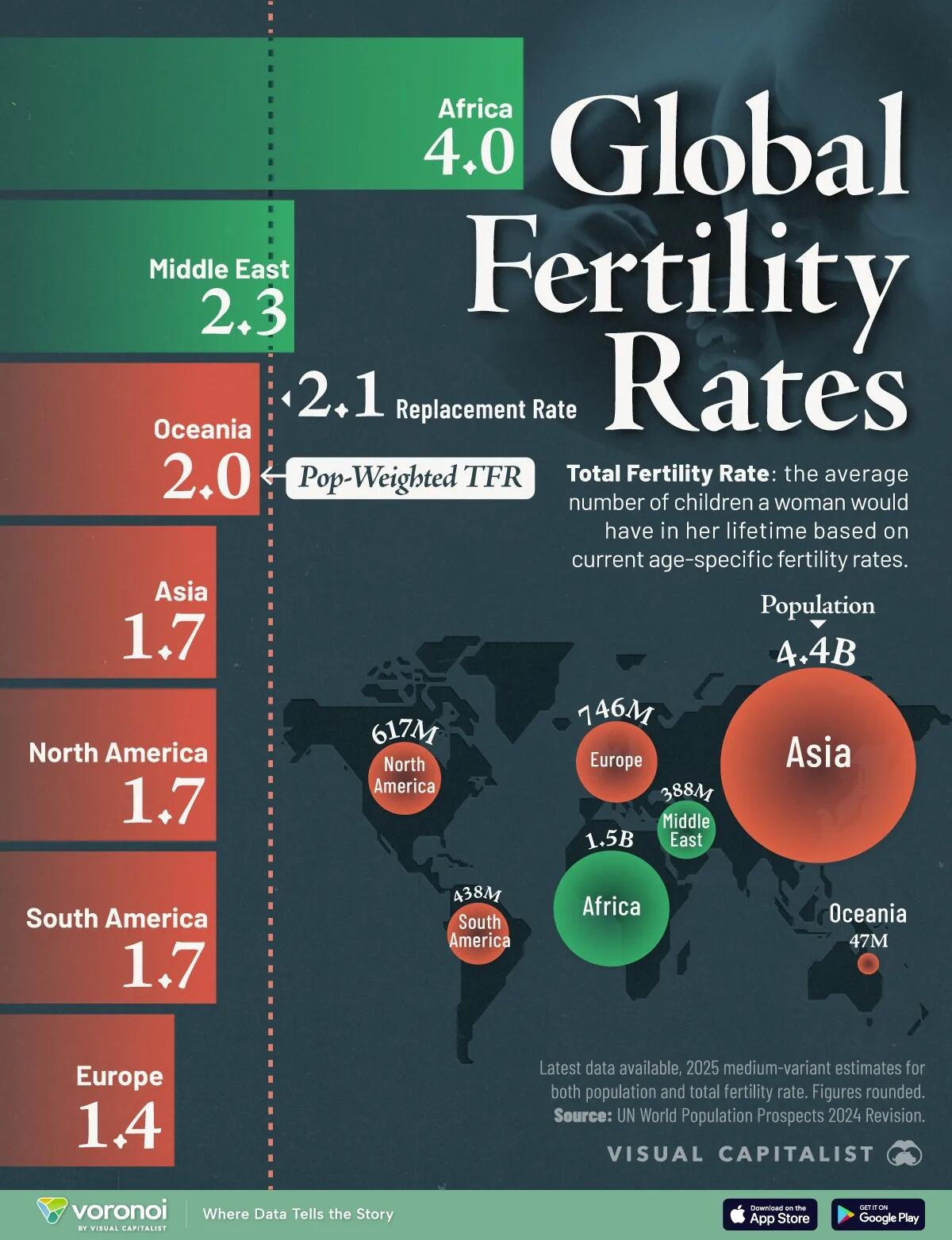
The result? Gen Z and Millennials fall even further behind.  They delay marriage, delay kids, delay life.  Birth rates keep dropping.  The GloboLeftElite flips from “stop having babies, save the planet!” to “import babies, we’re not having enough!” in one generation because their policies broke the math.

Young couples look at the spreadsheet listing rent, cards, future taxes for Boomer pensions and federal interest and decide “maybe later.”

Or never.

But me?  Debt mountains?  Debt landslides?  I think I need to stop with my metaphors because they’re making me sneeze.  Metaphors really set off my analogies.

The Housing Mess of 2026: At Least We Have Ramen

“They’re only noodles, Micheal.” – The Lost Boys

I entered a contest and won a lifetime supply of ramen.  I took the $20 instead.

Let’s start with the sliver of good news, because in this market it’s rare enough to mention:  Many illegals have left the country.  Not enough, mind you, but enough to show just how fake this economy is.  The result is real.  Rents are down where illegals live.

At least a little.  I found a great place to rent, fully furnished, but then the clerk told me it was a liquor store.

Sigh.

The Department of Housing and Urban Development to straight-up say illegals drove up to two-thirds of rental demand growth in recent years, so when .gov admits the problem, you know it’s really worse.  After years of unrestricted immigration flooding the rental market, the brakes got tapped.  Studies show that renter household growth cooled once immigration restrictions hit.

Average rent that hovering around $2,000 a month are finally showing some give instead of the nonstop 36% climb we saw the last five years.  This is, at least a small win for the working guy who just wants to keep the roof over his head while he eats ramen and smokes recreational weed.

Now the bad news.

And there’s plenty of bad news.

Housing is now unaffordable to Gen Z, and it is far worse as a percentage of their income than for any previous generation.  67% of Gen Z adults say they’re struggling to cover housing costs. That’s higher than Millennials (53%), Gen X (54%), or Boomers (36%).

When I grounded my Gen Z kids, their punishment was to go out and socialize. (meme as-found)

Homeownership for Gen Z sits at just 27.1% in 2025 data rolling into this year, which is a tiny bump from the year before, but miles behind where previous generations stood at the same age.  Zoomers need to earn over $112,000 a year to afford the median house.

The problem?  Median household income lags by about $25,000.  Nearly two million young households simply vanished from the market in 2025 because the math doesn’t work.  Housing is chewing up 40-50% of take-home pay.  That’s not a stepping stone to a family and 2.6 kids.  That’s a millstone.

Let’s delve deeper into the problem.

First, housing areas are limited, and the mass blight of urban hellscapes led to the creation and flowering of suburbia, where people could move and raise a family in relative safety.  Let’s be honest, a huge part of suburbia was economic segregation from . . . economic factors.  Suburbs?  You have to have a certain income level to live there.

When I think about the meaning of life, I think about three factors:  2, 3, and 7. (cartoon as-found)

Good schools.  Low crime.  Space to breathe.  No economic factors.

That flight from the cities created the demand, but supply never kept up.  Zoning, NIMBYs, and decades of stupid policy turned safe family neighborhoods into a scarce luxury good.  Housing prices have risen much more than inflation. While wages wobbled along like me on a Saturday night, home values sprinted like me out of the office on Friday afternoon.  Suburbia went from attainable dream to gated fortress most young people can only stare at through the fence.

Second, interest rates are up.  That’s the sort of thing that happens when the cash printer is on high and the oil pump is on low.  Higher interest rates lead to higher home costs for the same price house, as interest eats up more and more of the (now higher) payment.

Mortgage rates eased to around 6.2% by the end of 2025, but that’s still double the pandemic-era giveaway lows.  A $400,000 house that felt doable at 3% now demands a monthly payment that feels like indentured servitude.  Equity builds slower.  Gen Z runs the numbers on their phones and decide roommates, ramen, and the low-rizz life beat the alternative.

Third, houses are treated like an economic appreciation machine whose values never go down. This has led to many borrowers taking out loans near the peak value of their houses, and that peak value locks them in.  If they sell at a loss, they lose actual money, so they can’t sell for less than they owe.

We’re actually at an all-time high for the Google® search term “can’t sell my house.”  Google Trends just hit record levels in February 2026:  higher than 2008, higher than the COVID frenzy.  Sellers are frozen.  Buyers can’t bridge the gap.  The shut down like a date with a Kardashian when you tell them you’re broke.  Houses stopped being homes and turned into leveraged bets on eternal growth.

Markets don’t do eternal.

“There are no mistakes, just happy little accidents.”  Bob was a horrible nuclear physicist.

Fourth, banks don’t want foreclosures to hit the market. Why? It makes the rest of the loans in their portfolio worth less, so they’re incentivized to sit on houses rather than sell them and realize the loss on the books.  Foreclosure filings jumped 14% in 2025 to 367,460 properties, but that’s still historically low and banks are dragging their feet with modifications and delays.  How much of the current private credit crisis is due to just this?  My guess is:  plenty.  Those balance sheets are stuffed with crappy paper because it was different this time.

Fifth, those nice suburban houses with a thirty minute to sixty-minute commute are now even more expensive because the fuel to drive to where the jobs are at is much higher thanks to Gulf War IV. Or is it Gulf War VI?  I forget.  That suburban split-level two towns over suddenly costs a fortune just to reach.  The effective price of the dream just went up again.

The result of this mess is that Gen Z gets further behind.  The kids that should be having kids aren’t.  There are several factors to this, especially female hypergamy where every female (thinks she) is above average, but every male is below her standards.  But the sheer difficulty in having a home in which to raise kids is massive is also killing family formation.  No stability, no backyard, no “let’s start a family” talk that ends in anything but spreadsheets that fill with negative numbers.

Is a 4 with a 6-pack a perfect 10?

Birth rates keep dropping.  In one generation, we went from the GloboLeftElite telling us to stop having kids because “the planet can’t handle more!” to the GloboLeftElite telling us we need to import kids because we need workers.

They break the system, then demand more system to patch the system they created.  Young couples look at the numbers and decide “maybe later.”  Or never.  Unless they’re from (spins wheel) Somalia.  In that case, it’s free fun and prizes while you bring in an alien people with an alien religion.

The good news?

This type of mess always sorts itself out.  The cure for high prices is default and deflation.  If the market is too far cooked, well, look out below.  The United States doesn’t have magic dirt to turn Somalis into Americans, and houses aren’t magic wealth machines.  When enough locked-in owners and over-leveraged banks finally crack, inventory floods, prices reset, and affordability returns.

It won’t be pretty.  Foreclosures will spike.  Portfolios will bleed.  Credit markets may lock up.  The Google® searches for “can’t sell my house” will turn into actual sales at prices that make sense again.

I used to have a really funny polio joke, but no one gets it anymore.

A housing crisis wouldn’t be big for the country, would it?

Nah. Just trillions in pretend wealth gone, generational transfers halted, and the kind of reset that makes 2008 look like practice.

Prepare accordingly.  The reset is coming.

I’m glad I like ramen.

Civil War 2.0 Weather Report: A Chilly February

“Wayne coming back is change. Change is either good or bad. l vote bad.” – The Dark Knight

Is your refrigerator running?  If so, I might vote for it.

  1. Those who have an opposing ideology are considered evil.
  2. People actively avoid being near those of opposing ideology.  Might move from communities or states just because of ideology.
  3. Common violence. Organized violence is occurring monthly.
  4. Common violence that is generally deemed by governmental authorities as justified based on ideology.
  5. Opposing sides develop governing/war structures. Just in case.
  6. Open War.

Volume VII, Issue 10

Most memes except for the clock and graphs are “as found”.  I have maintained the Clock O’Doom at 9., given the open support of assassination and criminality by the GloboLeft and the increase in violence as well as direct interference with ICE and the insertion of the military into law enforcement.  Beware: the number can climb quickly.

My advice remains.  Avoid crowds.  Get out of cities.  Now.  A year too soon is better than one day too late.

In this issue:  Front Matter – Gerrymandering Risks – Violence and Censorship Update – Misery Index – Updated Civil War 2.0 Index  – But Who Will We Be? – Links

Front Matter

Welcome to the latest issue of the Civil War II Weather Report.  These posts are different than the other posts at Wilder Wealthy and Wise and consist of smaller segments covering multiple topics around the single focus of Civil War 2.0, on the first or second Monday of every month.  I’ve created a page (LINK) for links to all of the past issues.  Also, subscribe because you’ll join nearly 840 other people and get every single Wilder post delivered to your inbox, M-W-F at or before 7:30AM Eastern, free of charge.

Gerrymandering Risks

I’ve been concerned for some time that Trump’s attempt to redo the gerrymandering of the states with Republican control will end up not working out the way he thinks they will.  Right now, there are a total of 218 Republicans in the House of Representatives, the minimum number required for a majority of a full House.  There are a few vacancies.

Trump’s strategy has been to drive the strongly Republican-controlled states to gerrymander so that more Republican representatives would be elected.  The difficulty with this is that there is an optimum number so that the seats are safe for the party drawing the districts, yet impossible to lose.  The impact has been the change in districting so, if things work well for the Republicans they would pick up between 7 to 9 additional seats.  The Democrats weren’t idle, changes they initiated will likely end up driving 5 or 6 states their way.  That is, however, dependent upon the Republicans maintaining their current level of support.

In 2018, Republicans lost 26 House seats in Trump’s first term.  Even with gerrymandering, a similar performance would lead to Republicans losing 23 House seats.  However, with the remaining Republican vote spread thinner in states like Texas, what’s the likelihood that 30, 40, or even 50 seats are lost?

That’s not enough to override presidential vetoes, but it is enough to pass a never-ending stream of impeachments against every Republican appointee.  Would they be convicted in the Senate?

No.  But it would create a series of political events that would further polarize the public, and pull us closer to Civil War, and Trump’s ability to impact the laws of the nation will be crippled.

Violence and Censorship Update

More censorship that violence this month, as usual (until it’s not).  Let’s start with the United States:

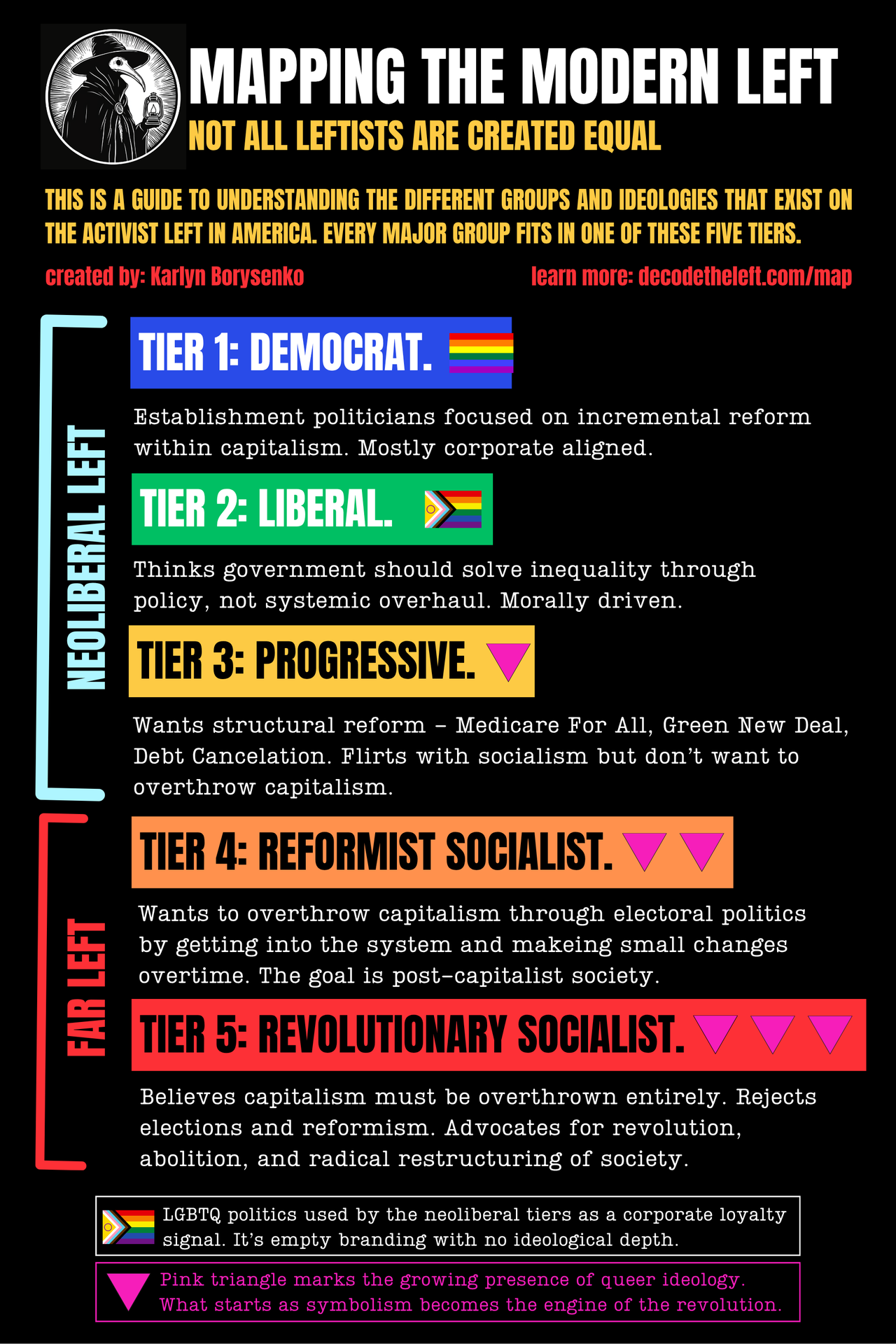
According to GloboLeftists, being okay with being white is evidence of hate:

And, apparently GloboLeftists are unfamiliar with hydrology, and always look like this crazy-eyed cat lady:

Who is unfamiliar with maps:

But there is still far too much censorship among a certain set of files.  Why?

Before we get to Europe, let’s look at how the Europeans are being used to try to shut down our ability to say what we want:

And certain speech is especially hated, even in Islamic France:

And Germans have utterly lost the plot:

Although this is parody:

This isn’t.  Police yourself, citizen, because even legal speech can be illegal.

Misery Index

The new Trump administration is shown in red.  Results continue to be much better than Biden’s misery numbers.

But nobody is buying houses, and the war with Iran won’t help that, but deflationary housing would be good for the kids.

Updated Civil War II Index

The Civil War II graphs are an attempt to measure four factors that might make Civil War II more likely, in real time.  They are broken up into Violence, Political Instability, Economic Outlook, and Illegal Alien Crossings.  As each of these is difficult to measure, I’ve created for three of the four metrics some leading indicators that combine to become the index.  On illegal aliens, I’m just using government figures.

Violence:

Violence indicators are up sharply this month, and, although they aren’t George Floyd-levels, you can see that from here.  And there’s a lot of frustration with illegals who are killing us:

Political Instability:

Down is more stable, and it went up slightly this month.  I anticipate it going up again in March, especially since half of the population hates Americans and 40% of the other half don’t want a war with Iran.

Economic:

The economy up just a smidge this month, but I think the bubble has some pretty grey hair and some other headwinds are on the horizon.

Illegal Aliens:

Still the lowest level since the Weather Report started.

But Who Will We Be?

Imagine a country that no one wants to fight for, because no one thinks of it as anything but a short-term economic investment?

As an American, I can trace my ancestry through about three main nations.  Even the word nation is based on the Latin word “natio”, meaning birth.  My ancestors have been here for a minimum on three generations, and many fought back in the Revolutionary War.  When I was born, I was born into a nation.  Most of Americans were in the same basket, we had no fealty nor acceptance in any other place in the world.  We were here and this was our land.

Now, in the West, it has become the norm to look down on the natives, and turn the United States from a nation into a country.  An example I’ve mentioned many times are Indians.  Indians have nothing in common with heritage Americans.  Nothing, except, perhaps that they like oxygen, too.

Can you imagine a presidential candidate creating a monument to a foreign leaders for worship?  Okay, I should ask that after the Iran war.  Although I think the picture below is probably A.I., you could certainly see someone like Vivek doing something like this, because they are nothing like us.

Judges with dual citizenship.  FEDERAL JUDGES with dual citizenship and Star Wars™ names ruling on citizenship.  These people have only the barest understanding of America, but they create rulings that impact a country they barely understand.

Europe is ahead of us on this track.  Germans have been taught since 1945 to hate Germany.  Is it any wonder that Germans won’t fight for their once proud nation, especially since in 2050 or so it will be Turkish?

And England, our mother country has ceased to have Englishmen that are willing to fight and die for it.  Why?

An increasingly fragmented country is one that will lead towards Balkanization and terror.  The GloboLeft do not understand this, but it is still the case that mass deportation is the most moderate choice that we can hope for.

LINKS

The links are again done by Ricky this month.  Thanks, Ricky!

BAD GUYS
https://x.com/kmbc/status/2022104782240940391
https://x.com/Dapper_Det/status/2023206053878321607
https://x.com/JeremyHarrisTV/status/2023254443748397064
https://x.com/iAnonPatriot/status/2019206205605077017

GOOD GUYS
https://www.police1.com/investigations/r-i-pd-credits-good-samaritan-with-stopping-shooter-who-killed-2-at-youth-hockey-game
https://www.wpri.com/news/local-news/se-mass/just-trying-to-help-good-samaritan-seriously-hurt-trying-to-assist-driver-in-freetown/
https://www.therepublic.com/2026/03/07/person-reported-missing-after-airboat-capsizes-in-floodwaters-near-cortland/

ONE GUY
https://www.findlaw.com/legalblogs/law-and-life/flashing-a-gun-self-defense-or-brandishing/

BODY COUNT
https://www.lifenews.com/2026/02/20/canada-is-killing-people-in-assisted-suicide-the-same-day-they-request-it/
https://assets.zerohedge.com/s3fs-public/inline-images/chance-of-being-born-on-continen.jpg?itok=FKOx1vzK
https://cms.zerohedge.com/s3/files/inline-images/Where_Americans_Having_Most_Babi.jpg?itok=bYt31T_L
https://cms.zerohedge.com/s3/files/inline-images/Share-of-Babies-Born-Outside-of.jpg?itok=6CY3ehVw
https://cms.zerohedge.com/s3/files/inline-images/2026-02-15_12-13-18.png?itok=2SeS4jAZ
https://pjmedia.com/scott-pinsker/2026/02/13/the-least-laid-generation-in-history-gen-z-is-ghosting-sex-and-the-implications-are-huge-n4949466

VOTE COUNT
https://www.zerohedge.com/political/panic-ensues-after-trump-orders-cia-give-2020-election-intel-stop-steal-lawyer
https://www.zerohedge.com/political/visualizing-changing-political-affiliation-generation-us

CIVIL WAR (OURS)
https://www.newsweek.com/map-shows-states-where-support-for-seceding-from-us-is-rising-11515967
https://nataliegwinters.substack.com/p/exc-usaid-funded-revolution-consultants
https://www.worldpoliticsreview.com/trump-ice-immigration-protests-minneapolis/
https://www.washingtontimes.com/cartoons/state-states/civil-war-in-america/
https://whowhatwhy.org/politics/us-politics/the-second-american-civil-war-is-already-here/
https://jewishjournal.com/commentary/opinion/386290/time-to-take-civil-war-seriously/
https://www.newamericanjournal.net/2026/02/you-cant-call-it-a-civil-war-if-one-side-refuses-to-fight/
https://baptistnews.com/article/americas-unfinished-civil-war/

CIVIL WAR (THEIRS)
https://brownstone.org/articles/the-fix-is-in-to-defeat-alberta-independence/
https://www.militarystrategymagazine.com/article/civil-war-comes-to-the-west-part-ii-strategic-realities/

How To Break A Society, Part I

“Half measures are the curse of it.  A rational society would either kill me or put me to some use.” – Red Dragon

The Andrew formerly known as Prince.

Picture this:  I leave my keys in the truck overnight.  Windows down.  Wallet on the dash.  Next morning?  Still there.  Nothing missing, though a cat might have explored an empty burger wrapper.  No viral TikTok™ of some “youth” doing donuts in my F-150®.

Absurd?  No.

And not because Big Brother has cameras up the backside of every squirrel, but because back in the day people just didn’t do that crap.  The neighbors would have known who did it.  Moms would have heard about it at church, and the father of the kid would have heard about it from his boss.

Shame, accountability, and consequences work better than ankle monitors.

That was the power of societal norms.  Invisible fences made of “What will people think?”  And the Founding Fathers knew it.  They told us so.

Benjamin Franklin walked out of the Constitutional Convention and some lady asked what they’d given us. “A republic,” he said, “if you can keep it.” Not “if the government keeps it for you.” Not “if we pass enough laws.” If you can keep it.

John Adams was even blunter in 1798: “Our Constitution was made only for a moral and religious people. It is wholly inadequate to the government of any other.”

They weren’t kidding.

I shocked the postman by opening the door completely nude.  I think what surprised him the most was that I knew where he lives.

Just like the Constitution, the libertarian dream only works when people self-circumscribe their own behavior.  An 85,000-page federal code of regulations telling me not to steal if my conscience (and the fear of my neighbors shunning me like a rabid raccoon with diarrhea at a picnic) already does the job.  The Constitution assumed a pretty genetically homogeneous people who spoke the same language, mostly went to the same church, read the same Bible, and agreed that punching your neighbor over a fence line was a last resort, not the premise of a YouTube™ video.

Some people broke the rules.  Always have, always will no matter the civilization.  But back then the system didn’t turn justice into a CBS® series lasting twenty years.  The mean time from sentence to rope?

Often weeks or a few months, not the decades-long death-row vacation with three hots, cable, and taxpayer-funded lawyers we enjoy today.  Were innocents sometimes executed?

Almost certainly.

But swift, mostly impartial justice beat the hell out of vigilante posses or letting killers out on technicalities to murder yet again.  A society that can’t punish the guilty quickly loses the ability to protect the innocent at all.

I stand behind Alec.  It’s safer than standing in front of him.

Fast-forward to post-World War II America.  Streets were so safe kids rode bikes until the streetlights came on.  Doors stayed unlocked.  Factories hummed, wages rose, and the biggest scandal in most towns was somebody skipping the church potluck.  Prosperity wasn’t just money:  it was a stable and predictable life.

That bored the revolutionaries of the 1960s half to death.

They looked at this overwhelmingly safe, secure, prosperous society made of families in traditional family roles and said, “Nah, too square.”  The GloboLeftist project kicked into high gear with the Great Society.

Lyndon Johnson and his crew didn’t just want to help the poor.  No.  They wanted to remake society.  The guardrails of conformity had to go.  Why?  Because the norms of self-restraint, local reputation, and actual community stood in the way of central control.

Take lending, for example.  Let’s say I wanted a home loan in 1955.  My local banker didn’t just run a credit score, because they didn’t exist.  He would have called my pastor:  “Does Wilder show up on Sundays,?  He does?  Any rumors about his behavior?  PEZ®, eh?  That’s a bit odd.”

Local money stayed local. My mortgage would have literally been made from the savings of the people I saw at the grocery store.  Or, rather that The Mrs. saw at the grocery store, since why would a married man go to the store?

Good families got a break if junior was speeding?  Sure.  Outsiders had to prove themselves?  Absolutely.  But it worked because everyone was playing the same cultural game.

If King Charles was anymore inbred, he’d be a sandwich.

Then came the 1960s and beyond.

Mass migration became deliberate policy.  Civil rights were the noble public excuse, but the real play was splintering the old society so it could be replaced with something more compliant. Free association?

Gone.

You can’t choose who you hire or rent to without risking a lawsuit. Schools?

Prayer out, social engineering in.

Education standards?

Lowered faster than a politician’s principles.

Family?

Oh, boy.

Women used to save themselves for marriage.  Even when I was a kid, that was still the norm in most places and led to more than one frustrating Saturday night.

Body count back in the 1950s?  Usually one, and it came with a ring and a white dress.  Fast-forward one lifetime from the Great Society:  sophomore year of college and some girls are racking up body count numbers higher than a Call of Duty™ leaderboard.

No-fault divorce, welfare that paid better for single moms than married couples, and a nonstop cultural drumbeat that “settling down” was oppression led not to the Great Society but the Great Breakdown.  The nuclear family, once our bedrock, got nuked.  Fatherless homes exploded.  The Great Society didn’t cure poverty:  it subsidized it while making dads optional and government mandatory.

My WIFI router is in the basement.  You could say this post comes from a LAN down under.

Every facet of life got the treatment.

Religion was pushed out of the public square.  “Under God” became hate speech.  Local norms replaced by federal mandates.  You couldn’t even form a private club without worrying about quotas.

The explicit goal?

Fragment the connections that made America 1960 a powerhouse.  Replace them with government strings.  Make people dependent on D.C. instead of their neighbors, their church, or their own character.

And it worked.

One generation. That’s all it took.

We went from “mind your own business but don’t be a jerk” to needing sensitivity training to say “good morning” without committing a microaggression.  We went from “your reputation follows you” to “my truth” where accountability is optional and consequences are for white men.

The absurdity peaks when you realize the same people who tore down the norms now act shocked at the results.

“Why is crime up? Why are families falling apart? Why can’t we have nice things?”

Because they spent 60 years telling people the guardrails were bigotry.  They replaced “don’t do that, people will talk” with “do whatever feels good, you slay, queen.”  They swapped local bankers who knew your grandma for algorithms that approve loans based on your zip code, skin tone, and whether your social media likes the right causes.

A fragmented society built on ephemeral values:  “my feelings, my identity, my government check” cannot magically produce the disciplined, self-restrained people who built the 1960 powerhouse. We can’t have a republic of free men when half the population thinks “freedom” means no consequences and the other half thinks the Constitution constrains the government too much.

The fall wasn’t accidental.

I ate in an all-you-can-eat Italian restaurant buffet.  There were endless pastabilities.

It was engineered during a time of plenty, when people were fat and happy enough to believe the sales pitch.  “Break the old norms, they’re oppressive!” Turns out the oppression was mostly keeping humans from doing what humans do when they’re not in a civilization and are left unchecked.

I don’t think we can keep the republic Franklin talked about from where we are.  Adams knew the reason: paper and ink don’t enforce morality.  People do.

Or they don’t.  And when they don’t, the government is happy to step in with a smile and a 10,000-page regulation.

The norms are gone. The absurdity remains. And the bill?

It’s due, with interest.

The Defeat Of The West?

“Victory has defeated you.” – The Dark Knight Rises

I once forgot the rules to chess, but they told me it was okay to check.

I just wrapped up Emmanuel Todd’s latest book, La Défaite de l’Occident (that’s “The Defeat of the West” for those of us that hate the metric system), and it lines up perfectly with what I’ve been posting about for years here.  In fact, this isn’t the first time I’ve written about Dr. Todd, having written about his Family Structure/Geopolitics Theory.

Another Key To Understanding It All: Family Structure

Family Structure, Part II: Orphans Still Not Required

The book isn’t in English yet, but somebody cut and pasted it into Google® to have it translated, and you can find it out there if you look.

In this book, Todd is using the Ukraine mess as a lens to autopsy what he calls the West’s self-inflicted doom.  In Todd’s view, the collective West is collapsing, compared to “stable” powers like Russia and China.  The West’s decline isn’t from bad luck or Russian super-spies, nope.  It comes from the rotting foundations of the West itself.

Why did Princess Diana cross the road?  She wasn’t wearing her seatbelt.

I’ve written extensively about the deindustrialization that’s left the economy hollowed out, so that should be familiar.  Add to that a slide into nihilism stemming from the death of Protestant Christianity in the United States.  Protestants used to stand for something, but the last time I went to a Protestant church it was very much them not wanting to be against anything and the female pastor went on a long “men are bad” speech.

On the other side, Russia, lagging on almost everything by about 50 years, is experiencing a resurgence in families, a religious revival, and an ethnonational cohesion that allowed them to (mostly) take the hit from sanctions and keep going.  The Ukraine war?  It’s the litmus test exposing our bluff:  we’re great at low-intensity or short duration conflicts with things like coups, sanctions, and drone strikes on weaklings (Iran, Venezuela, you name it), but don’t have the industry for real, prolonged industrial slugfests.

One example:  Russia can produce three million rounds of artillery a year, with one recent estimate that they produced seven million rounds last year.  Even at the lower three million number, that is three times the amount that the United States and other NATO countries, combined can produce.  And, yeah, Russia is fighting Ukraine and the United States has lots of amazing tech that nobody but people with top clearance or Chinese spies know about.

That’s why Ukraine keeps facing ammo droughts.  The West’s “superior” economies are finance-bloated illusions where we just keep swapping pictures of silver for electronic dollars that we’re too cheap to bother printing anymore.

I am really good at predicting the scores of the Super Bowls® before they start.  0-0.

US manufacturing jobs?  These dropped from 20 million in 1980 to 13 million today, with 80% of GDP now in services and Wall Street Pokémon® card swapping.

Russia simply isn’t the basketcase the MSM paints.  Yes, their nominal GDP’s around $2T vs. the US’s $27T and EU’s $20T, but in purchasing parity (what their money can really buy them) terms, Russia’s at $6T, edging out Germany as the world’s fourth largest economy.

Why?  The sanctions (starting in 2014) forced them to become independent.  After nearly a decade, when the United States hit them with sanctions after their 2022 invasion of the Ukraine, well, they were ready to survive without trade from the West.  Even though Russia has a much smaller population (roughly half) than the United States, Russia has more engineers aged 20 to 34 than the United States.  Russia has 2 million, the United States around 1.3 million.

Once a European midget asked me to hide him.  I guess I can cache a small Czech.

Contrast that with what Todd calls the West’s “shallow state” since it’s (his view) an oligarchic mess lacking soul or cohesion.  Todd mainly blames this on religious evolution:  Protestantism (Weber’s ethic of work, literacy, discipline) powered the rise of the West, but we’ve hit the stage where the United States is a secular void.  Zombie Protestant churches linger, channeling energy into welfare states.

Now we find that culture in the West is pure nihilism: no morals, just primitive urges for pleasure, cash, and violence.  Todd’s view is that the moral low point where we finally jumped the shark was around 2015.  “Marriage for all” symbolizing the final shredding of Christian norms and rise of GloboLeftism.  In Todd’s words, “If the people and the elite no longer agree to function together, the notion of representative democracy no longer makes sense:  we end up with an elite who no longer wants to represent the people and a people who are no longer represented.”

This certainly defines the state of the West now.  A huge majority of the people want all illegals gone, and some want legals gone, too.  And yet, the illegals are here and we fight to make the line up and to the right in what is now, according to Todd, a “liberal oligarchy”.  That leads to a national weakness.

This weakness is structural and has been building for decades as the United States in particular (and the West in general) worked as fast as it could to de-industrialize.  This offshoring has consequences, and can’t be changed in a heartbeat.  To rebuild, we have to build factories, build supply chains, build up a workforce, and remember how to make stuff.  To explain how difficult this may prove to be, in 2024 China reached 10,000 Terawatt hours of electrical production.  That’s more than the United States, Europe and India combined.

My favorite Asian stereotype is Sony®.

Back to Todd:  “Producing the world’s currency, at minimal or no cost, makes all activities other than monetary creation unprofitable and therefore unattractive.”  Why do we spend so much effort on finance in the United States?  It’s just so profitable and so much easier than making stuff, which requires real effort.

Todd’s conclusion:  Ukraine was a trap for the United States. The United States, flush from the victory over the Soviets was unbound.  It could do whatever it wanted.  The United States expanded its global reach from the early 90s to 2022.  But we ignored Russia’s 2021 ultimatum because we thought sanctions would crush them like they did in 2014.

The opposite happened.  Ukraine remains resilient but allowing 60+ year olds into the army isn’t really a sign that you expect when you’re winning.  I expect the end of Ukraine’s resistance to be amazingly abrupt and to occur sometime in the next year, with August being a midpoint.  Russia will win, and as near as I can see, their economy is stronger and more independent than it was before the start of the war.

I asked Sydney “How do you get into that tight shirt?” and she said, “For starters, you could buy me a drink.”

Now, my two cents:  Todd’s spot-on that West’s weakness is structural, not just spineless leaders.  Pain is coming.  NATO/EU has ceased to be a bloc; it’s a squabbling conglomerate with clashing interests and seems to have lost its will to live.

Todd’s book substantiates the politically incorrect that I’ve been championing forever:  nationalism trumps globalism.  The West is exhausted, defeated not by conquest but by its own nihilism leading to that most Evil philosophy of all:  “Do what thou wilt shall be the whole of the law.”

As for me?  I still refuse to learn to speak or read French.