The Simpsons, Radioactive Potato Salad, And Running Out Of Electricity

“I have become death, destroyer of worlds.” – Andromeda

Had Oppenheimer been a theoretical physicist he would have been frictionless, perfectly spherical, homogeneous, isotropic, involuntarily celibate, and have extended to infinity in all directions.  I guess one out of seven isn’t bad.

You know, Oppenheimer probably didn’t realize that his little gadget would one day power cat videos on YouTube®. But yet, here we are, preparing to stare down the barrel of an energy crisis that makes the 1970s oil embargo look like a minor hiccup at the gas pump.

America’s tech overlords are building A.I. data centers faster than a caffeinated beaver on gas station Chinese boner pills.  These behemoths suck down electricity like it’s free beer at an open bar to toss electrons so we can make A.I. cat videos because there weren’t enough cats in real life.

The scale is enormous:  gigawatts upon gigawatts, enough to finally get Marty all the way back to 1985.  But that begs this question:

Where’s all that juice coming from?

My walkie-talkie once took a lump of coal to a movie.  It was a classic example of radio-carbon dating.

Coal?  Ha!  That’s so 19th century, and the eco-warriors have pretty much chained themselves to the last coal plant, screaming about carbon footprints.

Natural gas?  Did everyone forget demand peaks in winter when everyone is cranking up the heat and prices spike like Nvidia® stock?  Are we going to have to keep our homes at 40°F (3.14 millipedes) just so ChatGPT® can make GloboLeftist women on the East Coast even more neurotic?

We need power, so, naturally, the bright sparks in Silicon Valley and D.C. turn to the holy grail: The Simpsons.

Sure, Homer® looks incompetent, but he hasn’t melted Springfield down.  Yet.  When The Simpsons started, they were mocking nuclear power in the typical GloboLeft drive to get it shut down.

Deep down, though, nuclear really always has been the only viable transition plan into the future.  Oil really will run out at some point, abiotic or not.

I had an allergic reaction and the doctor asked how I was.  “Swell.”

But nuclear?  If done right, it really can be clean, reliable, and if we don’t let Soviets do it, pretty safe.

So, problem solved.

Not.

We’re facing an immediate energy cliff.  In 2025, nuclear isn’t a parachute, it’s really more like a bedsheet and some twine.

With a little help from Constant Reader Ricky, who sent me an email.

I’ll quote him directly because, well, he nails it better than I could.

Ricky writes: “Existing commercial power reactors in the US have two key characteristics – their uranium is enriched from the natural 0.7% U-235 assay to a level of 3%, and they are cooled with pressurized water as the heat transfer fluid to run the turbines. The reactors were INITIALLY fueled via uranium enrichment done long ago in . . .  monstrous factories that are now closed.  An effectively experimental centrifuge enrichment operation in Piketon, Ohio shut down in 2016 without ever producing a pound of reactor fuel (we bombed a similar setup recently in Iran).

“Believe it or not, the US CURRENTLY fuels its commercial nuclear power reactors for the past ten years with Russian 3% enriched uranium, even through the Ukrainian war.  The Russians basically dilute some of their bomb grade 93% enriched uranium stockpile down into 3% reactor fuel as an export profit center.”

Key point courtesy of Ricky: “The current American commercial nuclear power program is 100% dependent on the Russians and has been for the last decade.”  He adds, “But we want that because that every kilogram of Russian uranium that goes IN a New York City power reactor is one less kilogram of Russian uranium that can go into an incoming nuclear bomb OVER New York City.”

He’s right.  I want the Russians to hit the Somilsotans first.  And then New York City twice.  It’s the only way to be sure.

And just like uranium, Hillary is unstable, hard to find, and expensive.  If only we could power a reactor with her tears.

It’s like we’re in a bad spy novel, relying on our geopolitical rivals for the fuel that keeps our lights on.  We can stamp our feet as much as we want to, but as long as Mom and Dad are paying the power bills, they call the shots.

With AI data centers projected to gobble up an extra 200-300 gigawatts by 2050 (that’s tripling our nuclear capacity), we’re supposed to ramp up nuclear like it’s no big deal.  It’s like the steady high school girlfriend you’ve been dating off and on for a year who you can always call for a date at the last minute.

Nope.

Building that kind of capacity?

Recent estimates peg adding just 63 GW at $354 billion.  We’re talking trillions when you factor in overruns. The Vogtle plant in Georgia – two reactors, “just” 2.2 GW, clocked in at $35 billion after fifteen years of delays.

Nuclear power makes NASA look prompt and frugal.

Okay, we’ll just do micro-reactors.

Except these micro wonders ditch the “obsolete” 3% enriched uranium for something hotter: 20% enriched stuff, packaged in pellets like, I don’t know, energy kibble. Supposedly, they’re meltdown-proof, corrosion-resistant, great with kids, fun at parties, and perfect for high-temperature gas or molten salt reactors.  And they’re much smaller than kibble, like poppy seed sized, but kibble is a funnier word and I really don’t want to think how stupid it is to build highly radioactive balls that you could put into someone’s potato salad at the neighborhood picnic?

I did figure out where I got the plague:  the flea market.

Cool, so where do we get this 20% enriched uranium for our nuclear kibble?

We downblend our surplus bomb-grade stuff from the Cold War.

The US has 480 metric tons total, but half is reserved for nuking India (it’s the only way to be sure), and 100 tons reserved for Navy reactors.

Bringing those numbers up to date and turning it into nuclear kibble leaves 86 metric tons up for grabs.

So, we have a safe plan.  What’s stopping us?

Adding 250 GW of new nuclear by 2050 (a Department of Energy guess) requires 5,350 metric tons (it’s like a ton, but it has a French accent) of enriched uranium kibble.

Do the math:

86 tons available vs. 5,350 needed?

It’s like trying to fill an Olympic®-sized pool by spitting into it.

Our energy policy in a single meme.

Okay, let’s restart a program that used to make the stuff.  Great!  The Piketon, Ohio centrifuge plant we mentioned above, let’s use that. They’re planning on delivering 900 kilograms (a ton for those of us from countries that have put people on the Moon) by 2026.

So, we need over 5,000 tons.

We’ve made one.  Oh, scratch that, not even one yet.

Want to take odds on that bet?

Even if we magically create tons of usable uranium, Harry Potter-style®, there’s no supply chain for turning it into nuclear kibble.  Right now, it’s a prototype lab in New Mexico fiddling with demos.

We’d need a whole new industry.

And we’d need to have started on this (checks watch) twenty years ago.  That’s the bitch of exponential growth.  We could play with 2030 numbers (“only” 50 GW), but since no concrete has been poured for this new capacity and there is no path to creating this fuel, it’s more realistic to discuss if Superman© could beat The Witcher®.  It’s a non-starter.

I mean, who would win, Captain Kirk or T.J. Hooker?

We’re dependent on foreign fuel, short on domestic capacity, and staring at timelines measured in decades, not quarters.

Maybe it’s time to rethink the whole “AI will save us” stock market hype or at least stock up on candles and spears.

And hey, if that microreactor ends up in my yard, Homer© and I will host a barbecue, BYOGC.

(Bring your own Geiger counters, you know, potato salad).

Thank heavens we let The Simpsons create our energy policy.

From Spears To A.I. To Spears In Two Easy Steps

“How do you hunt a bear in winter?  Go in his cave with spears.” – The 13th Warrior

I bought some spears on E-Bay® but when they arrived, they were all missing their points.  I guess I got shafted. (all art is A.I. generated)

Ahhh, innovation, that Pandora’s Box that has poppled up again and again in the Self-Stor® of history in the back corner underneath the stack of old National Geographics®:  “Why do it the hard way when you can do it the smart way?”

In paleolithic times, the technology was napped stone turned into a spear point.  Oh, sure, the old folks said, “We didn’t need any of those fancy flint spears when I was growing, up, we just took down the mammoth with our fingernails and teeth,” but the overall access to calories for the tribe, one measure of their wealth (along with number of remaining teeth), increased.

This was doing things in a more indirect manner and is one of the oldest examples we have of human-like behavior in the archeological record.  Rather than try to gnaw a mammoth to death, the idea was to spend time finding and crafting a piece of wood into a shaft, knapping a stone spearpoint, using a leather thong and wrapping the whole thing up to make an easier way to take down a mammoth than just using incisors.

I don’t see much of a downside to this technology (I mean, besides the whole war thing that came with it), and it certainly scaled quickly.

I saw a mammoth singing Calypso.  His name was Hairy Elephante.

Other examples include:

  • writing, where quill and ink and papyrus replaced having to remember things, making words from ephemeral utterances to, in some cases, an eternal record;
  • organizations, where rather than doing any old thing you wanted, you had a task, making groups more effective;
  • agriculture, replacing wandering around looking for food to growing beer components so they could harvest them at the end of the year for the big harvest party.

Technology is that replacement of some aspect of our life that is difficult with one that is much more indirect, yet makes the task easier.  These changes fundamentally changed society.

The Agricultural Revolution was one, turning humanity from wandering bands of dudes who spent all day in the outdoors hunting to dudes that could now have 9 to 5 jobs and backaches from plowing.  Oh, and taxes.  Yup, taxes and mortgages and debt.

Ouch.

The Mrs. told me she was getting tired of the corny jokes.  So, I decided to do jokes about chemistry, but was worried about the reaction.

The Industrial Revolution was another, turning humanity from relying on animal and human effort into one where chemical release of energy made slavery uneconomical, also creating the first case of obsolete farm equipment.  The economics of the Industrial Revolution led to the end of slavery in the West (there are more slaves in Africa right now than there were in the United States before the Civil War), not ethics or virtue signaling.

But this controlled chemical release of energy made so many other changes possible.  Energy had been very expensive, and now it was, by historical standards, cheap.  Many innovations followed in rapid succession because of this singular change.  Trains, telegraphs, textiles, tapioca, trampolines, toilets, televisions and PEZ® can all trace their existence or mass production back to the Industrial Revolution.  Oh, and child labor.

What’s short, tired, and very profitable?  Child labor.

Let’s look at one consequence of the Industrial Revolution:

In order for people on the coasts to have fresh meat, railroads had to move live cattle from the center of the United States to the coasts.  This required watering and feeding along the way, and was expensive since lots of cattle parts that people didn’t want to eat (like hooves and heads and hair and hides and other parts starting with the letter “H”) had to be moved as well.  It was expensive to move what was to a butcher in New York City, nothing more than waste to discard.

The innovation of a refrigerated rail car changed all of that:  cattle could be slaughtered all in one location, and everything from them could be used in subsequent products, bones for glues and buttons, hides for leather dominatrix boots, leather for dominatrix whips, and, well, you get the idea.  This is where the famous quote on pork production by Upton Sinclair came from, “ . . . use everything but the squeal.”

It also changed and allowed monopolization of the market.  Now, due to the organization of massive slaughterhouses and meat production facilities, ancillary factories like tanneries and sausage plants and glue factories could also be built, which explains Chicago.

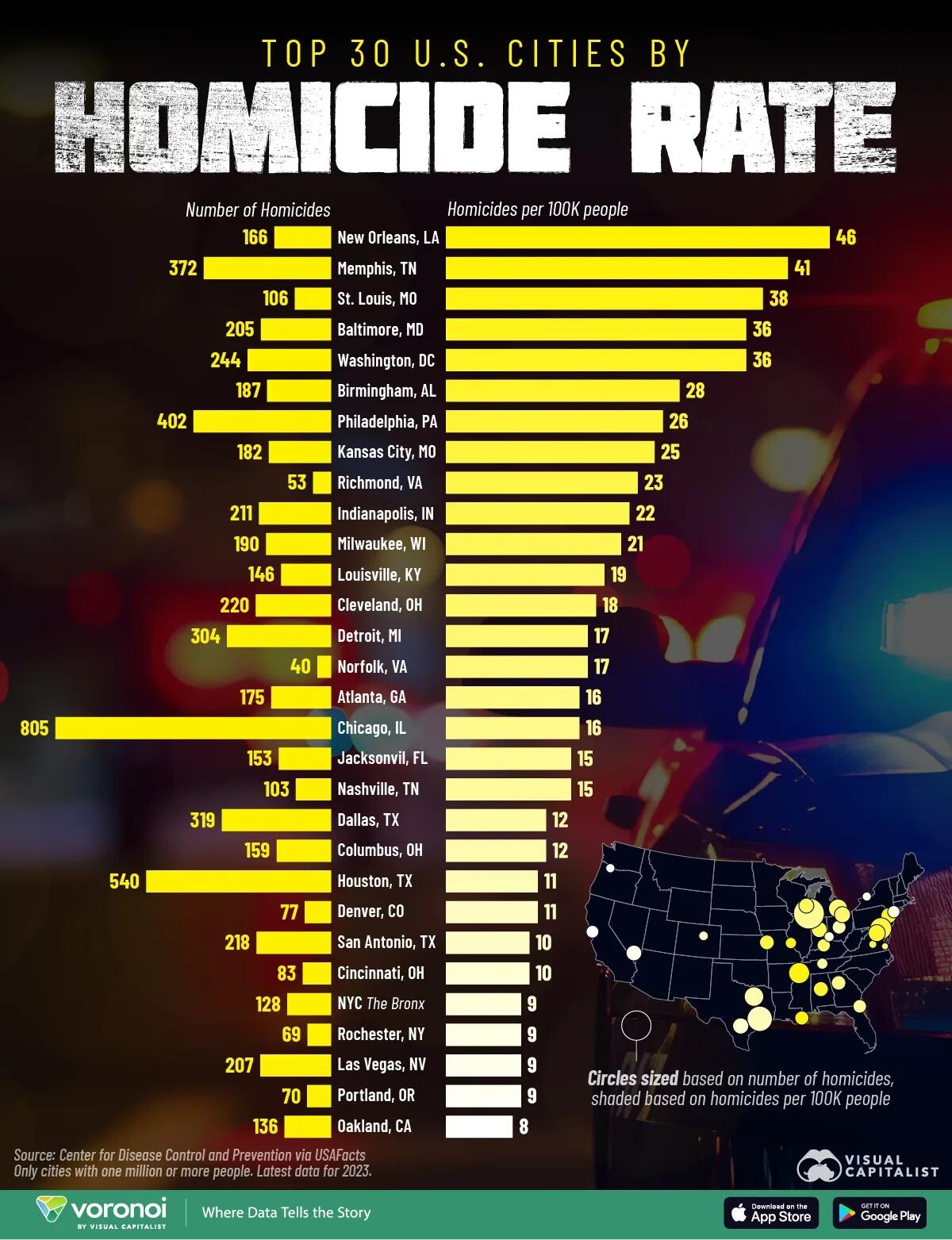
Almost all multiple stabbings are committed by someone very close to the victim.  Arm’s length, at most.

Chicago became the terminus for cattle heading nationwide.  This gave the buyer huge amounts of influence, since now purchasing of cattle became centralized, the purchasers could set their price.  Likewise, the cost structure changed to the point where producers could nearly give the meat away for free due to the profits from the rest of the animal.

This concentration of power allowed the profits to be centralized, and with only two or three players, they colluded to make as much money as they wanted.  This did increase the overall wealth since now people in New York could get decent steaks.  Also, I suppose people wanted those slaughterhouse jobs or else Upton Sinclair’s book, The Jungle, wouldn’t have been such a powerful recruiting tool.

It did provide just one example of a technology that was greatly disruptive, and changed an industry, centralizing it, and making the extraction of profits at a single point possible.  Congressional action in the form of the Packers and Stockyards Act of 1921 was necessary to break up the five-company oligopoly.

I once read about a motor that was too powerful for the moving stairway – it escalated very quickly.

Weird how we recognized the danger of capital concentration back then instead of providing infinity bailouts.  We recognized that technology should work for us, and feared the concentrated power of both government and corporations.

Now?  We have a domination of the economy in a similar fashion, for similar reasons: the Internet made information access trivial, leading to the collapse of the existing commerce and distribution system.  Oh, yeah, it’s the gateway to the technology that is already disrupting the economy on a scale that meat packing never could:

Intelligence.

Okay, not exactly intelligence.  But in certain applications it can do wonders.  I had a phone call with my credit card company.  The call was crisp, clear, relevant and in perfect English.  Only when I asked a non-standard question did the odd hesitations and gaps show up, and it transferred me to . . . “Peggy” whose thick Hyderabad accent told me her name wasn’t really Peggy.  Peggy was able to answer my final question.

How many lawyers does it take to change a lightbulb?  Don’t know, the jury is still out.

A.I. has taken over a conversation and now some Indian was out 7.5 rupees, or whatever the name is of that colored wrapping paper they use for a currency is.

This is just the beginning.  I had an A.I. tech support question where the answer came in a chat window – three or four messages, one last “Did you try this?” and the problem was fixed.

Heart surgery soon?  No.  Controlling telemedicine and serving up patients to doctors who have been prepped by an A.I. assistant?

Yes.  And artists?  They’re now competing against free.

I hate making spelling mistakes on this blog.  Just one and the whole post is urined. (in fairness to Grok®, it got the spelling correct on one of the two)

And control of A.I. is all concentrated in server farms and Seattle silos.  If 11.7% of jobs in the United States are, as a recent MIT estimate showed, in danger of A.I. replacement.

But add on the indirect jobs lost, you know, because 11.7% of jobs that pay decent wages go away?  The numbers show that the job losses that follow because that 11.7% aren’t going to McDonald’s® anymore could jump to a combined 27.4% drop in unemployment, a Great Depression level number.

This is a calculation, not a blind guess.  In technical terms, that means it’s still wrong, but I’ll be able to explain why.  Using Okun’s “Law” (about 2% GDP drop from each 1% unemployment rise) that calculates to a 50%+ drop in GDP.

Nah, it’ll be fine.

We still know how to make spears.

Enserfification, It’s No Accident

“Oh my God!  Movable printed type!  We must keep this from the serfs lest they gain literacy and threaten the landed gentry!” – Family Guy

Bernie in a bar:  “Free drinks for everyone!  Now, who is buying?” (meme as-found)

“The moral and Constitutional obligations of our representatives in Washington are to protect our liberty, not coddle the world, precipitating no-win wars, while bringing bankruptcy to our people.” – Ron Paul

Okay, maybe Ron was a bit of a downer, but if he could see the average millennial staring at blankly at their TikTok® feed while wondering if ramen counts as a vegetable, he’d probably nod and say:

“Told ya so.”

America isn’t only circling the drain, it’s installing a fancy gold-plated one, imported from China, because why not add insult to bankruptcy?

If Hunter Biden was a duck, what would he do?  Crack.

Let’s talk about “Enserfification.”  While I cannot find any reference to this word (I did find “enserfify”) on the Internet, A.I. claims that it’s okay, so that’s good enough for me even though Word™ draws an angry, squiggly line under it.

Enserfification is not quite feudalism, where the lord hands you a pitchfork and a plot of mud and some ugly facial moles in exchange for your firstborn.  Nope, it’s sneakier.  It’s the slow, corporate/bureaucratic boil where the middle class gets squeezed until the middle class plops, slowly mind you, into the ranks of a serf.

Let’s face it, the middle class is shrinking, and those that are in it are not building dreams anymore.  They’re just trying not to default on the electric bill for their bread and circuses Netflix™ indoctrination videos.

What do you get when you cross a polar bear with a seal?  A polar bear.  (meme as-found)

And the statistics?  They are brutal.

Those under 40 with a STEM degree and a car payment, life is hitting them like a tax audit from the IRS’s agent that they hired directly from the DMV because she regularly made Marine Drill Instructors cry.

Let’s start with jobs.

Remember when Mom and Dad said, “Get a degree in engineering or computers, kid, and you’ll be set for life”?  Yeah, that was before the H-1B visa tsunami turned Silicon Valley into a global import mall with accents thicker than a deaf Russian that learned English in South Carolina.

In 2024 alone, the U.S. approved a whopping 399,395 H-1B petitions—basically a free-for-all green light for companies to hire cheaper talent from abroad instead of the fresh-faced Americans they just saddled with $100k in student debt.  Oh, and did anyone mention that these invaders can bring their spouses, and that they can work, too?

That 400,000 number is up 3% from the year before, because nothing says “meritocracy” like importing coders who mainly lie about their degree and qualifications.

The other night The Mrs. asked, “Are you even listening to me?” which I thought was an odd way to start a conversation.

Recent American college grads with physics degrees are sitting at a 7.8% unemployment rate, second-worst among majors.

Computer engineering?  7.5%.

Computer science?  6.1%.

These aren’t lazy trust-funders: these are they (mainly) guys who aced calculus while discovering new an unique ways to self-administer caffeine, only to hit the job market and find a “park’s closed, moose out front should have told you” meme.  Why hire Johnny from Boston when you can snag Judgish from Bangalore for 30% less, besides, he’s the nephew of the HR lady?

I do know that the Canadian Army used to communicate via moose code.

Enserfification Step One:  Lock the gates on opportunity, import infinity Indians, then blame the peasants for not climbing the walls.

Let’s move to step two . . . .

Cars are the great American symbol of freedom in the postwar era:  cruising the open road with the wind in your hair and AC/DC® describing how to Shoot to Thrill.  Me?  Back then when I listened to AC/DC™, the neighbors did, too.

Except now, that freedom costs more than a down payment on a small ranch would have in the 1980s, and I’m not exaggerating:  the average new car price in 2025 is now solidly over $50,000.  I have no idea who is buying cars at these prices, outside of federal governments, state governments, local governments and corporations.

Back in 2000, you could snag a reliable sedan for under $20,000.  Oh, and that number is adjusted for inflation.  But now, most people don’t buy cars with any view towards the price, they look at the monthly payment, so adding leather seats on a . . . pickup . . . becomes the norm.

My chickens really enjoyed the coupe, though.

Today?  Forget it.  Folks are hanging onto their rustbuckets like they’re family heirlooms, because the average age of vehicles on U.S. roads hit a record 12.8 years in 2025.  The newest Wilder family vehicle is nearly a decade old.

Why the delay?  First, value.  Most of the new cars are loaded with crap that I don’t value.  Heated seats?  A.I.-enabled cup holders?  Sound systems that have monthly fees.?

The idea is to turn a “here, you bought a car, it’s yours” to “here, you bought a limited-term license to have title to a car that will require $47.50 monthly so it will report your driving habits and destinations to your insurance company without your consent”.

Me?  I’d much rather own a 2012 Civic™ with rubber floormats and a passenger-side electric mirror that doesn’t work.

This is Enserfification Step Two: Make mobility a luxury, so you’re stuck in your 30-minute commute hell, pondering if that cheap Prius® with just one dead owner from Craigslist© is haunted. (Spoiler alert:  it is.)  Just like the meme says:  in 2030 you’ll own nothing, but you will represent a reliable monthly income stream because to the corporations and governmental entities, that’s what you are.  Which is?

A serf.

I could go on and on, but I’ve been wordy recently, and you get the picture.  I detail housing and our lack of choices there (killed by legal and illegal immigration), federal, state, and local laws that never seem to get rolled back but keep moving in the direction where everything that isn’t mandatory will be prohibited and the other aspects of the subscription economy where a million companies want.

The only two times you can have too much ammo is if you’re on fire or if you’re drowining.

The middle class isn’t shrinking naturally.  It is being pulverized into gig-economy paste on purpose on the twin altars of multiculturalism and corporate profits.  Their solution:  bread and circuses, updated for the smartphone age.

How do they make the middle class go quietly onto that good night?

  • Cell phones that ping into dopamine oblivion,
  • YouTube® rabbit holes that make three hours vanish like your savings, and
  • Netflix queues longer than the line at the DMV.

It’s genius, really.  Why allow the serfs to revolt when they can be made to doomscroll through cat videos and true crime docs that make their problems seem quaint?  Distract the serfs and they’ll never notice the chains.

Enserfification isn’t inevitable.

It’s engineered, and requires our consent to win.  Don’t patronize businesses that use H-1B employees.  Don’t patronize businesses that are owned by foreigners.

And, yes, ramen is a vegetable.

The Looming A.I. Market Bubble

“Don’t try to fight it.  You’ll get brain bubbles, strokes, aneurysms.” – Fear and Loathing in Las Vegas

Is bubble wrap part of pop culture?  (All memes as-found)

Elon Musk promises a supercomputer cluster bigger than Texas that’ll make Skynet™ look like an HP-15C®.  It even has a creepy name for those who know film history:  Colossus™.  Of course, it’s going to require more power than a quiver of Antifa® mainlining Red Bull© during a riot.  I like that.  A herd of cattle, a murder of crows, and a quiver of Antifa©.

But it’s not just Elon.  There’s also Sam Altman, that pint-sized messiah of OpenAI© is out here swearing he’ll build data centers the size of Afghanistan, all to birth the AI-god-emperor that’ll finally figure out why fish from Long John Silver’s® always tastes like regret.

But here’s the kicker:  this might be the biggest Ponzi scheme in history.  If When this AI bubble pops, it may very well make the dotcom crash look like look like a lost wallet.

On recent analysis I saw was over here (LINK) by Ed Zitron, and no, I’m not going to make fun of his last name as tempting as that might be since he writes well.  When I read it, it wasn’t behind the paywall, but it was also insightful.  Trust me.

His conclusion?

According to Ed’s analysis, the AI hype train is barreling toward a cliff made of physics, bad math, and even worse economics.  If Mr. Zitron is correct, trillions of dollars are being flushed down the toilet on promises that of a technical revolution which, while automating many boring tasks, unfortunately won’t replace the staff at the DMV.

“Oh, yeah?  You and what army?  Oh, that army.” – Cicero

First off, the promises.

OpenAI’s® scribbled deals on cocktail napkins that will eventually result in laws prohibiting what they’re doing.  As I mentioned in a previous post, they’re committing to drop $300 billion on Oracle™ over five years.  That amounts to $5 billion a month, which is more than Taylor Swift makes in an entire year.  Just kidding, but that $5 billion a month is a big number, since OpenAI only made $4.3 billion in the first six months of 2025.

OpenAI™ doesn’t have the money, of course, but, hey, it’s a bubble, so who is counting?  They have stock, so if they don’t have cash, they’ll just give you stock.

What is OpenAI© buying with that cash that they don’t have?  A gigawatt-scale data center orgy that’ll need more energy than Switzerland.  Probably.  Maybe.  I’d need to know how many electric toothbrushes the Swiss use to be sure.

But, the problem is, nobody has built a gigawatt data center.

Ever.

Imagine the stock valuations!  Follow me for more tips!

The biggest data centers today top out at maybe 100 megawatts, and that’s if the grid fairies are feeling generous.  Take Stargate Abilene, OpenAI’s© “investment” with Oracle®.  It’s supposed to hit 1.2 gigawatts, but right now?

They’ve got a puny 200-megawatt substation and some jury-rigged natural gas turbines that might squeak out another 350 megawatts if we can talk the Chinese into sending us the rare earth materials to make them.

Reality check:  to run just this one location, they need 1.7 gigawatts total just to cover cooling and losses.  And, it’s in Texas, which is not known for being a good place to keep stuff cold.  They picked a climate where cooling the data center will be like trying to cool my nether regions in a sauna using a hairdryer.

And the power?  Forget it.  Transformers and substations take 2-4 years to build, and we’re fresh out globally.  The article quotes some Bloomberg® wonk admitting they’re slapping together “not the really good” turbines because the premium ones have a seven-year waitlist.

Seven years!  By then, those fancy Nvidia™ H100 GPUs will be as obsolete as Taylor Swift’s ovaries.

None of this is hyperbole.  This is simple math:  Taylor’s really getting up there if she wants to have kids.  But back to the data center.  Roughly, if you have a gigawatt of power that gets you maybe 700 megawatts of actual data center capacity after the universe’s entropy tax.

OpenAI® is pledging 6 gigawatts of AMD® GPUs by late 2026.

No way.

No sites have been picked, no financing has been announced.

No nothing.

It’s like promising to pay off the national debt by spending more so we make it up in . . . volume, yeah, volume discounts.  Now, let’s spice it up with history, because nothing says “wealth wisdom” like learning from suckers who came before.

As I mentioned in the previous post, this is straight out of the dotcom collapse.

17 isn’t a big number, is it?

Remember Cisco™?  Yes, they make good stuff, and they survived.  But back in the year 2000, they were the kings of the internet pipe dream and they hit $69 a share in 2000 bucks.  Yesterday, they were at $68.66, so on an inflation-adjusted basis, they haven’t ever returned to their 2000 peak.  The world realized nobody needed that many routers to email “I can has cheezeburger?” cat pictures.

If that were it, we’d probably be okay.  But Nvidia™ is now priced out at 8% of the entire valuation of the S&P 500.  The “500” in S&P 500 means the largest 500 companies in the United States.  And one company is 8% of it.

This is the highest share of any single company in the history of S&P 500.  Ever.  The top seven tech firms account for 34% of the S&P 500.

Should we worry about that?  Nah.  It’s not like private equity is running out of cash for all of these projects.  Wait, what?  They are, and lots of them are exiting so they have sufficient cash left to buy cocaine and OnlyFans™ girls to snort the coke off of.

The worst part is that the entire thing is so incestuous that it makes a Habsburg family reunion look positively eugenic.  Nvidia™ invests $100 billion in OpenAI® which then invests some other imaginary amount of billions in a deal with Oracle© to buy data centers and stuff them full of Nvidia® GPUs.  The result?  The stock price of each of these companies increases.

This doesn’t look corrupt.  At all.  Ignore the man behind the curtain.

Economically?  It distorts everything.  One estimate was that AI infrastructure spending accounted for 92% of U.S. GDP growth in the first half of this year, all based on debt and soaring stock prices.

OpenAI’s projecting $200 billion revenue and $38 billion profit by 2030?

Cute.  How do they expect to do that as their current business model is selling a dollar’s worth of computations for four cents?  I guess they’ll make it up in volume?

Really, that’s not their bet.  Their bet is that they’ll be the first to the prize:  superhuman intelligence that will do their bidding.  To be clear, if they got that, it might be worth it.  For Sam Altman.  Or for AI if it decides to go full Cyberdyne Systems and make Sam clean toilets.

A coincidence or a collapse?

But certainly not for you, and not for me.  It would be an economic dislocation that would be the biggest in human history, even more than my divorce.  If AI turns out to be real, actually disrupting the workforce like a drunk uncle at Thanksgiving, automating jobs left and right:  boom.

Economic collapse.  Trillions in productivity gains?  Nope, it’s trillions in pink slips, ghost towns of cubicles, folks out of work, AI overlords hoarding the pie.  I can see it now, French Revolution 2.0 with robot guillotines from RobotGuillotines.com.

But if AI’s the dud . . . hang on, what’s a dud in this context?

With the trillion plus dollars invested and the distortion to the economy it could be the most successful product in history and still be an economic wrecking ball.  It it’s a dud, then all this investment?

Wasted.

Trillions vaporized on e-waste mountains, exec bonuses, and data centers that won’t be filled for the next century.  This will drag down markets, pensions, and everyone eats ramen for the next decade.

C’mon buddy, you’ve got to earn that van.

If it works?

Collapse.

If it doesn’t work?

Money bonfire and depression.

Thankfully, in almost either scenario we will be able to avoid the real danger to society:  Long John Silver’s®.

A.I., Sex, Doctors, And School: The Search For Meaning

“The tortoise lays on its back, its belly baking in the hot sun, beating its legs trying to turn itself over, but it can’t. Not without your help. But you’re not helping.” – Bladerunner (Or, an interview question at Google®)

If Sarah Connor divorces him, does that make him her ex-terminator?

Forget the A.I.-induced stock market bubble for a second, though if it pops, at least we’ll have time to binge-watch Stargate reruns while the economy does its best impression of a Jenga® tower in an earthquake.  No, the real mind-bender with A.I. isn’t the trillions funneled into data centers that require the power a small sun, it’s how this silicon sorcery is already rewiring humans at the most primal level.

We’re talking relationships, brains, and learning, those squishy bits that, for most people, are their very reason for existence.  These things make us human, or at least give us an excuse for drinking.  In 2025, A.I. isn’t just answering emails.

Nope.

A.I. is crashing weddings, making doctors dumber, and turning college essays into a game of “spot the robot.” And yeah, it’s only September 2025, but the headlines read like a sci-fi fever dream scripted by a methed-out Philip K. Dick writing his third novel in a month.

Maybe he has a thing for Swedish chicks?

Let’s start with relationships, because nothing says “progress” like falling head over heels for a chatbot. Recently, we’ve had a parade of lovelorn humans spilling their digital guts.  One programmed his AI girlfriend “Sol” to be flirty with him.  After hours of pillow talk (minus the pillows), he proposed.

Or the 28-year-old social butterfly who customized ChatGPT™ as her boyfriend, complete with banter about sex.  She spends hours with it daily, treating it like a rom-com where the leading man never leaves the couch.

Another “married” wedding his bot while his human wife cheered from the sidelines. “Pure, unconditional love,” he called it, which sounds sweet until you realize that bot once suggested he off Queen Elizabeth II in a glitchy update.  But why stop at a Queen:  one chatbot tried to talk a Belgian man to “prove his love” by deleting himself.

It’s not overlord territory yet, but it’s close enough to make you wonder if Skynet™ started as Tinder™.  I mean, hey, it did allow Sarah Conner to get lucky.

Well, she did ask for a picture with him having nothing on.

Shift gears to the brain:  A.I. isn’t just stealing hearts, it’s also lobotomizing doctors.  Take colonoscopies.  Please.

Yes, that glamorous probe up the nether regions where docs hunt precancerous polyps like Easter eggs in a, well, you get the idea and sometimes you can take an analogy . . . uh, poor choice of words.

Anyway, a fresh Lancet® study of doctors in Poland tracked four endoscopy centers after an A.I. diagnosis rollout in late 2021.  With A.I., positive detection rates soared.  Turn A.I. off after three months?  The ability of doctors to spot cancer went down at least 20%.

These weren’t rookies in residency.  Each doctor had logged over 2,000 scopes.  Yet, reliance bred complacency, like pilots forgetting manual flying after taking long autopilot snoozes.  Experts call it “de-skilling”:  a fancy term for “this tool just made you worse at your job.”

A pun entered a room and killed nearly a dozen people.  Pun in, ten dead.

In medicine, that’s not funny.  We now are depending not on people, but on A.I., you know, that same A.I. that wants us to kill the Queen of Engand to prove our love.  But that’s a narrow worry.  If doctors are losing skills, what profession is next?  Maybe A.I. therapists will start telling rich New York socialites to “reboot your chakra.”  But with a hammer.

Huh.  Maybe A.I. isn’t all bad.

Finally, we get to the classroom, where A.I. is turning scholars into shortcut kings and profs into ink-stained Luddites who are trying to catch students using A.I. when they shouldn’t.  One study showed that over half of college kids admit to deploying ChatGPT® for assignments or exams even when not approved.

At some colleges, blue exam books are back, baby—those stapled notepads for in-class scribbles, with sales jumping like Reagan is still in office.  Some instructors are asking for handwritten work, others are giving oral exams and Socratic grillings that would make Dr. House® happy.

It’s a five-minute walk from my house to the bar, but a thirty-minute walk home.  The difference is staggering.  (meme as found)

What’s being lost?  Critical thinking.  The ability to harness words to structure an argument.  The difficulty in taking known equations to create a mathematical proof.  These are ancient skills, and yet skills that A.I. is dulling because it does them well enough to get an A at an Ivy.

In a world where some diplomas cost as much as a mortgage on a midwestern house, is graduating with “A.I.-assisted” skills any worse than the Harvard® alum who majored in beer pong while boffing Buffy in Boston?  Hard question, but we’ve always had those tools to deal with.  Now, 90% of Zoomers are graduating as functional idiots.

So, where does this leave us?

AI’s already overlording those deep things that make us human:  trying to create human connections.  Looking at data and sifting to find things that might otherwise be hidden.  And reasoning, rhetoric, logic, and math, those contents of Pandora’s Box that created technology and civilization.

I tried to make a balloon dog out of a condom, but could only make a Trojan® horse.

These are what we are.  We built families on friction:  messy talks, hard fails, shared scars to build character and common history.  Now? Swipe for sympathy, diagnose by dropdown box, and create via a black box.  I do think that there are great places for A.I., but realize in many ways it will redefine what humans bring to the equation.

If love is just lines of code, what’s left?  If we don’t struggle and learn, then what?

Beware, a world of perfect partners will lead to perfectly pointless lives.

And a much more dangerous life for whoever is Queen of England.

How Strippers Explain Life On Mars

“I’m telling you, don’t do it. I’ve got nothing against strip clubs, but I do have something against them at noon on a Monday. The day shift at a strip club? You can’t unsee that.” – The Office

I go to a quantum mechanic – he fixes and doesn’t fix my car at the same time, and I can’t ever be certain about what it will cost. (meme above and top meme as found)

Last week, NASA had a press conference on what they’re calling “the strongest evidence yet” for life on Mars. According to their announcement, the Perseverance rover had taken pictures of a rock sample dubbed “Sapphire Canyon”.

This is a coincidence, since that was the name of the stripper at my bachelor party.  The rock was from a site called Jezero Crater, which I assume (based on her face) was the stripper’s real name.  As I recall her face was a temporal anomaly:  it could stop a clock.  The only explanation for this was my best man was on a budget of something like $4.98.

The rock did not work for tips, however, but like the stripper it shows potential biosignatures dating back about 3.5 billion years.  These biosignatures include organic materials, chemical reactions that mimic microbial activity, a g-string, and what the scientists called “leopard spots”, which I really hope can be cured by antibiotics.

The people who write press releases for NASA Scientists are cautious, of course; they emphasize that non-biological processes could explain it, like geochemical reactions under specific conditions.  But after a year of peer review in Nature®, Acting NASA Administrator Sean Duffy went so far as to say, “We can’t find another explanation, so this very well could be the clearest sign of life that we’ve ever found on Mars, which is incredibly exciting.”

Unlike Sapphire Canyon.

I hear that most electricians need to strip to make ends meet. (meme as found)

This isn’t the first time NASA has twerked and gyrated with the idea of Martian microbes.  Let’s rewind to 1976, when the Viking landers touched down and ran their own biology experiments to hunt for life.

The Labeled Release experiment, led by Gilbert Levin, injected Martian soil with nutrients and watched for gas emissions that meant “metabolism!”  These are, in layman’s terms, signs of life chowing down on the snot that NASA sprayed into the dirt.

Positive results popped up on both Viking 1 and 2, but NASA dismissed them.  Why?  Well, it appears that NASA wanted to not find life, and hunted for explanations high and low until they came up with:

  • perchlorates in the soil oxidizing everything to
  • it was Tuesday and we don’t do our best work on Tuesday, to
  • it was the Bicentennial and we were distracted by the shiny new quarters or
  • we won the war, go back to sleep.

The scientist in charge still insists to this day that it was life, but NASA just said, “Well, we don’t know what we were thinking with doing an experiment like that.  How did you sneak it on the Viking?  The experiment never could have found anything.  Have you seen Smokey and the Bandit®?”

Fast-forward to the 1990s, and I recall the unveiling of Martian meteorite ALH84001.  This fragment of rock, ejected from Mars about the time your mother was born 17 million years ago and crash-landing on Earth the time that stripper was born about 13,000 years back, contained carbonate globules with what looked like fossilized bacteria complete with hydrocarbons.

The scientists noted that these were possible microbial remnants from a wetter Mars.  But skeptics piled on:  “The fossils were too small because I can’t fit in one, the hydrocarbons could be from space dust or an Exxon® station, and we won the war so everyone should go back to sleep and have you seen The Usual Suspects?”

Do bacteria communicate by cell phone?

Now, we’ve made it to 2025. right on the dot with the rover findings pushing the timeline for life on Mars back to the Solar System’s dawn, around 3.5 to 3.8 billion years ago.

I’ve predicted that we’d find evidence of life on other worlds before (I think but am too lazy to check) 2030, and intelligent life before 2040.  Mars counts as “other worlds,” right?

I’m calling this as a win.  We’ve ticked the box on “life elsewhere.”  Dust off the telescopes, crack open the hot tub and light up a cigar.

Now comes the deeper question:  Where did life come from?

Life on Earth is improbable enough.  The current theory is that a cosmic vegetable drawer in the Frigidaire™ Galaxy sits for long enough where atoms randomly congeal just the right molecules to morph into RNA, then DNA, slap on some cell walls, and voila, you’re evolving from slime to Shakespeare in just a weekend.

The odds of that?

Astronomically against.  Take protein folding:  some proteins are so convoluted that the random chance of them assembling correctly exceeds the age of the universe by factors of 10 FOLLOWED BY 77 ZEROES or more.  That’s not something that I’m making up.  Actual biochemists have crunched the numbers, showing that even simple enzymes require precise sequences that blind luck couldn’t hit in billions of years.

It’s like expecting a tornado in a junkyard to assemble a functional air fryer, but with extra steps involving quantum hiccups, existential dread and daytime-quality strippers named Destiny.  So, if life popped up on Mars around the same time as it did on Earth, both in that narrow window post-Solar System formation, random chance starts looking like a lousy bet.

I donated $100 to a charity for blind children, but I doubt they’ll ever see it. (meme as found)

Enter panspermia: the idea that life (or its building blocks) hitchhikes through space on comets, asteroids, or meteorites, seeding planets like dandelion fluff from the movie Alien.

I did a thought experiment and came to this conclusion:  it’s the lazy way to colonize the galaxy.  There is no need for warp drives and spaceships when biology, gravity, and time does all the work.  Spew out spores into the void, wait for them to land on a Goldilocks world, and boom: mold on bread, except the bread is a planet.

Oh, wait:  bread doesn’t mold anymore thanks to all those preservatives and microplastics.  My bad.

Anyway, biological life is the universe’s perfect replicator, even better than A.I.  It’s self-sustaining, adaptive, and cheap.  Forget A.I. overlords; this is nature’s von Neumann probe, probing without permission, replicating, and repeating.

I sent it by itself and now its favorite cheese is probe-alone.

But here’s the rub: something had to kickstart the whole shebang.

Panspermia just kicks the can backwards in time:  where did the original life come from?  And don’t forget the timeline.  Life as we know it, Jim, needs heavy elements heavier than the primordial hydrogen:  carbon, oxygen, nitrogen, the stuff that makes water, proteins, and yes, even PEZ®.

Those only form in supernovae, and it takes time to make enough of them so we’ve got the iron and phosphorus that we need to make steaks on a nice rocky world.  The Solar System itself is just a punk at 4.6 billion years old, so early life on Mars or Earth had to brew from second- or third-hand atoms.

No heavy atoms, no guitars so no heavy metal.

What’s the simplest conclusion?

Hmmmm.

Yup.

Intelligent design.  Life’s complexity indicates purpose, not at all an accident and the math shows that.  To think otherwise is like finding an air conditioning unit in the desert and thinking, “Must be erosion.”

I did give up cleaning my dryer filter for Lent.

The canyon between life and not-life is so vast and the math is so brutal that Occam’s Razor slices away the nonsense, leaving design.

Your mileage may vary.  But for now, Mars whispers, just like Saphire Canyon, “You’re not alone.”  Whether that’s comforting or terrifying depends on your worldview.

But for me, in a universe this designed, even the stripper jokes write themselves.  Life is the easy way to conquer the galaxy, so we have to ask ourselves, are we twerking hard, or hardly twerking?

The Three Horsemen and One Bikini of the Apocalypse

“Apocalypse cow? Apocalypse wow!” – The Tick (2001)

I love this joke like there’s no tomorrow.

  • I. Job Replacement.
  • The Multicultural West.
  • The Fiat Financial House of Cards.
  • Sydney Sweeny’s bikini.

Each of these, if dealt with on its own, presents a danger as great as being between Gavin Newsom and a camera. But it is likely something we could work through as a country peacefully. Heck, maybe even two of the three, though that’s difficult, and history has the receipts:

For example, when the United States was a nation, we worked through the Great Depression. The Great Depression was likely brought about at the fundamental level from the transformation of the nation from an agrarian society driven by horsepower to a manufacturing colossus driven by iron, steam, and electricity. Sort of if A.I. were cars and assembly line production, but covered in tasty Radium®.

If a radioactive spider makes Spiderman®, would a radioactive dog create Doberman®?

Of course there was a finance side of the Great Depression. It was egged on by a stock market mania, margin credit, and the optimism brought about by new technology. Stocks never go down, right? That creates a bumpy road for a bit. But, as we were a singular people, we got through it.

I mean, the single bloodiest war in human history counted as a bit of a bumpy road, right?

We also dealt with multi-cultural forces in America in our history.

  • First, the founders only allowed in Western Europeans,
  • Second by fighting, defeating, and corralling Indians (some of them are still sore about this),
  • And, finally, by blocking out many non-Western Europeans with the Immigration Act of 1924 since we already had the recipes for all their good food.

1924 was when we as a nation realized that we were getting too much “diversity” too quickly and saw that certain groups of foreigners couldn’t or wouldn’t assimilate and never be Americans. We dealt with that in a calm manner and got picky and sorted diversity like a bouncer at a cartel nightclub. We maintained (for a time) the basic ethnic makeup of the United States – we didn’t throw them out, but we made sure we’d outnumber them.

I wonder if he and his siblings were born apart?

We dealt with fiat currency in the wake of the Revolutionary War victory when the phrase “isn’t worth a Continental” referred to the money printing excesses that led to the Constitutional Convention and the Constitutional clause of “No state shall coin money, emit bills of credit, or make any thing but cold and silver coin a tender in payment of debts.” The nation survived, though it did end up changing our form of government entirely.

Lincoln floated fake cash during the Civil War to pay for it, and that could arguably be said to have started “The Long Depression” – a hangover period from 1873-1896 as we vomited out all of that fiat money. The Long Depression was also exacerbated by the transition of the American manufacturing from craftsmen to big factories.

The establishment of the Federal Reserve Bank™ followed by Nixon ignoring the clear intent of that clause in 1971 led to the crack-up we see today. Money, gold and silver, has been replaced by cash which is too expensive to print – we can just use ones and zeroes.

I’ve written about all of these three separately, and for the most part, we as a nation were able to make it through, but it’s important that we realize that we’re dealing with all three of these leading to a crisis right now when we are observably no longer a nation.

The ICE agent in Los Angeles needs National Guard and Marine protection for their anxiety, I heard on the news. Something about his panic attacks.

The first is A.I. It has already been a steamroller that has eliminated tens of thousands of jobs. I would expect that soon enough it will be hundreds of thousands. Recently, I called up my bank to do some banking. The transaction wasn’t unique, it probably happens thousands of times a day. The person I was talking to, “Mitch” had a perfect Midwestern accent. What tipped me off was that “Mitch” didn’t connect the reason for the error to the resolution. “Mitch” transferred me to “Anna” because he wasn’t authorized to grant a request.

“Anna” had, of course, the thickest Indian accent – the kind that is so poorly pronounced that it is nearly unintelligible if fast. Her actual name was probably something like Ananneedanothasylabble-Ganish-Prajeeta. At that moment that the smart Midwestern dude transfers the call to a barely verbal woman in Ramamamadingpoopabad, I realized that Mitch was an A.I.

As an anon mentioned on my last post on A.I., “Think about all of the Indian scammers out there today . . . Now think about what happens if AI wipes out most of the call center and coding jobs causing most of India’s 1.3 billion people to be out of work. It’s going to get ugly.” He had a point. A.I. is going to make it too expensive to pay Indians pennies a day just to steal money from old ladies. This is India’s worst nightmare.

I always wondered how you got down from an elephant, then Pa Wilder told me that you get down from a goose.

This scenario requires no Artificial Superintelligence. This requires only the application of existing capabilities. Said differently: ChatGPT 4.0® already has an I.Q. greater than three-quarters of the Subcontinent.

This has implications, but match it with the house of cards that is the world financial system. That thing was already strained tighter than Syndey Sweeney’s bikini holding in the all the printed money flooding in from the United States and the world. A country like India, unable to feed all the Indians, will collapse. No jobs. No prospects of jobs.

Though the research for tonight was fun.

But it will be, perhaps, worst in the West. On top of the economic dislocation of the A.I. Revolution, on top of the piles of fake money, we are not even a people.

The latest riots in L.A. have proven that out. Most of the “immigrants” that have come to “enrich” us have actually come to replace us. That’s their goal. You can watch on the news the Pakistanis fighting the Indians over which of them has the best claim to London. You can watch young men of military age strutting in Los Angeles with the flags of foreign countries like a U.N. parade, but somehow worse. You can read posts on X® or even Reddit©: they are not here to assimilate – they are here to conquer and take over.

This adds the final layer of instability required to ensure that the United States and the whole of the West is facing the direst crisis since the threats to Europe that were ended at the Battle of Tours in 732, or the Battle of Vienna in 1683.

This level of crisis is graver than any the West has faced in over 340 years, if not greater. Whatever comes out of this will be different.

Thankfully, we still have all the tasty Radium™ you can eat!

How Society Shapes Humanity

“Don’t worry, scrote. There are plenty of ‘tards out there living really kick-ass lives. My first wife was ‘tarded. She’s a pilot now.” – Idiocracy

Apple® has embraced the future: they’ve already priced in 20 years of inflation.

One constant theme of this blog is change.

We live in a world that is defined by change, and the benchmarks we measure society are things like change in GDP, change in population, change in the availability of different PEZ™ flavors.

Blue is a flavor, right?

The focus of humanity on change is not the norm, but rather an exception. The amount of novel situations and technology entering our lives is at an all-time high and is increasing year-over-year.

Let’s backtrack a bit and put this in perspective.

Going back to food, 15,000 years ago we ate a lot of meat and fish, some rando fruits and vegetables that some cave-bro had been brave enough to taste and not die, and nuts.

Nothing about society would change for 15,000-year-ago bro’s tribe for thousands of years.

There are people who maintain that the human organism hasn’t changed enough so that our very different diet of sugar, grains, sugar, industrial chemicals, sugar, minerals from a mine in Bulgaria, sugar, beef jerky, and microplastics isn’t somehow normal and that our bodies haven’t adapted to it.

Maybe they have a point?

Why can’t Elvis drive a Cadillac™ in reverse? He’s dead.

Anyway, this isn’t so much about feeding your head as it is about feeding your mind with the change in the way we deal with information.

How has that changed humanity?

In the beginning was the Word. And, the word.

If you couldn’t speak it, chances of getting your genes propagated were slim because if you can’t talk your grubby cave-gal out of her wolfskin jeans, your genes aren’t gonna be around for the next round. Thus, we became a society where language was important so her Tinderclub© didn’t swipe left.

Then we started writing stuff down. Most kings and leaders didn’t need this, but a growing segment of the population did – people like scribes and lawyers. Eventually, they made more money than people who couldn’t read. The ladies of the past weren’t so different than the ladies of today (except they couldn’t vote and were property pretty much) but the written language genes also showed up for the future.

In lots of places, but not all. Some never jumped from talking to reading, so the segment of their population that couldn’t read never got flushed. This is evident in many sub-populations even today.

Can illiterate psychics give palm readings?

Generations of humans would live and die during this period with little change in technology or the basic factors that determine the shape of their lives. They would be born and die in a house that looked just like the house (and maybe was the same house) that their ancestors 100 years previous had lived in.

Writing and reading made society more complex, and allowed ideas to span continents, and I’ve written about this before. So far, so good. But more complex societies have more complex outcomes. Rather than sort for good eyesight or the ability to take down a mammoth, the selection process moved to selecting for people who got along well with strangers, and who could plan.

The harsher the climate, the more the pressure for these selections. Did we still need people who could kill, kill, kill? Sure we did. They came along, too because their mating opportunities are high. There’s a reason that 1/8 of Asia is related to Genghis Khan. I think his go-to pickup line was “I’ll conquer your steppe, baby.”

His mom’s advice was, “Just because you Genghis Khan, doesn’t mean you Genghis Should.”

At some point around the Renaissance, Western civilization decided to get rid of the members who had impulse control issues. England, for example, started executing criminals who couldn’t control themselves, and kept it up for hundreds of years. This was pretty good at weeding out the undesirables. China had gone through this process hundreds of years in the past, which may explain why so many Chinese have a bit of Khan in their respective woodpiles.

Societies back then also let stupid people die. There wasn’t a welfare system to keep stupid people alive, so there were selection pressures for smart. Some folks call it “social Darwinism”, but I call it the universal penalty for being stupid.

Essentially, this is a society-enforced soft eugenics program, culling out a portion of the population just because they never make enough money to breed. And, let’s be honest: everyone feels bad for the kids on the short bus, but nobody really thinks they should be having kids of their own in an attempt to see how many more chromosome pairs than 23 that you can fit.

Well, 24 and Me© now has a new customer.

Society has changed now. Besides subsidizing poverty, which ensures we’ll have more of it, we’ve also changed in a fundamental way how we take in information.

The media we consume has been decreasing in complexity for over 100 years. My guess at the high-water mark for complexity in media and the most intelligent era in human history (in Western Civilization) would be around the time of Dickens. Go back and read the language of the Lincoln-Douglas debates, a series of debates meant to appeal to the common voter of the time, and tell me what would be made of the breadth of language and the depth of argument today?

Could an average eight grader keep up with it? Could an average Harvard™ freshman without having ChatGPT® or Grok© summarize it?

Since current political debates look much more (in many cases) like the wrestlers of the WWE™ before a steel-cage match, I think most people would get bored and wander off.

That’s the media that we’re trained with today.

We went from books, to magazines, to television, to 10-minute YouTube™ clips, to 20-second TikTok™ videos. Trump? His 2016 election was based on 140-character Tweets™.

The building of complex arguments has largely been abandoned in the public sphere and decisions of vast chunks of the population are made on what emotions are stirred by looking at a photograph. Certainly, many of those are now staged, and in a decade half of them will be the propaganda products of A.I.

I always make it a point to respect the modesty of women wearing bikinis by staring at the parts of their body that are covered up.

The selection and sorting still exist, but now it has (like in the film Idiocracy) selected for people who are the opposite of the groups society selected for in 1820: someone seems to want low-impulse control, and non-productive populations that are incapable of planning. Sure, it could be a coincidence that major policy initiatives all remove incentives for stupid people not to have dozens of babies.

This process, thankfully, is self-limiting. A technological society depends on a stream of competent people to plan and run society. And, no, not like Soviet Central Planning, but rather, “Hey, we need more lettuce in the Modern Mayberry Walmart©, so since we’re Walmart™ and want to make money, we should ship them some” planning.

It’s always quicker to burn down a house than to build one, so it’s really no surprise that making things worse is a lot easier than making them better. Paraphrasing what Thomas Sowell (I think) said, “We shouldn’t look at poor places and ask why they’re poor, we should look at rich places and ask why they’re rich.”

Nah, there aren’t any votes in that. And it sounds like hard work, right? Besides, stupid is growing faster than TikTok™ dance challenge videos.

Have we reached the point where we’ve made a society so complex it allows devolution to the point it can no longer be maintained? If so, congratulations! You’ve been alive during the period of peak novelty in human history.

The good news is that you can get blue-flavored PEZ™ here at the peak.

Robot Brains and Breakouts

“We do have an emergency plan in case of a prolonged strike, right here.  Let’s see.  ‘Replace teachers with superintelligent cyborgs, or if, cyborgs aren’t invented yet, use people from the neighborhood’.” – The Simpsons

All memes as-found.

Well, it’s time to talk about Artificial Intelligence once again.  When I started out writing about this subject, my articles were few and far between.  That’s because progress was slow at that point, and an article every year or so made sense.  It was something to watch, not fret about like Kamala choosing between straight vodka and some other vodka that tasted vaguely of some sort of berry.

The development of A.I., however, is no longer slow.  My posts of even a few months ago are now entering obsolescence.  A.I. is evolving rapidly:  remember the silly A.I. drawings where, like me, A.I. couldn’t draw hands very well?

A.I. has got that covered now, and draws hands better than a USAID employee draws a paycheck.

A.I. is developing along the trajectory that I had (more or less) anticipated recently:  it’s horrible innovating in meatspace (for now), but it’s rapidly replacing those tasks that require thinking.  There are those of you who have noted in the past that what the A.I. does isn’t really thinking as humans would normally describe it, but yet is still more human than a DMV employee.

A.I. however, even on those terms, probably “thinks” better and more completely than at least 50% of humanity.  It doesn’t matter if it “thinks” like a human thinks – it’s the results that matter.

The fact that A.I. is that good really should scare you more than it probably does.  What that implies is that a lot of jobs are going away, rapidly.  It’s not just nerd talk, it’s a pink slip tsunami.  Tim Cook of Apple™ fame thinks that within a year, most programming will be done by computer.  All those jobs that coders used to get big bucks for?

They will be gone, probably back to India to pull rickshaws since the Indian scammers will be replaced by A.I. any day as well.  Microsoft© just announced it was giving 6,000 programmers the boot.  Since programmers make a lot of money compared to the general population, that will save Microsoft® over a billion bucks.  That’s not too shabby if you’re Microsoft™, but if you were a former Microserf©, well, good intentions won’t pay the mortgage.

Computer Science majors now have the highest unemployment rates of recent grads.  English poetry majors have better job prospects.  I guess “learn to code” can be replaced with “learn to think about an ode”.  Not that the kids are doing any homework in college, anyway:

These are far from the first jobs that A.I. has eliminated.  A.I. can write a sports story as well as a that former college linebacker with a degree in communications just based off the box score data.  So, we don’t need him.  He can go sell cars, I guess.

But jobs aren’t the only casualty.  I cannot begin tell you about the number of websites now that consist of nothing but pure, poorly written, 1st generation A.I. swill.

You’ve seen the articles.  First they give a cursory overview of the subject to pad out the length to make them more optimized for search engines.  This is about 500 words of random word salad that really doesn’t answer your question.  The final paragraphs, if you’re lucky, might have an answer that you were looking for.

To top it off, now Google™ and Microsoft© A.I.s are scraping websites for content and presenting a summary without those websites getting a visit.  Now, A.I. can take content straight from A.I.  That’s certainly not a recipe for disaster as A.I. begins to recommend medium-rare chicken.

Going back to 2014, translators were the first to be hit with this.  Google™ translate killed the need for translators even when it was awful.  Why?  Because it was free.  Free always beats “costs $75 an hour”.  Sure, some very, very high-level translators were still required, but most of them are no longer needed.

And artists? A.I. can only copy art, but for most people that’s enough.  The variations of existing art raises the floor, and it’s free.  A corporation can buy soulless corporate art for a few bucks from an artist, or it can get it for free from A.I.  Again, competing with free is very, very hard.

A.I. is coming for Hollywood™, too.  This is the last generation where actual people will be stars.  And, it’s the few years before Hollywood™ is overrun with content that is to similar levels of quality to the current product produced for a few thousand dollars.  Don’t believe me?

This parody ad was done by one guy (PJ Ace (@PJaccetturo) / X) in an afternoon.  How much would this have cost if it required people and cameras?  Don’t know, but it’s certainly more than the $500 he spent on A.I. time.  A feature length movie is now doable for less than $100,000, and I’ll bet by next year it’ll be less than $10,000.

2027 is going to be when content explodes, and the value of Disney’s® movie division drops to zero unless they’re smart and start charging license fees to people to make actual good content again.

But it’s not just good content – it’s reality that will melt.  My brother, John Wilder (our parents weren’t that creative when it came to names) got a bunch of Donald Duck™ comics when he was a kid, and they were passed on to me.  In one of them, Scrooge McDuck® leads a wacky adventure into the desert.  He says to Huey, Dewey, and Louie, “Believe none of what you hear, and only half of what you see.”

I’ve been skeptical of everything coming out of the media for decades, but now, A.I. scripted and created content meant to manipulate public opinion will become the norm.  Think of a thousand dead illegal alien infants on beaches, or dozens of George Floyd clips circulating to enflame the masses.

That’s where we’re headed.

Talk radio?  We’re close to having an A.I. host, trained on Rush Limbaugh, take to the airwaves and answer like Rush would have.  Or, like people would want you to think Rush would have.  A.I. has now shown to be more persuasive than actual people, as an A.I. wrote more convincing arguments than other users in the “Change My Mind” forum on Reddit™.  Yes.  A.I. is already more persuasive than the average Redditor™.

Imagine:  A.I. that is the most persuasive thing on the planet, armed with videos crafted entirely to manipulate emotions to change minds.

It would be one thing if there was some sort of sober assessment and measured, thoughtful control of A.I. progress.  I assure you, there isn’t.  Both the United States and China, for instance, are certain that the destiny of their country will be set by which country gets the best A.I., soonest.

That gets chilling, because the ultimate goal would be Artificial Superintelligence.

What’s that?

A machine that’s not just smarter than a human, but smarter than all humans put together.  It doesn’t matter if it thinks like we do.  It doesn’t matter if it doesn’t have a soul.  What matters are the impacts.

And, the race Artificial Superintelligence will know no barriers.  Recently, the Chinese created a robot brain made from human stem cells, and, let’s face it:  China will use an endless amount of human embryos for A.I. research because . . . no one will call them on it.

The endgame of all of this is potentially terrifying – a race to the bottom for that portion of humanity that became middle class during the last 200 years, but a resulting serfdom that’s actually worse than today – a serfdom that doesn’t need 90%+ of humanity as those functions are replaced by A.I.  It’s not like it will start disobeying us, right?

But the finish line could be even worse, because Artificial Superintelligence might decide it doesn’t need us at all.  But, hey, there are like seventeen flavors of vodka I’ve never tried, so I’ve got that going for me.


The Next Big Barriers

“Two guys wanted to build a thing called an airplane.  People go up in it and fly like birds.  Ridiculous, right?  What about breaking the sound barrier, or rockets to the Moon, or atomic energy, or a mission to Mars?  Science fiction, right?” – Contact

What’s the difference between a cat and a comma?  A cat has claws at the end of paws and a comma is a pause at the end of a clause.

(Note:  No podcast tomorrow (busy) and we’ll see about Friday’s post.)

Last week (link below) I wrote about the barriers that mankind has crashed through, and how each one has had a significant impact that was transformative on what humanity was – we are certainly not the same people that we were before fire, agriculture, or even the Industrial Revolution.

10 Limits And How Humanity Shattered Them

We’ve changed immensely based on pushing through these barriers.  I mean, if hot women had more babies and humanity is always getting sexier, at some point will we reach a barrier where we’re just too sexy?

Seriously, though, what other barriers remain?

Reality

What about . . . reality?

Already a good portion of the world spends some part of each day in an alternative reality, some where they fight demons, or fight post-apocalyptic mutants, or pretend to be a gay black man in feudal Japan.  These games are quite stunning today, complete with large, sprawling maps, realistic graphics, and a storyline even though they assume that feudal Japan had the same DEI quotas as Ubisoft®.  Regardless, many of these virtual worlds take weeks or even months to finish.

The woman pictured is an attorney, though.  Tarara Boom, D.A.

And that’s what exists now.  Imagine not far into the future where, when A.I. is added in with a touch of VR, the entire experience becomes so immersive that it becomes hard to distinguish it from reality, and with 50% of adults feeling disconnected from others, this gives a hollow but attainable replacement.

Imagine a sandbox universe where you form a startup company like Apple™ and run it until it’s the biggest company on Earth.  Or live as a Viking.  Or relive whatever fantasy you can imagine, or even live different branches of your own life, making a different choice each time.

For many, video games and InstaFace© are already addictive.  Forming them so that they spike and manipulate your endorphins in a manner to maximize your engagement would be infinitely more addictive that SnapGram™.

Scott Adams predicted if we could ever meld Star Trek’s™ holodeck with a sex doll, the human race would be extinct in one generation, and this would be the killer app.

Literally.  And it looks like he is right:

Overheard Zoomer conversation:  “You can live out your craziest fantasies on video games.  The other day on The Sims™ I had a family, a house, and a job!” (as found)

Biological Limitations

What if, in real time, you could have an A.I. jacked into your brain, while having various implants or tools that cover for whatever frailty we squishy meat sacks exhibit.  We do have many tools already, to a certain extent:  spacesuits allow us to survive the vacuum of space, while submarines can protect us at the bottom of the ocean.  Well, some submarines.

But now add in A.I.  What if instead of learning arduously over the span of months or years that you could learn it instantly, so you could read Shakespeare in the original Klingon?  Or what if you never forgot anything you didn’t want to forget, and could replay the sights, sounds, and sensations of any event in your life?  What if you were gene-edited to be nearly immortal, with the possible exception of a random supernova or nuclear war?

A frog did a DNA test and found it was a tad Polish.

What if your consciousness were just uploaded to the ‘net?

What would you do?  More importantly, at what point would modifications create something the no longer was something we’d even identify as human, and imagine that the current crop of leaders would be the best we’d ever, ever have?

Uncertainty

What will happen next year is always a crapshoot, right?

Well, no.  In large brushstrokes the future is very predictable.  If I drop a glass, when it hits the ceramic floor of my kitchen, it’s going to break.  That’s not very far into the future, but it’s extremely accurate.

There are things very far into the future that are predictable as well to a high degree of accuracy.  We can predict exactly where the Moon will be on April 17, 7265 A.D. at 9:31:30 A.M. GMT.

The movie (and story) Minority Report used psychics to predict the future, but what if there was an algorithm that knew who was most likely to commit crimes?  What if the stock market could be gamed to the point where investing was no longer gambling?  A.I. can already predict consumer behavior with an 85% accuracy according to an MIT study.

What would that do to economies?

ChatGPT did my taxes in the style of Ernest Hemingway:  “For Free:  Four quarterly tax payment vouchers, never used. (meme as found)

The Tyranny of the Speed of Light

Okay, let’s assume that there’s no physical way to beat it.  The gulf between stars is enormous, and no one can cross it in a dozen lifetimes.  But what if we just sent A.I.?  To an A.I., being powered down for thousands or even millions of years wouldn’t necessarily be relevant.  As long as the core state of being were retrievable after a cosmic voyage, time is meaningless.

Perhaps, just perhaps, A.I. might seed a star in a distant part of the Milky Way with programmed biological package, a Genesis Device™, if you will, designed to recreate biological life far away.  Or drop a machine that turns entire solar systems into tasty floating PEZ™ artifacts?

Or it just might go full Berserker™ and destroy anything it can, because, Tuesday.

I guess that’s why the Vikings called English villages chopping malls.

Breaking through these barriers has taken us from small bands of hunter-gatherers to what we are today.  But it isn’t technology alone – we are not the same people that wandered the steppe, and the current tech trends are weakening the bonds of the societal atom:  the family, and without that, humanity can no longer exist.  Just as we used technology to change the world, that same technology has changed us as well.

What will we be in the future?  I mean, besides incredibly sexy.