Every Where You Look: The Game

“I’m giving you a choice:  either put on these glasses or start eating that trash can.” – They Live

“I’m hear to chew bubblegum and kick ass.  And I’m all out of bubblegum.”  (all memes as found)

Most posts aren’t connected, outside of they’re all written by me.  However, the last few have been following a theme that’s pretty old:  mistaking The Game for reality, even Plato wrote about it.  There are times we all get stuck in it.  It’s pretty seductive.  We mistake The Game for reality, often to our own detriment.

What’s The Game?

The Game is where life moves away from reality.  Money (or currency, or cash, which are not the same thing but we’ll use interchangeably in this post) was invented as a way to make trade easier.  Gold and silver were great because they didn’t rust, could be split up in itty bitty increments, and couldn’t be printed.

Money is an invention.  Collectively, humans made it.

We also invented interest rates.  Back a year or so ago (I’m too lazy to look it up) I invited everyone to think differently about the world by changing one simple thing:  eliminate interest on money.

If you haven’t seen the movie They Live, you should.  But when I suggested that “Let’s pretend that interest rates don’t exist,” I felt like Rowdy Roddy Piper trying to get Keith David to put on the ZZTop® sunglasses that (spoiler) allowed humans to see that half the people around him were aliens.

I mean, we didn’t get in a fistfight that lasted 20 minutes, but no one wanted to play a different version of The Game.  It was such a fundamental departure from the way the current world worked that people just couldn’t imagine it.

This is what The Game does.

I’ll guarantee that your great grandparents moving across the American West or settling in Kentucky or working a farm in Virginny could have imagined life without interest rates.  Many of them may not have borrowed money at interest at all.

In their lives.

It’s not that money didn’t matter, it most certainly did.  But if you grubstaked a house on the prairie you might have had to borrow a dollar or two until the crop came in, but it was probably to the store, and it probably wasn’t at interest.  Who would even loan against a farm?  Land was free for those that could homestead it.  Banking for everyone is a new invention.  Just like interest rates, it was just a new rule for The Game.

The reason?  Why not extend The Game to everyone so that they could transfer their wealth at six percent per year to the owners of a bank?

Large amounts of society are like this.  It is a large part of why it was so crucial to the COVID tRUsT tHe ScIENce crowd.  This was in a time of general insanity as the “trans-women are women” and “women are exactly like men” and “black people are really oppressed and George Floyd was murdered” hysteria hit peaks.

All of these are symptoms that The Game is afoot, and there is nothing a person who has bought into The Game will fight more than having the rules of The Game challenged.  And if individuals fight hard, the system will fight even harder.

January 6, anyone?

If I were a suspicious man, I’d think this was all an intentional plan to move away from the real to the fantasy world of make-believe things like money.  The transition for money moved from:

  1. Money is something tangible. Gold, yes.  Silver, maybe along with some copper and nickel.  But I don’t trust silver or copper or nickel much.
  2. Okay, gold is so important you can’t touch it but you can keep your silver coins. Only the government.  Oh, and the gold that we just took from you?  We’re going to immediately double its value.  But the dollar will always be backed by gold.
  3. Silver in coins are too expensive to make. We’ll just make them out of base metals.
  4. Gold?   We’re just going to have dollars.  You can buy your gold back.
  5. Pennies? Too expensive to make, we lose money on every single one we make.  We’ll skip ‘em.
  6. Say, have you tried some of this electronic digital cash so we can track everything you buy? So convenient and easy!

The reality has been twisted, and taking your money from you via interest payments and taxes wasn’t enough, they had to take the money, too.  The rules of The Game have been changed.

And me arguing that getting rid of interest rates is a crazy thought experiment?

The way your money was taken the same way your rights are taken.  They are removed slowly, people are nudged.  If you follow the Supreme Court, the plain language of the document has been twisted so far as for some judges to believe that somewhere in the Constitution is the protected right of dual citizens to

  1. Exist, and
  2. Serve in jobs like congressman or as a federal judge.

But, yet, the plain language allowing me to own military-grade weapons means that I shouldn’t be allowed anything more powerful than a shotgun pellet gun bb-gun squirt gun dart gun Nerf™ gun, and my right to the Nerf® gun isn’t absolute.

The rules of The Game have been changed.

Okay, I made this one.

The same way that your rights are taken is the same way your values are taken.

Imagine society in 1950.  Perfect?  No.  If you didn’t mow your lawn, you couldn’t get a job or a loan.  Society rejected you, but those may have been features, rather than bugs.

Likewise, gays couldn’t adopt and certainly couldn’t get jobs where they would be alone with children – that would be insane!  But then The Game changed.  The Catholic Church decided that they could trust gay priests, since priests were celibate and, besides, God loves gay people, too, right?

Ouch.  Not so much.  It wasn’t the “priest” that caused the problem, it was the “gay”.

Gay people existed then.  Not in such large numbers because, for large numbers of gay people today “gay” is a choice.  And back then, the choice was made for you, and communities who had sexual fetishes about latex-covered toasters didn’t exist because there was no Reddit™ to connect them all.

That was better.  Rule changes to The Game have spread farther, faster in our connected world.

But our values have been ripped away via rule changes to The Game.  Nothing is wrong, except thinking something is wrong.  Silly.  The Game is about inclusion.  Even to the point of including people who hate you.  This is what is wrong with the world today.

Yeah.  See what that’s doing with birth rates.  But its also on purpose.  These values have been chipped at every year since at least the 1950s until the only value that The Game will leave you with is the value of money.

And they’ll even take that away from you.

Just try on the damn glasses, why don’t you?

Delayed Reaction: Systems, Cash, and Shortages

“That’s the Lone Ranger®?  I thought he was here to fix the air conditioner.” – Predator 2

My friend’s wife asked him why he had Only Fans® on his phone.  Apparently “to contribute to your sister’s college tuition” was not the right answer.

One thing I’ve noticed in life is that there is always a delay between action and reaction.  If there weren’t a delay, we wouldn’t need watches to see why our spouses were still not ready even though we agreed we were leaving at 9am.

I digress.  One famous example is a household thermostat.  I think I’ve mentioned it before.  In my house, the air conditioner has exactly two settings.

On.

Off.

That’s it.  It doesn’t have a “make it colder faster” setting.  Or a “don’t overshoot and make the water condensing on the windows freeze” setting.  Nope.  Just on or off.

That alone is something that many adults don’t even recognize.  If it’s 80°F (3MPa) in the house, turning the thermostat down to 58°F (6km) won’t make it get any cooler any faster.  It will, however, keep the AC going long after The Mrs. has gone to get a blanket.

I got fired from my job as a locomotive engineer.  Boss asked me how many trains I’d derailed this year, and I told him, “I don’t know, boss, it’s hard to keep track.”

There are many other things like this as well.  Infestation er, immigration is one.  We go from “Well, that was a pleasant new Mexican restaurant,” to, “Can you speak a little more slowly and enunciate?  Or, better yet, get me someone that speaks English,” to “No, let’s not go to that part of town anymore because we don’t speak hindi and they poop in the street,” in only 30 years or so of unrelenting legal and illegal immigration.

Somewhere between 30 years and 3 hours, though, there’s the space where our economy moves in its cause-and-effect loop.

Part of the economy is entirely made up, that being stock prices and cash.  The dollar wouldn’t exist if we didn’t all agree it exists.  Where did it come from?  Well, we made it up.  We first said we’ll print pieces of paper that entitled you to a bit of gold, and when the “bit of gold” part became inconvenient we decided to skip the entire gold part and keep the “we’ll print” part.

That’s fictional.  And it always ends up the same through thousands of years of human history, but, yeah, sure.  This time it will be different.

If we’re lucky, we’ll get food as good as the Soviets had it.  Why, I hear it was so good that people would stand in line for days just for a single piece!

But there’s also a part of the economy that’s based in raw reality.  Rather than trading bits of paper for other bits of paper, or electrons on one storage system for electrons on another storage system, at some point people need to move the actual stuff that all the fictional stuff is tracking.

And that’s real.  I can’t eat a beef future that’s been cooked medium rare since it’s on a hard-drive in Pittsburgh or some place.  I have to wait until I have an actual ribeye in front of me.  Real things are those things that still exists when we stop believing in them.  Anyone here want to buy some francs or deutschmarks?  Thought not.

They don’t exist.

But they used to.  So, by definition, they were only as real as our belief.  What’s neat about imaginary things is you can make as many as you want as quickly as you want.  I think that since politicians spend our dollars with exactly that mindset, they lose the concept that they can’t just print eggs out of thin air.

I ordered a chicken and an egg from Amazon® today.  I’ll let you know.

No, we have a technology that turns insects into usable protein in the form of an egg, the product of thousands of years of human ingenuity.  It’s called a chicken.  And chickens are real, especially my neighbor’s rooster, who can’t seem to figure out that midnight isn’t dawn.

Real things, like the temperature in my house, are subject to actual physical laws.  And the reaction to an action is sometimes something that may take months or longer.  Let’s take the price of food.  When the price of fuel goes up, the price of fertilizer goes up, and the price of food goes up.

The typical reaction of a politician is to solve the problem by controlling the imaginary lever he controls:  spending more than they have.  Then the Federal Reserve™ uses the levers they control, namely cash supply and interest rates.  Interest rates are an imaginary thing that shows how much extra cash the most recent administration just spent.

But throughout all of this, we can’t imagine a steak.  We still need fertilizer to make the grass grow and diesel to harvest and move the hay, and a cow to eat the hay, and someone to kill and butcher the cow and then some way to get it to my house.

Why are pandas at home in San Francisco?  They’re vegetarians that refuse to breed.

None of that is imaginary, and is all where the physical world intrudes on the fantasy of finance.

And, just like cooling my house, all of this operates on a delay.  The oil is pumped from the ground.  The oil is then pumped into a tank.  It sits waiting for transport.  Then it’s transported to a refinery where it sits in a tank until its turned into diesel or gasoline and put in a tank.  And then it’s shipped to another tank where it sits until it’s put into a filling station tank.  Then it hits the final tank:  the fuel tank of the tractor or car where it will be transferred to the engine and, finally, burned to make useful energy.

At each of those steps there’s a buffer where the oil sits in a tank for some time.  That buffer is the lag in the system, the time between when a shortage starts at any part in the process.  As the buffer disappears, the shortage that cannot be papered over shows up at last.  About 20% of the finished gasoline in the United States is stored . . . in car and truck tanks.

And in six months or a year, we’ll all wonder why steak costs $73.37 a pound and silver $290 an ounce because those can’t be created by changing a computer entry.

I suppose it’s time to save money now for the future inflation crush.  I did tell The Mrs. that there was no need to set the temperature so cold on our air conditioner.  She told me?

“Not a fan.”

The Funniest Post You’ll Ever Read About Society, Values, And Waffles

“One time I bit hard into a marble ashtray, thinking it was a savory waffle.” – Anchorman 2

I bought The Mrs. a beautiful diamond ring, but she asked why I didn’t spend that money on a car instead.  Silly wife!  They don’t make fake cars.

I’ve spent hours reviewing why the country I grew up in felt like it ran on autopilot:  lawns were mowed, kids were in school, and front doors were unlocked at night and then turned into . . . this.  The version I see in 2026 feels like it’s held together with duct tape, threats, with little nothing shared.

Friday, I wrote about how real personal change only happens when emotion rewires values from the inside.

I think that same principle scales up to the societal level.

A highly functioning society doesn’t run on rules and cops.  It runs on a shared vision and voluntary self-enforcement:  you don’t have fist fights between naked people in Waffle House® at 3AM where I end up losing a shoe because that’s simply not done.  When that vision fades, you get more rules, more monitors, more guys with badges and attitude.  And the whole thing gets heavier, slower, and meaner.  And less free.

I went to my first Fight Club meeting last night.  I showed up late so I missed the first few rules, but it was awesome!  I love Fight Club!

Let me tell you what doesn’t build a free, cohesive society.

First, someone making people comply.  North Korea proves it works if your goal is terrified people who cry when the Dear Leader walks by and you don’t mind the occasional public execution for wearing the wrong socks.  Compliance by force is easy.  Loyalty?  Not so much. People smile on the outside and cringe on the inside.  That’s not a society.  That’s just a prison with better choreography.

Second, someone with power monitoring me to make me comply.  Remember 2020-2021?  It wasn’t technically illegal to say no to the clotshot, but tell that to the people who lost their jobs, their airline seat, or couldn’t put their kids in school without it.  A whole lot of people who would’ve skipped it folded under the overt pressure of “your papers, please.”  Some complied, without believing.  Big difference between that and the True Believers.

Third, someone moving society to monitor my behavior.  The GloboLeftElite tried to turn the internet into one giant hall monitor.  COVID was the big opportunity.  Disagree on Twitter® about anything, (masks, origins, side effects) and poof, banned.  The goal was simple:  only the approved narrative gets to be broadcast.  The goal was:  brainwash the populace into one artificial shared vision by deleting every other idea.

I was fat but I identified as slim.  I guess that made me trans-slender.

But we didn’t need any of that garbage back when the country actually worked.  Back then we had a shared set of values.  Values kept lawns mowed without code enforcement officers. Values kept people showing up to work, paying their bills, and not stealing the neighbor’s Amazon® packages.  Values were the invisible fence that let a free people stay free.

A huge part of the collapse is the deliberate feminization of society. Women are wonderful creatures.  Their nurturing and care are the reason families exist and babies don’t die in the woods.  But scale that instinct up to the level of national policy and it turns horrifying.

An illiterate military-age man crossing the border illegally triggers the exact same emotional circuit as a crying baby, especially in the spinster wine-aunt who never had kids.  The illegal becomes a surrogate for the kid her barren womb never produced.  Must help.  Must clean it up.  Must give it a chance.

And when it rapes or murders?  Well, punishing it is so mean.  It just needs more care.  That same instinct created the victimhood hierarchy we see everywhere now.  Who’s crying the loudest today?  Which baby gets the most snacks, the most attention, the most special rules?  The entire GloboLeft runs on sorting victims by volume.

I heard that one of Bob Ross’ victims said, “I’m scared” as they walked into the woods.  Bob replied, “You’re scared?  I have to walk out of here all by myself.”

The attempt to replace old values ran for decades through every TV show from M*A*S*H to Maude to Diff’rent Strokes to Golden Girls.  Every single “very special episode” was a Trojan horse.  Archie Bunker® would land a zinger, then spend the last two minutes being proven to be the world’s biggest idiot.

The message was clear:  your grandparents’ values are dumb and mean.  Here, try these shiny new ones instead.

The replacement values, however, weren’t built on what is True, Beautiful, and Good.

They were built on lies.

“There’s only one race, the human race.”
“They’re just like us!”
“This isn’t a nation, it’s a country built only on ideas, not on the posterity of the Founders.”
“Every idea is equally valuable.”
“Love is love.”

The biggest lie of all time?  “I have read and accept the terms and conditions to use this software.”

I could go on.  The lies are finally becoming visible to the general public, the way they always do when reality shows up with receipts.  What’s coming back are the old values, because those are the only ones that actually work at scale.

Getting there won’t be easy.  Societies don’t pivot on a dime.  There will be stunning levels of violence, which is the pain that comes from feminists not understanding that foreigners aren’t the same thing as babies.

The emotional foundation of the country is shift.

I think we will win, because we represent what’s True, Beautiful, and Good, and those that represent that will control the switch on the society that rises from the rubble. If the nation that follows is lucky, they will have the shared values that once made voluntary self-enforcement the norm and not the shattered “all against all” values of an India or a Haiti.

Seriously, is this the world we want?

Rejecting Hollywood’s® propaganda, the GloboLeftist victim Olympics, must be replaced by the old, sturdy values, the ones rooted in family, work, truth, and a common language and culture.  Importing millions who share none of that doesn’t enrich: it dilutes until the shared vision evaporates and only the cops remain.

I’m not naive.  The GloboLeftElite won’t surrender the microphone quietly.  The lies have been lucrative.  But lies always collapse under their own weight.

And that shoe I lost at Waffle House®?  I’ve developed a solution:

IHOP®.

Change, Propaganda, And Painting Lessons

“You were looking for a way to change your life.” – Fight Club

His pizza was also burnt and his beer was frozen.  He couldn’t pull anything out on time.

I’ve stared at the ceiling at 3 a.m. more times than I care to count in the past, wondering why some things in my life change and others stay stuck like a rusted engine nut on a ’78 Jeep® pickup.

Change.

It sounds simple.  Turn left instead of right.  Take the red pill or the blue pill or both.  Eat the salad.  Quit the habit I want to quit.  But the real change, the kind that rewires who I am, doesn’t happen because somebody tells me to change.  Change doesn’t happen because the boss is watching or the government posts another billboard.  Change happens when something inside me finally decides it’s time.

And the crazy part?

I control that switch.  No matter what my situation looks like right now, no matter how many birthdays I’ve stacked up, that control is still mine.

Let me tell you what doesn’t work.

But the boarding agent said she could have pie once we got to our seats:  “There’ll be a piece when you are done.”

First, someone trying to make me change.

Forget it.  I’m stubborn.  Bull-headed, really.  Push me, and I’ll dig in like a moist Missouri mule afflicted with mucus.  I’ve sent pushy salesmen packing more times than I can remember.  They come at me with the hard sell, the guilt trip, the “you really should” speech, and my natural reaction is to do the exact opposite.

It’s not rational.

It’s not even smart sometimes.  But it’s me.

Second, someone with power hovering over my shoulder, monitoring me.

Sure, I’ll toe the line while they’re looking. I’ll smile, nod, and change exactly enough to get them off my back.  The minute the spotlight moves, though?  Back to business as usual.  No buy-in.  No real shift.  Just temporary theater.  I know I’m not the only one.

Third, the whole society-is-watching angle.

This is Big Brother with a million little henchmen.  I’ll admit it:  back when I was a kid, the “Give a hoot, don’t pollute®” campaign actually worked on wee Wilder.  I picked up trash and felt good about it.  But that was simple.  Today it’s different.  Now it’s algorithms written for the fat-breasted blue-haired virtue warbler.  It’s social pressure and cameras everywhere, all trying to nudge behavior.

My kids wanted a puppy for Christmas, but I told them they were eating ham like everyone else.

I see it for what it is: a fancier version of the same old “boss is watching me” game.

I might play along in public when I absolutely must, but inside?

Still no sale.

So, what actually moves the needle?

Only one thing I’ve ever found works that works on me or anyone else:

changing values.

And values don’t change because of logic.  They change because of emotion, and not common emotions like “cold” or “sleepy” or “salt.”  No.  Raw, strong, gut-punch emotion.

I posed naked for a magazine once.  The lady at the 7-11® counter sure overreacted.

Take when I became a new father.  One minute the world revolved around me.  The next minute I was holding this tiny human who depended on me for everything, and I realized the universe didn’t orbit John Wilder anymore unless I put on enough weight to create my own gravity well.  That was a big deal.

Not a lecture.

Not a chart.

Just pure, overwhelming emotion.  My values shifted:  “providing” and “protecting” now were more important than “buzzed” and “sleepy”.  Everything else got rearranged around that.

I’ve seen the same thing in guys who barely survive a heart attack.

One day they’re carrying an extra seventy pounds, puffing on cigs, eating like a fat girl on a date with a blind man.

The next day after their slow dance with the reaper?

They drop the weight, kill the habits, start running, and turn into the most irritating health evangelists you’ve ever met, nearly as bad as bicycling atheist vegan transexual Harvard™ grads.

Nearly dying does that, I guess.

When I’m surrounded by my family, with my last breath I want to say:  “Hey, you guys want to see a dead body?”

It’s not a gentle suggestion from a doctor.  It’s terror and relief and gratitude and fear all slamming together at once into the conclusion that there are a finite amount of seconds left on that clock.

Emotion rewires the hardware.

That’s also exactly how propaganda works.  It skips the logic and goes straight for the deepest buttons we have: lust, fear, the need to belong, pain, despair and the need for PEZ™.  Most of them are negative, because negative is easy to manufacture, and negative sticks.

And in 2026 we’re swimming in it.

Screens, news, ads, entertainment are a constant bombardment trying to shift what we value without us even noticing.

One excellent YouTuber® on this subject is Screenwashed™, and he talks about how films are used to destroy our culture.  He breaks down the subtle (and not-so-subtle) ways Hollywood rewires what we think is normal, what we think is heroic, what we think we should want.  I’m not sure exactly how long it’ll be before they come to get this guy, but I’d suggest you give him a look.  Here’s one of his videos.

Even I, the mighty John Wilder, am not immune from propaganda.  I’ve caught myself feeling emotions I didn’t ask for after watching something “harmless.”  That’s why I’ve gotten deliberate about what I let into my head.

I pick and choose.

I pause and ask: What emotion is this feeding me right now?

Why?

Does it line up with the man I want to be, or is it nudging me toward someone else’s script?

The external stuff can scream all it wants.  The pressures, the trends, the crises, the propaganda machines can poke and prod and threaten.  But the final decision on what I value?  That’s mine.  Always has been.

The best addiction to have is injecting yourself with brake fluid.  You can stop anytime you want.

We can all flip it.

Not because some expert or politician or trending hashtag told us to. Not because someone’s watching or shaming.  But because we decide to let in an emotion strong enough to move the values that actually run your life.

Starve the propaganda.  Examine every emotion that shows up at your door and decide if it gets to stay.

Change isn’t a mystery.  It’s not reserved for the young or the lucky or the disciplined.  It’s a simple, stubborn fact:  I control the basis of it.  I always have.  And so do you.

The world can keep pushing.

I’ll keep deciding.

The Strait of Hormuz and the Domino Effect

“Let’s say this Twinkie™ represents the normal amount of psychokinetic energy in the New York area.  Based on this morning’s reading, it would be a Twinkie© thirty-five feet long, weighting approximately 600 pounds.” – Ghostbusters

Is it wrong of me that I want this as a t-shirt?

When I was younger, I was reading the book Liar’s Poker by Michael Lewis.

In the book, the author related the story of how he was on the trading desk when news of the Chernobyl reactor meltdown hit.  His co-worker, a seasoned trader who’d seen it all, looked at Lewis and said two words:

“Buy wheat.”

The reason was simple.  Ukraine was the Soviet Union’s biggest supplier of wheat.  Now, radioactive wheat would have sounded cool in the 1950s.  Imagine the cereal ads:  New Atomic Pops™: NOW FORTIFIED WITH GAMMA RAYS!

The seasoned trader, however, knew there was going to be a shortage of wheat on the world market since the RDA of uranium isotopes has been decreased under the Make America Healthy Again agenda rolled out.

But Chernobyl happened.  The consequences?  One event, one domino, and the price of bread halfway around the planet starts twitching like a tall tweaker on Tang™.  That’s how fast these things move when the stakes are real.

I’ve moved on to nuclear jokes because most of the chemistry jokes argon.  What, no reaction?

In a more serious world where consequences were to be a thing that actually happened, I’d bet on a huge economic tidal wave incoming from the current Israel-America-Iran War.  Ten to twenty percent of the world’s daily oil supply is stuck behind blockades.  To top it off, 14% of Qatar’s liquefied natural gas production is offline, and won’t be able to be repaired until 2029 or 2031.

Then, the Strait of Hormuz:  closing, re-opening, closing again like a game of “duck, duck, missile” has already tumbled a lot of dominos.

Right now, the Strait isn’t exactly a freeway.  Tankers are rerouting, insurance rates are through the roof, and every time someone blinks the flow sputters.  One day it’s open enough for a few supertankers to sneak through.  The next, it’s blocked again and prices expand like Madonna’s face after whatever it is she’s injecting into it.

Those first dominos are easy to spot, and they were the subject of a recent post.  Fertilizer production is down because natural gas is the key feedstock, so (domino falls) food prices are headed up.

Gasoline, jet fuel, and bunker fuel costs are up, so (domino falls) transport prices are up, too. Trucks, ships, planes, and everything that moves stuff from farm to factory to your grocery shelf gets more expensive.

Freight rates for everything from soybeans to sneakers start climbing.  Those are the obvious ones.

But dominos don’t stop at the first few if there are more in line.

I guess we know now who was holding the whole thing together.

Before the big inflation wave really crashes ashore, weird things start happening in the markets.  Gold is up on good news and down on bad news.  Same with silver.

Why?  Because these are assets (at least the paper versions that pretend to be gold and silver) that people can sell fast and clean to cover margin calls, and other ways that they’ve leveraged the market.  Each domino leads to other consequences.

What are the downstream consequences?  Political unrest?  Certainly.  We’ve seen it before.  We’re seeing it now.

When food prices spike, people in places that were already living on the edge don’t write polite letters to their congressman.  They take to the streets.  Empty bellies and expensive diesel have a way of turning into pitchforks and torches.

And what about a complete redo of the world economic stage?  Yeah, that’s a hell of a big Twinkie®, er domino.  But, it’s looking more likely every day.

Here’s the part that should keep you up at night if you’re the kind of person who still believes in fairy tales about “the system.”  In a world where almost any country can convert whatever Christmas wrapping paper they crank out of their printing presses into any other currency almost instantly, why does the world need the dollar?

I’ve been asking this question forever on this blog.

I have absolute certainty that the dollar is the same as a cryptocoin made by Algerian, Albanian, or Albigensian pirates:  it’s a meme.  It’s just a meme that everyone has bought into for 100 years or so.  If I can dump the Zimbabwe Zloty straight into Seychelles Shekels, well, no need for dollars as the go-between as I trade my diseased goats for your rotten cocoanuts.

I heard that the Pharaoh’s favorite cook was Gordon Ramesses.

No need at all.

Marco Rubio even let the cat out of the bag the other day when he said that in the future the United States wouldn’t be able to put sanctions on countries anymore because other countries wouldn’t be using the dollar very much.

Now that’s a huge domino!

It was going to happen.  There was no way the world was going to forever let the United States print dollars forever and have people send us stuff like oil from the Orient or gold from Germany or PEZ® from Paraguay while we shipped them electronic representations of paper money that was now just too expensive for us to bother to print.

We’ve seen this domino before.

I later found out he had a trap door, so it was just a stage he was going through.

A nation that ceases to be a nation and starts to become a financial entity is toast.  One example was Spain.  They pulled in all that New World gold, let their economy wither, and offshored the real work to places like the Netherlands because they could not ditch the Dutch.  For a while it looked like Spaniards were on top of the world.  Then the Indians who gold ran out, and the bills came due.

The final nail in the coffin of Spain, which had been declining for hundreds of years?

When it ceased to be a military power that anyone noticed.  The Spanish-American War was that moment for Spain.  In the end, I think the Spanish were tired of being Spain since it was so much work, and were more than happy for Great Britain to take the helm.

But that was then.  Now Great Britian looks more like Spain circa 1870.

The Royal Navy has more admirals (40) than total warships (25) and only six plausibly active surface warships.  Guess that Britannia shan’t be ruling the waves of anything larger than a hot tub anytime soon.

Most of the time, nothing happens.

Markets drift.  Politicians talk.  Central bankers print and pretend.  Then that domino hits, and it happens all at once.

One day the system is humming along on just-in-time deliveries and faith in the reserve currency.  The next day the Strait is blocked for real, fertilizer plants shut down, grocery shelves get spotty, and suddenly everyone remembers that energy isn’t optional and cold showers suck.  Energy is the blood in the veins of the whole machine.

When the price jumps, everything else has to adjust:  wages, rents, retirement plans, and government budgets.

The dominos don’t ask permission.

The United States had to wait for COVID, but China got it right off the bat.

And here’s the part nobody wants to say out loud:  the United States has been running on cheap energy and the dollar’s special status for eighty years.  Both of those props just got kicked.

Hard.  The reset isn’t coming in some distant future.  It has already started.

The only question is how many more dominos have to fall before everyone admits the board has been tipped and the Monopoly™ pieces are stuck in the Cheez-Whiz™ covered Rice Krispie® treats.

In the end, dominos don’t care.  They just fall.  One after another, faster and faster, until the structure is gone.  When the last domino drops, the only thing left is whatever you built that wasn’t made of paper and promises.

And sweet, nutritious, gamma rays!

Remember, Kim Jong Un and Dominos™ have a lot in common:  they can both make a crispy Hawaiian in less than thirty minutes.

Casualties Of War: Africa, A.I., India . . . And Europe?

“I had the titular role in Out of Africa.” – Upright Citizens Brigade

Will that work?  I have my droughts.

World economic systems are straining due to the current IAI (Israel, America, Iran) war.  One of the lessons learned from previous economic crises is that issues show up at the weak points first.  Back during the Arab Spring in 2011, people in the Arab world were revolting.

I mean rebelling.

One big driver was the inflation that had hit the area.  What caused the inflation?

Well, money printing in the United States due to the 2008 Great Recession had finally spread internationally to the Middle East.  Certainly, the Middle East is already as stable as a methed-up stripper ex-girlfriend whose rent-check just bounced, so adding vodka to the mix didn’t help.

Countries burned.

They overthrew their governments, and when they didn’t like the new ones, went and got the old ones back.  This was caused at least in part because the Arabs were hungry and food was too damn expensive.  Can’t farm the desert, so might as well blow the place up.

Which they did.

Once again, the Middle East is center of worldwide economic stress and it’s moving quickly across the world.

Bigfoot is confused with sasquatch, yeti never complains.

In Australia, they’re running out of something they call petrol.  If only they knew about gasoline!

In India, they’re running out of fertilizer so it will be difficult to line the streets with poo.

In Taiwan, soon enough they’ll be running low on helium, which is a byproduct of natural gas processing.

Helium?

Yeah, they need lots of helium to make computer chips so that you can make Internet cat pictures that are photorealistic plus I think they huff it a lot which is why they can’t pronounce “R”.  Regardless, here’s an A.I. cat for you:

But one place that will certainly be having difficulty is Africa.  Africa is the basketcase of the world.

Why? For starters, Africa imports 85% of its food.

85%.

85%.

Why? Farming is apparently too hard, and whenever they have a few white people farming and feeding Africa, black people decide they’ll take the magic farm and get rich.  Except they don’t. Lush, productive farms fall into disrepair, but, hey, the Africans who looted the place ate for a day.

Not only that, their governments are also basketcases.  In almost every country, the government requires copious amounts of foreign aid to get anything done.  I’d make more fun of them, but then I think about our budget deficit and go, “Oh, yeah, at least in America we know some payday lenders.”

So, since they have to bring in food and can’t care for themselves in any way at all, at least they’re doing the responsible thing by keeping their wombs from being clown cars and not having hundreds of millions of children that they have no way to feed, right?

No. They’re turning their wombs into clown cars and having hundreds of millions of children that they have no way to feed.

And, of course, they’ll blame us.  In this case, they might be right.  We’ve taken a group of civilizations whose only actual contributions to the world are raw materials and AIDS and given them medicine and food.  Since the entire continent has been in super-fertile rabbit mode since forever (r/K biology –link below), what did they do with effectively unlimited food and a drastically reduced child mortality?

r/K Selection Theory, or Why Thanksgiving is Tense* (for some people)

Breed.

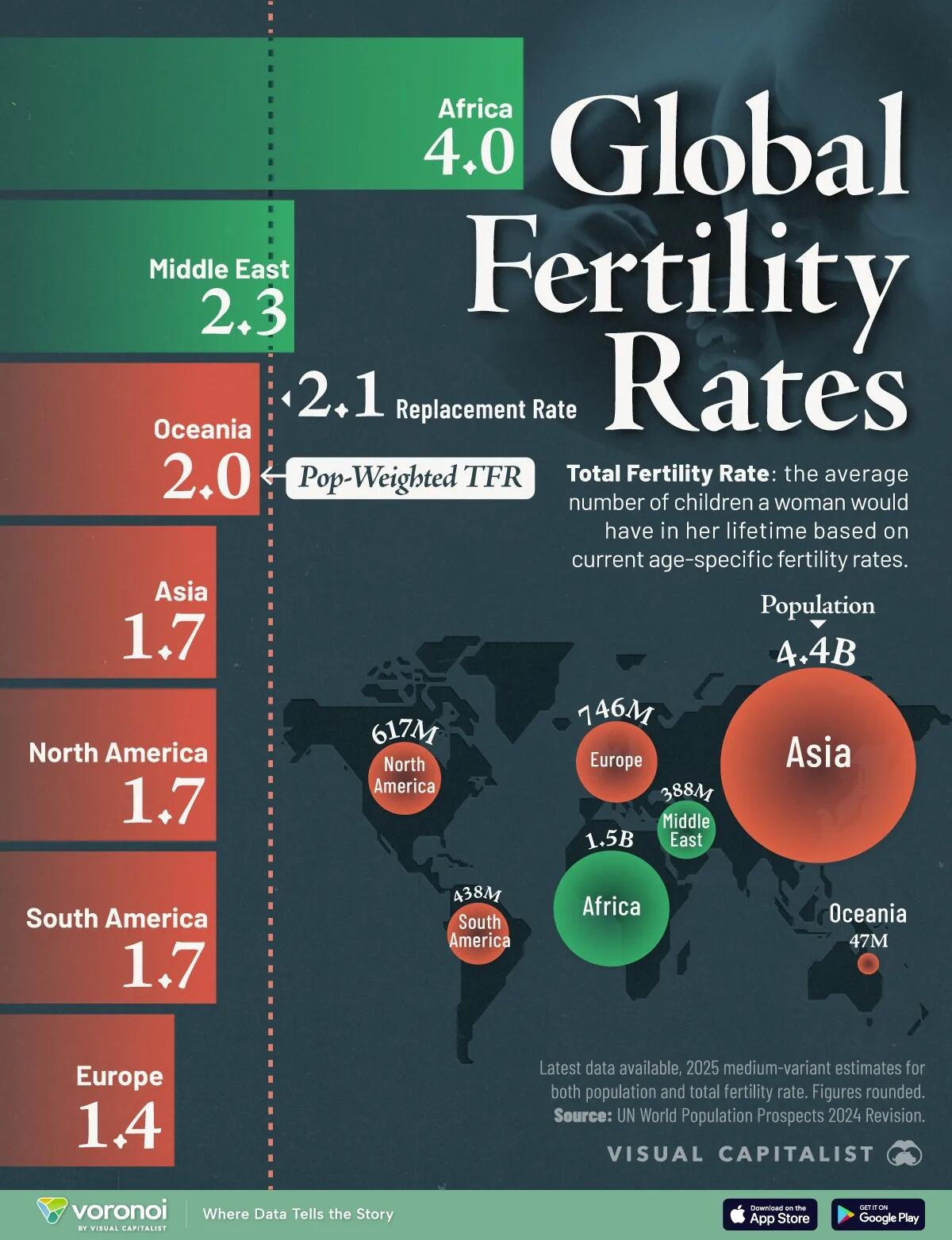
They’ve gone from a reasonable 10% of the population of the world when I was a kid to more than double that today, as the world population has doubled.  They double-doubled.  And they were starving and dying when I was a kid.

Regardless, it’s like someone turned on the “African-making machine” and left it on overnight.  For decades.  And, their population is projected to be some silly number like 40% of the world’s population by 2100.

(as-found)

But that will never happen.  Why?  Because a big crisis, like the one we’ll be seeing soon due to the IAI war, will simply remove the excess wealth that sends medicine and food down to Africa.  We all know what happens next:  the senseless deaths, the violence, the revolutions, the cannibalism.

Oh, wait, that’s Africa when things are going well.  Things will soon enough get much darker on the Dark Continent as the wealth spigot dries up.  I can’t imagine that Europe will continue to absorb them there, either, but then again I never thought the West would be committing collective cultural suicide like it is today.

Sadly, not AI or a horror movie. (as-found)

The IAI war isn’t some far-off desert dust-up that only affects oil futures and late-night cable news.  It’s a live-action stress test on every fragile supply chain we’ve built since the last big reset.  Oil tankers with $100,000,000 cargos reroute around the Red Sea like it’s a game of dodgeball with $3,000 drones.  Grain ships that used to feed half the planet now sit idle or pay pirate insurance that would make your mortgage look cheap.

Fertilizer plants in Europe and Asia that run on Middle Eastern natural gas?

Yeah, those are suddenly “strategic assets” instead of just boring factories.  The ripple hits the weak points first, just like it always does.  Australia’s petrol shortages aren’t because they suddenly forgot how to drill and can’t figure out how to spell “gasoline” it’s because the tankers that used to show up like clockwork are now playing naval chicken in the Strait of Hormuz.

India’s fertilizer crunch?  More natural gas.

And Taiwan’s helium?  That’s not some niche nerd problem.  Helium keeps the fabs running so your phone can update and your cat video can render in 8K.  No helium, no chips.

No chips, no economy that looks even vaguely modern.

It’s all connected, and the connections are fraying faster than a cheap suit at my uncle’s funeral.  Africa just happens to be the thinnest thread on the whole sweater.  They don’t grow enough food to feed themselves on a good day.  They don’t manufacture much beyond raw materials that richer countries turn into actual products.  Their governments run on foreign aid the way a junkie runs on his next fix.

And while the rest of the world was busy printing money and inventing new genders, Africa was busy doing what r-selected populations do best when you hand them calories and medicine: exploding in numbers.

The math is brutal and it doesn’t care about feelings.  When the aid stops, when the container ships prioritize Europe and Asia over charity runs to the Sahel, when the NGOs pack up because the insurance premiums are higher than their budgets, the party ends.  Not with a polite “thank you for the fish,” but with the kind of scenes that make Arab Spring look like a polite disagreement at a PTA meeting.

Who has two thumbs and a poor grasp of visual humor?  This guy. (as-found)

We helped create the conditions.  Not out of malice, but out of the same soft-hearted, soft-headed Western instinct that says “we have extra, so let’s share.”

We shared vaccines.

We shared grain.

All this while infant mortality plummeted and fertility stayed at levels that would make a rabbit blush.

The result?

The bill is coming due, and the IAI war is just the guy in the suit who shows up to repossess the furniture.  Europe already has its hands full with the last wave.  America is staring at its own debt mountain and wondering why the grocery bill looks like a car payment.  Australia and India and Taiwan are discovering that “just-in-time” supply chains work great until the “just-in-time” part becomes “just-in-case the war lasts another six months.”

The weak points crack.

Then the stronger ones start groaning.

Then the whole system starts looking for someone to blame.

The Dark Continent is about to get darker.  Revolutions, famines, the whole greatest-hits album of human misery played on repeat.

(as-found)

And the rest of the world?  We’ll be too busy trying to keep our own lights on to send another aid convoy.  And I worry the most about rebellion here.  Especially among the cows.

I can’t abide a mootiny.

The Time Of Your Life

“There are some spare fuses in the crawlspace.” – Scary Movie 3

If I had a dime for every time I think about you, I’d definitely think about you.

Often, we spend much on things of little value, and little on things of great value.  I’m not the first to observe that, some dead Greek or Roman (probably both) beat me to it by thousands of years.

Regardless, it’s one of those truths that hits like a freight train when I remember it, but until then, it’s just humming along in the background of my life like the fridge in the kitchen or the bodies buried in the crawlspace.  There, but we just don’t think about them.

It’s easy to chase the shiny, the expensive, the Facebook™ fodder by pouring cash and hours into stuff that delivers about as much lasting joy as a two-week-old ham sandwich served by a lunch lady that looks too much like Ellen DeGeneres.

Meanwhile, the really good stuff, the stuff that actually fills my soul and makes me excited and glad to be alive, sits there free for the taking, and we walk right past it like it’s yesterday’s newspaper.

Take a sunset.

My first girlfriend reminded me of a sunset:  purple and hard on the eyes.

Not some fancy resort sunset that cost $5,000 and six hours in an airplane after the TSA cavity search to see.  Just the one out my front window, or even on the drive home.  Those shockingly bright filaments of cloud turning the sky into purples and oranges and pinks that no paint company has ever quite matched.  That experience costs exactly zero dollars and maybe minutes of my life to really look deeper at the world around me and see the wonders embedded there.

I can stand, tilt my head, and for that brief moment connect to something bigger than my to-do list or 401(k) balance.  Natural beauty is raw and free in the Recommended Daily Allowance, and served whether anyone notices or not.  I’ve had days where that pause reset my entire mood.

No app, no subscription, no ticket required.

Or this blog, for that matter.  Sure, you say, “Wilder, how can you be so funny?  It’s drugs, isn’t it?”

No, dear friends, that’s silly, unless you call sunsets, puppies wagging their tail, purring cats, alcohol, nicotine, and caffeine drugs!  What nonsense!

What’s the difference between meth and math?  Meth is a stimulant, math is a depressant.

But I get a lot of enjoyment out of the writing, which is why I do it.

It’s the same with a good book, which I can get at the library for free because they don’t have a good anti-theft system.  Or a conversation with The Mrs. over coffee that isn’t about bills or schedules or why the carpet is wet again.

This is free. Abundant, even.

Ben Franklin nailed it 5,000 years ago when he designed the Great Pyramid:  “If thou lovest life then wasteth not time, for that is what lifeth is madeth of.  And, a little lower and to the left.”

Time is the one resource I can’t buy more of, can’t borrow, and that I can’t refinance.

Every second I spend is gone forever.

The opposite side of the coin is even uglier.

How many times did I give away the truly precious stuff:  hours, health, relationships . . . for pennies?

I asked seven CEOs “what’s the secret of your success?” and they each answered the same way, “How did you get in my house?”

So many people trade five full days a week doing work they actively hate for the fleeting dopamine hit of a weekend.  I get it.  It’s called a job, not a hobby, for a reason and that reason is that they give you money for it.  Bills gotta get paid, mouths gotta eat.  But when the dread starts Sunday afternoon and doesn’t let up until Friday at 5 p.m., I’m not living.  I’m enduring.

And enduring is what prisoners do.

The rest of us, unless you’re literally locked up because those pesky kids kept snooping around and just would leave it alone, have choices.

Real choices.  The guy staring back at me in the mirror every morning is usually the one who got me into whatever fix I’m in.

Bad career move?  My choice.

Skipped the workout?  My choice.

Put off that hard conversation?  Yep, still me.

But here’s the kicker:  we’re all surrounded by free gold.

I guess he caught the Germans with their panzers down.

A walk outside costs nothing and gives me fresh air, movement, and a chance to clear my head.   Gratitude practiced daily, literally just listing three things I’m thankful for, rewires my brain toward the good. There are millions of these things that surround us.  I can remember when I met The Mrs. (at that time, The Miss).  If you took the square root of our net worth at the time, it would have an imaginary component because it took digging even to get to zero.

I worried less then than I do now.  Quality of life is more about gratitude and hope than it is about net worth.  Understanding that I will die gives me power, and no excuse for not going all in.  I don’t get an extra prize for running out the clock.

Purpose and consequences are the secret ingredients to the Big Mac® of life.  Easy happiness is cheap: a little weed, endless video games, or passive scrolling.  It’s bliss without accomplishment, and it leaves everyone who follows that path hollow inside.

Real happiness, the kind that sticks, comes from choosing what’s worth being temporarily uncomfortable for.  It’s never as glamorous as the movies make it look.  No montage, no random hot stranger fixing your life, no making punji sticks to impale the crooked sheriff just because he hated Vietnam vets.  Nope.  Just brutal honesty, some discomfort, and the slow compound interest of time spent wisely, though you can still make the punji sticks.

Me?  I’m trying to audit the tradeoffs.  Where am I spending much on little?  Where am I skimping on the great?

The bright side is at Easter they get their bunnies for nothing.  And Peeps® for free.”

We’re all headed to the same exit ramp. The good news is, until then, most of us get to choose how we spend those miles unless a pack of comedic crime-fighting kids and a dog start snooping around my crawlspace.  The guy in the mirror is the one who decides.  Choose the sunset. Choose the conversation.  Choose the book on the deck.  Choose the work that doesn’t feel like slow death.  Stack the free wins.

They compound faster than any investment account, and the dividends are paid in meaning, not just money.

The Double Debt Mountain of 2026

“It’s just a metaphor, dude.” – Guardians of the Galaxy

I had bad credit, so I asked my high school geometry teacher if she’d cosine for me.

The economy looks “fine” on the surface.  Fine, that is, if you believe the headlines.  I sense, though, underneath it’s a double debt mountain that’s getting closer to a landslide every day, and someone is planting bombs along the slope.  Okay, that’s a lot of metaphor.  Let me see if I can pilot this ship home.

Damn.  Another metaphor.

One bomb is the wallets of the kids.

The other bomb is in Washington.

Both are set to blow up the same people:  Millennials and Gen Z, generations already hammered by housing costs, stagnant real wages, hordes of legal and illegal aliens soaking up employment, and women who forgot that the main reason they exist is to make more humans.

Good news?  Yeah, there’s a tiny sliver.  Credit card delinquencies on some non-housing debt leveled out in late 2025 according to the New York Fed®.  But that’s like saying the fire department showed up and has the fire down to burning one house an hour in the neighborhood.  The real picture is as ugly as an Antifa swimsuit pageant.

Yeah, it’s grim.

And all of their older women are coming down with prostate cancer.

Credit cards have become the new paycheck for millions of young Americans, and new companies have shown up to monetize even the smallest debts.  Want to go to Taco Bell™ and pay for that Super Crunchwrap Supreme Bellgrande™ over the next six months?

You can do that.

Total credit card debt hit a record $1.28 trillion in 2025, up $44 billion in just three months.  That’s not a blip:  that’s paying for groceries on credit cards and only paying the minimum monthly payment.  Delinquencies on household debt overall jumped to 4.8 percent, led by the kids.  For people under 39, the transition into serious delinquency on credit cards is nearly double the national average.

Surveys show 56 percent of Gen Z are forced to use cards just to make ends meet because prices keep climbing.  Sixty-six percent of Millennials say they rely on plastic to get through the month.  Thirty-five percent of Millennials are carrying more than $10,000 in card debt.

Credit card debt, the gateway drug of insolvency.  Sure, payday lenders and “buy here, pay here” car places are the crack cocaine and meth of debt, but it all starts somewhere.

Gen Z is running around $3,500 in average balances, while Millennials are pushing $7,000.  They’re not buying yachts or avocado toast, they’re financing groceries, gas, and rent.

It’s Avocado’s number.

Here’s why this mess is worse than it looks:

First, real wages aren’t keeping up, and the system is rigged against the young.  Gen Z and Millennials entered the workforce during the pandemic hangover, got crushed by housing prices we already talked about, and now face interest rates that make every purchase a long-term loan.  The GloboLeftElite told them to “follow your passion” and rack up student debt for useless degrees that qualify them for entry-level retail jobs in malls that don’t exist anymore.

And they listened.

Credit cards fill the gap at 20-25 percent interest.  For those that didn’t choose wisely and avoid jobs taken by Jugdish, life is not luxury.  It’s debt, roommates, and used couches that smell vaguely of fish.  Forever.  One bad month due to a mandatory car repair, unexpected medical bill, or if Egyptians convince them to invest in a pyramid scheme, and they’re in the hole they can’t climb out of.

Chuck Norris had a grizzly bear carpet in his bedroom.  It’s not dead, just scared to move.

Second, banks and card companies love debt.  People don’t get poor because they don’t make enough money, they get poor because they give it away to everyone else:  ask the Amish.

Banks are making fat margins on revolving debt while pretending everything is peachy.  Delinquency rates are rising, but not fast enough for the suits to panic yet.  They know the game:  extend and pretend and as long as we get this quarter’s bonus, it’s all copacetic.  Just like with the housing market in 2008.

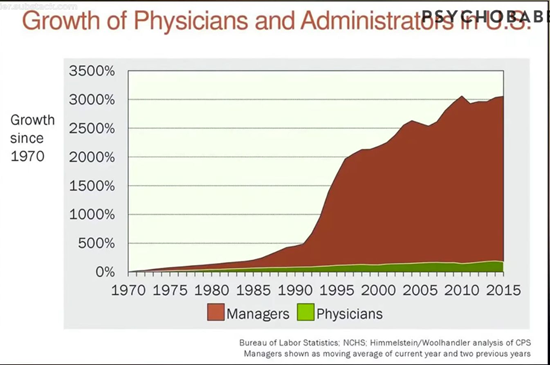
Meanwhile, the official unemployment rate looks fine because more paper-pushers are getting hired in the last growth industry:  government jobs.

The real economy?  Productive private-sector work is stagnant.  Young people are borrowing to eat.

Third, this consumer debt bomb feeds right into the bigger federal debt bomb.  Washington has its own plastic problem, except it’s measured in trillions.  National debt sits north of $38.5 trillion.  Net interest payments are projected to hit $1 trillion in fiscal year 2026 and interest payments are already bigger than defense spending in the first quarter of this year.

Interest already eats 19% of all federal revenue.  By 2036, CBO says it doubles to $2.1 trillion and consumes nearly a quarter of everything the government takes in, but the CBO is always low, because they have to use the assumptions that Congress made up.  Yes.  AOC is responsible for the rules of the game.

But what do we want to spend our money on?

Defense?  Medicare? Infrastructure? Sorry, the interest check has to clear first.

What you get when you cross a human with a moose?  Arrested, apparently.

Fourth, the GloboLeftElite solution is always the same: print more, borrow more, kick the can.  National debt doubles every eight years.  The Fed and Congress act like debt is free because they control the printer and don’t have to worry.  Higher debt, though, means higher interest rates, which means even more debt service, which means . . . you get it.  It’s a doom loop.

Every time they “stimulate” to keep the economy looking good for the next election, they make the next crisis worse.  And who pays?  Not the politicians.  Not the connected class in D.C.

It’s the taxpayers, especially the young ones who haven’t built wealth yet, but yet were forced to watch the abomination that is Scrappy Doo™.

Fifth, the generational theft is obvious.  Boomers got cheap debt, rising home values, and that long summer of the 1980s and 1990s.  Oh, and pensions that actually worked.  Millennials and Gen Z get 24 percent credit card APRs, $1 trillion in federal interest payments crowding out future programs, and a promise that “we’ll import more workers” to fix the birth rate collapse caused by imported workers, interest payments, and . . .

Female empowerment.

Female hypergamy and economic despair already delayed families, and they’ve reached civilization-ending levels with Gen Z and Millennial female solipsism.  Now add maxed-out cards and a government that can’t even pay its own interest without borrowing more.

The kids who should be having kids are busy paying Visa® instead.

Before I was adopted, my selfies were called “family photos”.

The result? Gen Z and Millennials fall even further behind.  They delay marriage, delay kids, delay life.  Birth rates keep dropping.  The GloboLeftElite flips from “stop having babies, save the planet!” to “import babies, we’re not having enough!” in one generation because their policies broke the math.

Young couples look at the spreadsheet listing rent, cards, future taxes for Boomer pensions and federal interest and decide “maybe later.”

Or never.

But me?  Debt mountains?  Debt landslides?  I think I need to stop with my metaphors because they’re making me sneeze.  Metaphors really set off my analogies.

Iran So Far Away: Million-Dollar Bombs Versus $3,000 Drones and Day 23 of the 4 Day Operation to Liberate Iran

“This film is only for Madagascar and Iran, neither of which accept American copyright law.” – Bowfinger

I’ve heard that if a golf ball lands on a house, it’s scored as a home-in-one. (all memes as-found)

If you were sleeping under a rock (not the iRaq©, which has been officially purchased by Apple®) The United States and Israel dropped a surprise airstrike package on Iran like it was Amazon Prime® Day for regime change.

Supreme Leader Khamenei? Gone.

Nuclear sites? Smoking craters.

Military bases? Swiss cheese.

Iran fired back with hundreds of drones and ballistic missiles at Israel and pretty much every country in the neighborhood from Bahrain to Qatar. I’m especially offended by Qatar, because if a word has a “Q” in it, it should have a “U” as well. Qatar. That’s just wrong, man. It bothers me enough that I think they should kick Qatar out of the UN, but the argument against that is that it’s an unnecessary Qatar solo.

Vlad the Impaler’s favorite joke starts this way: “So this bar goes into this guy…”

Back to the war. Er, special military operation. It’s still early in the game, but in true 2020s fashion, the winners so far seem to be no one except the guys selling missile insurance and the printers at the Federal Reserve©.

Are we done yet? No, we’re not. So, let’s look at The Bad and The Good, at least so far.

The Bad

Energy prices are exploding upward faster than a Houthi suicide bomber on Red Bull®.

Oil is headed toward levels so high I won’t be able to bathe in it anymore, feeling the luxury of 10-W40 as it coats every inch of my skin. I remember when crude oil was cheap enough I could afford to fill my pool with it.

Sadly, those days are gone. Brent crude (a proxy for crude oil that shows up on a ship) is up over 40 percent since the strikes started. Analysts are whispering $110-plus if they have bought futures, and I’ve heard that it might go higher, still.

High energy prices act like an immediate tax increase on everything except paper straws in plastic wrappers in California. Periodically purchased Pringles®? Pricier. Pickles? Pricier. Plaster of Paris? Pricey. PEZ® is even presently a pretty penny purchase.

Oh, wait, pennies are too expensive to make.

I think King Arthur would be interested in this, since at either end they’d need a place to park, which would mean two places called Camelot.

Meanwhile the United States is burning through billions of dollars of precision munitions that take years to manufacture just to turn perfectly good Iranian concrete into expensive Iranian gravel. Concrete costs a few hundred bucks per cubic yard and you can pour a bunch in an afternoon if there are enough Mexicans around.

Our missiles? Millions per missile and the supply line is months to years for even the ones that keep missing the Iranian missiles.

I make it a point never to scream into a colander, since it might strain my voice.

Iran, on the other hand, is lobbing $3,000 drones that somehow managed to damage a $14 billion natural gas facility that took a decade to design and build. We brought a sledgehammer made of gold. They bring the fly swatter made of spite after decades of sanctions required that they work with nothing.

The policy is deeply unpopular with the American public. Polls show most people want nothing to do with this adventure except the tar and feather merchants who are prepping for higher tar prices, but think that feathers may come down enough so they can make a profit.

That face you make when you swap out something 80% of the American public are for versus something that 16% are for.

Iran is sucking all the oxygen out of the room and taking the focus off domestic issues like making beer cheaper or figuring out how to get illegal aliens and H-1B visa holders to stop turning the United States into either Guatemala or Mumbai.

Instead? We are arguing about whether blowing up another desert dictatorship is worth another trillion we do not have, which is gonna go great at the polls come November.

The Good

Every cloud has a silver lining, even when the cloud is radioactive fallout.

This mess is making my prediction (it’s in writing here on the site, but I’m too lazy to look it up) that the national debt doubles every eight years look less like a prediction and more like a weather forecast. In truth, it is that, since I can do math and see that, yeah, every 8 years the national debt has doubled since 1973.

The bright side of this debt? At least half of us get shiny new dollars to spend every eight years instead of those boring old dollars. Inflation is just another word for free money!

Last year, I could walk into the store with $100 and walk out with 50 pounds of ribeye. Not now. They installed security cameras.

I have been rough on Qatar so far, but one citizen from that nation may be of use in regime change in Iran due to the dire straits of the current situation. They should check out Qatar George, he knows all the Kurds.

If we play our cards right, Iran may follow through on its threats to take India, Africa, and the Pakistanis off the Internet, and remove them from all electronic communications. Hey, that is a public service more useful than anything Congress has done in years. No more spam scam calls from overseas call centers.

As a bonus, Pakistan has already hinted that since it cannot hit the United States directly it will nuke India instead if things get spicy. So, what exactly is the downside of that?

India would probably try to scam free Internet from Australia, which would come from a LAN down under.

Another bright spot is that we now know that Chinese air defense systems are as effective as barbells on a space station. Iran uses plenty of Beijing’s hardware and it did not exactly shine against American and Israeli jets. People in Taiwan should sleep easier tonight. If the Chinese who would invade them are equipped with the same made-in-China wonders, the invasion fleet might sink when it hits the water.

Shipping is getting a makeover too. Many tankers are now taking the long way around Africa instead of the Strait of Hormuz. This will be nice because it will allow cheese to age properly on the extra weeks at sea. Real cheddar needs time, and is not a rush job. The downside? Somalian pirates will not be able to steal and hijack as much cargo, so they will be forced to open more Learing Centers®.

Melons have traditional weddings. They cantaloupe.

Finally, what happens if the A.I. boom collapses because the market tanks and liquidity dries up? This is perfect. The Federal Reserve© could print even more money to paper it over. Then they could roll out trackable Central Bank Digital Currency to replace the failed dollar. Who could lose with that? My every purchase monitored for wrongthink while the dollar dies like a good idea on Facebook®.

It’s a win-win for the surveillance state, we’re all poor and can’t have privacy!

The real bright spot after all this is that I did find out the difference between Qatar and Abu Dhabi. In Qatar, watching The Flintstones is not allowed, but the people of Abu Dhabi do.

The Housing Mess of 2026: At Least We Have Ramen

“They’re only noodles, Micheal.” – The Lost Boys

I entered a contest and won a lifetime supply of ramen.  I took the $20 instead.

Let’s start with the sliver of good news, because in this market it’s rare enough to mention:  Many illegals have left the country.  Not enough, mind you, but enough to show just how fake this economy is.  The result is real.  Rents are down where illegals live.

At least a little.  I found a great place to rent, fully furnished, but then the clerk told me it was a liquor store.

Sigh.

The Department of Housing and Urban Development to straight-up say illegals drove up to two-thirds of rental demand growth in recent years, so when .gov admits the problem, you know it’s really worse.  After years of unrestricted immigration flooding the rental market, the brakes got tapped.  Studies show that renter household growth cooled once immigration restrictions hit.

Average rent that hovering around $2,000 a month are finally showing some give instead of the nonstop 36% climb we saw the last five years.  This is, at least a small win for the working guy who just wants to keep the roof over his head while he eats ramen and smokes recreational weed.

Now the bad news.

And there’s plenty of bad news.

Housing is now unaffordable to Gen Z, and it is far worse as a percentage of their income than for any previous generation.  67% of Gen Z adults say they’re struggling to cover housing costs. That’s higher than Millennials (53%), Gen X (54%), or Boomers (36%).

When I grounded my Gen Z kids, their punishment was to go out and socialize. (meme as-found)

Homeownership for Gen Z sits at just 27.1% in 2025 data rolling into this year, which is a tiny bump from the year before, but miles behind where previous generations stood at the same age.  Zoomers need to earn over $112,000 a year to afford the median house.

The problem?  Median household income lags by about $25,000.  Nearly two million young households simply vanished from the market in 2025 because the math doesn’t work.  Housing is chewing up 40-50% of take-home pay.  That’s not a stepping stone to a family and 2.6 kids.  That’s a millstone.

Let’s delve deeper into the problem.

First, housing areas are limited, and the mass blight of urban hellscapes led to the creation and flowering of suburbia, where people could move and raise a family in relative safety.  Let’s be honest, a huge part of suburbia was economic segregation from . . . economic factors.  Suburbs?  You have to have a certain income level to live there.

When I think about the meaning of life, I think about three factors:  2, 3, and 7. (cartoon as-found)

Good schools.  Low crime.  Space to breathe.  No economic factors.

That flight from the cities created the demand, but supply never kept up.  Zoning, NIMBYs, and decades of stupid policy turned safe family neighborhoods into a scarce luxury good.  Housing prices have risen much more than inflation. While wages wobbled along like me on a Saturday night, home values sprinted like me out of the office on Friday afternoon.  Suburbia went from attainable dream to gated fortress most young people can only stare at through the fence.

Second, interest rates are up.  That’s the sort of thing that happens when the cash printer is on high and the oil pump is on low.  Higher interest rates lead to higher home costs for the same price house, as interest eats up more and more of the (now higher) payment.

Mortgage rates eased to around 6.2% by the end of 2025, but that’s still double the pandemic-era giveaway lows.  A $400,000 house that felt doable at 3% now demands a monthly payment that feels like indentured servitude.  Equity builds slower.  Gen Z runs the numbers on their phones and decide roommates, ramen, and the low-rizz life beat the alternative.

Third, houses are treated like an economic appreciation machine whose values never go down. This has led to many borrowers taking out loans near the peak value of their houses, and that peak value locks them in.  If they sell at a loss, they lose actual money, so they can’t sell for less than they owe.

We’re actually at an all-time high for the Google® search term “can’t sell my house.”  Google Trends just hit record levels in February 2026:  higher than 2008, higher than the COVID frenzy.  Sellers are frozen.  Buyers can’t bridge the gap.  The shut down like a date with a Kardashian when you tell them you’re broke.  Houses stopped being homes and turned into leveraged bets on eternal growth.

Markets don’t do eternal.

“There are no mistakes, just happy little accidents.”  Bob was a horrible nuclear physicist.

Fourth, banks don’t want foreclosures to hit the market. Why? It makes the rest of the loans in their portfolio worth less, so they’re incentivized to sit on houses rather than sell them and realize the loss on the books.  Foreclosure filings jumped 14% in 2025 to 367,460 properties, but that’s still historically low and banks are dragging their feet with modifications and delays.  How much of the current private credit crisis is due to just this?  My guess is:  plenty.  Those balance sheets are stuffed with crappy paper because it was different this time.

Fifth, those nice suburban houses with a thirty minute to sixty-minute commute are now even more expensive because the fuel to drive to where the jobs are at is much higher thanks to Gulf War IV. Or is it Gulf War VI?  I forget.  That suburban split-level two towns over suddenly costs a fortune just to reach.  The effective price of the dream just went up again.

The result of this mess is that Gen Z gets further behind.  The kids that should be having kids aren’t.  There are several factors to this, especially female hypergamy where every female (thinks she) is above average, but every male is below her standards.  But the sheer difficulty in having a home in which to raise kids is massive is also killing family formation.  No stability, no backyard, no “let’s start a family” talk that ends in anything but spreadsheets that fill with negative numbers.

Is a 4 with a 6-pack a perfect 10?

Birth rates keep dropping.  In one generation, we went from the GloboLeftElite telling us to stop having kids because “the planet can’t handle more!” to the GloboLeftElite telling us we need to import kids because we need workers.

They break the system, then demand more system to patch the system they created.  Young couples look at the numbers and decide “maybe later.”  Or never.  Unless they’re from (spins wheel) Somalia.  In that case, it’s free fun and prizes while you bring in an alien people with an alien religion.

The good news?

This type of mess always sorts itself out.  The cure for high prices is default and deflation.  If the market is too far cooked, well, look out below.  The United States doesn’t have magic dirt to turn Somalis into Americans, and houses aren’t magic wealth machines.  When enough locked-in owners and over-leveraged banks finally crack, inventory floods, prices reset, and affordability returns.

It won’t be pretty.  Foreclosures will spike.  Portfolios will bleed.  Credit markets may lock up.  The Google® searches for “can’t sell my house” will turn into actual sales at prices that make sense again.

I used to have a really funny polio joke, but no one gets it anymore.

A housing crisis wouldn’t be big for the country, would it?

Nah. Just trillions in pretend wealth gone, generational transfers halted, and the kind of reset that makes 2008 look like practice.

Prepare accordingly.  The reset is coming.

I’m glad I like ramen.