My Most Irrational Post Ever. Plus? Hot Chicks.

“Cassandra, in Greek legend, was condemned to know the future, but to be disbelieved when she foretold it.” – Twelve Monkeys

Proof that Jerry Lee Lewis was psychic with at least one of his songs:  A man from Florida was arrested for dipping his testicles into salsa.

One of the simplest geometric forms is a triangle.  It’s just three points and the lines that connect them.  See?  Simple.  Elegant.  The only thing simpler is a circle, but we’ll get to that, at least in passing.

The Greeks were crazy about math, like a geometry teacher on meth and Adderall® who was also genetically spliced with the Taco Bell© chihuahua, and loved dividing things.  Every time they divided something, though, they got either a whole number (1/1=1), a fraction that ended (1/4=0.25) or a fraction that repeated the same number or sequence of numbers forever (1/3=0.33333333…).

See, simple rules.

Rational output.  Literally rational output, because the numbers could be expressed as a ratio.  That’s actually where the word rational comes from:  if something can be expressed by a ratio of whole numbers, it’s a rational number.  In these combinations of numbers and ratios, these Greeks saw the perfection that came from a designed universe, a place where things made sense.

The one cult died out at ate-a-Glock™ in the morning.

And that was important, since math was a cult back then.  Yes, an honest to God, Waco-level showers-optional cult based as near as we can tell on math, mysticism, vegetarianism, reincarnation, and politics.  Since they were vegetarians, we know that they had poor grip strength and were shunned by women.  Basically, its as if they put your high school math club on an island for six generations and made them wear togas.

Triangles, though, eventually ended up driving the Greeks crazy, even crazier than the hot chicks they couldn’t get to talk to them.  Actually, it wasn’t the triangle itself, but what happened when they started thinking about the simplest right triangle, one with two sides that are 90 degrees apart, and are only one unit long.

What’s the hypotenuse of that triangle?

Well, Pythagoras figured it out. With the old a2+b2=c2, the Pythagorean Theorem®, right?  Turns out that it had been developed as early as 1300 years before Pythagoras became a Grecohipster by the Babylonians.  I guess the Babylonians had bad press.

Enough history, back to the hypotenuse.

If a=a2=1, and b=b2=1, then c2=2.  Easy.  That means that c is equal to the square root of two.  Or the speed of light.  But let’s stick with the square root thing.

Funny thing is that their friends were imaginary, too.

Some weak, protein-starved pale Greek from the cult of Pythagoras was able to prove that the square root of 2 was irrational.  It goes like this:

Assume that the square root of 2 is rational. That means we can write it as a fraction of two numbers p and q that have no common factor:

Square both sides to eliminate the square root:

The right side is clearly even (it’s 2 times something), so p² is even.  The square of an odd number is always odd, and the square of an even number is always even.

Therefore, if p² is even, p itself must be even.  So, we can write p = 2m for some positive integer m. Substitute this back in:

Now the left side is even, so q² is also clearly even.

By the same logic as before, q itself must be even. But now both p and q are even, that means they share a common factor of 2.

This directly contradicts our starting assumption that p and q have no common factors

Therefore, the original assumption must be false:  the square root of 2 cannot be expressed as a ratio of two integers.

It is irrational.

I know it’s irrational, but I do love pumpkin pi.

This baked the gourds of the cult.  Rumor has it that they kept it secret and may have even killed to keep it a secret.

This was where the word irrational came from.  But the word in our language came from a concept of a number can’t be expressed as a ratio.  So, before my ex-wife even existed, people were talking about the word irrational.

The square root of 2 is thus irrational.  So are a lot of other numbers, like pi.  The Greeks thought pi was irrational because they kept making bigger and bigger models of circles with smaller and smaller units and could never come up with a ratio that made sense because the denominator kept getting bigger, also like my ex-wife.

But here’s the part that bakes my gourd.  The square root of two never ends.  It’s been calculated to more digits than the weight of my ex-wife in grams, and that’s a lot, and it looks to be very random.  But since it goes on forever . . . that means my social security number is in there.

And so is yours, if you have one.

Those Gen Z kids have a lot of nerve, always walking around like the rent the place.

Everyone’s social security number is probably there.  And if you did something crazy like do a substitution into a different mathematical base (I used base 28) and have it map to the alphabet plus a comma and a period instead of numbers, you could have something like this for the first 400 digits of the square root of two:

AKPTVWWMVL,BOOLWLVQY..RDWM.BHVFYCFJMIAHGIU.EYMXWLPWZ.V.NT.AUBXB.UEGICHKTBRYATPCKPPUFOPWLDTVOOISWJKN,FJGOHZESKBQHPAKZ.OZHSFTPFZRQDTYDN.N.HCSTLQYYQK,HVKIQQGHYMEYDOMPGFSNNMHJAKSHC,,F,YWKSBJLQPAFZGRDMCEIXQGPVQ.NUEQOLDYFGFSRJPR.WMAXMV,NNSGRIGPGKPKGLXSCQR,SYFPHQCJXEMUEWLHOUMDSSMYDAVNXTFWOC,YBNZHBN.GNIHXSU.UBB,CHQCOATUL.AYPALBNAFHOD.ZQB,SHIWDZPCZIM.OL.TRUP.XGJLEWUUIZTCOHXBNUXGVCSVMUPFFHCBJCWMVTUXSNWHSNS.

You could even map it into the ASCII code that I’m typing in, but I was too lazy to do that, but the Sumerians calculated it in base 60 which may have made them more insane even than the Greeks.  But the good news is that every post I’ve ever put up (or ever will put up) is available in the square root of 2.  In order.

That also means that, rolled up in an infinite number is every possible thing that could ever exist.  Every thought that could ever be had.  Every .jpg of Kathleen Turner.

Don’t look up current pictures.  She’s gone into Kathleen Turner Overdrive.

All of it.  In one number.  And in an infinite number of random irrational numbers, like pi.  The Greeks couldn’t prove pi was irrational because they didn’t have calculus until one of them was reincarnated as Newton.

Now, the downside is that we have no index to where everything is sitting the square root of 2.  Where, exactly, all of my posts are besides my hard drive and on the server of the hosting company are unknown.

But they’re there.

That means that everything that is, ever was, or ever will be is compressed in a single number, yet to us, also unknowable because we don’t have the index.  Infinities are embedded in some of the simplest shapes in the universe:  that shape which defines a plane contains, well, everything.

But this is a little deep for a Friday.

Who wants to talk about hot chicks?


Singapore Got Rich on a Tiny Rock. We’re Getting Poor on a Vast Continent. Here’s Why.

I hate hipsters, with their vegan diets and tiny feet and whiskery faces and sawdust bedding.  Oh, I meant hamsters.  I hate hamsters. (meme as-found)

We are becoming poor.

Not “poor” in the sense of some third-world hellhole where the average guy eats dirt and dreams of a bicycle.  No, we’re sliding into a softer, slower, more insidious kind of poor, the kind where everything costs more, does less, and shrinks while the price tag stays the same.  Think of your new Giant Size™ Freetos© Corn and Sawdust Chips®.  Thirty-three percent less product than the old Stupendous Size©, same price, and now with extra cardboard flavor for that authentic “we’re all getting cancer” mouthfeel.

Or the Chimkin King® MacNugget© that used to be a glorious 0.75 ounces of protein-packed joy (roughly three picofarads of satisfaction) and is now a sad 0.4 ounces (two millibecquerels of regret).

Same price.

Or twice the price.

You pick.  This isn’t random.  It’s the visible symptom of a deeper rot.

I think Superman® will die when he finds his crypt tonight.

To understand why we’re getting poorer, let’s ask the question:  What makes places and peoples wealthy in the first place?  Wealth isn’t some mystical fog that drifts in on the winds of good intentions.  Wealth is built, deliberately, from a handful of non-negotiable ingredients.  Screw them up, and poverty is the only destination.  Nail them, and creation of wealth is damn near impossible to stop:  look at Singapore, a rock with zero natural resources that became richer than most continents because they got the recipe right.

Here’s the list.  It’s not complicated.

Raw materials.  You need stuff to make stuff.   A country doesn’t have to own the mines or the oil fields.  Taiwan proves that.  They import what they need and turn it into iPhones© and Nvidia© chips that the world lines up to buy.  Venezuela sits on more oil than a Saudi prince’s dream and still can’t afford luxuries like toilet paper or rice.

Energy.  This is the raw material people pretend doesn’t exist until the lights flicker.  Cheap, reliable energy is the multiplier for everything else.  Coal, oil, nuclear, geothermal, solar:  swap the source if you want, but you cannot negotiate with 12 shots of vodka or thermodynamics.  I may run on booze and condiments, but without abundant energy, factories sit idle, and data centers don’t compute.  When energy gets expensive, everything else gets more expensive.  Period.

Gasoline prices are so high that I heard the homeless in Southern California have stopped huffing it and switched to cocaine to save money. (snip as-found)

Capital investment.  You have to build things to build things.  Our entire world is a stack of prior investments stretching back to the pyramids, the steam engine, the transistor. AI doesn’t pop out Sam Altman’s ass:  it needs concrete, steel, copper, water pipes, motors, and enough electricity to power a small country.  Each of those required factories, that also required factories.  Every layer of capital makes the next layer possible.  Starve that pipeline for decades and watch the future evaporate.

Drive and ingenuity.  Someone has to have the spark.  Steve Jobs said it best:  the desire to “kick a dent in the Universe.”  Wanting it isn’t enough, someone has to be smart enough and stubborn enough to actually take the risk.  That’s the rarest ingredient.  Most people are content with Nyquil P.M.™ Netflix® and Nacho Cheese Doritos©.  The ones who aren’t?  They move mountains.

Labor and physical craftsmanship.  Ideas and Jeffery Dahmer are worthless without execution.  You need trained, experienced men who can turn blueprints into reality:  welders, machinists, engineers, coders who’ve solved hard problems before and aren’t afraid to get their hands dirty.  Craftsmanship isn’t taught in a three-hour DEI seminar.  It’s earned through sweat, failure, and repetition.

My former wife didn’t understand algebra, which is why the x is no longer in the equation.

Right environment.  Enough government to stop anarchy, not so much that you end up with Pol Pot’s people party.  Singapore, South Korea, even old-school America had governments that mostly stayed out of the way while protecting property rights and contracts.  Too little law and warlords loot your factory.  Too much and the bureaucrats loot it for you.

Scoring system.  This is the secret sauce.  No scoring system at all?  Communism where everyone starves equally except the leaders.  All scoring system, no guardrails?  Wall Street cocaine binges off of hooker’s butts after their derivative play wrecked Poland.  Reward the leeches useless migrants unworthy rapists?  Hello, modern Europe, where the productive pay for the idle and call it “compassion.”  The right system rewards the creators, punishes the parasites, and lets the market sort the rest.  Mess with the incentives?  You get what you reward.

Get these seven things lined up and wealth explodes.  Miss even a couple and you’re Venezuela with better Wi-Fi.

So why are we sliding backward?

We’ve been neglecting every single one of them for decades, and the bill is coming due.

Raw materials?  We’ve got plenty underground, but we’ve regulated mining into a paperwork hellscape while China laughs and digs.  Or else.

OnlyFans© was outlawed in Orwell’s book 1984.  They wouldn’t allow thotcrime.

Energy?  We’re shutting down reliable coal and nuclear plants for windmills that work when the wind feels like it and solar that dies at sunset.  The result?  Higher costs for everything, from grocery bills to California electric cars that can’t charge because the grid is wheezing.

Capital investment?  We offshored it to China and called it “globalization.” Factories, machine tools, entire supply chains are all gone.  Sure, some capital flowed back in the form of stock buybacks and McMansions, but the productive kind?  That’s building Chang’s future now.

Drive and ingenuity?  Our schools turned into indoctrination camps.  Merit is racist, excellence is oppressive, and every kid gets a participation trophy.  The spark of genius gets smothered under layers of “equity.”  Steve Jobs couldn’t get hired at Apple™ today and with the regulations, couldn’t even start Apple© today.

Labor and craftsmanship?  We imported millions of low-skill workers who consume more in services than they produce in output, while our own kids rack up six-figure debts for gender studies degrees.  The skilled trades?  Stigmatized as “dirty jobs” for decades.  Now we wonder why nothing gets built on time or on budget.  Welding productivity is half what it was in 1960.

But we both liked heavy metal, so we eloped to Vegas for our welding.

Right environment?  We’ve got more government than ever regulations thicker than a Manhattan phone book (for the younger generation, a phone book was when someone printed off a section of the Internet), agencies with SWAT teams, and a bureaucracy that treats citizens like the enemy.  Pol Pot was too extreme, sure, but the slow-motion version where every productive act requires ten permits and a diversity audit?  That’s nearly as destructive.

Scoring system?  We reward voting for more handouts, not creating value.  Welfare cliffs, affirmative action, corporate bailouts, student loan “forgiveness” that’s really just sticking the bill on the productive.  Europe’s model of taxing the hell out of workers to fund the idle has crossed the Atlantic.  And don’t get me started about how we’re letting the people who print the money keep it.  The leeches are thriving.  The creators are exhausted.

Every one of these screw-ups shows up in the data:  houses that cost ten times what they should because we imported 100,000,000 net new consumers (legal and otherwise).  National debt? Every printed dollar dilutes the value of the ones you earned.  Shrinking products, rising prices, declining quality are all the same signal.

We’re poorer.

Stunningly accurate.  (meme as-found)

If we keep this up, we won’t be the world’s superpower.  We’ll be Albania on the Atlantic, the Mumbai in the Midwest, or the Pretoria of the Pacific Rim:  a place where the lights flicker, the shelves are half-empty, people burn Styrofoam® for heat and the ambitious either leave or give up.

The crazy part? Fixing it is simple.

Stop importing net consumers.  Secure the border, enforce the laws we already have and repatriate them all.

Unleash energy.  Drill, build nuclear, keep the coal plants running until the next better thing is actually ready since cheap energy fixes almost everything downstream.

Cut the regulations that strangle capital investment.  Let factories come home and encourage them to do so with tariffs.  Reward builders, not bureaucrats.

Rebuild education around merit, rigor, and actual skills.  Fire the ideologues.  Bring back shop class and calculus.

Restore the scoring system:  reward production, punish predation.  End the welfare traps.  Make work pay again.

That’s it.  All the fixes.  None require magic or a revolution.  Just the political will to stop doing stupid stuff.

So why don’t we do that?

Because the people steering the ship benefit from the decline:  a system is what it does.  Politicians get votes from the dependent class.  Bureaucrats get power from the red tape.  Corporations get cheap labor and cheap virtue-signaling.  The media gets endless stories about “systemic” problems that justify more of the same poison.

The incentives are perfectly aligned.  For them.

For the rest of us? Not so much.

The ingredients for wealth haven’t vanished; we’ve just stopped mixing the batter.  But the window is closing.  Every year of delay makes the turnaround harder and everyone poorer.

I wear shoes with Velcro® closers now.  I mean, why knot?

It will be painful, more painful than pulling putting duct tape on a Kardashian’s back and pulling it off.  For the Kardashian, I mean, since I would pay money to see someone pull duct tape off of a hairy Kardashian.

The alternative to the pain, though, is worse.

I am so tired of sawdust.

Excalibur: The Movie The West Needs Now

“My pride broke it!  My rage broke it!  This excellent knight, who fought with fairness and grace, was meant to win.  I used Excalibur to change that verdict.  I’ve lost, for all time, the ancient sword of my fathers, whose power was meant to unite all men, not to serve the vanity of a single man.  I am . . . nothing.” – Excalibur

I tried to pull the sword from the stone, but I wasn’t Arthurized.

I rewatched Excalibur last weekend for the first time, likely, since Reagan was president and the phrase “press one for English” had yet to be spoken.

It was glorious, and better than I remembered, and that isn’t just the wine talking.  Excalibur came out in 1981, directed by John Boorman, who also brought us the underrated epic of Zardoz.  Any man who can talk Sean Connery into wearing an orange diaper for an entire film and likes guns as much as Boorman is okay.

Excalibur, however, features no orange underwear or guns.  It is, however, one of the most nationalistic, unapologetic, mythic, sword-swinging spectacles ever put on film.

To be clear:  it’s not a history lesson.  It’s a legend.

First things first:  no, the armor isn’t remotely historically accurate.  Plate armor like that didn’t show up until centuries after the real  Arthur would have been stomping around Britain in the 600s or 700s.  The knights look like they stepped out of a 15th-century tournament sponsored by the Stainless Steel Institute® instead of a muddy Dark Ages battlefield.

The wedding party lasted too late into the night for one of Arthur’s Knights.  Poor Sir Cadian.

Boorman knew this.  He didn’t care because Excalibur isn’t trying to be a documentary.  It’s a full-throated retelling of the King Arthur myth, the kind that’s been passed around campfires and tavern tables for more than a thousand years.  When I looked back at the overall King Arthur Literary Universe©, I found that there were endless characters and sub-characters and plots and mutually exclusive elements.

Boorman picked the main plot points of the Arthur myth perfectly.  As a result, the film knows exactly what it is:  a legend soaked in Christianity, fog, blood, magic, virtue, redemption, and destiny.

The critics, when it first came out, whined that the characters weren’t “complex” enough.  Arthur wasn’t nuanced.  Guinevere wasn’t layered and didn’t have a chance to prove herself on the battlefield as a Strong Independent Woman©.  Lancelot wasn’t a tortured anti-hero with a tragic backstory and three therapy sessions.

That’s the damn point.

They’re archetypes.

My favorite dessert at Thanksgiving is made by dividing a pumpkin’s circumference by its diameter:  pumpkin pi.

Arthur is the Once and Future King.  He is pure, flawed, larger than life and his failings are the point of the movie.  Merlin is the scheming wizard who sees the long game.  Morgana is ambition and vengeance and hotness wrapped in snakes, silk, and spite.  The film doesn’t waste time giving everyone a five-minute monologue about their feelings.

It trusts the myth to simply be what it is.

And with the exception of Helen Mirren, all of the rest of the cast in main roles flailed for the rest of their careers as B and C listers.  But in this movie?  Nigel Terry is Arthur.  Nicol Williamson is a Merlin that is so Merlin that I can’t imagine another person being Merlin.  In what probably saved their careers, you’ll spot Liam Neeson, Gabriel Byrne, and Patrick Stewart in roles that are nearly so brief you’ll blink and miss them.

The actors are the roles they were born to play, and the story moves like a river in flood.  That’s why it still works.

Part of the backstory is that Boorman wanted to make a Lord of the Rings movie, but thankfully couldn’t find anyone stupid enough to take the risk on a production far too large for its time.  Instead, he made Excalibur.

I imagine Father’s Day was uncomfortable around the castle.

Excalibur is a nationalist British film, made by a British director, for an audience that still remembered what a legend actually was.  Men were men.  Women were women.

Honor and virtue mattered.  Betrayal hurt.  Sex was raw and consequential, not a punchline or a sermon.  People with good motives weren’t ridiculed.

Boorman put his own flesh and blood into the movie, literally.  Boorman had to direct his own young and incredibly hot daughter in one of the more, shall we say, vigorous scenes in the movie.

Yeah.

Imagine Boorman as a director, talking to his daughter:  “Honey, can you just, you know, a little more passion on take three?  Hip thrusts, dear.”  To top it off, Boorman’s son played the young version of Mordred.  This is the family business, Boorman style.

The man didn’t just make a movie about myth, he co-wrote the screenplay, directed the film, produced the film, and he dragged his own bloodline into the forge.  No wonder the whole movie feels more alive than most things that have been made in the last decade.

That is why Excalibur feels dangerous somehow next to today’s polished, focus-grouped slop.

No one was trying to make Excalibur “relatable for modern audiences.”  No one was worried about alienating the overseas market or triggering the comment section.  No soulless Disney© corporate executive (but I repeat myself at least three times) was trying to make a tentpole for the Arthur Cinematic Universe© and have three more movies so they could triple the profits.

He just told the damn story.

You know I’m right.

The result is a film that looks like it was shot inside a stained-glass window:  every frame drips with atmosphere, every line of dialogue sounds like it was read off of a stone carving.  The classical music fills the spots perfectly.  The (very inaccurate) battles feel like they matter because the people swinging the swords believe in something bigger than themselves.

The movie is earnest.  The actors and writers and crew believe in the story they’re telling.

That’s the contrast that stings in 2026.  We’re drowning in corporate product:  remakes, reboots, and “elevated” retellings that strip out everything that made the originals mythic.

They give us complexity instead of clarity, messaging instead of meaning.

Excalibur reminds me why the old stories endured:  they weren’t about making transgender people or minorities feel seen.  They were about making people feel the weight of destiny, the cost of power, and the pull of something ancient and also something that was True, Beautiful, and Good.

Search for “Amelia Meme UK”.

So, if you haven’t seen it, you might correctly guess I’m a fan.  If you haven’t seen it in a while, give it another shot.  Pour something that Arthur would have quaffed, turn the lights down, put the damn phones up, and let the sword rise from the lake one more time.

In a world that’s forgotten how to tell legends, Excalibur still knows exactly what it is.  And just like King Arthur himself, there will never be another like it.

Let’s hope that Great Britain remembers Arthur’s words from the film:  “Now, once more, I must ride with my knights to defend what was, and the dream of what could be.”

Life Is Hard For A Reason. A Good Reason. Plus Hot Chicks.

“Life’s short and hard like a bodybuilding elf.” – Bloodhound Gang

Regardless, the people at his funeral will be called Paul-bearers.

I bought the book Dune by Frank Herbert when I was a kid.  I still recall buying it as it was on one of the monthly trips we took to the book store when we ventured off of Mount Wilder.  Ma Wilder was horribly indulgent when it came to books or other healthy creative outlets, like model kits.  Books had an unlimited budget around the house, and she never particularly cared which books, as long as I was reading them.  As such, at two or three novels a week from age 10 to 16, I read a lot.

I still do.

Dune was one of those.  I read it before I started driving.  I remember reading it in the time after finishing mowing Grandma Wilder’s lawn and before I was picked on a beautiful summer day decades ago.  One thing that struck me is the description in the book of the planet Salusa Secundus.  As a kid I mentally pronounced it “Salsa” Secundus, and, well, it is a pretty spicy planet.

I was told to bring an extra jar of liquid cheese, in queso-emergency.

In Herbert’s description, Salusa Secundus was a hell world, horrible weather, murderous beasts, extreme temperatures, awful terrain.  It was also the Emperor’s prison where he tossed away the worst criminals of his interstellar empire.  “ . . . the mortality rate among new prisoners is higher than sixty percent.”

Yet, here was where the Emperor got his fanatical and tough warriors, the feared Hardeharhar.  Oops, different book.  I mean the Sardaukar®.

Why there?  Well, if you could survive there, you could survive on any planet that a man could live on.  And if you could make it though the gauntlet of prisoners trying to kill you, congratulations, you survived the initiation process.

The guards at Big Ben in London look tired!  I guess they’re working around the clock.

The idea isn’t a new one.  The Spartans had a similar story, as retold by Plutarch, who, despite his name, was not Mickey Mouse’s™ dog:

Another boy . . . when some of his companions had stolen a young fox and delivered it to him . . . hid it under his gown; and though the angry little beast bit through his side to his very guts, he endured it quietly, that he might not be discovered.  When the searchers were gone . . . [his friends] chid him roundly, saying, ‘It had been better to produce the fox, than thus to conceal him by losing your own life.’  ‘No, no!’ said he, smiling, ‘it is better to die than to be detected in a base attempt at theft.’

Our teacher told us this story when I was in second grade.  Yes.  They told it in a somewhat different variation, but they were telling it to seven-year-olds.  No trigger warning.  No safe space.  Just a story about a kid who was so tough that he’d let a fox eat his intestines rather than show weakness.

I think I have an idea where Herbert took his inspiration for the Hardeharhar from.

But at the Best Buy© in Athens you can get advice from the Greek Squad©.

This is a story that resonates, and the deeper it resonates the truer it is.  We don’t become strong by being bathed in rose water and sleeping on satin sheets and eating our fill of lemon-cream PEZ© every day, and sailors don’t become captains on calm seas.

We don’t become emotionally strong by never facing hardship.

We don’t become physically strong by sitting on a couch.

We don’t live lives of purpose without getting bruised.  Any thing of purpose and worth that one might do will be opposed.  Period.  Either the odds are against it, the gods are against it, or other people are against it.  Sometimes all three.

These are the good fights, if founded in the True, Beautiful and Good.  These are the things that are worth the time and effort and pain.  These are the things that my scar tissue prepared me for.  A life that is based on something that Epictetus said:

Don’t you understand that amounts to saying that I would so prepare myself to endure, and then let anything happen that will happen?

An Epic Cow is really Legend Dairy.

That’s a strong statement.  And in a life filled with challenges, it’s hard to understand sometimes why we faced the challenges we did, why we have the scars and bruises that we do.  I think it’s because if they didn’t break us and they made us better prepared.  Yeah, even Nietzsche was right a time or two, if you include his magnificent mustache.

What then, does this leave us with?

We have today.  We have this moment.  We have the amazing gift that we can do anything we wish to right now.  We can make vows to change the world, we can dedicate (or rededicate) ourselves to fighting for what we know is True, Beautiful, and Good.

And that’s why we’re here.  We’re not here for comfort.  We’re not here for leisure.  We’re not here for quiet.  A quiet universe is a dead universe.  A universe without conflict is a dead universe.  A universe without purpose is a dead universe.

How much mass is in the universe?  All of it.

We do not live in a dead universe.  We’re breathing, fighting, aberrations, statistical flukes and inconvenient, stubborn fools fighting against entropy and common sense.  We see the world and keep going, because, deep down, we have our choices, our reasoned choices that allow us to get up to fight another day.

Or give up.

Me?  I choose to keep going, come what may.

Besides, now I’m hungry and am looking for chips and salsa.

Extra spicy.  I think I’m ready.

What Does A Bubble Look Like?

“I had it all, even the glass dishes with tiny bubbles and imperfections.” – Fight Club

You know what really gets my goat?  A Chupacabra.

I’ve been in a bubble before.  What happens in them is, well, interesting.

First, the money isn’t just where the attention is.  Nvidia® and OpenAI™ and Anthropic© are where the attention is focused.  But it’s a bubble, right?  Honestly, if the irrational exuberance over A.I. was just about those three companies, it would be pretty boring.

But it’s not.  A bubble is insidious because it doesn’t impact just one part of an economy, it sinks its tendrils in seemingly unrelated things.  That’s good, because change is the basis of growth, creating new combinations in the economy to create value.  I’ll stress the “creating value” part because often that’s confused with “red line go up and to right good, down and to right bad”.  A stock price should be related to the value the company creates but is often masked, at least for a while.  I mean, Enron©, right?

Looking at the A.I. bubble now, well, it’s everywhere, and often in irrational and uncomfortable places, like the backseat of a Volkswagen®.

What’s got two legs and lives off a dead beetle?  Yoko Ono.

Things are built in places for reasons.  When things are being built in stupid places, well, it’s probably that someone isn’t thinking straight.

Let’s take data centers.  What do data centers need?

First, power.  We’ll get back to this subject (and most that follow) again, but unless there’s power, none of the chips run.

Second, space.  You need a place to put the chips.  It’s most often a building, on land.  Well, to be honest, that’s where it’s third most common.  The most common is in the dreams of Sam Altman, the second most common is in a warehouse because the datacenter hasn’t been built yet.

Third, access to robust communications.  You’re building something that has to listen and talk, so it needs to be hooked into the data sphere.  Thankfully, thanks to the Dotcom bubble, that fiberoptics are everywhere.

What the hell is laser hair?  And why do people want to get it removed?

Fourth, access to a place to dump the waste heat generated by all that electricity usage.  Most often, this implies access to water for use.

Each of these has its own solution, but meeting all four requires a bit of thought.  I mean, the South Pole would be great except for the whole “access to communication” bit.  So, selection is a balancing act.  Pacific Northwest, with power, land, water and data access, not so bad.  Pennsylvania?  Also pretty good.

Let’s take the factors, one by one.  Power.  As we’ve discussed before, the power usage for data center construction is screaming “bubble” from the top of its lungs.  People building data centers are signing contracts for power, either from utilities or by buying natural gas generators or . . . fusion?  Really?  That’s what they’re planning?  Why not power them off of Elon’s Tweets®?

Looks like even Buc-ee’s® went A.I.

Yeah.  It’s a bubble.  Just because Fred’s Datacenter Depot and Truck Stop© signed a contract doesn’t mean that they have money or even loans to build it.  Yet, chained investment is spurred on through public utilities and engine/turbine manufacturers.  They’re building new lines, expanding capacity, all for a level of power generation that’s absurd.  Thankfully, you can also get a Slim Jim™ at Fred’s©.

What about land?  These are the lucky ones, since people with hundreds to thousands of acres of land are able to sell the land for ridiculous prices if they win the data center lottery.  The nice thing for these folks is that they actually get paid.

Third:  communications.  There are a lot of fiber networks in the US, so this makes a lot of the country okay for buildout.  Greenland?  Notsomuch.

Besides, I have other plans for Greenland.

Then there’s water.  I use the Mississippi for a proxy cutoff line, since east of it, wet, west of it, dry.  YMMV, and there are places like the PacNorthwest that get a lot of water.

But Utah or Nevada?  Or Colorado?  Sure, these places get cold in winter, but are they even thinking about water usage?  These are the places where the phrase, “Whiskey is for drinkin’ and water is for fightin’.” came from.  They’re dry.

But, there’s a never-ending stream of data centers being announced pretty much everywhere.

Announced.

But my experience in a previous bubble tells me that all of these companies that are attempting to build all of these data centers are needing more in common than just millions of Nvidia© chips.  They’re needing copper for wiring.  They’re needing pipes to move water.  They’re needing concrete.  They’re needing steel beams.  They’re needing rebar and glass and aluminum to build some of the largest buildings every conceived by man outside of the Pyramids and that ballroom next to the White House.

And that’s just for the building.

What is the difference between USA and USB?  One connects to your computer to access all your data, the other is computing industry hardware standard.

They’re also in need of power.  That’s another Big Kahuna, and it’s already raising rates to consumers in various states as utilities plan to build out power plants to serve demand from data centers that . . .

May never be built because they can’t be built because there’s not enough stuff to build them or enough electricity to power them even though, “Hey, we have signed contracts!”

That’s the flip side of a bubble.  It’s irrational.  You end up with insanity like 87% of venture capital going to A.I.  49% of investment-grade bonds are going to . . . A.I.  As Michael Burry notes, during the Dotcom boom, only 40% of venture capital went to dotcom companies.  So, 87% is better and safer than 40% because it’s more, right?

I hear that farmers can use a hoe to make money honestly.

Things inflate because everyone wants them.

Copper.  Silver, which is (currently) not behaving like an economic metal, but like an input to data centers.  Concrete.  The very people that know how to build data centers are in amazing demand.

But a bubble?

Nah.  Don’t call it that.

I could go on for another three thousand words about how frothy we are at this moment in time, but this time really is different.  Most of this bubble is built on debt to build things that are impossible to build in promised timelines using resources that aren’t available.  At least when the dotcom bubble burst, we had lots of unused fiber optic cable in the ground and when the housing bubble burst, we had houses left over.

What happens when a debt bubble bursts that hasn’t built the data centers it promised and evaporates a huge percentage of the venture capital that was sunk into it and all we have left are mountains of Nvidia© chips sitting in warehouses surrounded by confused pimps?

Well, that’s just another way that A.I. will change the world, I guess.

Won’t that be interesting?

Novelty vs. Routine: The One Line Every Man Must Guard Or Watch His Life Slip Away

“I’ve seen things you people wouldn’t believe.  Attack ships on fire off the shoulder of Orion.  I watched C-beams glitter in the dark near the Tannhäuser Gate.  All those moments will be lost in time, like tears in rain. Time to die.” – Bladerunner

And to everyone who said I couldn’t do standup, well, I see you’re not laughing now.

Routine is where life goes to die.

On reflection the other day I was a bit amused to note how much of my life is on autopilot. I have three pairs of pants that are all the same that I wear for work that are identical in cut, color, and comfort, so I never have to stand in front of the closet wondering what matches what.  I have six shirts that rotate on my torso for daily wear, each one as unremarkable as the last.  I get up, generally, within one minute of the same time each day, and the Wildermobile™ hits the pavement within the same thirty seconds each workday.  I have cigars three times a week, on the same days and at the same approximate time, rain or shine, good mood or bad.

Why three times a week?

Well, because insurance says that means I’m a non-smoker.  It’s a loophole I’m happy to exploit, and it keeps the premiums from getting as high as Johnny Depp jumping on Mount Everest.

Now, don’t get me wrong, I set those things up on purpose.  I figure I have only so much energy to make decisions each day, so why not save it up and also pre-make decisions for the time I’m stupidest each day?  For me, that’s in the morning when I get up.  Brush teeth first, pants second, and if I’m lucky they’re on my legs and not as a unique set of chestless arm chaps.  No debate, no drama, just forward motion.

It’s like giving my brain a head start on the real work that comes later.  This makes sense to me. Efficient.  Practical.  The kind of system a man builds when he realizes life is long on demands and short on spare mental horsepower.

But.

I get concerned sometimes that I’ve pre-programmed life a bit too much, and created too much of a routine.  The reason I’m concerned is that all of those minutes faced with nothing novel or consequential happening slip away like the replicant played by Rutger Hauer says in Blade Runner:  “All those moments will be lost in time, like tears in rain.”

And the mostest lostest will be those moments where I was living life on routine, putting one foot in front of the other with hours of my life slipping by on autopilot.  The coffee is hot, the drive is the exact same stretch of highway, the cigar smoke curls up exactly as it did last Tuesday.  Comfortable, yes.

But is comfort the same as living?

Time is really one of the biggest fascinations of my life. Even as a kid, I was obsessed with the idea that something new is only bright and shiny when it’s brand new, and after a certain amount of damage it simply can’t be made to look new again.  It wears.  It gets scratched and dinged, and none of that is, short of melting it down and remaking it new again, reversible.

Time does that to everything, including us.  I can go back to the home I left this morning, but I can’t go back to this morning.  It’s a lost country, a place where I can only go in my memory. Gone.

Irretrievable.

And what if every morning is the same for a thousand days?  Haven’t I just compressed all of my life into one single Groundhog Day, with the only exception that I’m getting older, less shiny and new?  Less naïve?  Less innocent?

The calendar pages flip, but the days bleed together into one long, grey blur.

I wake up, I do the things, I go to bed, and suddenly a decade has vanished while I was busy being responsible.

The flip side of routine is novelty.

I remember the first night I met The Mrs., the way the room felt electric and the conversation refused to end.  I remember my first car.  I remember my first touchdown.  I remember my last day of college.

I remember building the first Pinewood Derby® car with The Boy and the last one with Pugsley. Those moments and milestones that make up the peaks and valleys of life.  Those, certainly, have made my life longer.  Not in years, but in the way that life stretches when something real happens.  I remember those moments intensely.

There’s a fine line, though.

If my life is nothing but novelty, then what chance do I have of creating something useful, of establishing meaning with my life?

There is none.

Chaos is where life goes to lose meaning.  One wild distraction after another, no anchor, no progress, just a pinball existence bouncing from shiny object to shiny object until nothing sticks and nothing matters.

If my life is always routine, I’m pushing every bit of meaning away, becoming a grey man in a gray room on a grey house on a gray hill.  Everything blends.  Nothing stands out.  The days stack up like identical bricks in a wall you can’t see over, and one day I realize the wall is my life and I built it yourself.

I have this thought, mainly because Pugsley is mostly on his own now.  I figure the time when I’ve spent half of the hours I’ll ever spend with him was sometime in 2015 or 2016.  He’s now out in the world.

That realization sneaks up on a father like a quiet thief.  No warning bell when the halfway mark passes.  I just look up one day and notice the house is quieter, the schedule has gaps, and the kid you taught to ride a bike is suddenly navigating highways I’ll never drive.

It forces the question:  so what now?

Again, routine is where life goes to die, and chaos is where life goes to lose its meaning.

Routine is Scylla; Chaos, Charybdis. I love it when I work a semicolon into a sentence!

We paddle between the two monsters, trying not to get devoured by either.  Too much of one and we drown in sameness.  Too much of the other and we drown in noise.

I think we as a culture are caught between these two monsters right now.  We have chaos in the never-ending rise of technological advancement, which at the same time turns faces toward the black mirrors in their hands, where they take the cold comfort of doomscrolling their life away in an endless sea of other people’s outrage and other people’s highlights.  Every notification promises novelty with a new opinion that will surely change everything.

But it doesn’t.

It just scrolls.

The phone lights up, the brain lights up, and another slice of irreplaceable time disappears into the glow.  We’ve engineered a world that offers infinite novelty at the cost of any real depth, and we wonder why so many feel hollow.

Reality, I think, is part of the antidote. Writing is, for me. Sure, I do it on a routine:  same time, same chair, same keyboard, but each post is something different.  Each one starts from a fresh thought, a fresh observation, a fresh wrestle with whatever corner of life is nagging at me that week.

It’s routine that (mostly) invites novelty instead of smothering it.

And getting out and accomplishing something in the physical world is also important, too.  Building something with my hands. Moving my body until it complains and then keeps going anyway.  These things don’t just fill time; they mark it.

They leave evidence that I was here, that I did something that outlasts the doomscroll.

The balance isn’t perfect and it never will be. Some days the routine wins because the world demands it.  Other days novelty crashes in whether I wanted it or not.

The trick, I’m learning, is to guard the line between them like it’s the most important border in your life.  Protect enough routine to keep the engine running and enough novelty to keep the engine pointed somewhere worth going.

Because time doesn’t wait for us to figure it out.  It keeps moving, wearing us down, turning shiny new mornings into well-worn afternoons.

And if I’m going to lose moments like tears in rain, I’d rather a few of them be the kind worth remembering:  sharp, vivid, and undeniably mine, than a thousand identical ones that blur together into nothing at all.

Dr. Michael Burry Has Spoken Again. The End Is Nigh, Or Margot Robbie’s Thigh?

“On a long enough timeline, the survival rate for everyone drops to zero.” – Fight Club

A truck filled with quinoa and a truck filled with Worcestershire sauce crashed into a charcuterie shop near my house.  What was the result?  It’s kind of hard to say. (meme as found)

Dr. Michael Burry has spoken again.  Okay, actually more like “emailed again” but he’s on the record again saying that the the end is nigh.  Is he right?  Well, on a long enough timeline, entropy always wins, and the heat death of the universe doesn’t care about my 401(k) yields.

But are we close?

The S&P valuations are through the roof.  We’re in the middle of the largest investment in the history of the United States outside of World War II:  Artificial Intelligence.

More has been spent on A.I. than was spent on the Manhattan Project, but less than was spent on, well, insert whatever outrageous bill Congress passed last week while you weren’t looking—probably something involving green energy subsidies for gluten-free solar panels raised free-range by Antifa® Chapter 4077.

The payoff for winning the Second World War was a big one.  Essentially the United States was surrounded by a smoking crater of a world.  Our industries were ready to absorb all the G.I.’s returning with their war brides into job to rebuild that crater.  I mean rebuild the nice parts, not India.

The world without Western Civilization. (meme as found)

Factories were humming, houses were sprouting like dandelions, and the economy was so robust you could afford a house on a single blue-collar paycheck and still take the kids to Disney World® without having to resort to Moustitution© or selling a kidney.  That’s what we got for entering into the war late and avoiding any of it happening on our homeland.

But what is the prize if A.I. is successful?

Well, it’s negative jobs.  It’s a profusion of information so vast it makes the Library of Alexandria look like a collection of Post-it® notes abandoned after spelling errors.  Elon Musk thinks it will create a society of abundance so great that no one will have to work and everyone can have a cool penthouse and all the gold they can eat.  We can be sure he’s right, because this is just how the Industrial Revolution ended.

Wait, what?

Hours worked went up?  Rural agrarian lifestyles were traded for urban factory hellscapes where the owner of the factory charged extra for all the asbestos he let you breathe in?  Yeah.

Every production “revolution” that the world has seen has actually increased human effort.  Those leaps forward did increase material wealth, but they also led to humans having to work more.  Hunting nomad chads became farming incels.

Why?

You can’t brew booze if you don’t have the grain and the place to brew it.  So, just like me, the nomads decided to give up a lifestyle of hunting, fishing, sex, and leisure for all the beer they could drink.  I mean, I have priorities.

As a child I never napped.  I was resisting a rest.  (meme as found)

I don’t expect anything different in the Thought Revolution.  Nobody will get free stuff, but the world will need a lot fewer of us.  This is the case if it is successful:  essentially an entire civilization working overtime to create a replacement for itself.

Yikes!

But let’s say it doesn’t work.

That’s better, right?  Well, maybe.  A bit.  If A.I. reaches some limit where it becomes economically unfeasible to get to the next level (think power generation capability required being infinite) of cognition, or the models start to get dumber the more advanced they are (there’s a fashion model joke in here somewhere, but I’m too polite to make it), then the stock market will collapse.

Collapse?  Surely, John Wilder, you exaggerate.  No, I meant collapse.  The market has priced in that A.I. is going to work.  On the recent day that Wall Street hit new highs in the S&P 500, most (55%!) stocks weren’t near their highs.  The high is high, but it’s not broad.  This current level of investment in A.I. is so big and so deep and so tall, there is no way it can do anything but fall.

Sorry, got a bit of Seuss stuck in my keyboard.

“Oh me! Oh my!” said the plumber named Fred,
“My pipes cost a fortune, I’m deep in the red!
I can’t fix the sink or the tub or the drain!
This copper’s so pricey, it’s driving me insane!”

This is a damned if you do, damned if you don’t scenario.  Let me put on my Cassandra pants and throw out this idea: Why not both?

The economy is screwed, or at least the economy that I grew up with is screwed.  We’re becoming poor at a fantastic clip.  Not “poor” as in West Virginia moonshiner with a still and a shotgun, but “poor” as in living like we’re in a crowded megacity filled with unwashed brown people where the air smells like regret and curry.

Let’s look at how affordable things are compared to income from the 1970s. I found this handy chart on the Internet.  You know the one:  houses, cars, healthcare, education all marching upward while real wages stagnate like a sloth on Ambien.  Now, I know that no one actually goes to movie theaters anymore even though it’s on the chart.  There’s no point in going to the movie.  I can get booze from my fridge and pause the movie whenever I want if I watch it at home, but yet it’s “indecent” if I fall asleep drunk and in my underwear in the front row at the latest Avatar™ movie.

(as found)

But everyone can still afford a place to live, right?

Well, not since we’ve opened the floodgates and let in the entire world.  A massive population increase combined with a group of people that consume much more in services than they contribute is killing us.  They’re actually making us poorer as each one crosses into the country.

Remember in math you can always raise per capita by lowering the number of capitas.

But, hey, they borrow money so they can create debt that produces profit for the banks, right?  Win-win, except for the natives footing the bill.

Isn’t enough that our economy is as stable as a knife fight between a drunken Whoopi Goldberg and a blindfolded Jimmy Kimmel in a bikini atop a butter-coated teeter-totter on top of WTC7?  Did we have to put the whole existence of humanity in the future in the balance, too?

The good news, I guess, is that Burry could be wrong.  He has been wrong before.  Like me, he’s predicted five of the last two recessions.  But there comes a point where we won’t be able to paper over the cracks in the structure with more printed money and hopium.

Yup, been there, done that.

When all this cracks, and it will because complexity plus leverage plus narrative equals fragility, the reset won’t be gentle.  It won’t be “buy the dip” and back to brunch.  It will be the kind of event that makes 2008 look like a mild correction and 1929 look like a Tuesday.

So where do I want to be when it happens?  I want to be listening to a twenty-something Margot Robbie describing what collateralized debt obligations are from a bubble bath.

And remember Wilder’s Rule of Humorous Collapse #6:  civilizations don’t fail because they run out of money; they fail because they run out of reality.

But at least I finally understand collateralized debt obligations (warning, mildly spicy language).

Disclaimer:  I am not Margot Robbie, though I would take a cameo to talk about philosophy in a movie from my hot tub while I smoke cigars, and am also not a professional anything, let alone your financial advisor, so please bang your head against the wall a dozen times before you take the advice of an unpaid Internet humorist.

How The GloboLeft Uses Your Virtue Against You And Why It’s Killing The West

“Be excellent to each other.” – Bill and Ted’s Excellent Adventure

I’ve never been to central Europe, but I might Czech it out one day. (all memes as-found)

“Then what makes a beautiful person?  Isn’t it the presence of excellence?  Young friend, if you wish to be beautiful then work diligently at human excellence.  And what is that?  Observe those who you praise without prejudice.  The just or the unjust?  The just.  The even-tempered or the undisciplined?  The even-tempered.  The self-controlled or the uncontrolled?  The self-controlled.  In making yourself that kind of person, you will become beautiful.  But to the extent you ignore these qualities, you’ll be ugly, even if you use every clever trick to appear beautiful.”
-Epictetus

Epictetus may have had some ulterior motives when he said this, since if history is correct he was lame, was missing an eye and an ear, and had hair only in patches on his skull.  Did I mention the burn scars?

I kid.  But Epictetus was lame.  I mean, not 1980s “lame” but rather had a limp.

The point he makes is a good one, though.  We are fundamentally the genes we are born with.  If I wanted to be taller, I suppose there is surgery I could get to lengthen my legs.  Yeah.  Really.

If I wanted to avoid being a blinding hazard when the Sun shines off of my scalp, well, I could get hair plugs or a toupee.

Neither of those, however, would make me a better person.  And I don’t know about you, but when I find out about the vile beliefs and practices of some Hollywood™ starlets, well, they start to lose a lot of their attractiveness to me.  In fact, I start to see ugly, just like the ugly I see with Jeff Bezos’ wife.

I mean, really.  Wow.  That’s a lot of plastic surgery.  Seriously, does she not look like an alien that was constructed out of a scaffold of lizard DNA in a Tupperware® factory?  If she and Bezos have kids I don’t know which they’ll look like:  dime-store rubber geckos or a tube of Saranwrap©.

I do think that Epictetus, despite the handicap of being dead as well as gimpy, has done a good job at sketching out some of the things that have made Western Civilization great.  There was a time that we nearly universally admired being just.  Our culture is one that’s based on guilt, rather than shame, so being just comes from within.

Shame comes from without.  In a shame-based culture (which describes most third world cultures) the idea is that cheating an old widow in Iowa out of her family fortune is acceptable unless you get caught.  It’s clever, and they feel guilt only in being caught.  Ever see any video of a foreigner getting caught doing something wrong on video?

I know you have.

What happens is that the shame kicks in.  They can’t and don’t feel guilt over doing evil, only shame for getting caught doing evil.  This explains why India looks like India and Nigeria looks like Nigeria.  Good actions aren’t valued.

Next, Epictetus talks about the virtue of being even-tempered.  Again, this is something that society selected for through its very construction.  People who impetuously committed crime were systematically executed in Great Britain for nearly a thousand years.

Don’t think that has something to with keeping tempers in a bottle?  It certainly does.  And when men like that become warriors, well, Heaven help you if you push one over the edge into rage and wrath.  That is something mythic, something that makes entire continents burn.

Lastly, Epictetus talks about self-controlled versus, well, not.

Again, this is a virtue that Western Civilization has lauded in its stoic male heroes who experience hardship yet come away stronger for the effort.  Our very fables talk about men who never cry because they understand that they are masters of their emotions and can select which ones the let to the surface when the stress is running high.

This is not a bug like Hollywood© would try to make us think:  this is a feature.

To one extent Epictetus is right:  these are all necessary values for beauty, at least for me.  They are also necessary values for everything that is required to move society upward, to keep us from being crabs in a bucket, drawing each other down for our own temporary gain.

And, Epictetus notes that these virtues are within our control, each and every one of them.  Sure, if you come from a place that’s not been selecting for these behaviors for nearly a thousand years (and I could argue that Europe as a whole has been selecting for these behaviors for thousands of years) then it might be difficult.

But not impossible.  And if it is impossible, then that person could rightly be called a savage.

All of Western Civilization is ultimately built on the idea that these are things that individuals can do, right here, right now through being virtuous.  They are True.  They are Beauty in themselves.  And they are Good.

This is, in my mind, a major disconnect and why Western Civilization is hated by so many in the third world.  They look at this wonderful cultural set of values of which we are exemplars (on our best days) through our own choices and feel envy.  They want a world that looks like ours, but yet don’t want to change their behaviors.

This is why they don’t build.

This is why we do.

Are there other cultures with similar values?  Certainly.  Japan appears to have undergone a similar winnowing with respect to honor.  Feel free to opine in the comments about other places that make the grade.

Like Western Civilization, though, cultures that have a large focus on just outcomes are susceptible to propaganda that plays on cultural guilt.  Ever wonder why GloboLeftists pimped the 1619 Project?  Like the entire Civil Rights movement, it was based on creating guilt in people who had committed no crime or offense.

And it was effective.

On white people.  But it wouldn’t be on them.

I think that there still exists a strong fear on the part of white people to say, “Hey, I’d rather live among other white people.”  It sounds scary to them.  Yet, those same people wouldn’t bat an eye if black people wanted their own dorms that excluded whites.

It’s guilt.  Our virtues have been weaponized against us.  It’s so effective that even British people feel guilt over slavery, even when they effectively ended the international trade in slaves.  Those who do this are, like Epictetus said, using every trick to be Beautiful to try to hide their true ugliness.

My guess is that’s why they really want the statues to come down.  To see Western Civilization and all it has created is the biggest slap in the face to them and fills them with shame, so they have to either destroy it, or come up with some reason why they have failed to assuage their shame.

Continue in your quest for excellence, and understand those that will try to drag you down or fill you with guilt.

Ignore them.

And, in the immortal words of Abraham Lincoln,

“Party on, dudes!”

China’s Unrestricted Economic War on America

“You can go off and rule the Universe from beyond the grave.” – Big Trouble in Little China

I guess the French are sensitive about jokes like that.  Sore losers.

I’ll admit it right up front. For years I did exactly what millions of other Americans did. I rolled into Walmart©, grabbed a cart, and filled it with cheap Chinese stuff:  tools that broke after one use, plastic Godzilla© toys that lit up for a week, and clothes that wore out by the second wash.  It was easy. It was affordable.  And yeah, I played along, just like everybody else.

We called it “free trade.”  What was it really?

It was the slow, deliberate hollowing out of American manufacturing.

Factories closed.  Main street died.  Towns emptied.  Skills vanished.  Whole supply chains got shipped overseas under the polite fiction that cheap imports would make us all richer.

They didn’t, at least long term.  They made China richer and left us weaker.  The base of our economy, the ability to make things, got gutted while we congratulated ourselves on saving a few bucks on a toaster while the Chinese progressed to manufacturing iPhones® on a global scale.

Found two lumps on my car battery, had them tested.  One came back positive.  Looks like it’s terminal.

But manufacturing was just the opening act.  Now let’s talk about our farms.

In the last couple of years we’ve seen Chinese nationals caught red-handed trying to bring biological weapons straight into the heart of American agriculture.  Take the 2025 case out of Michigan:

Two Chinese citizens, one a University of Michigan scholar with a PhD in plant pathogens from a Chinese university and the other her boyfriend, got busted trying to smuggle fusarium graminearum into the country through Detroit Metro Airport.  That fungus isn’t some harmless underarm cheese cultivated by AntiFa.  Nope.  This fungus wrecks wheat, barley, and corn before they can be turned to their highest possible use, making booze.

This fungus can wipe out entire harvests and has the added bonus terror of pumping out mycotoxins that poison livestock and people.  Being late to the party for any crime not committed by white guys who were their paid informants, the feds called it an “agroterrorism weapon.”

What has 43 actors, four settings, six writers, and one plot?  430 Netflix® movies.

The “scholar” is a Chinese Communist Party member.  They were caught in July 2024.  The FBI noted this was the second such case involving a Chinese national tied to the same university in a matter of days.  The second.

In days.

How long have these shenanigans been going on.  Florida is known for cocaine, Florida Man®, and orange.  Back in 2005, citrus greening showed up in Miami.  The disease is caused by a bacterium native to Asia, spread by the Asian citrus psyllid, another Asian import.

Nobody knows exactly how it arrived.  Within a few years, citrus trees stopped producing decent fruit.  Groves died by the thousands.  Production got cut in half.  Farmers went broke.  Entire communities that had grown oranges for generations watched their livelihood rot on the diseased trees.

Florida used to be the orange juice capital of the world.

Is it a coincidence that a devastating Asian disease suddenly explodes in America’s second biggest citrus state or part of a longer pattern?

The Earth is has a high proportion of surface covered with water, but little of it is carbonated.  The Earth is flat.

Then there’s the poultry industry.

Since early 2022 the chicken farmers have been culling birds by the tens of millions because of highly pathogenic avian influenza:  bird flu.  Under the Biden administration the numbers got biblical:  over 168 million birds affected across commercial and backyard flocks in nearly every state.  The result?  Massive egg shortages, price spikes, farmers watching their entire operations wiped out in days.

The virus spreads through wild birds, sure.  But the timing, the scale, and the economic damage line up awfully neatly with a strategy that weakens America’s food production without a single missile being fired.

I’ve said it before on this blog and I’ll say it again: the Chinese government actually seems to care about making the majority of its people successful.  Yeah, individual rights get stepped on. That’s how Chinese society has operated since at least 232 B.C., when Wang Chung won the battle of Win Kong over the Chang Sing and something like 78 million people died.

In the middle of the battle, I switched to my knife to save ammo.  Now I’m banned from playing paintball.

Are the Chinese ruthless?

Absolutely.

But the rulers in Beijing have always understood that a strong, productive Chinese population is the foundation of their national and international power.  They invest in their people and push them to succeed to keep the machine humming.  Contrast that with our own leadership, which often seems to compete to be the bigger champion for bringing in illegals:  Democrats as voters and welfare targets or Republicans who want cheap labor.  If having millions of illegals or millions of Indians in a society is an advantage, well, China must be falling behind.

Right?

China looks at the world and sees that there’s only one nation standing between them and outright global dominance: the United States.

Open war?  Too expensive, too risky, and today’s Chinese just won’t make the sacrifices the old Chinese would to eat their enemies.

But why bother when you can win without firing a shot?

That’s exactly what two People’s Liberation Army colonels spelled out back in 1999. Qiao Liang and Wang Xiangsui wrote a treatise called Unrestricted Warfare.  This is nothing less than a blueprint for beating a technologically superior enemy by doing, well, whatever was necessary.

Forget tanks and jets.  Qiao and Wang (good name for a urologist) talked about “beyond limits combined war”, and it was exactly that.

“Hey, NASA, your mom said I was big enough.” – Pluto

Trade warfare, financial warfare, resource warfare, PEZ™ warfare, ecological warfare, psychological warfare, smuggling warfare, media warfare, drug warfare, network (cyber) warfare, technological warfare, fabrication warfare, economic aid warfare, and international lawfare.

The idea was simple: use every possible tool to erode the enemy’s strength while pretending you’re just a friendly neighbor.

How many of those boxes have they checked?

  • Trade warfare? Done. They flooded our markets, stole our manufacturing base, and used the WTO like a Trojan horse.
  • Financial warfare? They’ve been buying up U.S. debt, manipulating currency, and positioning themselves to pull the rug out when the time is right, which might be now.
  • Ecological warfare? See the citrus groves and the poultry barns and the Michigan fungus folks.  Introduce a pathogen here, a pest there, and watch the food supply strain.
  • Smuggling warfare?  Fentanyl, anyone?
  • Cyber and network warfare?  Constant hacks, intellectual-property theft, missing hard drives from Los Alamos, and infrastructure probes that never quite rise to the level of “war.”
  • Psychological and media warfare?  Want to bet that China was stoking the fires on both sides in Minnesota during George Floyd?

The playbook was published over twenty-five years ago while we patted ourselves on the back for cheap socks and iPhones.

But not if I were a ghost hunter.  Then?  Pair of normal socks.

China has been at war, and hope to win before the rest of the world even notices.  It’s unrestricted economic warfare, and it’s already here.

But thankfully, we’ve had Godzilla® help us learn the true source of economic wealth in society.

Flipping houses.

Every Where You Look: The Game

“I’m giving you a choice:  either put on these glasses or start eating that trash can.” – They Live

“I’m hear to chew bubblegum and kick ass.  And I’m all out of bubblegum.”  (all memes as found)

Most posts aren’t connected, outside of they’re all written by me.  However, the last few have been following a theme that’s pretty old:  mistaking The Game for reality, even Plato wrote about it.  There are times we all get stuck in it.  It’s pretty seductive.  We mistake The Game for reality, often to our own detriment.

What’s The Game?

The Game is where life moves away from reality.  Money (or currency, or cash, which are not the same thing but we’ll use interchangeably in this post) was invented as a way to make trade easier.  Gold and silver were great because they didn’t rust, could be split up in itty bitty increments, and couldn’t be printed.

Money is an invention.  Collectively, humans made it.

We also invented interest rates.  Back a year or so ago (I’m too lazy to look it up) I invited everyone to think differently about the world by changing one simple thing:  eliminate interest on money.

If you haven’t seen the movie They Live, you should.  But when I suggested that “Let’s pretend that interest rates don’t exist,” I felt like Rowdy Roddy Piper trying to get Keith David to put on the ZZTop® sunglasses that (spoiler) allowed humans to see that half the people around him were aliens.

I mean, we didn’t get in a fistfight that lasted 20 minutes, but no one wanted to play a different version of The Game.  It was such a fundamental departure from the way the current world worked that people just couldn’t imagine it.

This is what The Game does.

I’ll guarantee that your great grandparents moving across the American West or settling in Kentucky or working a farm in Virginny could have imagined life without interest rates.  Many of them may not have borrowed money at interest at all.

In their lives.

It’s not that money didn’t matter, it most certainly did.  But if you grubstaked a house on the prairie you might have had to borrow a dollar or two until the crop came in, but it was probably to the store, and it probably wasn’t at interest.  Who would even loan against a farm?  Land was free for those that could homestead it.  Banking for everyone is a new invention.  Just like interest rates, it was just a new rule for The Game.

The reason?  Why not extend The Game to everyone so that they could transfer their wealth at six percent per year to the owners of a bank?

Large amounts of society are like this.  It is a large part of why it was so crucial to the COVID tRUsT tHe ScIENce crowd.  This was in a time of general insanity as the “trans-women are women” and “women are exactly like men” and “black people are really oppressed and George Floyd was murdered” hysteria hit peaks.

All of these are symptoms that The Game is afoot, and there is nothing a person who has bought into The Game will fight more than having the rules of The Game challenged.  And if individuals fight hard, the system will fight even harder.

January 6, anyone?

If I were a suspicious man, I’d think this was all an intentional plan to move away from the real to the fantasy world of make-believe things like money.  The transition for money moved from:

  1. Money is something tangible. Gold, yes.  Silver, maybe along with some copper and nickel.  But I don’t trust silver or copper or nickel much.
  2. Okay, gold is so important you can’t touch it but you can keep your silver coins. Only the government.  Oh, and the gold that we just took from you?  We’re going to immediately double its value.  But the dollar will always be backed by gold.
  3. Silver in coins are too expensive to make. We’ll just make them out of base metals.
  4. Gold?   We’re just going to have dollars.  You can buy your gold back.
  5. Pennies? Too expensive to make, we lose money on every single one we make.  We’ll skip ‘em.
  6. Say, have you tried some of this electronic digital cash so we can track everything you buy? So convenient and easy!

The reality has been twisted, and taking your money from you via interest payments and taxes wasn’t enough, they had to take the money, too.  The rules of The Game have been changed.

And me arguing that getting rid of interest rates is a crazy thought experiment?

The way your money was taken the same way your rights are taken.  They are removed slowly, people are nudged.  If you follow the Supreme Court, the plain language of the document has been twisted so far as for some judges to believe that somewhere in the Constitution is the protected right of dual citizens to

  1. Exist, and
  2. Serve in jobs like congressman or as a federal judge.

But, yet, the plain language allowing me to own military-grade weapons means that I shouldn’t be allowed anything more powerful than a shotgun pellet gun bb-gun squirt gun dart gun Nerf™ gun, and my right to the Nerf® gun isn’t absolute.

The rules of The Game have been changed.

Okay, I made this one.

The same way that your rights are taken is the same way your values are taken.

Imagine society in 1950.  Perfect?  No.  If you didn’t mow your lawn, you couldn’t get a job or a loan.  Society rejected you, but those may have been features, rather than bugs.

Likewise, gays couldn’t adopt and certainly couldn’t get jobs where they would be alone with children – that would be insane!  But then The Game changed.  The Catholic Church decided that they could trust gay priests, since priests were celibate and, besides, God loves gay people, too, right?

Ouch.  Not so much.  It wasn’t the “priest” that caused the problem, it was the “gay”.

Gay people existed then.  Not in such large numbers because, for large numbers of gay people today “gay” is a choice.  And back then, the choice was made for you, and communities who had sexual fetishes about latex-covered toasters didn’t exist because there was no Reddit™ to connect them all.

That was better.  Rule changes to The Game have spread farther, faster in our connected world.

But our values have been ripped away via rule changes to The Game.  Nothing is wrong, except thinking something is wrong.  Silly.  The Game is about inclusion.  Even to the point of including people who hate you.  This is what is wrong with the world today.

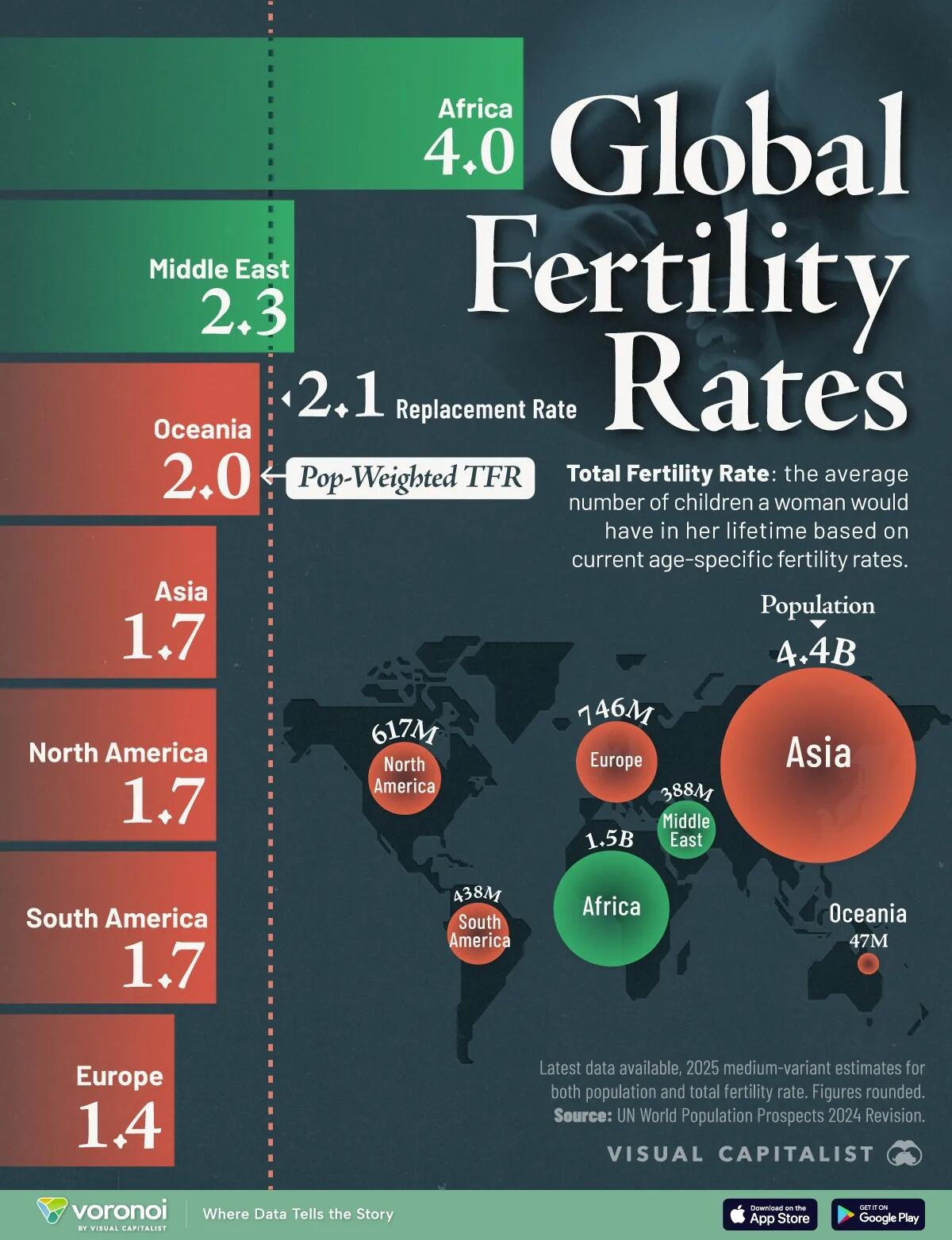
Yeah.  See what that’s doing with birth rates.  But its also on purpose.  These values have been chipped at every year since at least the 1950s until the only value that The Game will leave you with is the value of money.

And they’ll even take that away from you.

Just try on the damn glasses, why don’t you?