
“The risk of death turns people on.” – Rush

What’s more than 9, but not quite to step 10? This clock.
- Common violence. Organized violence is occurring monthly.
- Opposing sides develop governing/war structures. Just in case.
- Common violence that is generally deemed by governmental authorities as justified based on ideology.
- Open War.
As close as we are to the precipice of war, be careful. Things could change at any minute. Avoid crowds. Get out of cities. Now. A year too soon is better than one day too late.
In this issue: Front Matter – Signals – Violence And Censorship Update – Updated Civil War 2.0 Index – Running Out Of Options – Links
Front Matter
Welcome to the latest issue of the Civil War II Weather Report. These posts are different than the other posts at Wilder Wealthy and Wise and consist of smaller segments covering multiple topics around the single focus of Civil War 2.0, on the first or second Monday of every month. I’ve created a page (LINK) for links to all of the past issues. Also, subscribe because you’ll join nearly 620 other people and get every single Wilder post delivered to your inbox, M-W-F at 7:30AM Eastern, free of charge.
Signals
- Senator Ted Cruz from Texas brought up the idea that Texas should secede from the Union in November, if the Democrats “fundamentally destroy the country.”
- Three counties in Maryland are looking into leaving Maryland and going to West Virginia.
- Oroville, California declared itself a “Constitutional Republic” where federal and state ‘Rona mandates don’t apply.
Those are all stories from November. This isn’t an all-exhaustive list, since it doesn’t include all of the cries for a national breakup should abortion be thrown back to a state-by-state decision. More than anything, though, they’re a sign that people are talking about national divorce everywhere.
By itself, these would be nothing more than ramblings. But in virtually every public issue except for spending as much money as is humanly possible (where the Democrats and Republicans are in harmony), the polarization is advancing and accelerating.

What is Voyager 1’s favorite cheese since it’s over a billion miles from Earth? Probe Alone.
There is little agreement of what the United States even is in 2021 – as Empire fades, we see that we are hollowed out. Left and Right cannot agree on anything. The “Jab” is a perfect example: the Left sees it as a new Holy Sacrament, and the Right sees the apparatus supporting it as a potential Mark of the Beast-level of Evil.
Violence And Censorship Update
In violence, Portland again takes the Riot Prize for convulsing in a violent pity-party after Kyle Rittenhouse was found not guilty. Portland wasn’t the only place, but seemed to have the greatest degree of destruction. The violence was initiated by the Left.
- Project Veritas Raid
Project Veritas has been a thorn in the side of the Left since James O’Keefe pointed out the hypocrisy of Project Acorn, where Leftist activists gave him pointers on how to have his (fictitious) 13 year-old-Ecuadoran prostitutes as a tax deduction and helped him apply for a loan for his brothel.
Since then, he’s engaged a series of high-profile stunts that mix real reporting with “I can’t believe he got away with that” publicity ideas. The Left hates this guy. So, what to do?

I hear Hillary is a ruthless editor, too. She took one guy’s colon out.
Use the full force of the FBI to investigate him, conduct an early-morning raid on his house, and leak personal information as well as electronic conversations with his lawyer to a party he was suing: The New York Times®. The use of the federal government to harass people who embarrass the Left is nothing new, but going after journalists is a blatant attempt at censorship.
- YouTube® Dislike Button
We have known for several years now that YouTube® is against the Right. Creator after creator on the Right has been first demonetized and then kicked off the platform. This forces people with unpopular (from YouTube’s® perspective) opinions to have to seek alternative platforms.
Now it’s a war against the viewer. One very easy way to show that you didn’t like a video was to hit the “dislike” button. This very simple act made it easy to share a very simple opinion. “I didn’t like this.”
YouTube© sold this change on the idea that it would “help protect” small creators. Nope. This was entirely aimed at not showing how many dislikes Biden’s videos got. This was for creators like Disney™ to avoid dislikes on their videos. This allows them to manufacture consent (LINK) by hiding the fact that there are huge numbers of people that disagree with The Leftist Narrative.

How is YouTube® like the government? They both break their own rules.
- New Twitter CEO
A single quote is all you need to understand the bans will intensify: “Focus less on thinking about free speech, but thinking about how the times have changed.”
Updated Civil War II Index
The Civil War II graphs are an attempt to measure four factors that might make Civil War II more likely, in real time. They are broken up into Violence, Political Instability, Economic Outlook, and Illegal Alien Crossings. As each of these is difficult to measure, I’ve created for three of the four metrics some leading indicators that combine to become the index. On illegal aliens, I’m just using government figures.
Violence:

Up is more violent, and our perception of violence is holding steady, despite riots in major cities after the Rittenhouse verdict. Perhaps we’re just getting used to it?
Political Instability:

Up is more unstable, and it ticked up this month again.
Economic:

Economic feelings finally dropped.
Illegal Aliens:

This data was at record levels last three months, but finally dropped. Now it’s just near a record level (and record for this time of year).
Running Out Of Options
Biden’s approval rating is in the dirt. Almost everything that could be a difficulty, is a difficulty. When Bill Clinton was in this position, he hired nominally Republican staffers to help him. They “triangulated” and tried to find positions where the Left and Right could be ignored, and a compromise solution could be proposed. It worked, and without his lying under oath, this strategy made him a much more effective President.
Biden does not appear to have that luxury. Viewed on the Left as a compromise that could defeat Trump, there’s no real excitement for him outside of his bedroom, and, honestly, probably not there either. The Hard Commie Left considers him a fascist, the progressives consider him a sell-out, and the moderate Left barely exists anymore. Biden’s base . . . doesn’t exist.

Sadly, this made-up stuff is actually more coherent than a lot of his actual comments, you lying dog-faced pony soldier.
The Right doesn’t like him at all, and is following the post-1990 opposition playbook of “do anything to make him fail” that only had a short truce after 9/11.
Who does that leave?
Well, he tried mandating “the Jab” because, with 59% of Americans double-jabbed, he thought that he could get someone on his side. Ooops. Turns out that only the hardcore Left want to take people’s jobs and then put them in camps if they’re not vaxxed. It was a longshot, and (right now) it looks like a big failure.
The scary part of this is that when people are really far down, they tend to take major risks to try to win. If it’s the bottom of the ninth and there’s a runner on base and you’re up at bat, the chances of swinging for the fence to get a homer go up. Why? Nothing left to lose, baby.
Like I said – scary. What policies will he try and how will he push in order to gain the support of the Left? And will that push the United States even farther apart?
LINKS

As usual, links this month are courtesy of Ricky. Thanks so much, Ricky!!
The Devolution Will Be Televised
Palm Beach, FL: https://www.youtube.com/watch?v=FqW5yyXv9pc
Portland: https://twitter.com/i/status/1461922664377847813
SF: https://www.youtube.com/watch?v=ZKFPGzomkUo
https://twitter.com/i/status/1461933919750606850
https://twitter.com/i/status/1462284757434175488
Chicago: https://twitter.com/i/status/1465678537306914826
https://twitter.com/i/status/1461478278645047307
http://themostimportantnews.com/archives/in-some-parts-of-america-looting-has-become-a-way-of-life
https://townhall.com/columnists/victordavishanson/2021/12/02/third-worldizing-america-n2599978
Ballot Box Befuddlement
https://amgreatness.com/2021/11/16/how-much-cheating-is-enough/
TX: https://uncoverdc.com/2021/11/23/texas-funds-sos-comprehensive-forensic-audit-of-four-counties/
WI: https://www.cbs58.com/news/kleefisch-files-lawsuit-against-wisconsin-elections-commission
https://citizenfreepress.com/breaking/wisconsin-election-commission-admits-to-breaking-laws-in-2020/
USA FBI Bombshell: https://amgreatness.com/2021/11/18/durham-investigation-intrigue-sergei-millian-an-fbi-plant/
Body Count Of A Lost War…
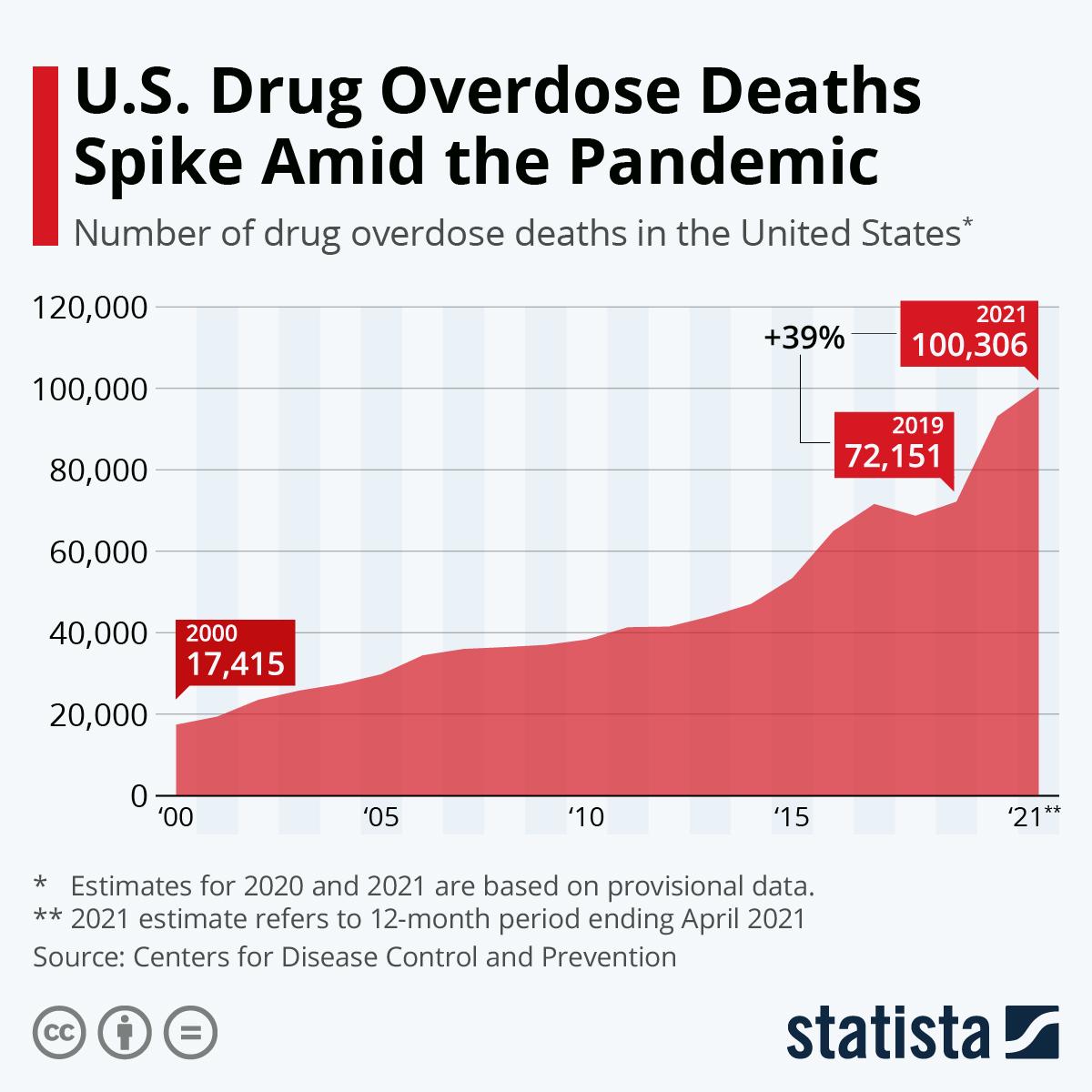
https://www.nbcnews.com/health/health-news/yearly-drug-overdose-deaths-top-100000-first-time-rcna5656
https://cms.zerohedge.com/s3/files/inline-images/18744.jpeg?itok=u3T0Djrx
Marching Towards A New War???
https://nypost.com/2021/11/21/armed-father-daughter-duo-seek-to-protect-anti-rittenhouse-protesters/
https://www.washingtontimes.com/news/2021/nov/23/antifa-urges-members-take-arms-after-kyle-rittenho/
https://www.dailymail.co.uk/news/article-10226225/WATCH-Portland-police-cornered-garage-protesters-riots-Kyle-Rittenhouse-verdict.html
https://www.cbsnews.com/news/andrew-sullivan-conservatism-60-minutes-2021-11-12/
https://dailyreckoning.com/the-u-s-is-a-powder-keg/
https://www.salon.com/2021/11/04/in-the-coming-second-american-civil-war-which-side-are-you-on/
https://survivingtomorrow.org/america-will-be-twelve-countries-very-soon-58d900389257
https://unherd.com/2021/11/would-america-survive-a-civil-war/
Amen, Five Times August, Amen