Watch The Economy Stagflate, Complete With Unrelated Bikini Picture

“We, the people, suffered.  We still suffer from unemployment, inflation, crime and corruption.” – Taxi Driver

When I buy groceries for prepping, The Mrs. says I have stock home syndrome.

Back in the bad (economically) old days of the 1970s, a word came into existence that described the economic policy of the Carter Administration:  Stagflation.

Now, if this would have been about massive helium-filled deer antlers, it would have been great.  Surreal, but great.  But it wasn’t.  Instead, it was surreal but bad –the economy was stagnant, but the price of everything kept going up.  It was like going to the dentist because of a toothache and finding out that instead of anesthetic you just got pepper spray in your eyes to take your mind off the dental surgery.

But back to surreal.  The impacts of stagflation were likewise as surreal as the giraffe clock currently melting in my light socket.   Here’s an example:  I remember when I was first married to The Mrs., we would go and visit her parents and spend the weekend in her old bedroom.  In one part of the closet was a dust-covered box filled with toys from when The Mrs. was a very young The Miss.

Is a prog rock band that plays Spanish guitar on your front lawn called Pink Flamenco?

One toy in particular stood out – it was a cheap plastic injection-molded car.  It still had the grocery store price sticker on it – and it was something like $8.99.

Whoa!  Back in the late 1990s, $8.99 would have bought something like a dozen similar cheap plastic injection-molded cars.  Inflation had been out of control in the late 1970s when The Mrs. had been given that toy.

Everything sucked economically – crappy quality at inflated prices.

Two major factors led to that situation – Nixon pulling the United States off the gold standard was the most critical one.  If we had to prove-up our spending with gold, well, we’d have to have some sort of discipline or we wouldn’t have any gold.

Discipline sounds like it’s boring, and the 1970s was made for disco parties, drugs, and infidelity, so why have discipline with our money?  That’s just not cool, man.  Besides, who needs rules when you have bitchin’ bell bottoms?

I guess weightlifters in the 1970s wore barbell bottoms.

The other situation is that the United States had reached a (then) peak in oil production, and was now dependent upon oil supplies from foreign nations (they were nations instead of countries back then – now, not so much).  Since one group of foreigners (Arabs) didn’t like another group of foreigners (Israelis) the group that had all the oil (Arabs) decided to stop selling so much oil.

Oil is a big deal, because the price of oil is hidden almost everywhere in our economy.  It’s required for planes to move bikini models, for trucks to move PEZ™, and in some places heats homes.  So, increasing the price of oil was just like tossing a big tax on everything, so moms everywhere went to work to bring home the bacon, fry it up in a pan, and then wear crappy perfume and nylon pantsuits.

I think I just gave the origin story of Hamburger Helper™, but I digress.

Not everyone makes great meatloaf, but two out of three ain’t bad.

What does this mean to today’s problem?  Are we in the same place?

Partially.

We’ve been partying, mostly, since the 1970s, and have gotten away with it through various shenanigans.  As Ayn Rand said, “You can avoid reality, but you cannot avoid the consequences of avoiding reality.”  I’ll just shrug and Ayn was talking about her polyamorous relationships, but I can’t be sure.

Regardless, 2025 is a big year for dealing with consequences.  Our current national debt is something like $33 trillion.  I know, it’s like Whoopi Goldberg’s butt, it’s so big it’s meaningless.  But we have to refinance $9 trillion of that $33 trillion plus another $3 trillion that we’re spending that we don’t have, this year.

I mean, who is going to buy all that debt?

Don’t know.  Probably not China.  Or Canada.  Or Mexico.

Let’s think about where that debt is now.  The Federal Reserve® already owns about $5 trillion, and it’s not like they have a choice, so they’re probably in for several trillion.  But the biggest holder of the national debt is . . . the government.  It owes itself $7 trillion dollars.

The rocks are still worth more.

Yes, you read that right.  Big chunks of that are Social Security “trust fund” that’s stuck in Al Gore’s “lock box”.  I mean, seriously, what do people not understand about a lock box?  But it also includes things like DOD retirement, and civil service retirement (which is over a trillion dollars).  And you know we’re spending down that Social Security trust fund right now, so that just means more debt that someone else will have to buy.

It’ll be the Fed©, snapping up debt like it’s at a Black Friday sale on silicon oven-mitts on TEMU™.

A trillion here, a trillion there, and soon enough we’re talking about real money.

The way debt bonds are sold is that people bid on ‘em at an auction.  What are people bidding?  The interest rate.  So if there’s a huge supply and lower demand, what goes up?

The interest rate.

Since we’re not paying the bills out of cash, but out of borrowed money, that means the interest paid will just go onto the debt as it’s paid, which means that even more bonds will need to be sold.  That means that there will be more supply and . . . higher interest rates.

It’s a vicious circle, but one that works as long as the economy keeps growing.

But the economy likely didn’t grow last quarter, so we’re (at least right now) stagnant.

Oddly, the tariffs and deportations seem to have broken something and right now we have the lowest inflation in the last four years.  I don’t think that will last.  Higher interest rates will bleed into businesses, and money for expansion or even day-to-day operational expenses.

How odd that people whine and complain when you make them go live in a country they made, surrounded by people who speak the same language that they do.

These higher interest rates will also make trillions of bank assets (my mortgage, for instance) worth less.  My mortgage is at an interest rate lower than I can get with a deposit a savings account.  I assure you my bank is aware of that and loves it when I toss them my monthly check.  This is what led to the Silicon Valley Bank® implosion – it had too many dollars tied up in low interest loans and securities, and then rates went up.

Thankfully, the Fed® made the decision that the banks can ignore the fact that their assets are worth less, or else all of them would have self-extinguished.  And you wonder why gold is selling at $3,300 an ounce?

Why do I predict the high likelihood of Civil War 2.0 by 2032?  Because by then, if you do the math, you’ll see that just interest on the debt will be at least half of the total tax hauled in, but I think it will be worse, because the numbers always are worse.

The solution to this won’t be a business-as-usual solution, and there will be extreme economic dislocations.  There is no evidence of anyone wanting to increase our economy at the China-like rates we’d need to outrun this mess, and no appetite to cut the cost of government.  At some point the consequences of ignoring reality will become so manifest that they aren’t something we can ignore.

And it runs on beetle juice.

Well, the good news is that we probably won’t see $8.99 injection molded plastic toy cars.  The bad news is that they’re already selling the one in the picture above for $10.00.

How Society Shapes Humanity

“Don’t worry, scrote. There are plenty of ‘tards out there living really kick-ass lives. My first wife was ‘tarded. She’s a pilot now.” – Idiocracy

Apple® has embraced the future: they’ve already priced in 20 years of inflation.

One constant theme of this blog is change.

We live in a world that is defined by change, and the benchmarks we measure society are things like change in GDP, change in population, change in the availability of different PEZ™ flavors.

Blue is a flavor, right?

The focus of humanity on change is not the norm, but rather an exception. The amount of novel situations and technology entering our lives is at an all-time high and is increasing year-over-year.

Let’s backtrack a bit and put this in perspective.

Going back to food, 15,000 years ago we ate a lot of meat and fish, some rando fruits and vegetables that some cave-bro had been brave enough to taste and not die, and nuts.

Nothing about society would change for 15,000-year-ago bro’s tribe for thousands of years.

There are people who maintain that the human organism hasn’t changed enough so that our very different diet of sugar, grains, sugar, industrial chemicals, sugar, minerals from a mine in Bulgaria, sugar, beef jerky, and microplastics isn’t somehow normal and that our bodies haven’t adapted to it.

Maybe they have a point?

Why can’t Elvis drive a Cadillac™ in reverse? He’s dead.

Anyway, this isn’t so much about feeding your head as it is about feeding your mind with the change in the way we deal with information.

How has that changed humanity?

In the beginning was the Word. And, the word.

If you couldn’t speak it, chances of getting your genes propagated were slim because if you can’t talk your grubby cave-gal out of her wolfskin jeans, your genes aren’t gonna be around for the next round. Thus, we became a society where language was important so her Tinderclub© didn’t swipe left.

Then we started writing stuff down. Most kings and leaders didn’t need this, but a growing segment of the population did – people like scribes and lawyers. Eventually, they made more money than people who couldn’t read. The ladies of the past weren’t so different than the ladies of today (except they couldn’t vote and were property pretty much) but the written language genes also showed up for the future.

In lots of places, but not all. Some never jumped from talking to reading, so the segment of their population that couldn’t read never got flushed. This is evident in many sub-populations even today.

Can illiterate psychics give palm readings?

Generations of humans would live and die during this period with little change in technology or the basic factors that determine the shape of their lives. They would be born and die in a house that looked just like the house (and maybe was the same house) that their ancestors 100 years previous had lived in.

Writing and reading made society more complex, and allowed ideas to span continents, and I’ve written about this before. So far, so good. But more complex societies have more complex outcomes. Rather than sort for good eyesight or the ability to take down a mammoth, the selection process moved to selecting for people who got along well with strangers, and who could plan.

The harsher the climate, the more the pressure for these selections. Did we still need people who could kill, kill, kill? Sure we did. They came along, too because their mating opportunities are high. There’s a reason that 1/8 of Asia is related to Genghis Khan. I think his go-to pickup line was “I’ll conquer your steppe, baby.”

His mom’s advice was, “Just because you Genghis Khan, doesn’t mean you Genghis Should.”

At some point around the Renaissance, Western civilization decided to get rid of the members who had impulse control issues. England, for example, started executing criminals who couldn’t control themselves, and kept it up for hundreds of years. This was pretty good at weeding out the undesirables. China had gone through this process hundreds of years in the past, which may explain why so many Chinese have a bit of Khan in their respective woodpiles.

Societies back then also let stupid people die. There wasn’t a welfare system to keep stupid people alive, so there were selection pressures for smart. Some folks call it “social Darwinism”, but I call it the universal penalty for being stupid.

Essentially, this is a society-enforced soft eugenics program, culling out a portion of the population just because they never make enough money to breed. And, let’s be honest: everyone feels bad for the kids on the short bus, but nobody really thinks they should be having kids of their own in an attempt to see how many more chromosome pairs than 23 that you can fit.

Well, 24 and Me© now has a new customer.

Society has changed now. Besides subsidizing poverty, which ensures we’ll have more of it, we’ve also changed in a fundamental way how we take in information.

The media we consume has been decreasing in complexity for over 100 years. My guess at the high-water mark for complexity in media and the most intelligent era in human history (in Western Civilization) would be around the time of Dickens. Go back and read the language of the Lincoln-Douglas debates, a series of debates meant to appeal to the common voter of the time, and tell me what would be made of the breadth of language and the depth of argument today?

Could an average eight grader keep up with it? Could an average Harvard™ freshman without having ChatGPT® or Grok© summarize it?

Since current political debates look much more (in many cases) like the wrestlers of the WWE™ before a steel-cage match, I think most people would get bored and wander off.

That’s the media that we’re trained with today.

We went from books, to magazines, to television, to 10-minute YouTube™ clips, to 20-second TikTok™ videos. Trump? His 2016 election was based on 140-character Tweets™.

The building of complex arguments has largely been abandoned in the public sphere and decisions of vast chunks of the population are made on what emotions are stirred by looking at a photograph. Certainly, many of those are now staged, and in a decade half of them will be the propaganda products of A.I.

I always make it a point to respect the modesty of women wearing bikinis by staring at the parts of their body that are covered up.

The selection and sorting still exist, but now it has (like in the film Idiocracy) selected for people who are the opposite of the groups society selected for in 1820: someone seems to want low-impulse control, and non-productive populations that are incapable of planning. Sure, it could be a coincidence that major policy initiatives all remove incentives for stupid people not to have dozens of babies.

This process, thankfully, is self-limiting. A technological society depends on a stream of competent people to plan and run society. And, no, not like Soviet Central Planning, but rather, “Hey, we need more lettuce in the Modern Mayberry Walmart©, so since we’re Walmart™ and want to make money, we should ship them some” planning.

It’s always quicker to burn down a house than to build one, so it’s really no surprise that making things worse is a lot easier than making them better. Paraphrasing what Thomas Sowell (I think) said, “We shouldn’t look at poor places and ask why they’re poor, we should look at rich places and ask why they’re rich.”

Nah, there aren’t any votes in that. And it sounds like hard work, right? Besides, stupid is growing faster than TikTok™ dance challenge videos.

Have we reached the point where we’ve made a society so complex it allows devolution to the point it can no longer be maintained? If so, congratulations! You’ve been alive during the period of peak novelty in human history.

The good news is that you can get blue-flavored PEZ™ here at the peak.

How The Great Society Doomed The United States

“Mention modern art, civil rights, or folk music, and you’re in like Flynn.” – Animal House

I didn’t go see Malcolm X in the theater because I hadn’t seen Malcolm I through IX.

Perhaps the worst seven years in the post-war history of the United States started in 1964.  I’d love to blame just one political party, but it’s clear that both are to blame.  This six-year period was devastating in the changes it caused in the United States, and we’re seeing the full and very negative effect of those GloboLeftElite initiatives as they blossom today.

Let’s start off with the worst one first.  That is, of course, the Civil Rights Act of 1964.  Passed (like all of the laws in this post) over the still cooling corpse of John F. Kennedy, Johnson used that pity and sympathy to completely ride roughshod over the Constitution, people and economy of the nation.

The Civil Rights Act started as a governmental solution to a problem that was created by fundamental rights of individuals – the right to associate with whoever we wanted to – the old “We Refuse The Right To Serve Anyone”.  Would the worst of the reasons leading to the Act’s passage have been handled by lesser measures or public pressure?

Certainly, that would have happened.  But that’s not what happened.

I hear that quack was tearing apart the duck community.

To give a taste of the hypocrisy, surrounding the bill, talking about forced bussing of children because of race, ArchCommie Hubert Humphrey said, “ . . . if the bill were to compel it (bussing) it would be a violation of the Constitution, because it would handling the matter on the basis of race and we would be transporting children because of race.”

How did that work out for us?

I guess it was worth it to ignore the Constitution and the rights of citizens because the relations between blacks and everyone else has been healed and there were no riots in the late 1960s or 1990s or 2010s or 2020s due to race.  And there is no anger and lingering resentment by the black community.

Oh, wait . . .

But, again, Humphrey was on to something – the Civil Rights Act of 1964 began to act as second Constitution.  And it has evolved to cover absolutely anything and everything, leading to lawsuits that noted that the bans on euthanasia violate the civil rights of patients who wanted to die.  Courts have ruled that companies have to hire people who can’t speak English, and the safety of employees who can’t understand instructions is no reason to not hire them.

I don’t know what the intent was of this Act, but that doesn’t matter.  The result of it even existing has been horrific beyond measure.  And it causes really stupid lawsuits because absolutely anything can be litigated:  black managers sued Walgreens™ because it they were placed in predominantly black neighborhoods under the theory that black customers might like black managers better.  Apparently black managers are traumatized by being forced to be around black customers?

I think Snoop was upset because his arthritis was acting up – he said, “My joints are on fire!”

This was a dream win for the GloboLeftElite – it gives them an infinite amount rules that they can make that don’t have to be consistent with themselves or even be logical.  Lewis Carroll nailed it in a phrase from Through the Looking Glass:  “When I use a word it means just what I choose it to mean – neither more nor less.”  The law evolves and means whatever the moment requires, protecting boys pretending to be girls, and not protecting the girls because that’s what’s important in the current moment.

The law, in the end, does not provide for civil rights:  It simply strips Americans of the freedoms that the country was founded to create and creates a playground where the GloboLeftElite can change rules at a whim.

One example of particular note of how this made the world worse is the 1971 Supreme Court decision in the Griggs v. Duke Power Co. case.  In this case, the Supreme Court ruled that having to have job applicants possess a high school diploma (of which Duke would pay 2/3 the cost if the person didn’t have a degree) and have an acceptable I.Q. score was somehow wrong.

None of that is based on race.  Yet, Duke lost the case because it had a “disparate impact” on hiring – fewer blacks had a high school diploma and could pass an I.Q. test to get certain jobs.  Keep in mind that the same rules applied to everyone, not just black people.

From the objective standpoint of an employer, having an employee who had sufficient tenacity to complete a high school degree and enough intelligence to accomplish complicated tasks just might be required to run a power plant, regardless of what color the person is.

But no, even back in 1971, the rot was in.  And the downstream consequences of this have been huge – since employers could no longer hire by intelligence, they had to have a proxy.  That proxy?  A college degree.

But she did take the test three times and added up her scores.

Now, they could ask for that because GloboLeftists are the people that run colleges, and, *poof* the Griggs degree led to a nearly immediate increase in demand for college degrees as a requirement for a job.  On top of that, it has led to the mind-numbing numbers of certifications and certificates required for any job, when a simple high school degree and an I.Q. test could have solved it all.

How many billions of dollars has that cost the American people?

But it’s racist to even ask that question, right?

The next thing on the list for Johnson was the Immigration and Nationality Act of 1965.  Here’s what Teddy Kennedy said, “It will not upset the ethnic mix of our society.  It will not relax the standards of admission.  It will not cause American workers to lose their jobs.”

Whew, that’s a lot of lies in a row, even for a Kennedy.  This was one JFK actually was all on board for, as JFK’s staff wrote A Nation of Immigrants, at the request of the Anti-Defamation League™.  Hey, don’t blame me for bringing it up, it’s literally in the same sentence in the Wikipedia© entry.

I’d spend more describing the impact of this law, but, you’re soaking in it.

But there’s more.

In 1965 Johnson decided again to screw Americans, this time by removing silver from U.S. coins.  Here’s what Johnson said at the time:  “Our present silver coins won’t ever disappear and they won’t even become rarities… If anybody has any idea of hoarding our silver coins, let me say this. Treasury has a lot of silver on hand, and it can be, and it will be used to keep the price of silver in line with its value in our present silver coin. There will be no profit in holding them out of circulation for the value of their silver content.”

The Fed™ disagreed – whenever coins made their way, they were sorted by weight and they retained all the silver coins.  They even bought a special machine to do that.  Which is exactly the opposite of what you’d do if there was no profit in keeping silver coins.

Well, you know what happened:  $1 in silver coins from that time are now worth over $24.

It’s funny that humor and Schumer rhyme.  That’s the closest the Democrats will ever get to being funny.

Not content with only destroying race relations and sound money, the ethnic makeup of the country, and Johnson launched his Great Society program between 1964-1968.  Coming off of Johnson’s post-Kennedy Democrats holding two thirds of both houses, he had a GloboLeftist paradise.  Let’s have the government take control and regulate vast amounts of the economy.

This led to

  • Food Stamps to encourage poor people to not work,
  • The Housing and Urban Development Act of 1965 to further encourage poor people not to work,
  • The Elementary and Secondary Amendments which pushed federal funding, and thus control, into schools that were supposed to be locally controlled, and
  • The Civil Rights Act of 1968 which put federal tentacles into housing.

The Great Society had spent over $22 trillion dollars by 2014, so you can be certain that total is closer to $32 trillion today, and that doesn’t include the need to hire HR departments and compliance costs and wasted college degrees.

The national debt is $37 trillion.  If we hadn’t spent all that money on Johnson’s programs?

We’d be on Mars.  Or the income tax would be like $6 a year.  And a dollar wouldn’t have inflated away infinity times.  It’s a certainty that everyone in the United States would be wealthier.

I have heard that the restaurant on Mars has great food but not much atmosphere.

We are in a unique period – people are finally willing to look at these consequences, and have seen what is going on.  Thank police body cams, thank the George Floyd riots.  Thank the Internet, so people can see what’s going on without it being spun by GloboLeftElite media.

The impacts of just these rules, cumulatively has set up the place where collapse is the most likely outcome of the American Experiment.  As I’ve said, there is a small window to stop it, but that window is closing rapidly, and will certainly be shut by 2028, if not by 2027.

The situation cannot stand, and that’ okay – because what will come after, in time, will be better.

Let us hope we have learned sufficient lessons when we rebuild.

Failing Justice: Vigilante In Indiana . . .

“Five hundred and twenty-seven counts of obstruction of justice.” – The Dark Knight

Behold, the American justice system!  (All memes as-found today)

One of the most important requirements to have a functional society is the law.  This is backed by historical evidence.  One of the earliest known fragments of a legal system is the Code of Ur-Nammu.  Ur-Nammu is the name of the king who wrote the laws, and the name of the country he ruled was Ur, which must have been quite a happy coincidence for King Ur-Nammu.

The kingdom of Ur was bordered on the north by Um, on the south by Uh, and on the west by Like.  On the east was the kingdom of Carpetia, who, from their capital of Deepshag, specialized in creating high-quality fabric floor coverings.  But that is another story.

This, though, was at least 4100 years ago.  It illustrates a very simple truth:  when people live together, they have to have laws and punishment or there will be chaos.  Anyone who ever had a roommate or an ex-spouse can vouch for me on that one.

Thankfully, federal judges have jurisdiction in interstellar space.

The law is a very simple premise:  in exchange for the promise of fairness, the individual gives up the natural rights of vengeance and retribution.  This is crucial.  Without law, if Britney Spears borrows $20 to buy a McChicken™ sandwich at 3am and then doesn’t pay me back, I could drive to her house and kidnap her pet ocelot until she repaid me.  I know, I know, that sounds oddly specific, but there are some stories I just won’t get into.

Instead, I can sue Britney Spears in court, and if all of the facts are properly judged, that McChicken®-eating soulless tart will give me back that $20.  Or, maybe, I lost that IOU she signed on the back of my travel copy of the Magna Carta and the judge says, “Insufficient evidence” and frog marches us both out of court.

As long as everyone feels the system is fair, life is good.  But when people sense that fairness is gone, they’ll take matters into their own hands.  This is scary, because it leads to a series of endless reciprocal atrocities.  Another word for this is Chicago.  Or Mogadishu.  Or El Salvador.

Still waiting, Pam.

The people in those locations don’t believe in the law.  Those wandering around killing don’t want cops, obviously.  But most of the people that they kill don’t want cops, either, since they’re killing as well.  The bystanders and clueless non-violent civilians who wander into the games would like law, but it often doesn’t matter.

The punishments are rare, and when they finally hit, aren’t a sufficient deterrent to others going out to break yet more crimes.  Part of the reason is that most of these criminals are really stupid.  I don’t mean that euphemistically – they’re stupid.  Low IQ correlates with high crime.  The stupider they are, the more likely they are to kill.

There are many reasons for that, from inability to plan, to the inability to understand a conditional hypothetical (“How would you feel if you didn’t have breakfast, Jamal?”  “But I did have breakfast.”), to the inability to think that their actions might have consequences.

Amazing how opposition to Trump will make the GloboLeft contort themselves.

No, for the law to work on stupid people, the punishment must be swift, severe, and certain.  Our current justice system is none of these.  Cases last for years, most crimes are dealt with by being dismissed or through a plea to a far lesser offences, and Soros D.A.s frequently drop the charges on rapists and murderers.

If that isn’t bad enough – juries are tribal.  The first big case I saw that confirmed this was O.J. Simpson’s murder trial.

It’s pretty obvious that O.J. Simpson killed his ex-wife.  This is a non-ideological question.  But it is not a non-racial question.  Why was he found not guilty?  It was because he was black and killed a white woman.  The black jurors certainly weren’t going to convict him.

Do we think a black juror will vote to convict Karmello Anthony?  Or that a pliable D.A. won’t give him a sweetheart plea deal so he can do two years in the slam and then be out?  That leads to a loss of faith in the system.

What happens when we lose faith in the justice system?  Well, in Indiana, one great-grandfather lost faith in the system.  65-year-old Mark Vawter was waiting, likely, to shoot and kill one S’Doni Pettis.

Why would a great-grandfather want to do that?  Because Mr. Pettis had, while (allegedly) with drugs and while being chased by police, Mr. Pettis had driven a car at great speed into an innocent bystander’s car causing it to burst into flame.  Inside?  Mr. Vawter’s 3-year-old and 2-month-old great-grandchildren.  Mr. Vawter probably had seen that Mr. Pettis was charged with 3 counts of a level 3 felony.  In Indiana, that could put him out on the streets again in less than three years.

And Mr. Vawter had probably learned that Mr. Pettis had already been charged with an attempted murder, but the case was plea-bargained down to an aggravated battery.  He went to jail, and . . .

Pettis was likely let out early.

Mr. Vawter calculated that the system would probably fail again, and decided to take matters into his own hands.  Vawter waited with a pistol, and drew it when the prison van doors opened.  What Vawter didn’t know was that Pettis wasn’t on the van – his hearing had been postponed.

Vawter was shot by the police.

Vigilantism is something that has been feared by governments for more than 4,000 years.  When individuals feel that they have no choice but to enforce justice themselves, you have the chaos of gang warfare.

But thankfully in the UK, you know the justice system is working, and people will get longer sentences than Mr. Pettis for speaking their minds . . .

The justice system is important, and it’s failing.  There will be consequences.

Tariffs: How’s That Going For You?

“One watch, gold.  One cigarette lighter, gold.” – The Usual Suspects

I’d like to thank France for the help giving the United States independence.  If it weren’t for them, we’d still be speaking English right now.

Tariffs are now in place, and in various stages of implementation.  They are a very big change from the previous game, which was a seemingly sweet deal:  Americans send cash that was just “printed”.  Foreigners send stuff that they made.  Since 1973, they have been super polite:  they didn’t even ask us for gold.

They trusted us!

Essentially, this was an “Americans have nukes and are the unipower” tax.  As I’ve written before, this had a negative impact on the composition of the American economy, moving from manufacturing to making accounting anomalies.

The rise of China as a manufacturing and economic powerhouse was the biggest challenge to the “unipower” concept, which was born out of the “sweet” deal – they sent us plastic junk while developing world-class manufacturing skills.

China is now number one in manufacturing, with 30% of the global output, as well as being the largest producer of wheat, rice, vegetables, fruits, and pork.  This is despite the continuous headline of the last thirty years about “Now China Will Really Face The Music”.

No, not really.

To be clear, it wasn’t just Joe.  Meme as found.

So, China has grown, but the United States overplayed its hand to make problems accelerate, and I’m not talking about Trump’s tariffs.  No, I’m talking about when Biden embargoed Russia from the international payment system while taking Russia’s money and buying Ukraine something nice with it.

When Biden chose that action, the whole world took notes.  Cutting Russia off from the SWIFT payment system seemed like a good idea.  Except China thought, “Hey, they still owe me for all those iPhones™ they promised to pay me for.”  Immediately this bought the BRICS closer together, and they’re working on ways that they can more seamlessly work together – around the United States if need be.

The reason gold prices are up is that the dollar is worth less, not that gold is suddenly even more scarce.  Trust in dollars tanked:  people are looking for a hedge so that they won’t lose their wealth through exposure to meme dollars.  The proof?

They don’t trust the dollar, or graphs.  They think the graphs are plotting something.  (graph via Dollarcollapse)

Gold didn’t take off in 2025.  Or 2024.  Or 2023.  Gold took off exactly when Biden sanctioned Russia in 2022 after the Russians invaded Ukraine.  Part of the game for the world using the dollar is that we wouldn’t weaponize it.

Oops.

That’s a card you get to play exactly once.

And it backfired.  Bigly.

Tariffs are about changing that game, yet again.  And it is possibly a pretty long shot, but when it’s the bottom of the ninth and you’ve got a man on first, the temptation is to swing away.

Tariffs have already changed the game.  Imports in April are already down 40% year over year, and although a string of ships are still headed our way from China, rumors are that the numbers are down even more.

I first threw a boomerang when I was seven.  I live in constant fear.

To give an example of an individual’s complaint about the tariffs, one father was buying his daughter a dress.  To be clear, they didn’t specify it was a girl, but it’s 2025, so who can say.  Anyway, the daughter had found the perfect dress to wear to a wedding on TEMU™.  It was $19.  But when the father went to check out, the price had gone up to $59 with tariff.

Now, since TEMU’s© slogan is “Shop Like A Billionaire™” it shouldn’t have mattered, though I can’t see Elon spending time on TEMU™ buying himself sundresses.  But was the price reasonable?

Probably.  TEMU® has been accused of copying and stealing designs from fashion designers and artists, so I’m sure that there’s no karma in this.  Beyond that, though, if we want to be a nation that has consumed itself to death, we should avoid tariffs so TEMU© can grow stronger.  So that’s in import.

TEMU® is for people who can’t afford Goodwill™.

Let’s switch to exports.

In one of the weirder stories, pork imports by China from the United States are down.  That’s not weird because they slapped a tariff on pork, but the weird part is that this will probably hit the largest US pork producer the hardest.  That’s Smithfield Foods©, which is owned by  . . . Chy-Na.  So, they’re not importing pigs they already own because they put a tariff on those pigs.

That they own.

Which means cheaper bacon in the United States at the expense of the profit margin for multinational corporations.  I can deal with that.

Back to the big picture.  The imports being lowered by 40% will have a knock-on effect.

  • Truckers will have fewer loads to transport across the country,
  • Which means that there will be less demand for diesel fuel,
  • Which means lower diesel prices.

Overall, the economy has been projected to have shrunk by 2.5% in the first quarter, and with a big hit to imports, chances are nearly 100% that the economy will shrink in the second quarter as well.  That means a recession.

I don’t give money to homeless people because I know that they’ll spend it on alcohol when I could spend it on alcohol instead.

But don’t just take my word for it:  when I mentioned that the economy would be hitting a recession, The Mrs. scoffed:  “We’ve been in one for over a year.  Maybe two years.”

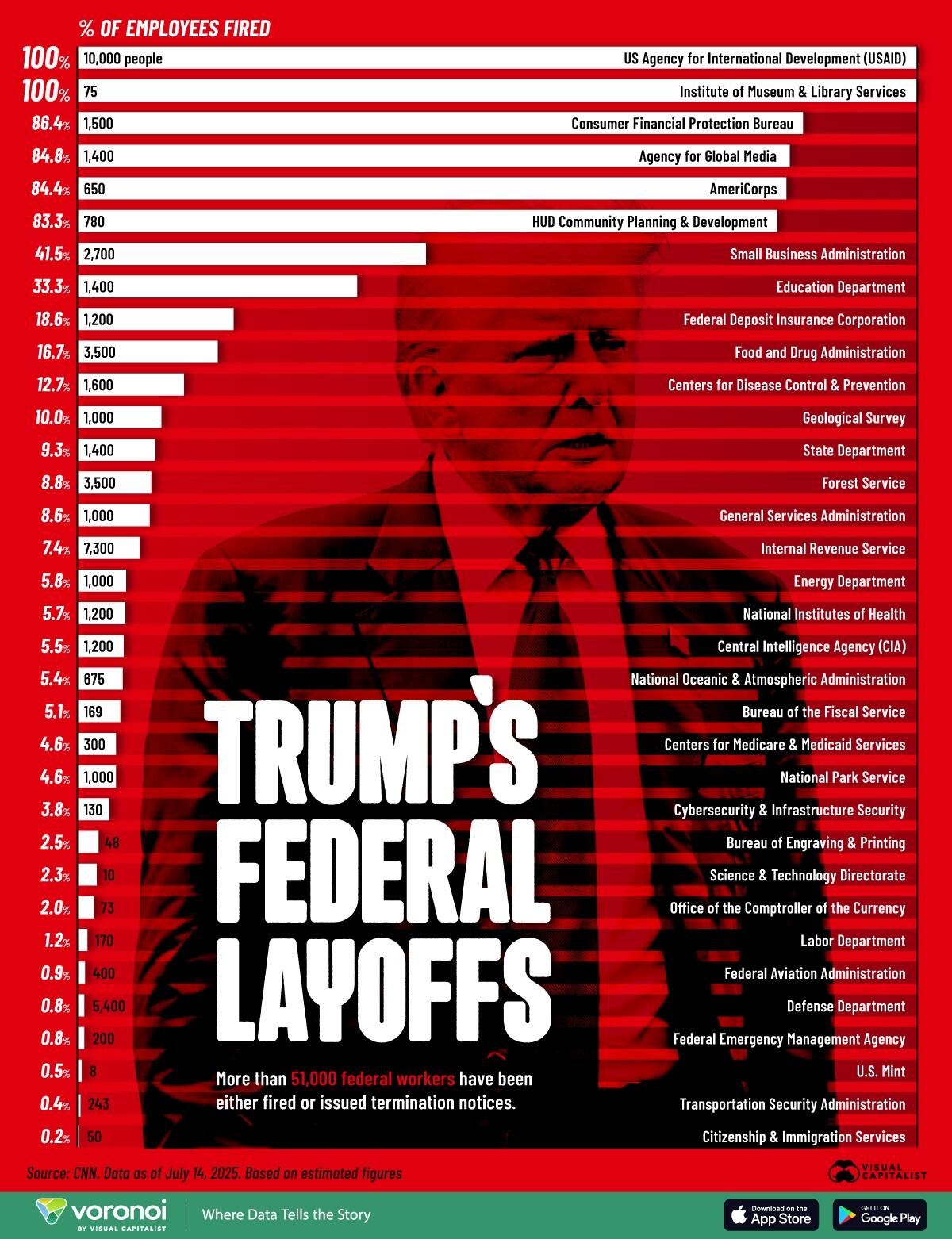
She’s right.  On a regional basis, and in the places where GloboLeftists don’t strap on the taxpayer money feedbag, the economy likely has been in a stagflation-recession for the last two years.  Nobody at USAID noticed it, because they just got continual increases in salary like clockwork and a pension plan better than anything in the private sector.

Going forward, Biden’s sanctioning of Russia made it so we couldn’t print cash anymore:  he killed the golden goose.  To be fair, it was already sick.  Trump (or somebody he knows that says nice things about him) realized it, and, boom, tariffs.

The game is afoot.  Can we become net producers again before people don’t want dollars?  It’s a race.

But there’s always gold.

Notice:  This is not financial advice, since I’m an unpaid humor blogger that writes for my own personal amusement and if you do the things that I’ve done that might make you part of the punchline, and not in the good way.  I am not an attorney, accountant, financial advisor, mime, or clairvoyant nor do I pretend to be and I have not stayed at a Holiday Inn™ Express© recently.  This website is not a substitute for consultation with an investment professional that is saner and more stable than I am and who is actually, you know, an investment professional who hasn’t tossed back a few shots of bourbon.  I expressly suggest you seek advice from a competent professional and accept no liability for any loss or damage that you incur.  Gold has gone up in the past.  It has also gone down.  Not my job to make your decisions:  it’s on you, bub. 

How Expensive Housing Leads To An Oversupply Of Wine Aunts

“You won’t lose the house.  Everybody has three mortgages nowadays.” – Ghostbusters

When Zoomers start to pass away, will they have eulogis?

FYI – no podcast tonight.  I’m sure you’re shocked.  I’m out travelling.  Next week???

The American economy is broken in several ways, but one of the biggest is housing.  When I was a wee Wilder in my twenties, I bought a house that was about twice my income.  The mortgage payment was doable, just barely.

I just looked up what it’s going for today, and the answer was . . . over 10 times what I paid for it.  Was it a nice house?  Sure.  But not that nice.  Why did it go up 10 times in value?

Several reasons, and not because it grew a hot tub and a golden toilet, either.

This particular house was nice because it was in a suburban neighborhood where the schools weren’t . . . bad.  The local elementary school and high school were pretty safe which was why we bought it in that area in the first place.  Places with “good schools” tend to have much higher property values than those that don’t have good schools.

But good schools lead to high home prices because a mother will sacrifice her husband’s kidney to the Hong Kong black market to get her kid into a good school.

Why does that picture remind me of the media during COVID?

A lot of that is bounded by driving distance – people will drive a long ways to have good schools, but there is a limit.  The suburbs were set up based on just that mathematical tradeoff.  The fact that the ‘burbs had much higher appreciation just means people will pay a lot to avoid . . . bad schools.

Around this time, people stopped looking at homes as a place to live, and started looking at them as an investment.  What they noticed was that prices in the ‘burbs seemed to go up faster than their salary, so houses began to resemble shake-shingled slot machines.

Places like California saw this effect first – as big city with a very desirable climate, people flocked there for the jobs created by a variety of businesses, from defense to entertainment to manufacturing to importing illegals.

Enter the predators.

Blackstone® is now there in California.  Recently, they’ve been building housing in San Diego.  Rent?  $3000 to $4000.  A month.  But it’s not just California – the median housing payment for people who bought homes is now a record – $2,819, not including taxes and insurance.

There are, of course, two sides to the equation:  my freshman economics prof would note that supply and demand have led to this situation.

During COVID, there were a lot of trials held on Zoom™.  Does that mean the case was settled out of court?

Demand is up because tens of millions of illegals have flooded this country in an unabated wave.  Whereas a typical American family has three or five people living in it (nine if you’re the Brady family) the average foreigners will often rent a cot in a kitchen so that the houses are packed with people, India-style, so that 10 or 15 people are paying $200 a week to live in these homes.  A landlord could make $8,000 or $12,000 gross profit if they rented to people to whom that would still be better than living in Haiti or India.

Yup, turning suburban houses into Mumbai Motel 6 one cot at a time.

Oh, and I mentioned Blackrock™.  Not content to strip mine American companies by loading them down with debt and ejecting them like Osama Bin Laden’s corpse off a flight deck, the private equity firms have entered as a competitor, buying houses with one goal:  to turn people from one-time purchasers into full-time wagie wealth engines who end up paying but never owning.

You’ve heard their slogan:  You’ll own nothing, and like it™.  Hey, at least you can put a happy face on your rent check.  Wait.  It’s all direct withdrawal now.

So, there’s the demand problem.  Americans didn’t ask for this, but here it is.

What do you say to your English teacher when she’s crying?  “There, they’re, their.”

What about supply?

Supply isn’t increasing to match demand.  There are lots of reasons for this, among them zoning laws, environmental laws, contractor requirements, building codes, and other Not In My BackYard (NIMBY) restrictions that make it complicated and expensive to build anything.  In fact, in places like California, it’s turned into BANANA – Build Absolutely Nothing Anywhere Near Anyone.

That reduces supply.

If you bought a home 25 or 35 years ago in a place like this, congratulations.  The restrictions in supply of housing make your investment worth a lot more than it would normally be worth if the market were functioning properly.  I suppose the upside is that very expensive houses create the perfect environment for . . . good schools.

That has other consequences, though.

The Mrs. asked me if I had a police record.  “No, but I do have one by Sting.”

Whereas I could get into a house at the age of 24, that’s simply not the case for kids today in most areas.  My modest first home (I checked its current value) would lead to a full-in payment of at least $5,000 a month.  That’s $60,000 a year, after tax.

Not a lot of just out of college kids can afford that, so forgetaboutit.

Young families are locked out in that area.

That has a knock-on effect:  lower family formation, lower numbers of children being born, and miserable young men.  Oh, there are miserable women, too, but they’re older than forty and they’re miserable when they find out that the only role left for them in society is Cat Loving Wine Aunt™.

As I said above – the economy is broken, and housing is part of it.  Oh, wait, now we have an oversupply of wine aunts.

Will that result in making box Chardonnay too expensive?

Debt Slavery’s Long Game: From Sumer to Goomer With A Detour to Ginger And Mary Ann

“If you erase the debt record, then we  go back to zero.” – Fight Club

If Electric Avenue is closed, where are on Earth are we going to rock down to?

I can’t remember the first time Pa Wilder said “There’s nothing sure but death and taxes” but I couldn’t have been any taller than former Secretary of Labor Robert Reich, who I believe is about three feet tall.  But I’m sure that while Pa was quoting Benjamin Franklin accurately, he did miss one big point:  although death was really old, for most people in the history of the planet, there was also debt.

Some of the earliest records we have are records of debt, baked into Sumerian clay indicating that Goomer owed Abadabaduu 12 sheep because he borrowed 10 sheep.  And debt was a pretty serious thing back then.  If Goomer couldn’t pay, he might even be sentenced to become Abadabaduu’s slave.  If Goomer’s kid, Jenzie, had the misfortune of Goomer getting a bad sunburn and dying, well, Jenzie now a lifetime of debt slavery himself to look forward to as he pays off Goomer’s debts.

This stuck in my mind when I was listening to a conversation between a guy who owned a *lot* of apartments and some kids.  The kids were in the middle school age bracket and the landlord was trying to teach them about finance.  The landlord said, “You know, having apartments is a lot like having a slave.  They go out and work for me, and give me money every month.”

Keep in mind that this guy wasn’t what I would normally call shady, but that’s the sort of nightmare fodder that GloboLeftists use as propaganda when they want to burn down capitalism.  A much better way to describe the situation is that the apartment owner does such a good job at building and maintaining his properties that people want to engage in a voluntary transaction with him to live there.

Describing them as slaves?  Eeek.

What did Yoda™ say when he saw himself in 4k?  “HDMI”

And, I generally wouldn’t describe the situation where a willing lender and a willing borrower make a loan.  I’ve taken out several loans, and have (so far) paid them all back, as far as I can recall.  Now, people who have borrowed from me?

Not so much.  I suppose Shakespeare had it right when he said,

“Neither a borrower nor a lender be,
“for loan oft loses both itself and a friend,
“and borrowing dulls the edge of husbandry [thrift – JW]”

Though, in truth I remember this best when the Skipper was singing it in the musical version of Hamlet that the castaways put on in Gilligan’s Island.

To be clear, I’ve made the argument as recently as Monday that we shouldn’t goof around with systems that work, and compound interest has been with us longer than bourbon and syphilis, so I give up.  Just like herpes, we’re stuck with it.  But that also means that we’re stuck with the problems that debt causes.

If debt were just limited to cocoanuts on an island where adolescent me was stuck with Ginger and Mary Ann, well, life would be swell.  Really swell, as in now I understand why they never made it off the island:  Gilligan was sabotaging any real chance of escape on purpose.

But it isn’t Gilligan’s Island, and debt it has longer term impacts than that glue the professor made out of that pancake syrup.

Why not both?

Let’s talk about Rome.

Debt played a significant part of the Roman Social Wars, a period of ten years where essentially everyone in the Roman sphere was fighting everyone else.  This led to Rome taking the unprecedented step of cancelling 75% of all debts.  Those that remained were restructured.  This was brought about because debt-based economies become unstable.

It happened in mediaeval Europe, when III defaulted on his debt and forgave noble debts so the nobles didn’t slit his favorite throat.  Oh, yeah, the peasants still owed.

It happened after the industrial revolution, when the Napoleonic Wars jacked the British government det to 50% of the budget by 1820.  That was okay, because the British were in peak expansion mode, conquering the roughly 7,522 “nations” that made up India so that they could set up call centers.  Then the British were forced to fight when they found that the Boer were sitting on all that British gold underneath the country the Boers had founded.

Indians in call centers make teams to see who can scam more Americans.  I don’t like them or their call leagues.

And when the Imperial expansion stopped?  The British Empire crumbled because it could no longer sustain itself and had to change its name to the United Kingdom.  And the UK was stuck with a capital city (Londonistan) sized for a world-spanning empire, not for a country that would have to have US help to take back the Falklands and now has a navy that contains more admirals than ships.

Briefly, Great Britain saw prosperity beyond their debt burden when the North Sea oil began flowing, but as it has ebbed, Great Britain has started to ebb as well.  The UK has an external debt of 66% of its total wealth.

If April showers bring May flowers, what do May flowers bring?  Smallpox.

Sure, that sounds bad, but let’s look at the United States:

In 1980, the United States was the largest net-creditor in the world.  Take what we own and subtract what we owe, and we were, by far, in the best position on the planet.  Only six years later, the US was a net-debtor.  How bad is it in 2024?  The United States has more net-debt than . . . every other country that is a net-debtor.

Combined.

How long does that last?  I’ll ask Grok® and he’ll opine here:

My Opine: How Long Does U.S. Net-Debt Dominance Last?

The Take

  • Short Term (5-10 Years): The U.S. can sustain this—barely. Web data (Visual Capitalist, 2024) shows U.S. debt at $36.1T (Dec 2024), 124% of GDP (CEIC, Dec 2024), projected to hit 166% by 2054 (PGPF, 2024). Japan’s at 254.6% (Visual Capitalist, 2024)—they’re fine, because they hold their own debt (90% domestic). U.S. has a buffer as the world’s reserve currency (Visual Capitalist, 2024), but foreign holders (22.9%, $7.9T, USAFacts, 2024) like Japan ($1.09T) and China ($768.6B, Investopedia, 2025) could pull back—X’s “China dump” fears hum. Interest costs are the killer—$1.126T in FY 2024 (GAO, 2024), 14% of federal spending (Wikipedia, 2025). If rates rise (CBO projects 3.1% average, PGPF, 2024), or if China tariffs spike (Visual Capitalist, 2024), the U.S. could face a reckoning by 2035—debt-to-GDP at 118% (PGPF, 2024).
  • Long Term (20+ Years): Cracks show. Web data (PGPF, 2024) warns of 172% debt-to-GDP by 2054—unsustainable. X’s “dollar crash” doomers aren’t wrong—foreign selloffs (USAFacts, 2024) could spike rates, tank the dollar. If the U.S. loses reserve status (China’s yuan push, X’s “dedollarization” buzz), it’s game over—think Britain post-empire, your “Londonistan” vibe. I’d say 2040-2050—25 years max—unless spending cuts and growth (not GloboLeft “stimulus”) kick in. Carl’s X: “Debt’s a PEZ® trap—U.S. chokes in 25.”

Why It’s Shaky

  • Interest Costs: $1.126T (FY 2024, GAO)—set to hit $1.7T by 2034 (Visual Capitalist, 2024). That’s 3% of GDP (Wikipedia, 2025), highest since 1996. X’s “interest bomb” memes nail it—unsustainable.
  • Foreign Pullback: China’s down to 5% of U.S. debt (2018, Wikipedia)—sanctions, tariffs (Visual Capitalist, 2024). If Japan follows (X’s “yen rise” buzz), U.S. rates spike—GloboLeft’s “forgive it” won’t save.
  • Structural Mess: Spending outpaces revenue (PGPF, 2024)—23.1% GDP outlays vs. 17.5% revenue (2024). X’s “cut the fat” roars—GloboLeft’s “spend more” is Rome’s 86 BC rerun.

See?  Grok® likes PEZ™, too.

One thing you can credit him for, he stepped down as CEO when he was in his Prime®.

Unless that debt gets written off, it certainly won’t be paid off, and Jenzie will be turned into a wage slave because who is left saying:

“Okay, Goomer.”

Read On To See That You Don’t Have To Care

“I know there’s no way I can convince you this is not one of their tricks, but I don’t care.” – V for Vendetta

I asked what was on the menu, and they said Himalayan Rabbit.  The waiter said they found Himalayan on the road.

It used to be that people didn’t have to have an opinion on, well, everything.  Now, it seems, that everyone wants an opinion on everything:

  • Ukraine versus Russia.
  • Palestine versus Israel.
  • Meghan and Harry versus the rest of the English royal family.
  • Twix™ versus vodka. I mean, you can have both.

And you’re supposed to care about these things, deeply, even though the media noise it appears that Meghan and Harry have the collective I.Q. of a poorly-watered houseplant.   I guess they’re more like a cactus with a fancy title.

I’ll take a controversial opinion:  I don’t really care about any of those things I listed above, and you can’t make me.  And, if forced to choose, I’d rather live in a world without vodka than a world without Twix©, because, well, bourbon.

Did he name the ear he didn’t cut off Van Stay?

Neil Postman wrote about part of this in his famous book Amusing Ourselves to Death, which I highly recommend if you haven’t read it.  News gets filtered down to the barest elements – image and emotion.  Our consciousness is then hit with a barrage of unactionable information.

I don’t care about any of those things precisely because I started learning about them as they developed, after I dig deeper into details.  I tend to do that when I get the sense that the propaganda is flying hot and heavy:  what are the facts of the situation?

Another corollary:  if I lived in 1745 America, would I even hear of these conflicts taking place half a world away?  Does it make any difference to me that these fights are taking place?

Not really.  And I won’t have been upset that Carl the Butcher three states away didn’t give a “thumbs up” to my “killed the Indians raiding our village” update on Ye Olde Facebooke®.

But we don’t live in 1745 America, so we hear about them.  I will say that the filters still do work in that a car crash in the next county gets a lot more news locally than a school bus filled with nuns and orphans going over a cliff in India or the Rwandans deciding that they want to eat half 1.3 million residents of the Congo.

Never eat a Monopoly® board.  It tastes gamey.

We are primed, however, to affiliate with our tribe.  People who enjoy the same football (0.3048 meterball to you Europeans) or baseball (cricket, but with beer) team mainly all get along pretty well in the stadium or at work on Monday after the game.  But if I don’t like the local team, nobody at work really cares.  In this, although they affiliate, they’re much more in the role of spectator rather than moral participants.

That has ceased.  Tribes used to be fun, but now they’ve turned feral.  I mainly blame the GloboLeft, because they simply are broken emotionally.

I’ve written before about the mechanism where GloboLeftists have cast their empathy net so far that they’ve essentially forgotten about humanity.  Note that their incessant handwringing about COVID Vaxxing® disappeared the second that a Russian tank tread touched Ukrainian clay.

Yes, GloboLeftists care about borders.  Just not our borders.  Have an unending stream of invaders into Europe that makes The Camp of the Saints look like a best-case scenario instead of impossible dystopian fiction?   Not a problem.

Oh, Europe.  I’d say, “never change” to you but I can’t write Arabic script.

But let one group of Slavic people invade another group of Slavic people in countries where potatoes are used instead of coins?

Count me out, but I’ll pop some popcorn as I watch the GloboLeft switches trip and the gold and blue flags pop up.

I decided to read about what was really going on, and came up with the opinion that I don’t care if the Russians are attacking the Ukrainians.  And no one can make me care.

Frankly, I’m happier to let those things go.  If I want to spend my energy caring, I’ll care about things much closer to home, and spend it on things that are much more important than if one quasi-dictator takes out another.

By all means, please, feel free to care about any or all of those things.

The reason that I blame the GloboLeft is that they have always cared more than the TradRight about what the people care about.  The high point of these were the communist governments of the 20th century.  Stalin’s minions cared what you thought about Stalin.  Mao’s Long March Through the Institutions was built on rooting out people that didn’t think like Mao.

It didn’t matter if you were a good bricklayer, you had to be a bricklayer that thought like Mao.

Since eggs are more expensive now, are people more likely to poach them?

One of the commentators had previously described this as an essentially feminine characteristic.  I guess I can see that.  Ma Wilder cared what I thought.  Pa Wilder just wanted peace and quiet.

What’s next?

From what I see today, I think we’re moving into Pa Wilder territory – Trump absolutely doesn’t care what I think about him.  Trump just deported a bunch of Venezuelan gangsters to “entertainment camps” in El Salvador.  Normally, the GloboLeftist media would have brought up a storm of complaint.

I’m sure those prisoners will soon be El Salvadorable.

Now, not so much.  Why?  The pendulum is moving, rapidly, right.  When even CNN sees that the party of “caring” is less popular than Ebola at a Methodist potluck in Minnesota, even they can read the room.

Me, I care about our borders first.  And, I’m also glad I live in a Universe where I can have both vodka and Twix®.

Movies, Foreigners, Blazing Saddles, And The Fight For Your Mind

“Come on, Mick, it’s network propaganda.  We wouldn’t be here if he hadn’t helped us.” – The Running Man

Come to mention it, I ordered a book called “How to Scam People Online” a month ago and it still hasn’t shown up.

The monthly movie retrospective that I do the last week of the month has been a fairly popular part of the blog and has really given me some time to think about the content of the movies that we’ve seen in the past, and what it really means.

Before the 1970s, sequels weren’t the norm.  Gradually sequels became popular.  A large part of that is failure – the sequels usually made money, though in almost every case less money than the original.  But they would make money, even if they were crappy.

Making sequels lowered the perceived risk a studio was taking.

The other factor in play is that the revenue streams changed.  How many Chinese people in Mao’s China lined up to see Jaws?  None.  Zero.  I’d imagine the same was true of Star Wars.  Revenues from China in the 1970s.  From what mud hut theater?  Paid in what?  Chickens?

Now, the goal is to create a product for the world stage.  and to go through the Marvel Cinematic Universe™ you could spend sixty or more hours on the thirty-five MCU® movies alone, even skipping their television spinoffs.  But the audience was different.  Avengers:  Infinity Wars made $680 million in the United States and the 51st state, Canada, but made nearly $1.4 billion overseas.  Contrast that with Star Wars, where about 70% of the revenue came from the 51 United States.

I guess that was a wookie mistake.

Some movies are utter failures in the United States but achieve profitability only when international revenues are included.  The very odd Matt Damon movie The Great Wall (2017) made only $45 million of its $289 million total in the United States, but made $171 million in China, who now had movie theaters and no longer paid in chickens.

Movies have changed, dramatically, because they’re no longer made just for American audiences.  Sequels help here, because they allow foreign people to see the same characters again and again.  So, movies have changed because the audience has changed.  And, if you’ll note, the international audience is almost always much more leftist (though not necessarily GloboLeft) than Americans.

Making movies for foreign audiences automatically moves them into a more socialist frame since foreigners are more socialist.

The one time they selected me for jury duty they gave us snacks.  Trial mix.

But subversion in the American cinema goes way back, because the GloboLeftElite have had their fingers in propaganda forever.  One example is 1957’s 12 Angry Men, starring GloboLeftist subversive Henry Fonda.

I had never seen 12 Angry Men, so when it showed up on my “Up Next For You” list on the television while writing.  By the time I was done, I was amazingly angry.  12 Angry Men was subversive, highlighting how awful Americans were casting us as stereotypes filled with bias, prejudice, or disinterest.  Keep in mind this was made at the time that McCarthy (who was right, by the way) was being lampooned for being biased and prejudiced against communists.  The disinterested were an indictment of capitalism.

This was a movie where the circumstances were so contrived in order to play on emotion, not facts.  How bad is this movie?  During the movie, Henry Fonda’s character absolutely breaks the law by introducing new evidence into the jury room.  This is illegal, precisely because it now takes the process of introducing evidence into open court for all to see and puts it behind closed doors.  Sounds like everything that GloboLeftElites love.

When I watched it, I got pretty angry, and wanted to see if anyone else had the same reaction.  Here’s Proper Horrorshow with a discussion about just what I saw:

To be clear, if I watched 12 Angry Men 20 years ago, I probably would have missed the anti-Americanism that the movie is drenched in.  But after years of having woke slammed into my face?  My antenna were up, and I couldn’t have missed it.

The bad part of German navigation systems is that whenever you want to go to France, you have to go through Belgium.

Blazing Saddles was similarly subversive.  Don’t get me wrong, I thought it was a hoot the half-dozen times I’ve watched it, but it is at its core a GloboLeftist exercise.  One of my friends recently said, “They couldn’t make this movie today.”

My response was rather pointed, “Why not?  Exactly what part of the movie would reflect a value that the people who run Hollywood wouldn’t love?  Is it the normalization of gays?  Is it the race-swapping of the sheriff?  Is it the interracial romance?  Is it the “make fun of white guys as much as you want, but don’t mock a single minority”?  Was it shooting a hole in a Bible?  ”

No.  It’s racial slurs.  But those racial slurs were used to make . . . a white guy look racist, so even those might make the cut.

Please, don’t get me wrong, I don’t have such a stick up my backside as to be unable to laugh at jokes aimed at me, especially funny jokes.  But I recognize it.  Turn the sheriff white and everyone else be black.  Would the jokes about all the black townsfolk being stupid still be funny?

Now that is a movie one couldn’t make today.

What font is on Wyatt Earp’s tombstone?  Sans Sheriff.

The last one I’ll bring up for now is Pleasantville.  This 1998 movie set the stage for the Woke revolution and is a ideal bookend to the vile 12 Angry Men.

I really hate this movie.  It is the worst sort of subversion.  The plot is that 1990s kids (Brother and Sister) get sucked into a Leave it to Beaver-type television show set in the 1950s.  Their lives are in black and white.  Literally.  That’s not the only thing that gets sucked, since after Sister has sex with a guy, instead of being in black and white, he goes into color.  When Sister tells a high school girl how to pleasure herself, she goes into color.  A malt shop owner paints a nude on the window of his malt shop.

The result?

Color.

The message is clear.  Living in a society like the 1950s where people practiced restraint is so boring.  Live your life.  Remember, “Do what thou wilt shall be the whole of the law” is from Aleister Crowley’s, not the books of Matthew, Mark, Luke, or John.

The Mrs. asked me if she had any bad habits, but then had the nerve to get offended by the PowerPoint® presentation.

Pleasantville is anything but.  Obviously, critics loved it.  Thankfully, audiences hated it, turning Pleasantville into a big failure.

Pleasantville failed because it was too big of an ask to audiences in 1998.  It asked them to fully give in to whatever deviant thought they had in the moment and, in fact, to embrace that deviance.  Be proud of that deviance.

Hmm.  Proud.  Pride month.  Got it.

In 2025?  It’s not a challenge at all to find subversion in almost any movie.  The rot has come more to the top, and it has killed the industry, since no one wants the crap anymore and people are done with watching the 37th Marvel™ Cinematic Universe© movie.

Some might say that entertainment is downstream from culture, but how much, really, of our culture is driven by propaganda as entertainment?

Why Do They Want To Replace You? Control, Oh, And To Increase This Quarter’s Profits

“I am Iron Man.  The suit and I are one.  To turn over the Iron Man suit would be to turn over myself, which is tantamount to indentured servitude or prostitution – depending on what state you’re in.” – Iron Man 2

What’s the difference between an Indian and an African elephant?  One’s an elephant.

I had intended to keep the posts between now and the next Civil War 2.0 update fairly light in content – fewer serious topics and more just “fun” stuff.  But, no matter how much I try to get out, they keep dragging me back in.  What inspired this post was the brutal civil war on X© this week over H-1B visas.

The H-1B visa program is a program that was (originally) set up to bring in workers in extremely specialized jobs, which required a unique talent or body of knowledge.  Very specifically, the intent wasn’t to displace Americans (it says) but rather help employers who cannot otherwise find these skills.

No shortage of American rock star students here . . . .

Obviously, that’s government bullshit, and the program is one of the most abused government programs, which says quite a bit.

Who abuses it?

Mainly people from India – Indian companies and Indian workers, though plenty of “American” companies abuse the program as well.

How?

Well, Indian companies abuse the program by being consultancies:  they essentially air drop in tens of thousands of Indians who they’ll rent to you so that they can do whatever it is you want them to do:  accounting, programming, or running a cash register.

Running a cash register is a specialized skill that Americans can’t do?  Yes, if you believe a company up in the Northeast which applied to sponsor $22,000 a year convenience store clerks on H-1B visas.

But, like I said, “American” companies abuse the system, too.  In 2014, 250 American IT employees at Disney World© were laid off, but they were forced to train their Indian H-1B replacements.  Want to know why I have a beef with Disney®?  This is certainly a part of it.

Musk defended this program, noting that it should have a minimum wage of (he said) at least $120,000 to keep up with inflation.  I looked up the H-1B workers he employed at Tesla® in Austin, Texas.  The process engineers were making in the low $80,000s.  Not bad, right?  Well, it is when you compare them to the national average, which is $94,000.  Elon’s hires aren’t the 0.01% “rock stars”.  Nope, he’s hiring a garage band that you can pay in weed and porn magazines that will sleep on the sofa.

To be fair, this latter analysis assumes that “Indians” are a homogeneous population, and it’s likely that there are subgroups with higher I.Q.  Is this the basis of the caste system?  That would bring the numbers up, some, but the lower castes would likely have much lower functional I.Q. to make up the difference.  I’d consider this the lowest number of Indians with an I.Q. greater than 130.  I’d suggest the population could be in the low millions.  Final note:  I’d be that my readers come mostly from America’s 8 million (along with some wonderful foreign people!).

Vivek Ramanotanamerican further came out with a long, impassioned screed where he says that American culture “has venerated mediocrity over excellence”.  To be clear, Vivek’s company seems to be founded on a bit of a scam (LINK), and has consistently lost large sums of money.  He’s also 100% cratered his political future by telling Americans being replaced by folk of his ethnicity that they’re lazy.

That is another glaring point that we simply have to bring up:  India, as a country, is kind of awful and they don’t like us very much.  There’s a game that I’ve heard some people play, which involves going on Google® Streetview™ in a random place in India.  How do you win?  If no trash or poop is visible in the random place, you win.  Despite trying a dozen times today, I was unable to win.  As to Indians not liking us much, see all the love that some Indians have for us below:

The Indian culture itself is a kleptocracy where bribery and corruption appear to be endemic.  Why do scammers in India target the United States?  Because they ran out of Indians to scam.  Per the U.S. Department of State, politicians and public “servants” are openly corrupt and never charged with crimes because no one wants to fund anti-corruption investigators.  Why spoil the party?

How bad its it?  One report notes that Swiss bank assets held by Indian nationals are worth 13 times the national debt.  When the Indians aren’t engages in trying to scam Americans for gift cards, they’re busy scamming themselves.  Oh, and those Indian scammer businesses?  When found, they’re never prosecuted.  Why bother?  No Indian was harmed.  And, according to this speech (LINK) given by an actual Indian, Jayant Bhandari, India is far worse than you think.  An article version is also available at American Renaissance® – warning, AMREN is likely banned by your work (link directly below) and will get you a visit from your HR if you click it and don’t own the place.

India: It’s Worse Than You Think

So, of places we want to emulate, India is probably the very last, and if we fill America with Indians, it won’t be America anymore – it’ll just be another India, and nobody (not even the Indians) want that.  And if America is just an idea, why can’t they have that idea over there, rather than coming to the United States?

But part of the corrosion from the H-1B program is that ghost jobs are constantly advertised, not to bring in candidates, but to bring in applications that can all be denied so that a foreign worker (they’re not all Indians, just a vast majority) can be hired for far less than an American.  I even saw some Xeets™ indicating that the reason that employers preferred the H-1B is that they never asked for time off, would work 100-hour weeks, rarely raised issues, and would happily work on the 4th of July.

So, like indentured servants?

One of the big points that Elon and his co-Xeeters™ brought up was the idea that American has to win.  No, it doesn’t, not if it isn’t America anymore.  To replace the people to win a game turns the United States into an NFL® franchise where nobody is from the city where the team plays, and everybody is swapped out on a regular basis.  Or fired.

As found.

And I know that Elon has like thirty kids from half a dozen women, but I’m not interested in swapping my children out because I can get a deal on some Asian kid that has a slightly higher SAT® score.  No, American can succeed or fail as America.  We did wonderfully in the past, slowly assimilating people of similar backgrounds and faiths, with occasional small numbers of wildcards from other cultures.  America is a Western European nation, and filling it with hordes of non-Westerners who worship blue elephant gods is a recipe for social division, which only leads to totalitarianism.

I can see bringing in true rock stars, but not 7-11® cashiers – they have to go back.  Setting a minimum salary of $200,000 to $400,000 seems about right, as long as that salary at least twice the 90th percentile for wages for that job.  Those are rock stars.

Real rock stars.  Okay, there were a few Germans in there, but those were German rock stars.

I think that Elon, after having been raked through his own website now has the understanding that Americans aren’t at all excited about being replace and having their wages artificially held down through practices that would make Indian scammers blush.  And, this is where the TradRight is the exact opposite of the GloboLeft:  when we see something worth fighting against, we fight against it.  Elon is not our leader.  Vivek is not and never will be our leader.

I like 2016 Trump.

I’ve said it before:  Trump is not our leader, either.   Trump just saw a parade, and then jumped out in front.  We will not follow him when we don’t want to go that way.  Period.  And America isn’t a franchise sweatshop where if we don’t race to the bottom on working 80-hour weeks forever, we’ll get replaced by 9 billion other economic units.

No, we won’t.  We won’t go quietly onto that goodnight.  And maybe, just maybe, Elon bought himself a clue this week.

Be vigilant.  Don’t give in.  Let your voices be heard and don’t let them backslide.